What to Expect in a Supply Chain Management College Program
A supply chain management college program provides an interdisciplinary curriculum combining business foundations, quantitative analytics, and operational strategy. Students learn to navigate global sourcing, logistics, inventory contr...
A supply chain management college program provides an interdisciplinary curriculum combining business foundations, quantitative analytics, and operational strategy. Students learn to navigate global sourcing, logistics, inventory control, and procurement through case studies, mathematical modeling, and enterprise software training.
Contents
Selecting an undergraduate or graduate academic track in supply chain management (SCM) requires an understanding of how modern organizations move goods, services, and information from origin to consumption. As global trade networks grow increasingly complex, academic institutions have structured their SCM programs to bridge theoretical economic principles with practical, data-driven methodologies. Students entering this field encounter a rigorous blend of quantitative analysis, business management, and technological application designed to prepare them for leadership roles in logistics, manufacturing, retail, and consulting.
Core Curriculum Foundations and Business Core
Before diving deep into specialized logistics and procurement courses, every SCM student must build a robust foundation in general business administration. Universities typically structure these programs so that the first two years establish general economic and commercial literacy.
The Business Core Requirements
Nearly all accredited business schools require foundational coursework in microeconomics and macroeconomics, financial accounting, managerial accounting, business law, and introductory statistics. Understanding balance sheets, profit-and-loss statements, and economic indicators is essential because supply chain decisions directly impact corporate cash flow and capital expenditure. For example, a decision to shift from domestic warehousing to overseas third-party logistics (3PL) providers alters fixed and variable costs, requiring a clear grasp of managerial accounting to justify the financial shift.
Introduction to Operations and Supply Chain Principles
Once the general business prerequisites are satisfied, students transition into introductory SCM courses. These classes introduce the end-to-end framework of a supply chain: Plan, Source, Make, Deliver, and Return. Students learn how value is created at each node of the network and how disruptions in one tier—such as a component shortage at a tier-two supplier—can cascade into systemic delays for finished consumer goods. This introductory phase dismantles the traditional view of purchasing and logistics as isolated clerical functions, positioning them instead as core strategic drivers of competitive advantage.
Specialized Coursework and Quantitative Training
Moving past foundational business concepts, the heart of a supply chain management program relies heavily on analytical modeling, process optimization, and specialized functional areas. Modern supply chains cannot be managed effectively through intuition alone; they require heavy data interpretation and systems thinking.
Quantitative Methods and Operations Research
Students must take advanced quantitative courses focusing on operations research, linear programming, forecasting methods, and probability models. These classes teach future professionals how to optimize inventory levels using mathematical formulas such as the Economic Order Quantity (EOQ) model, manage lead times under conditions of uncertainty, and design facility locations that minimize total transportation costs.
Core Functional Areas of SCM
The specialized curriculum is typically divided into several key operational pillars:
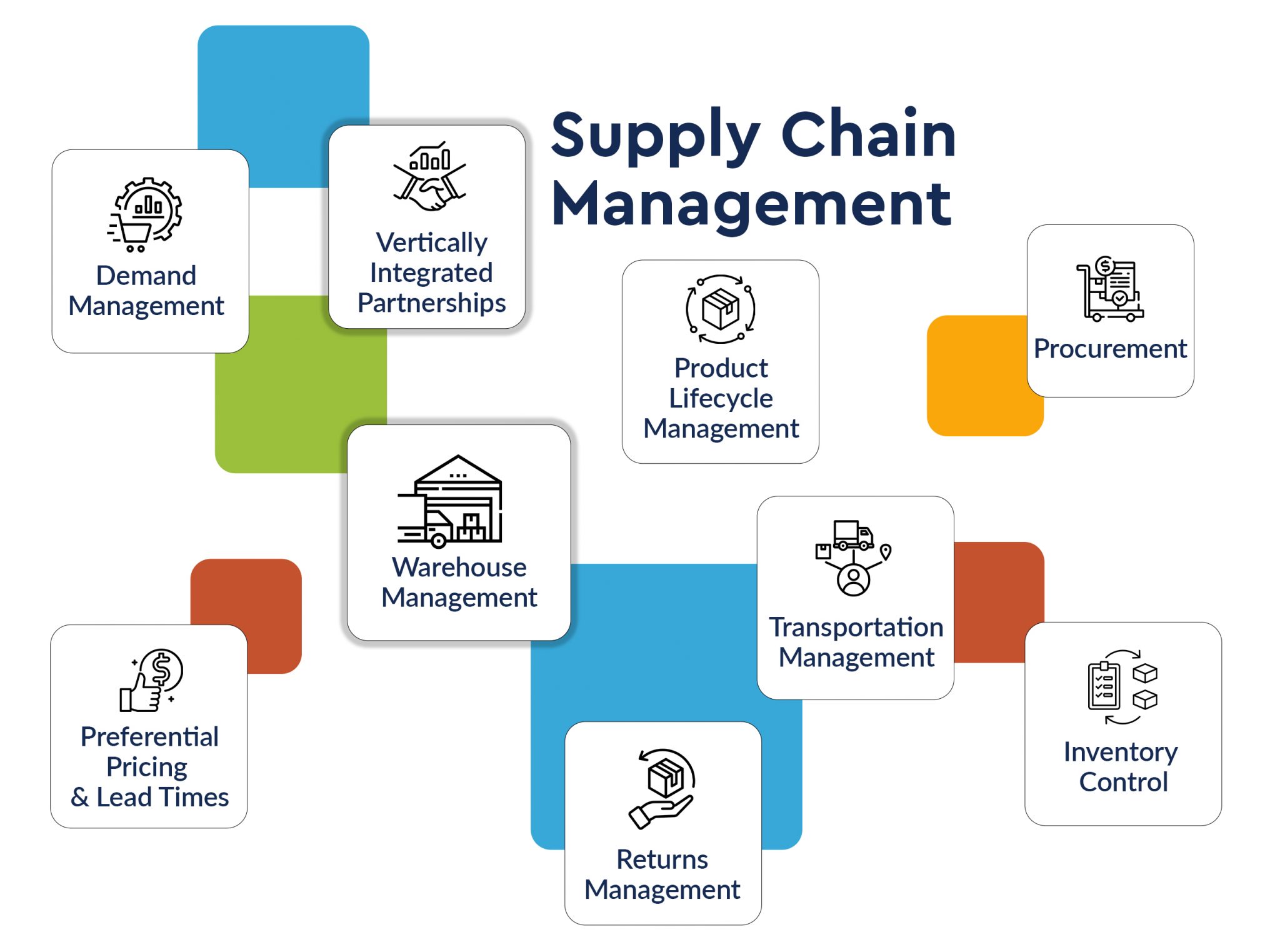
- Procurement and Strategic Sourcing: Focuses on supplier selection, contract negotiation, vendor relationship management, and global sourcing ethics.
- Logistics and Transportation Management: Covers carrier selection, freight routing, modal optimization (rail, ocean, air, and trucking), and warehouse layout design.
- Inventory Control and Demand Planning: Explores safety stock calculations, material requirements planning (MRP), enterprise resource planning (ERP) system inputs, and sales and operations planning (S&OP) processes.
- Sustainable and Circular Supply Chains: Examines reverse logistics, carbon footprint reduction, ethical labor practices, and regulatory compliance regarding environmental impact.
Software, Technology, and Experiential Learning
Theoretical knowledge must be paired with software proficiency and real-world application to ensure career readiness upon graduation. Universities invest heavily in enterprise simulation software and computing laboratories to replicate industrial environments.
Enterprise Resource Planning and Simulation Tools
Students gain hands-on experience with industry-standard platforms such as SAP or Oracle Enterprise Resource Planning systems. Learning how to navigate database architectures, track purchase orders, and generate inventory reports inside an ERP environment is a vital résumé asset. Additionally, many programs incorporate complex supply chain simulation games—such as the MIT Beer Game or specialized software modules—where student teams compete in real-time markets, managing inventory fluctuations and coping with the bullwhip effect under shifting consumer demand.
Capstone Projects and Internships
Most undergraduate and graduate SCM programs culminate in a senior capstone project or a mandatory internship. Capstone projects often involve partnering with a regional manufacturer, distributor, or retail corporation to solve an active operational bottleneck. Students audit the company's existing logistics or procurement workflows, analyze data anomalies, and present actionable recommendations to corporate executives. Simultaneously, internships provide supervised professional exposure, allowing students to network with industry recruiters and transition seamlessly into full-time employment.
Comparison of Degree Levels in Supply Chain Management
Academic pathways in this field span from undergraduate certificates and bachelor's degrees to specialized master's programs and executive education. Choosing the correct path depends on prior professional experience and career goals.
| Degree Level | Typical Duration | Primary Focus | Ideal Target Audience |
|---|---|---|---|
| Bachelor of Science / Business Administration (BS/BBA) | 4 Years | Broad business foundations, core SCM principles, introductory analytics | High school graduates entering the corporate workforce |
| Master of Science in Supply Chain Management (MSSCM) | 1 - 2 Years | Advanced analytics, optimization algorithms, strategic leadership | Mid-career professionals or technical graduates seeking specialization |
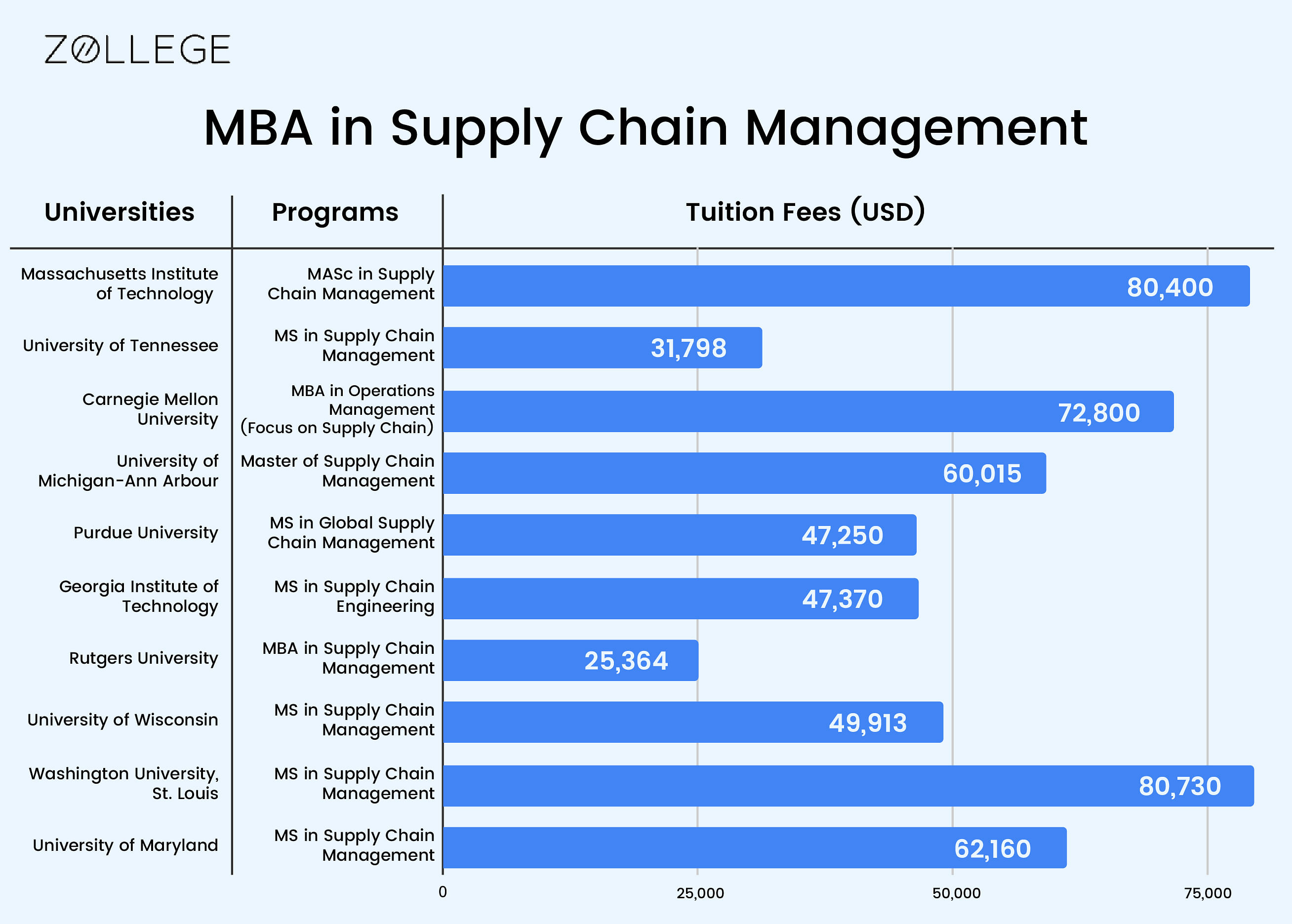
| Master of Business Administration (MBA) with SCM Concentration | 2 Years | General executive management with an elective focus on operations | Professionals transitioning into corporate general management or C-suite roles |
| Graduate Certificate | 6 - 12 Months | Targeted functional expertise (e.g., procurement, global logistics) | Working professionals looking for rapid upskilling without a full degree |
Common Challenges and Misconceptions
Prospective students often harbor inaccurate assumptions about what studying and working in supply chain management entails. Clearing up these misconceptions prevents misalignment during the academic journey.
Myth Versus Reality in SCM Education
A prevalent misconception is that supply chain management is merely "moving boxes" or managing warehouse shipping docks. In reality, modern SCM is a highly analytical discipline heavily reliant on data science, financial modeling, machine learning, and international trade law. Students who struggle with mathematics and statistics often find the quantitative operations research courses more demanding than anticipated. Another common challenge is the interdisciplinary nature of the coursework; students must balance qualitative subjects like negotiation strategy and international business ethics with rigorous calculus-based optimization models.
Navigating Industry Certifications
Many programs encourage or directly prepare students to pursue recognized professional designations alongside their university studies. Notable credentials include the Certified Supply Chain Professional (CSCP) or Certified in Planning and Inventory Management (CPIM) offered by the Association for Supply Chain Management (ASCM), as well as certifications from the Institute for Supply Management (ISM). Balancing academic coursework with professional certification exams requires disciplined time management, but doing so significantly enhances marketability upon graduation.
Frequently Asked Questions
Do I need a strong background in mathematics to major in supply chain management?
A foundational understanding of algebra, statistics, and basic calculus is required. While you do not need to be a theoretical mathematician, you must feel comfortable analyzing numerical data, building spreadsheet models, and applying formulas to solve operational problems.
How does a supply chain degree differ from a general business administration degree?
While both degrees share a common core of accounting, finance, and marketing, a general business degree offers a broad overview of corporate administration. A supply chain management degree focuses specifically on operational efficiency, logistics infrastructure, inventory mathematics, and vendor management.
Are internships required in most college supply chain programs?
While requirements vary by institution, the vast majority of top-tier business schools strongly encourage or mandate internships. Because employers heavily value practical experience in facilities management or logistics analytics, completing at least one summer internship is often the primary catalyst for securing post-graduation employment.
What programming languages or technical tools are taught in these programs?
Curriculums vary, but students frequently utilize advanced Microsoft Excel (including macros and pivot tables), database management tools like SQL, data visualization platforms like Tableau or PowerBI, and enterprise resource planning software such as SAP. Some advanced analytics tracks also introduce Python or R for predictive demand forecasting.
What are the primary career paths after graduation?
Graduates typically enter roles such as logistics analyst, inventory planner, procurement specialist, buyer, transportation coordinator, or supply chain consultant. With experience, professionals advance into director-level roles, operations management, or global sourcing strategy.
Next Actions for Prospective Students
If you are planning to enroll in a supply chain management college program, begin by reviewing the specific admissions prerequisites of your target business schools, ensuring your foundational mathematics and economics coursework is up to date. Reach out to academic advisors to inquire about corporate partnership programs and software labs available on campus. To gain an early advantage, familiarize yourself with basic spreadsheet analytics and read current publications like the Supply Chain Quarterly or industry reports from ASCM to understand the real-world operational challenges shaping modern global trade.
Image Gallery