Understanding the Relationship Arc: Why Roy Kent and Keeley Jones Broke Up
Roy Kent and Keeley Jones, two of the central figures in the television series Ted Lasso, end their romantic relationship due to a fundamental misalignment in their personal growth trajectories and professional self-worth. Their breaku...
Roy Kent and Keeley Jones, two of the central figures in the television series Ted Lasso, end their romantic relationship due to a fundamental misalignment in their personal growth trajectories and professional self-worth. Their breakup, which occurs toward the conclusion of the series, is not the result of a single catastrophic betrayal but rather a slow-burn realization that their individual needs no longer intersect in a sustainable, healthy manner.
Contents
The Foundation of the Relationship
To understand the collapse of the partnership between Roy Kent—the stoic, retired AFC Richmond captain—and Keeley Jones, the vibrant, ambitious public relations consultant, one must first look at the start of their dynamic. When they began dating, they were essentially helping one another through significant life transitions. Keeley was moving away from being a "WAG" (wives and girlfriends of high-profile athletes) toward establishing her own professional independence. Roy was dealing with the forced end of his playing career and the existential dread that accompanied his retirement.
In the early stages, they were perfect "mirrors" for one another. Keeley gave Roy the permission to be soft and vulnerable, while Roy gave Keeley the stability and respect she lacked in previous relationships. However, as the series progressed into its later seasons, the very traits that made them compatible began to pull them in different directions.
Divergent Professional Trajectories
The primary catalyst for their eventual separation was the imbalance in their personal development. Keeley’s arc is one of rapid ascent; she launches her own public relations firm, moves into an executive office, and begins to define herself entirely through her autonomy. Conversely, Roy finds himself struggling to adapt to life after football. Even when he joins the AFC Richmond coaching staff, he remains tethered to a rigid, often cynical worldview.
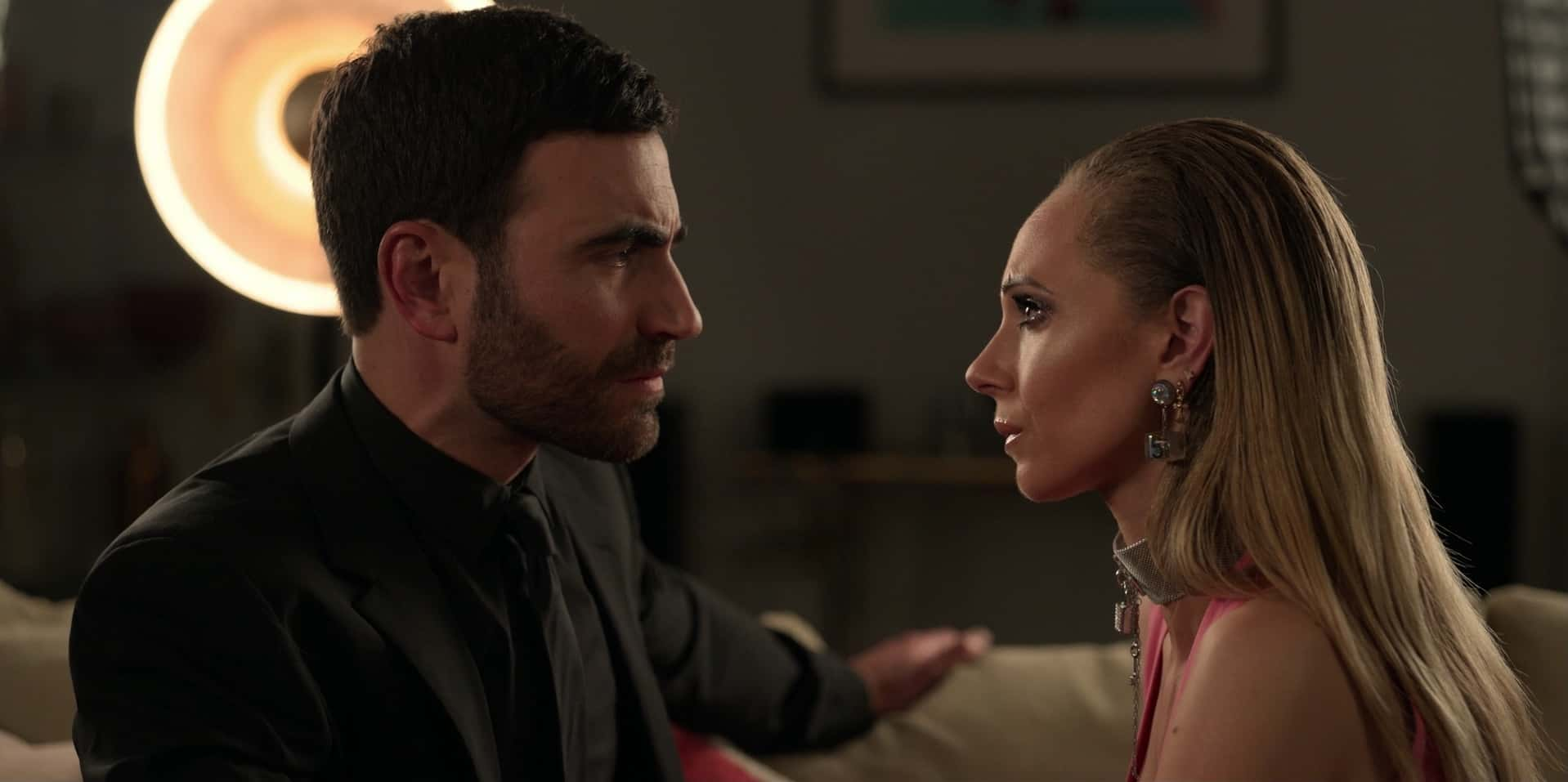
As Keeley’s business demands increased, her focus shifted toward innovation, networking, and creative risks. Roy, feeling increasingly insecure about his place in the world compared to Keeley's burgeoning success, retreated into a shell of stoicism. This created a silence between them—a literal and figurative lack of communication—that left Keeley feeling unsupported in her professional triumphs and Roy feeling like a secondary character in his own life.
The Role of External Insecurities
A critical turning point occurs when Roy’s inability to express his needs manifests as a controlling or distant demeanor. He struggles to keep up with the pace of Keeley’s life, which is characterized by constant change and external ambition. While Roy loves Keeley, he eventually recognizes that he is not currently capable of being the partner she requires.
Their breakup is underscored by a poignant realization: love is not always enough to sustain a relationship if both individuals are not evolving at a pace that allows for mutual support. For Roy, the breakup is an act of self-reflection; he recognizes that if he stays, he might become a source of anchor-like drag on Keeley’s career, which contradicts his core desire to see her flourish.
Comparison of Relationship Milestones
The following table outlines the distinct phases of their relationship and the internal factors that contributed to their drift:
| Phase | Roy's State | Keeley's State | Relationship Status |
|---|---|---|---|
| Initial Attraction | Transitioning out of soccer | Seeking validation | Harmonious/Supportive |
| Mid-Relationship | Struggling with identity | Gaining professional momentum | High intimacy/Occasional friction |
| The Drift | Insecure and stagnant | Ambitious and autonomous | Growing distance/Silence |
| The Breakup | Accepting personal limitations | Prioritizing self-growth | Amicable separation |
Why They Could Not Reconcile
Many viewers often wonder why they did not simply "work through it." The narrative of Ted Lasso emphasizes that characters must complete their individual journeys before they can successfully navigate a long-term partnership. By the time they arrive at the end of their relationship, Keeley is no longer the person who needs Roy to "protect" her from the world, and Roy is not yet the person who has fully unpacked his past trauma to be a secure partner.
The breakup is essentially a necessity for their individual character development. By separating, both Roy and Keeley are forced to confront their fears in isolation. Keeley proves that her success is her own, not a byproduct of her relationships. Roy proves that he can find purpose in coaching and mentorship without relying on a romantic partner to dictate his emotional state.
The Impact of Attachment Styles
The tension between Roy’s avoidant attachment style and Keeley’s need for partner engagement creates a cycle of misunderstanding. Roy often believes he is being "kind" by withholding his negative emotions or by keeping his struggles private to avoid burdening her. Keeley, however, interprets this as a lack of investment or a decline in interest. This fundamental communication breakdown is a realistic portrayal of how couples who truly care for each other can drift apart when they rely on different "languages" of love.
Frequently Asked Questions
Was the breakup caused by infidelity? No, there is no infidelity involved in the dissolution of Roy and Keeley's relationship. It is an internal, emotional drift rather than an external betrayal.
Do they get back together? The series finale leaves their relationship status intentionally open-ended, focusing more on their growth as individuals rather than confirming a specific romantic reconciliation.
What was the final straw? There was no single "final straw." The breakup was a culmination of the growing distance caused by Keeley’s career advancement and Roy’s inability to communicate his evolving insecurities.
Why did Roy act so distant toward the end? Roy’s distance was a symptom of his deep-seated feelings of inadequacy. He felt he was falling behind in his personal growth and projected his internal frustration onto his interaction with Keeley.
Moving Forward: The Lesson of the Breakup
The separation between Roy and Keeley serves as a reminder that the healthiest relationships are those where both partners are allowed to grow into their own versions of success. It highlights the importance of emotional intelligence and the danger of defining one's self-worth through a partner. For those looking at this narrative, the key takeaway is that sometimes the most loving action two people can take is to acknowledge when their life paths have diverged, choosing to value the growth of the individual over the comfort of the status quo.
As you navigate personal relationships, remember that professional growth and emotional independence are not threats to a partnership, but rather prerequisites for a healthy, long-term bond. If you find your own relationship in a state of similar drift, the most constructive next step is often not to force a reconciliation, but to initiate an honest conversation about your current life goals and whether your individual paths still align with the partnership you initially built.
Image Gallery