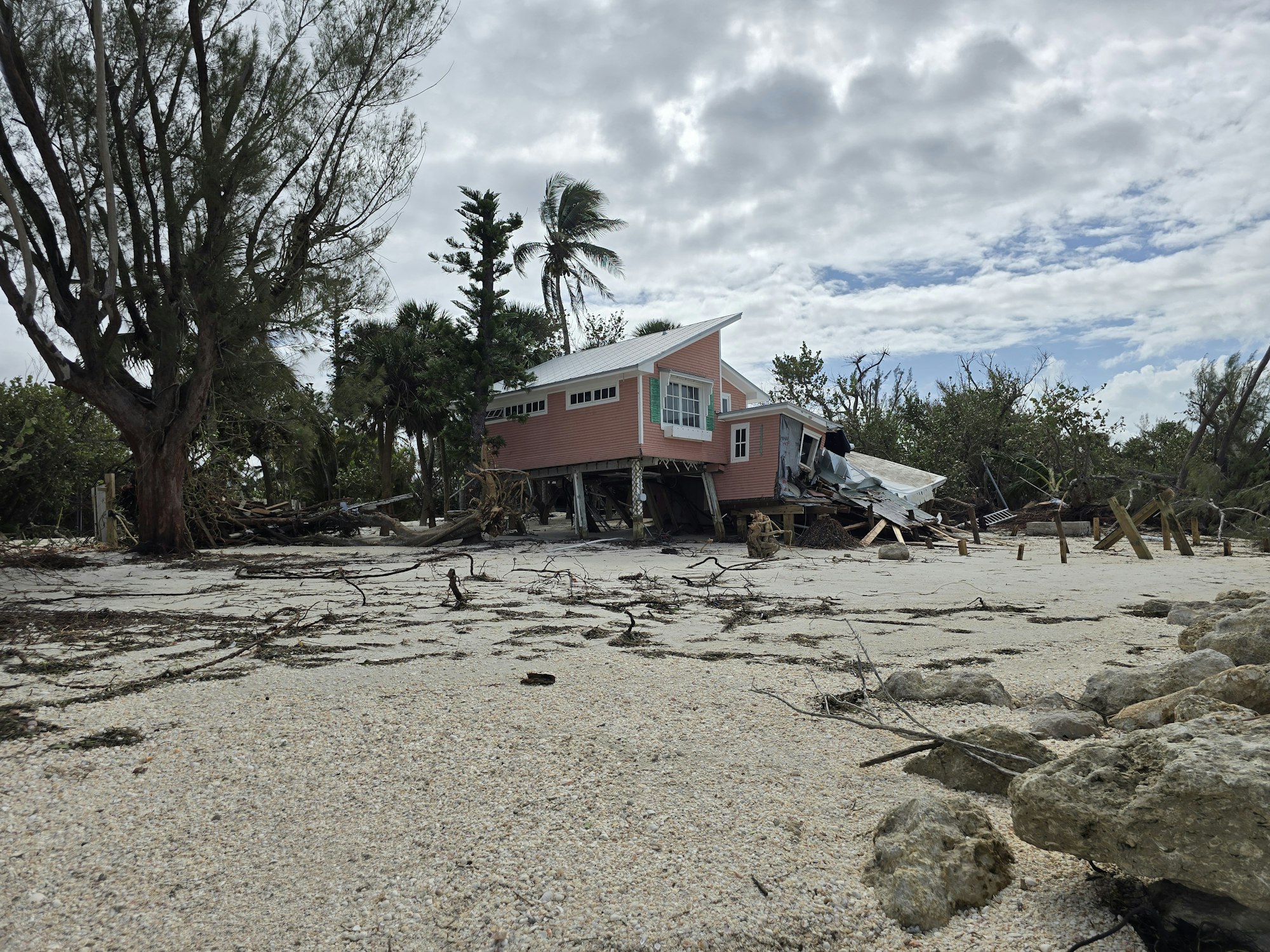
Understanding the Different Impacts of Hurricane Milton and Helene on Your Home
When assessing the risk to your home or deciding on mitigation strategies in 2026, the choice between preparing for a Hurricane Milton or Hurricane Helene profile depends on whether your property is more vulnerable to extreme wind and...
When assessing the risk to your home or deciding on mitigation strategies in 2026, the choice between preparing for a Hurricane Milton or Hurricane Helene profile depends on whether your property is more vulnerable to extreme wind and tornadoes or catastrophic storm surge and inland flooding. Milton was defined by its rapid intensification and devastating wind-driven damage across Central Florida, while Helene remains the benchmark for historic storm surge and unprecedented inland freshwater flooding across the Appalachian region.
Contents
The 2024 hurricane season fundamentally altered the landscape of the American Southeast. For homeowners today in 2026, "choosing" between the lessons of Milton and Helene isn't about preference; it is about identifying which meteorological profile poses the greatest threat to your specific geography. While both were high-intensity storms, their mechanics of destruction were vastly different. Understanding these differences is critical for insurance valuation, structural retrofitting, and long-term residency decisions.
The Meteorological Profiles: Wind vs. Water
To understand how these storms affect a home, one must first analyze their physical characteristics. Hurricane Helene, which made landfall in late September 2024, was a massive, sprawling system. Its primary weapon was water. Because of its sheer size, it pushed a wall of water into the Florida Gulf Coast long before landfall, and its moisture plume was funneled into the mountains of North Carolina, causing "1,000-year" flood events.
Hurricane Milton, occurring just weeks later in October 2024, was a different animal. It was a compact, hyper-intense storm that underwent one of the fastest intensifications in Atlantic history. While it also brought surge, its legacy is defined by wind velocity and a record-breaking tornado outbreak on its outer bands.
Hurricane Helene: The Surge and Flood Benchmark
Helene’s impact on a home is characterized by hydrostatic pressure and saturation. For homeowners in the Big Bend of Florida or the coastal reaches of Tampa Bay, Helene proved that even homes outside the immediate "cone" could be decimated by storm surge. Inland, the storm demonstrated that distance from the coast provides no immunity to water damage. The "Helene profile" for a home involves:
- Long-duration saturation: Homes remained under water or in high-humidity environments for extended periods, leading to immediate mold colonization.
- Foundation scouring: The movement of large volumes of water eroded the soil beneath concrete slabs and piers.
- Mechanical failure: Most HVAC and electrical systems are floor-mounted; Helene proved that even two feet of water renders a million-dollar asset uninhabitable.
Hurricane Milton: The Wind and Pressure Benchmark
Milton’s impact was characterized by structural uplift and missile impact. As the storm crossed the Florida peninsula, it maintained significant strength, bringing hurricane-force winds to the Atlantic coast. Furthermore, the pre-landfall tornado clusters destroyed homes that were built to standard building codes but not designed for EF-3 or EF-4 vortexes. The "Milton profile" involves:
- Envelope breach: A single broken window or failed garage door allows internal pressurization, which often leads to the roof being lifted off the structure.
- Cyclic loading: The sustained high winds weakened fasteners over several hours, leading to structural fatigue in older homes.
- Tornado damage: Concentrated paths of total destruction that ignored traditional "flood zones" or "wind zones."
Structural Vulnerabilities: Which Storm Does Your Home Fear?
In 2026, structural engineers categorize residential risk based on these two 2024 events. Your "choice" in mitigation depends on your home’s construction type and location.
Vulnerability to the Helene Profile (Flooding)
If your home is located in a low-lying area or near a river system, you are in a "Helene-risk" zone. The primary vulnerability here is non-elevated living space. In 2024, thousands of homes built on "slab-on-grade" foundations were effectively totaled because the cost of remediation exceeded 50% of the structure's value—triggering the FEMA 50% Rule. To protect against a Helene-style event, homeowners must prioritize:
- Flood Vents: Allowing water to flow through the foundation rather than pushing against it.
- Elevation of Utilities: Moving condensers and electrical panels to a minimum of 3 feet above the Base Flood Elevation (BFE).
- Hydrostatic Barriers: Using closed-cell spray foam insulation that does not absorb water.
Vulnerability to the Milton Profile (Wind)
If your home is in an open area, on a ridge, or in a region prone to atmospheric instability, you face a "Milton-risk" profile. The vulnerability here is the roof-to-wall connection. Milton highlighted that many homes built between 1990 and 2010 had "clipped" rafters rather than full hurricane straps. To mitigate against a Milton-style event, the focus shifts to:
- Impact-Rated Openings: Installing windows and doors that can withstand the strike of a 2x4 timber at 50 mph.
- Hip Roof Geometry: Four-sided roofs perform significantly better in high winds than gable (two-sided) roofs, which Milton’s winds often caught like a sail.
- Reinforced Garage Doors: In Milton, the garage door was the most common point of failure. Once it buckled, the wind pressure blew the roof off from the inside out.
Comparison of Impact: Milton vs. Helene
The following table summarizes the technical differences between these two landmark storms to help you determine which threat profile is most relevant to your property.
| Feature | Hurricane Helene (2024) | Hurricane Milton (2024) |
|---|---|---|
| Primary Driver of Loss | Storm Surge & Freshwater Flooding | Wind Velocity & Tornado Outbreak |
| Peak Intensity | Category 4 | Category 5 (landfall at Cat 3) |
| Primary Region | FL Big Bend, GA, NC, TN | Central and West-Central Florida |
| Typical Structural Failure | Inundation, Mold, Foundation Erosion | Roof Uplift, Window Breach, Debris Impact |
| Insurance Claim Type | NFIP (Flood) / Private Flood | Homeowners (Wind/Hazard) |
| Mitigation Priority | Elevation & "Wet Floodproofing" | Impact Windows & Hurricane Straps |
| Recovery Timeline | Long-term (Inland access issues) | Moderate (Debris removal focus) |
The Insurance Landscape in 2026
By 2026, the insurance markets in the Southeast have fully integrated the data from Milton and Helene. This has led to a "tiering" of premiums that homeowners must navigate.
The National Flood Insurance Program (NFIP) and Helene
Helene caused a massive re-evaluation of flood maps. If your home is being compared to the Helene damage profile, your NFIP Risk Rating 2.0 premiums likely reflect the reality that "inland" does not mean "safe." Many homeowners in North Carolina who did not have flood insurance during Helene found themselves with no recourse. In 2026, lenders are increasingly requiring flood insurance even in "Zone X" (moderate-to-low risk) areas if they share a similar topography to the Helene impact zones.
Private Market Capacity and Milton
Milton’s wind damage fell under standard homeowners' policies. Because Milton hit heavily populated areas like Sarasota and Orlando, the private insurance market saw a significant "reinsurance" contraction. In 2026, to get an affordable premium in a Milton-affected area, homeowners must often provide a Wind Mitigation Verification Inspection. This document proves the existence of secondary water barriers and specific nail patterns in the roof deck—upgrades that became standard in the wake of the 2024 season.
Choosing Your Mitigation Strategy
If you are renovating a home in 2026 or looking to buy in a storm-prone region, you must choose a mitigation path that addresses the most likely "storm twin" for your location.
When to Prioritize the Helene Defense
Choose this path if your property is within 5 miles of the coast or within a 100-year floodplain of a river. The cost of "defending" against water is often higher than wind, as it involves physical elevation or the use of expensive masonry materials. However, as seen in Helene, water is the "total loss" agent. A home can survive 150 mph winds with minor damage, but it cannot survive 4 feet of standing water without a complete interior gut.
When to Prioritize the Milton Defense
Choose this path if you live in a "High-Velocity Hurricane Zone" (HVHZ) or an area with significant tree cover. Milton proved that trees are a liability during high-wind events. Defensive measures include the installation of permanent storm shutters or laminated glass. While these do not protect against floods, they ensure that the "envelope" of the home remains intact, which is the difference between a repairable insurance claim and a total structural collapse.
Frequently Asked Questions
Which storm caused more total damage, Milton or Helene?
While both caused tens of billions in damages, Helene is often cited as the more "complex" disaster due to the geographic span of its flooding, reaching deep into the Appalachian Mountains. Milton's damage was more concentrated but featured higher wind speeds, leading to extreme "wind-only" losses in urban centers like Tampa and St. Petersburg.
Can a home be built to survive both a Milton and a Helene event?
Yes, but it requires a "dual-threat" engineering approach. This involves elevating the home on piers or a high stem wall (Helene defense) while simultaneously using a reinforced concrete structure with impact-rated windows and a hip-style metal roof (Milton defense). In 2026, this is becoming the standard for new luxury construction in coastal Florida.
How did the 2024 storms change building codes for 2026?
The most significant change is the expansion of "Required Flood Insurance" zones and stricter mandates for garage door wind ratings. Milton showed that garage door failure was the "Achilles heel" of modern homes. Consequently, 2026 codes in many jurisdictions now require doors rated for 150+ mph even in non-coastal areas.
Does my standard homeowners insurance cover both types of storms?
No. This is a critical distinction that remains true in 2026. Damage from Milton’s wind is covered by standard policies (subject to a hurricane deductible, often 2-5% of the home's value). Damage from Helene’s storm surge or rising river water is strictly covered by Flood Insurance (NFIP or private flood). If you have one but not the other, you are only half-protected.
Practical Recommendation for Homeowners
The best course of action in 2026 is to conduct a comprehensive risk audit. Do not assume that because your home survived Milton’s winds, it is safe from a Helene-style flood. Conversely, do not assume that because you are elevated above the flood zone, your roof can withstand a Milton-style tornado outbreak.
Start by checking your current elevation certificate and then hire a licensed inspector to perform a wind mitigation report. Addressing the "weakest link" identified by these two storms is the only way to ensure your home remains an insurable and safe asset in the coming years.
Image Gallery