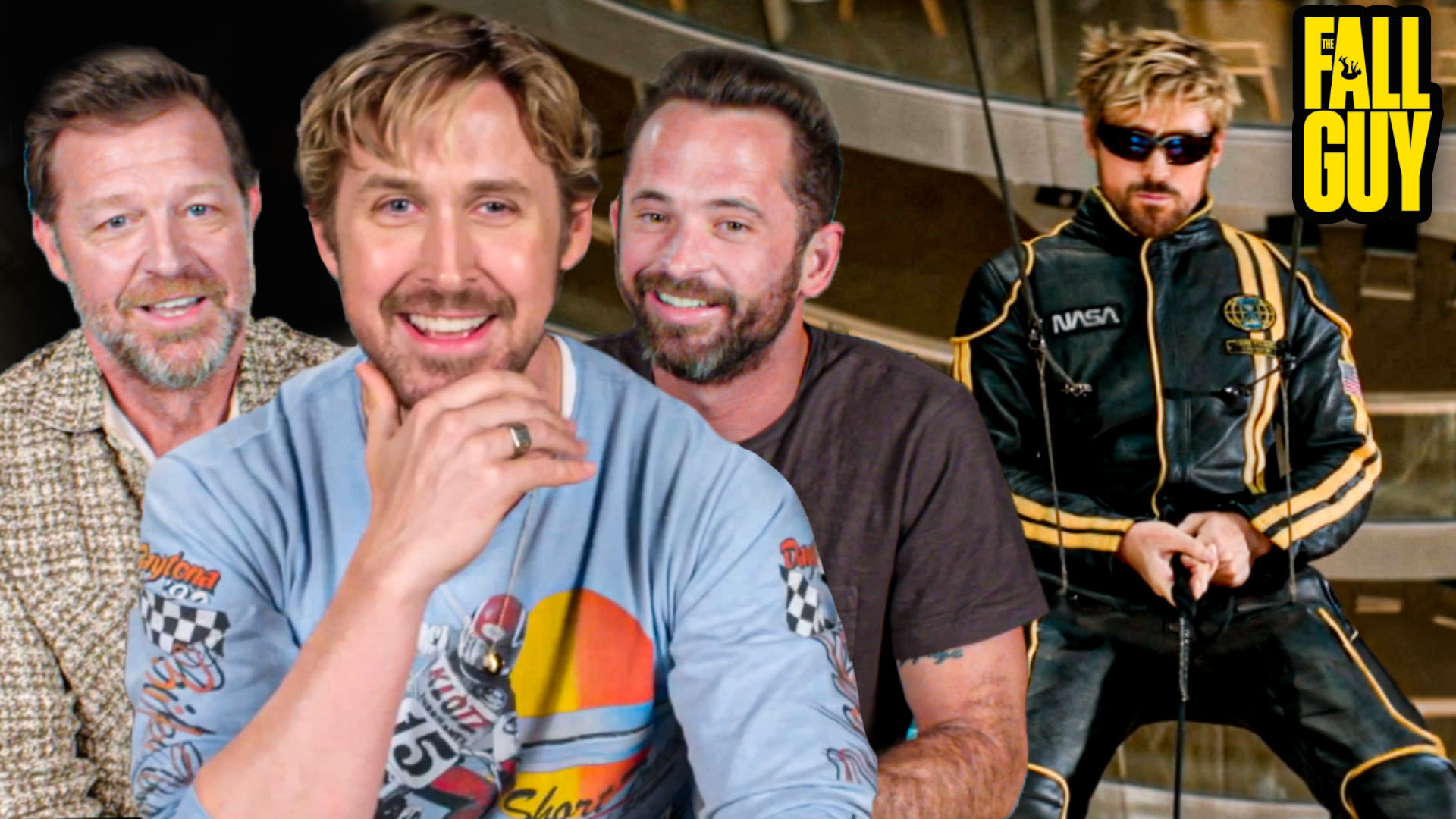
Exploring Ryan Gosling’s Stunt Performance in The Fall Guy
Ryan Gosling performed several significant stunts in The Fall Guy, most notably the 12-story controlled fall in the film’s opening and the high-speed sequence where he is dragged across the Sydney Harbour Bridge. While Gosling utilized...
Ryan Gosling performed several significant stunts in The Fall Guy, most notably the 12-story controlled fall in the film’s opening and the high-speed sequence where he is dragged across the Sydney Harbour Bridge. While Gosling utilized a dedicated team of four professional stunt doubles for life-threatening maneuvers and world-record attempts, he executed enough of the physical action to ground the character of Colt Seavers in authentic emotion and physical vulnerability.
Contents
The Philosophy of Stunts in The Fall Guy
Released in 2024 and remaining a touchstone for action cinema in 2026, The Fall Guy was designed from its inception as a "love letter" to the stunt community. Directed by David Leitch—himself a former stunt double for Brad Pitt and a co-director of John Wick—the film sought to pull back the curtain on the dangerous, often invisible work that goes into Hollywood blockbusters.
For Ryan Gosling, playing Colt Seavers meant more than just delivering lines; it required a willingness to step into the shoes of the very professionals the film honors. However, the production maintained a transparent approach regarding what Gosling did himself versus what was handled by specialists. This transparency was central to the film’s marketing and its advocacy for a dedicated Stunt category at major award ceremonies. Gosling’s involvement was balanced by the necessity of safety and the desire to showcase the elite skills of professional performers who have spent decades perfecting high-risk maneuvers.
Which Stunts Did Ryan Gosling Actually Perform?
While many leading men claim to "do all their own stunts" for PR purposes, Gosling and Leitch were careful to clarify the boundaries. Gosling focused on stunts that allowed his face to be visible, enhancing the audience's connection to the character’s peril, while leaving the most technically complex or lethal "gags" to his doubles.
The 12-Story Drop (Opening Sequence)
One of the most harrowing moments for Gosling was the film’s introductory stunt: a 12-story drop through the center of a hotel lobby. Despite Gosling having a self-admitted fear of heights (acrophobia), he agreed to perform the descent on a controlled descender rig.
In this sequence, the character falls backward, which is psychologically more difficult than falling forward because the performer cannot see their landing point. The rig allowed for a safe deceleration, but the sheer height and the physical sensation of freefall were entirely real. Gosling noted in several press cycles that his body’s "fight or flight" response was fully engaged, which contributed to the genuine look of shock and adrenaline seen on screen.
The Sydney Harbour Bridge Drag
In a major action set-piece filmed on the iconic Sydney Harbour Bridge, Gosling was strapped to a metal shovel-like sled and dragged behind a truck at speeds reaching 30 to 40 miles per hour. While a stunt double was used for the more chaotic collisions within that sequence, Gosling himself spent significant time on the pavement, holding onto the vehicle as it wove through traffic.
The physical toll of this stunt is often underestimated. Even with protective gear, the vibration and the wind resistance at those speeds require immense core strength and grip endurance. By performing this himself, Gosling allowed the camera to stay close on his face, capturing the chaotic environment of the Sydney morning commute without the need for digital face-swaps.
The "Colt Seavers" Stunt Team: The Men Behind the Actor
To fully realize the character of Colt Seavers, the production employed a "Stunt Avatar" approach. Because the film features so many different types of action—driving, falling, fighting, and parkour—no single person (including Gosling) could safely or effectively do it all. Four primary doubles were used, each a specialist in their field.
- Logan Holladay (Precision Driving): Holladay was responsible for the vehicular mayhem. He famously broke the Guinness World Record for the most "cannon rolls" in a car, achieving eight and a half rotations during the beach sequence. Gosling was not in the car for this specific feat, as the G-forces involved are potentially lethal for anyone not trained in high-impact car stunts.
- Troy Brown (High Falls): While Gosling did the 120-foot controlled drop, Brown performed the 150-foot "high fall" into an airbag. This is a classic, dangerous stunt that requires precise body positioning to avoid serious internal injury upon impact.
- Ben Jenkin (Parkour and Fire): Jenkin handled the "movement" stunts, including being hit by cars and performing "full burns" (where the performer is set on fire). His background in parkour allowed the character to move with a specific fluidity that Gosling’s training wouldn't allow him to replicate safely in high-risk environments.
- Justin Eaton (Martial Arts): Eaton was the primary combat double. While Gosling learned the choreography for the fights, Eaton performed the high-impact throws and acrobatic strikes that required years of martial arts conditioning.
Technical Specifications: The Cannon Roll Record
One of the most technically impressive aspects of the production—though not performed by Gosling—was the record-breaking cannon roll. Understanding the mechanics of this stunt illustrates why lead actors are generally prohibited from attempting them by insurance providers.
| Feature | Specification / Detail |
|---|---|
| Stunt Performer | Logan Holladay |
| Vehicle Used | Modified Jeep Grand Cherokee |
| Mechanism | Nitrogen-powered cannon fitted under the chassis |
| Number of Rolls | 8.5 (Official Guinness World Record) |
| Location | Kurnell, New South Wales (Sydney) |
| Safety Gear | Custom roll cage, 5-point harness, reinforced fuel cell |
| Previous Record | 7 rolls (held by Adam Kirley in Casino Royale) |
The cannon roll works by firing a literal "cannon" (a steel slug) into the ground at high pressure while the vehicle is moving. This force flips the car. The timing must be perfect; if the cannon fires too early or too late, the car could vault into the crew or land on its roof in a way the roll cage cannot support.
Safety Protocols and Training on Set
Gosling’s ability to perform "some" stunts safely was the result of months of preparation. Before filming began in Australia, Gosling underwent rigorous physical conditioning. This wasn't just "superhero" muscle building; it was functional training focused on "taking a hit."
- Wirework Training: To prepare for the 12-story drop, Gosling practiced on smaller rigs, gradually increasing the height to desensitize his vertigo.
- Choreography Memorization: For the fight scenes, Gosling worked with the 87North team (Leitch's production company) to learn the "beats" of a fight, similar to learning a dance. This allows the actor to perform the close-up shots safely without accidentally injuring a stunt performer or vice versa.
- Risk Management: Every stunt Gosling performed was vetted by the stunt coordinator, Chris O'Hara. If a stunt had a high "unpredictability factor"—meaning things could go wrong regardless of the actor's skill—the double was used. If the stunt was "controlled," Gosling was given the green light.
The Impact on the Stunt Community
Gosling’s decision to perform some stunts, while heavily crediting his doubles, sparked a significant conversation in the film industry that has lasted into 2026. Historically, actors have been encouraged to take credit for all physical work to maintain the "movie star" illusion. Gosling’s public praise for Logan Holladay and the rest of the team shifted the narrative.
By 2026, we have seen an increased push for the Academy of Motion Picture Arts and Sciences to recognize stunt coordinators with an Oscar category. The Fall Guy served as the primary evidence for this movement, demonstrating that while an actor’s performance is vital, the technical execution of action is a distinct and highly specialized craft.
FAQs about Ryan Gosling’s Stunts in The Fall Guy
Did Ryan Gosling actually break the world record for car rolls?
No, the world record for the most cannon rolls (8.5) was set by professional stunt driver Logan Holladay. While Gosling’s character is seen doing this in the movie, Gosling himself was not in the vehicle during the record-breaking attempt due to the extreme physical risks and G-forces involved.
How high was the fall Ryan Gosling did himself?
Ryan Gosling performed a 12-story (approximately 120-foot) controlled fall. He was attached to a safety line known as a descender, which controls the speed of the drop. This was done for the opening sequence of the film to ensure his facial expressions and reactions were authentic.
Does Ryan Gosling have a fear of heights?
Yes, Ryan Gosling has publicly stated that he suffers from acrophobia (a fear of heights). This made his performance of the 12-story drop particularly challenging. He credited the stunt team’s safety protocols for giving him the confidence to confront his fear for the sake of the film.
Who were the stunt doubles for Ryan Gosling in The Fall Guy?
Gosling had four main doubles: Logan Holladay (driving), Troy Brown (high falls), Ben Jenkin (parkour and fire), and Justin Eaton (martial arts). This "team" approach was used because the film required a wide variety of specialist skills that no single person could safely master simultaneously.
Did Gosling get injured while filming The Fall Guy?
There were no reports of significant injuries to Ryan Gosling during production. This is a testament to the rigorous safety standards set by director David Leitch and stunt coordinator Chris O'Hara. The production emphasized safety to ensure that both the lead actor and the professional stunt team could complete the ambitious sequences without casualty.
Practical Recommendation for Action Fans
If you are interested in the technical artistry behind Ryan Gosling’s performance, the best "next step" is to watch the behind-the-scenes "Making Of" featurettes specifically focused on the Sydney Harbour Bridge sequence. These documentaries provide a side-by-side comparison of the raw footage versus the final edited scenes, illustrating exactly where Gosling’s physical work ends and the stunt doubles’ expertise begins. Additionally, following the Guinness World Records documentation of Logan Holladay’s cannon roll provides a fascinating look at the engineering required to make movie magic possible without the use of CGI.
Image Gallery