Why Border Wait Times in Vancouver Matter
Border wait times in the Vancouver region matter because they directly disrupt supply chains, cross-border labor markets, regional tourism, and daily commuting between British Columbia and Washington State. Delays at ports of entry lik...
Border wait times in the Vancouver region matter because they directly disrupt supply chains, cross-border labor markets, regional tourism, and daily commuting between British Columbia and Washington State. Delays at ports of entry like Peace Arch, Pacific Highway, and Abbotsford-Huntingdon create economic friction, increase operational costs for businesses, and alter consumer behavior across the Pacific Northwest.
Contents
The Economic Impact on Supply Chains and Freight Logistics
The Lower Mainland of British Columbia serves as a vital international trade corridor linking Western Canada to the United States Pacific Northwest. Commercial carriers moving goods between Vancouver and industrial centers like Seattle or Portland rely heavily on predictable border crossings, primarily through the Pacific Highway port of entry in Surrey, which accommodates heavy commercial transport.
When border wait times spike, commercial carriers face severe operational challenges. Trucking companies operate under strict hours-of-service regulations and tight delivery schedules. Extended delays at the border lead to driver idling, increased fuel consumption, and missed delivery windows. These logistical inefficiencies translate directly into higher freight rates, which businesses ultimately pass down to consumers in the form of elevated retail prices for groceries, manufacturing components, and consumer goods.
Furthermore, modern supply chain management relies on just-in-time inventory models. Unpredictable border delays undermine this precision, forcing companies to hold higher safety stocks or risk costly production line shutdowns. The financial cost of congestion at the British Columbia-Washington border extends far beyond the immediate fuel burn of a single truck; it ripples through regional manufacturing, warehousing, and distribution networks.
Commuter Friction and the Regional Labor Market
The geographic proximity of the Greater Vancouver area to Whatcom County in Washington State fosters a deeply interconnected regional labor market. Many individuals live in one country and work or study in the other, while others maintain regular personal and family ties across the international boundary.
Prolonged border wait times at crossings such as Peace Arch, Blaine, and Douglas significantly impact daily commuters. Unpredictable queue lengths make it difficult for workers to arrive at their jobs on time, leading to productivity losses and workplace stress. For employers relying on cross-border talent or specialized technical labor, unpredictable transit times complicate staffing logistics and employee retention.
Beyond employment, the social fabric of the borderland region depends on fluid transit. Families separated by the international boundary, individuals accessing cross-border medical services, and everyday shoppers experience diminished quality of life when congestion at ports of entry stretches transit times from minutes to hours.
Tourism and Cross-Border Retail Dynamics
Tourism and retail trade constitute major economic pillars for both British Columbia and Washington State. Vancouver is a primary destination for American travelers seeking cultural experiences, dining, and outdoor recreation, while Lower Mainland residents frequently travel south for shopping trips, fuel savings, air travel out of Seattle-Tacoma International Airport, and weekend getaways.
Border wait times act as a direct tax on discretionary cross-border travel. When processing times at ports like Peace Arch and Zero Avenue become excessively long, leisure travelers simply cancel or postpone their trips. This behavioral shift immediately impacts local economies on both sides of the border:
- Hospitality Sectors: Hotels, restaurants, and entertainment venues in Vancouver and Bellingham experience revenue volatility tied directly to weekend border delays.
- Retail Outlets: Shopping centers, outlet malls, and grocery stores near the border notice sharp declines in foot traffic when northbound or southbound queues stretch past 60 minutes.
- Aviation Choices: Vancouver residents weighing flights departing from Vancouver International Airport versus Seattle-Tacoma International Airport factor border predictability heavily into their logistical planning.
Operational Realities at Lower Mainland Ports of Entry
Understanding why wait times matter requires examining the infrastructure and operational dynamics governing the major Lower Mainland border crossings managed by the Canada Border Services Agency (CBSA) and U.S. Customs and Border Protection (CBP).
| Port of Entry | Primary Function | Key Operational Constraints |
|---|---|---|
| Pacific Highway (Surrey) | Commercial freight and passenger vehicles | High volume of commercial trucks; separate processing lanes; subject to commercial inspection protocols. |
| Peace Arch (Surrey) | Passenger vehicles and pedestrians only | Heavy leisure traffic; physical space limitations; peak weekend congestion during holidays. |
| Abbotsford-Huntingdon | Mixed passenger and commercial traffic | Alternative route for regional travelers; sensitive to agricultural and local freight movements. |
| Douglas (Surrey) | Passenger vehicles | High-volume urban commuter artery running parallel to the Peace Arch crossing. |
Staffing levels, secondary inspection referrals, technological upgrades, and shifting security mandates all influence how quickly vehicles clear customs. When security threat levels rise or staffing shortages occur at CBSA or CBP booths, the resulting bottlenecks quickly propagate backward onto regional highways like Highway 99 and Highway 15, creating severe local traffic congestion.
Mitigation Strategies and Traveler Preparedness
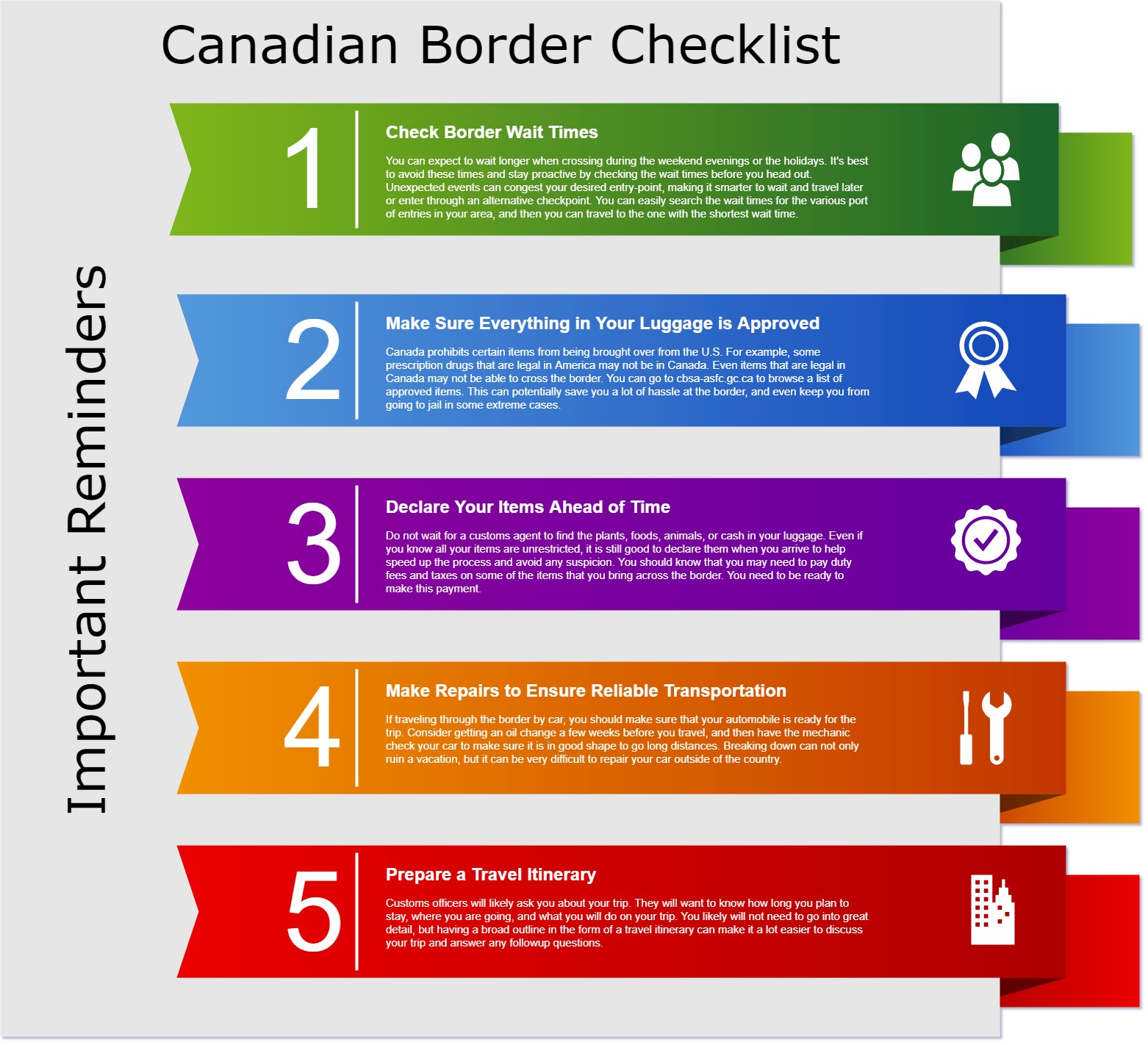
To minimize the economic and personal friction caused by border delays, both travelers and commercial operators utilize specific mitigation strategies. Leveraging technological tools and trusted traveler programs is essential for navigating the Pacific Northwest border efficiently.
- Check Real-Time Data: Consult official CBSA and Washington State Department of Transportation (WSDOT) border wait time applications and traffic cameras before departing.
- Enroll in Trusted Traveler Programs: Frequent cross-border travelers utilize NEXUS cards, which provide access to dedicated lanes with expedited processing speeds, reducing wait times significantly during peak hours.
- Optimize Travel Windows: Avoid traditional peak periods, such as Friday afternoons, Sunday evenings, holiday long weekends, and major sporting or concert events in Vancouver or Seattle.
- Prepare Documentation: Ensure passports, enhanced driver's licenses, and declaration forms are organized and accessible before reaching the primary inspection booth to minimize transaction times.
Frequently Asked Questions
What are the primary factors that cause long border wait times in Vancouver?
Long wait times are primarily driven by high traffic volumes during peak commuting and leisure hours, staffing fluctuations at inspection booths, commercial freight inspections, secondary examinations, and occasional security or technological disruptions at ports like Peace Arch and Pacific Highway.
How do border wait times affect commercial trucking between BC and Washington?
Delays force commercial carriers to burn excess fuel, face driver hour-of-service limitations, and miss strict delivery windows. This disruption increases transportation costs, which ultimately impacts supply chain efficiency and consumer prices throughout the region.
Do NEXUS cards significantly reduce wait times at Vancouver border crossings?
Yes. NEXUS cardholders use dedicated lanes that bypass standard passenger queues. While security screening still applies, processing times are substantially faster, making membership valuable for frequent cross-border commuters and business travelers.
What is the busiest border crossing in the Vancouver region?
The Peace Arch crossing in Surrey is one of the busiest passenger vehicle ports of entry, while the adjacent Pacific Highway crossing handles the highest volume of commercial transport trucks in the Lower Mainland.
How can travelers check accurate, up-to-date border wait times?
Travelers can monitor real-time conditions using official mobile applications and websites provided by the Canada Border Services Agency (CBSA), U.S. Customs and Border Protection (CBP), and regional transit authorities like DriveBC and WSDOT.
Conclusion
Border wait times in Vancouver are much more than a minor travel inconvenience; they represent a critical economic indicator affecting international trade, labor mobility, and regional tourism. As cross-border movement continues to grow, understanding the operational realities of ports like Peace Arch and Pacific Highway enables businesses, commuters, and travelers to better navigate delays and maintain the economic vitality of the Pacific Northwest corridor.
Image Gallery