Agatha Christie’s Second Husband: Max Mallowan and Their Extraordinary Life Together
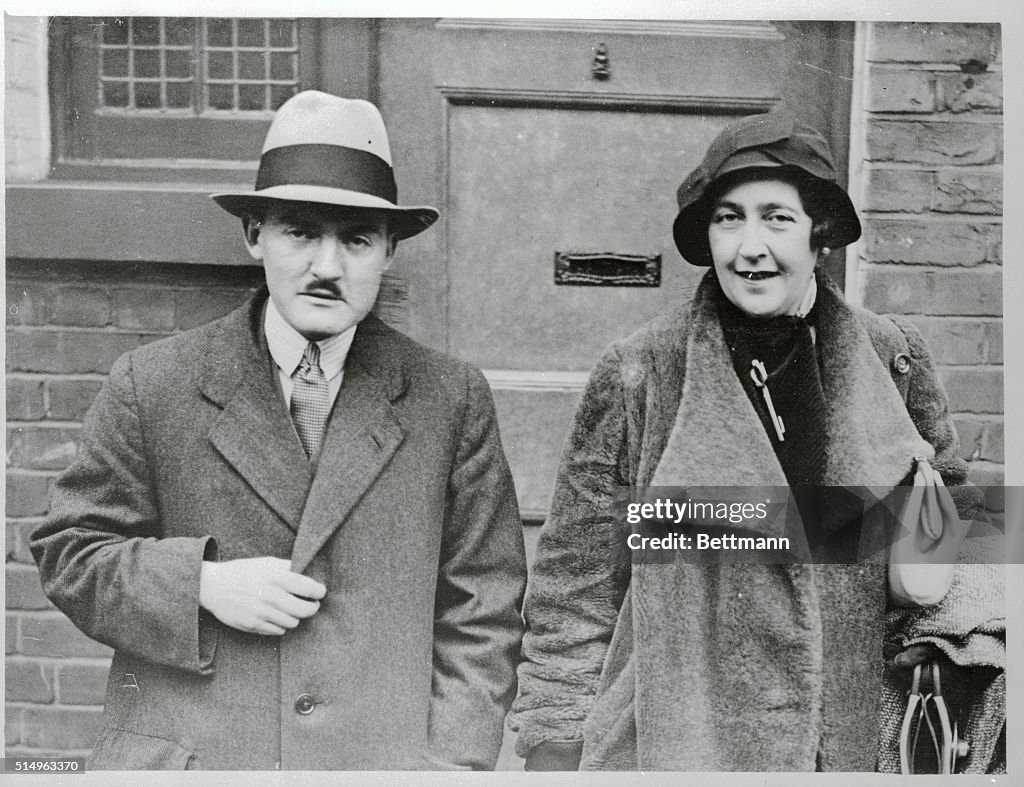
Agatha Christie’s second husband was Sir Max Mallowan, a distinguished British archaeologist whom she married in 1930. This defining partnership shaped the second half of the legendary author's life, profoundly influencing her literary...
Agatha Christie’s second husband was Sir Max Mallowan, a distinguished British archaeologist whom she married in 1930. This defining partnership shaped the second half of the legendary author's life, profoundly influencing her literary output, introducing her to the Middle East, and supporting a decades-long collaboration in archaeological excavation and historical preservation.
Contents
Understanding the man who stood beside the "Queen of Crime" requires looking beyond the famous anecdote of how they met. Their union bridged two distinct worlds—classic British detective fiction and meticulous academic archaeology—creating a unique intellectual partnership that endured for over forty years until Christie's death in 1976.
The Meeting and Courtship in Iraq
The story of Agatha Christie and Max Mallowan began against the backdrop of imperial exploration and personal reinvention. By 1928, Christie was recovering from a deeply turbulent period in her life. Her first marriage to Archibald Christie had ended in a highly publicized divorce following a dramatic eleven-day disappearance in 1926 that triggered a massive nationwide manhunt. Seeking a complete change of scenery and mental escape, Christie decided to travel on the Orient Express to Baghdad.
During her travels in Mesopotamia, she visited the famous archaeological site of Ur in southern Iraq, where she was hosted by the British archaeologist Leonard Woolley and his wife, Katharine. It was at Ur that she first crossed paths with Max Mallowan, who was working as Woolley’s assistant field archaeologist. Mallowan was fourteen years younger than Christie—she was 39 and he was 25 at the time of their introduction—a notable age gap in British society of the 1930s.
Despite the age difference, a deep intellectual and personal rapport developed quickly. Mallowan volunteered to show Christie around various historical sites in the region. Their courtship deepened during a journey back to England when Christie fell ill with appendicitis in Greece, and Mallowan stayed behind in a Athens hospital to care for her. They were married quietly in September 1930 at a registry office in Edinburgh, choosing to keep the wedding low-key to avoid the relentless tabloid media scrutiny that had plagued Christie's life following her first divorce.
Max Mallowan’s Academic Background and Career
Max Mallowan was not merely an appendage to a famous novelist; he was a titan of British archaeology in his own right, specializing in the ancient civilizations of the Near East. Born in 1904, Mallowan was educated at Lancing College and New College, Oxford, where he studied classics. His transition to archaeology was heavily influenced by his early fieldwork experiences under Leonard Woolley at Ur, where unearthing the Royal Cemetery provided him with world-class training in stratigraphy and artifact cataloging.
Following his marriage to Christie, Mallowan led numerous independent excavations across Syria and Iraq throughout the 1930s. Sites such as Arpachiyah, Tell Chagar Bazar, and Tell Brak yielded vital discoveries regarding prehistoric Mesopotamian cultures, particularly the Halaf culture. Mallowan’s meticulous excavation methods and precise publication standards established him as a pioneer in Near Eastern archaeology, eventually leading to academic appointments including Professor of Western Asiatic Archaeology at the University of London and Director of the British School of Archaeology in Iraq.
Influence on Agatha Christie’s Life and Work
Max Mallowan’s profession fundamentally transformed Agatha Christie’s writing career and personal horizons. Rather than sitting at home writing suburban English murder mysteries, Christie spent months every year living in tents in the deserts of Syria and Iraq. These expeditions provided the authentic settings, local color, and atmospheric texture for some of her most acclaimed novels.
Christie applied her keen powers of observation—honed by her husband's scientific methods—to the people she met on digs, including fellow academics, local foremen, and travelers. Her memoirs, particularly Come, Tell Me How You Live, offer a humorous, affectionate, and vivid account of archaeological camp life, shattering the misconception of Christie as a sheltered homebody.
Novels Inspired by Archaeological Expeditions
| Novel Title | Publication Year | Primary Archaeological Setting / Influence |
|---|---|---|
| Murder in the Mesopotamian | 1936 | Based directly on experiences at the excavation site in Ur. |
| Death on the Nile | 1937 | Inspired by extensive travels through Egypt with Mallowan. |
| Appointment with Death | 1938 | Reflected travels through Petra and the Middle East. |
| They Came to Baghdad | 1951 | Incorporates deep familiarity with the geography and politics of Iraq. |
Beyond providing settings, the archaeological environment offered Christie psychological refuge. She famously remarked that an archaeologist is the best husband a woman can have because the older she gets, the more interested he is in her. This partnership provided stability, mutual respect, and intellectual stimulation that sustained her through the Blitz of World War II and her later decades of international literary fame.
Preservation and Partnership in Later Life
As the geopolitical landscape of the Middle East shifted following World War II and the rise of independent republics, Mallowan shifted his academic focus to Nimrud in northern Iraq, conducting major excavations there between 1949 and 1958. Christie continued to accompany him, actively participating in the daily labor of the dig. She famously cleaned fragile ancient ivory artifacts using a bottle of face cream and a fine brush, earning the deep respect of the student archaeologists and local workmen.
Christie chronicled her role in these projects, and her financial success frequently subsidized the expensive publication costs of Mallowan’s academic excavation reports. In recognition of his scholarly contributions, Mallowan was appointed a Commander of the Order of the British Empire (CBE) in 1960 and was knighted in 1968. Consequently, Agatha Christie became legally entitled to be styled Lady Mallowan, though she continued to use her maiden name for her literary publications.
Legacy and Final Years
Max Mallowan and Agatha Christie remained married for forty-six years until Christie’s death on January 12, 1976, at Winterbrook House in Oxfordshire. Following her passing, Mallowan married Barbara Parker, a former epigraphist and colleague, in 1977. Mallowan passed away on August 19, 1978, just over two years after Christie, leaving behind a monumental legacy in Near Eastern archaeology and a permanent place in literary history as the devoted husband who shared the desert sands with the world's most famous mystery writer.
Frequently Asked Questions
When did Agatha Christie marry Max Mallowan?
Agatha Christie and Max Mallowan married on September 11, 1930, in a quiet ceremony at a registry office in Edinburgh, Scotland, four years after her divorce from her first husband, Archibald Christie.
What was the age difference between Agatha Christie and Max Mallowan?
Max Mallowan was approximately fourteen years younger than Agatha Christie. When they married in 1930, Christie was 39 years old and Mallowan was 25 years old. Despite societal expectations of the era, the marriage proved remarkably enduring and harmonious.
Did Max Mallowan inspire any of Agatha Christie's characters?
While Mallowan himself was rarely caricatured directly as a murder victim or a villain, his profession and academic colleagues heavily influenced characters in novels like Murder in Mesopotamia and Appointment with Death, which feature field archaeologists, dig camps, and academic rivalries.
Did Agatha Christie participate in the archaeological digs?
Yes, Agatha Christie was an active participant in Mallowan's excavations in Syria and Iraq. She financed portions of the expeditions, managed camp logistics, photographed artifacts, and meticulously cleaned delicate ivories and pottery using specialized conservation tools.
What happened to Max Mallowan after Agatha Christie died?
Following Christie's death in 1976, Mallowan published his autobiography, Mallowan's Memoirs, in 1977. That same year, he married Barbara Parker, an archaeologist and longtime colleague. He died in 1978 at the age of 74.
Image Gallery