Comprehensive Guide to Free Impulse Responses for Audio Projects in 2026
Free impulse responses (IRs) are high-fidelity digital captures of the sonic characteristics of acoustic spaces, hardware electronics, or speaker cabinets. Used within convolution plugins, these WAV files allow producers to replicate t...
Free impulse responses (IRs) are high-fidelity digital captures of the sonic characteristics of acoustic spaces, hardware electronics, or speaker cabinets. Used within convolution plugins, these WAV files allow producers to replicate the reverberation of a cathedral, the warmth of a vintage preamp, or the tone of a specific guitar amplifier with mathematical precision.
Contents
Understanding Impulse Responses and Convolution Technology
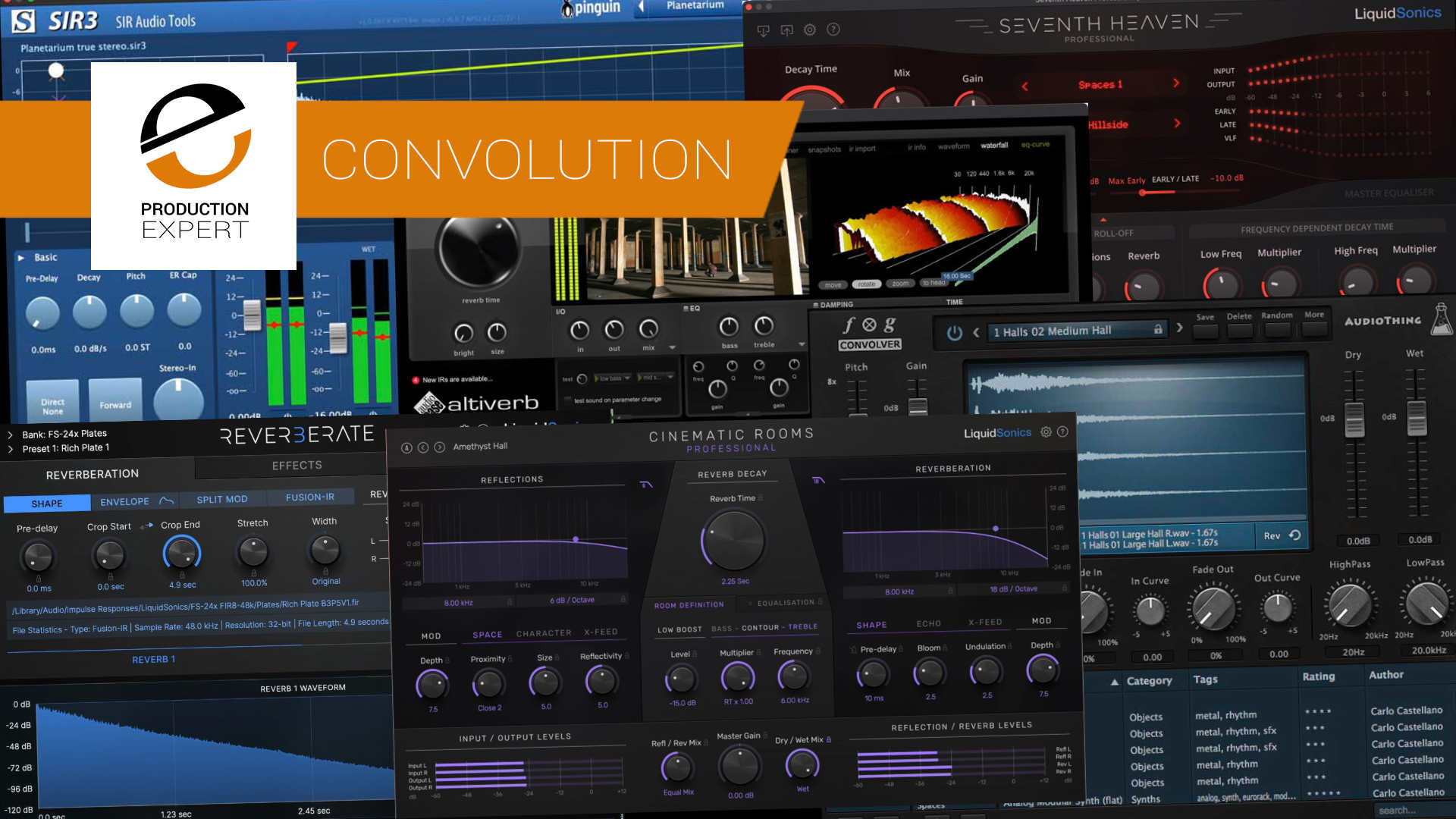
To effectively utilize free impulse responses for audio projects, one must first understand the underlying technology: convolution. Unlike algorithmic reverbs, which use delay lines and feedback loops to simulate the idea of a room, convolution uses a mathematical process to "multiply" an incoming audio signal by the recorded "impulse" of a real environment.
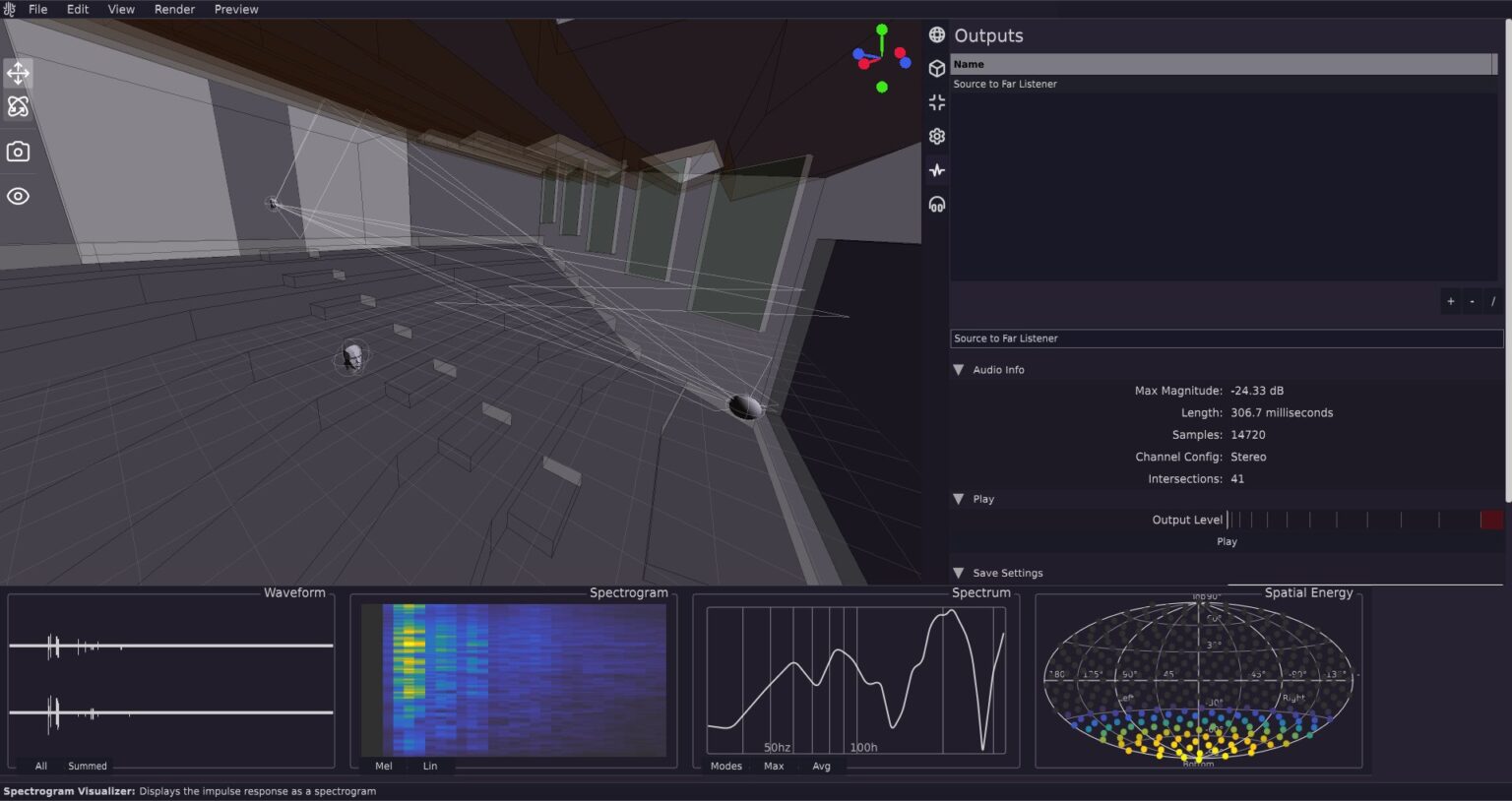
An impulse response is typically created by firing a short, sharp burst of sound—such as a starter pistol, a balloon pop, or a sine-wave sweep—into a space and recording the result. The resulting file contains all the reflections, frequency absorptions, and temporal characteristics of that space. In 2026, convolution technology has become incredibly efficient, allowing even standard laptop CPUs to run multiple instances of high-resolution IRs without significant latency.
The Physics of the Sonic Fingerprint
When you load an IR into a convolution engine, the software performs a complex calculation for every sample of your audio. It essentially asks: "If this specific piece of audio happened in that specific room, how would the room react?" This results in a level of realism that algorithmic reverbs often struggle to match, particularly regarding the density of early reflections and the complex decay of low-frequency energy.
High-Quality Sources for Free Reverb Impulse Responses
Finding the right IR can transform a "dry" bedroom recording into a cinematic masterpiece. While many premium libraries exist, several long-standing community projects and professional developers provide exceptional free resources that remain industry standards in 2026.
EchoThief: The Global Acoustic Library
One of the most significant resources for naturalistic IRs is the EchoThief project. Created by Chris Warren, this library features captures from diverse locations, ranging from glacial caves in Iceland to the stairwells of abandoned industrial complexes.
- Why it’s valuable: These are "character" IRs. They are not designed to be "pretty" in the traditional sense but to be authentic. They are perfect for film scoring and post-production where a specific, non-studio environment is required.
- Technical Spec: Most files are provided as standard 24-bit WAVs, making them compatible with almost every DAW, including Ableton Live’s Convolution Reverb and Logic Pro’s Space Designer.
The Samplicity Bricasti M7 Collection
The Bricasti M7 is widely considered the gold standard of hardware digital reverb. While the hardware unit costs thousands of dollars, Samplicity has historically offered a comprehensive set of IRs captured from this unit.
- Why it’s valuable: It provides the "expensive" sound of high-end studio hardware. The "Seventh Heaven" series and original Samplicity packs offer halls, plates, and rooms that sit perfectly in a dense musical mix.
- Best Use Case: Use these on vocal buses or orchestral woodwinds to add a sense of luxury and depth without washing out the original signal.
786K and Lexicon Captures
The Lexicon 480L and 960L are the sounds of 80s and 90s hits. Various hobbyist sites and technical forums (such as Gearspace) host community-captured IRs of these units. The "786K" collection is a notable example of high-sample-rate captures that preserve the unique "spin" and modulation characteristics of vintage Lexicon algorithms.
Essential Free Guitar Cabinet Impulse Responses
For guitarists and bassists, IRs have replaced traditional miking in many home studio workflows. A "cab IR" captures the frequency response of a specific speaker, the cabinet housing it, and the microphone used to record it.
Seacow Cabs and Experimental Tones
Seacow Cabs has remained a staple in the heavy music community through 2026, offering a massive array of free "power packs." These often include captures of Mesa Boogie, Marshall, and Orange cabinets.
- Microphone Variations: Their packs usually include different "IR mixes" featuring the classic Shure SM57, Sennheiser MD421, and Royer 121 ribbon mics.
- Phase Alignment: A critical feature of these free packs is that they are often phase-aligned, meaning you can blend two different IRs (e.g., an SM57 for bite and a 121 for body) without the signals cancelling each other out.
OwnHammer and Celestion Freebies
Professional IR developers like OwnHammer and Celestion often provide "demo" or "free" packs to showcase their high-end scanning technology.
- OwnHammer: Their free "V2" packs usually include a 4x12 cabinet that provides a balanced, "mix-ready" tone that requires very little EQ.
- Celestion: As an actual manufacturer of speakers, Celestion’s free IRs of the Vintage 30 or G12M Greenback are arguably the most historically accurate representations of those specific drivers.
Technical Specifications and Compatibility
When downloading free impulse responses, you must ensure they match your project’s technical requirements to avoid aliasing or unwanted artifacts.
| Feature | Standard Requirement | Explanation |
|---|---|---|
| File Format | .WAV or .AIFF | Standard uncompressed audio formats required by convolution engines. |
| Bit Depth | 24-bit or 32-bit float | Ensures a low noise floor, especially important for the long decay tails of large cathedrals. |
| Sample Rate | 44.1 kHz to 96 kHz | Must match your DAW session. Most modern plugins (like FabFilter Pro-R 2 or Altiverb) will auto-sample-rate convert. |
| Channels | Mono, Stereo, or True Stereo | True Stereo IRs use four channels to capture the interaction between left/right inputs and left/right outputs. |
How to Load IRs into Your Workflow
To use these files, you need a Convolution Loader. Most modern DAWs include one:
- Logic Pro: Use "Space Designer." Click the "IR Sample" name to load a custom file.
- Ableton Live: Use the "Convolution Reverb" (Suite version). Simply drag and drop your WAV file into the display area.
- FL Studio: Use "Fruity Convolver."
- Free Third-Party Options: If your DAW lacks a built-in loader, NadIR by Ignite Amps is the industry-standard free loader for guitarists, while MeldaProduction MConvolutionFFT offers a powerful free version for general reverb tasks.
Creative Uses for Impulse Responses Beyond Reverb
While reverb and guitar cabs are the primary uses, "audio projects" in 2026 often involve sound design that pushes boundaries.
Hardware Coloring and Preamps
You can find IRs of high-end analog hardware, such as Neve preamps or SSL consoles. While an IR cannot capture the dynamic distortion or saturation of analog gear (since convolution is a linear process), it can capture the "frequency tilt" and "transformer weight." Loading a Neve 1073 IR with a 0% wetness/dryness mix—using it essentially as a static filter—can add subtle analog flavor to digital tracks.
Object Impulse Responses
Creative sound designers often capture the "resonance" of objects. There are free libraries available that feature the IR of a metal trash can, a cello body, or even a PVC pipe.
- The Technique: By loading these into a convolution reverb and setting the mix to 100% wet, you can make any sound—like a synth or a vocal—sound as if it is being played inside that object. This is a powerful tool for foley work and experimental electronic music.
Troubleshooting Common IR Issues
Using free IRs is not always a "plug and play" experience. Here are common hurdles and how to resolve them:
- Excessive Latency: Convolution is CPU-intensive. If you experience lag, ensure your loader plugin is set to "Zero Latency" mode (if available), or increase your buffer size.
- Truncated Tails: Some free IRs are cut off too early to save file space. If the reverb sounds like it "snaps" off unnaturally, check if your plugin has an "Envelope" setting where you can add a slight fade-out to the tail.
- Phasing in Multi-Mic Setups: When using multiple guitar cab IRs, if the sound becomes "hollow" or "thin" when you add the second IR, they are out of phase. Use a plugin like Voxengo Sound Delay to move one IR by a few samples until the low end returns.
- Sample Rate Mismatch: Loading a 96kHz IR into a 44.1kHz project can sometimes cause the reverb to sound an octave lower or higher if the plugin doesn't have built-in resampling. Always check your plugin's manual for resampling capabilities.
Frequently Asked Questions
Can I use guitar cabinet IRs for vocals?
Yes, though it is a creative choice rather than a corrective one. Using a guitar cab IR on a vocal will apply a narrow band-pass filter effect, making the vocal sound like it is coming through a radio or an old speaker. It is a popular technique in lo-fi and indie rock.
What is the difference between "True Stereo" and "Mono-to-Stereo" IRs?
A Mono-to-Stereo IR takes a single input and creates a stereo field. A True Stereo IR captures the cross-talk and spatial nuances of how a sound on the left side of a room reaches the right ear, and vice versa. True Stereo is significantly more realistic for orchestral and bus processing but requires more CPU power.
Are free impulse responses legal to use in commercial projects?
Generally, yes. Most free IRs are distributed under Creative Commons or as "freeware" for promotional purposes. However, always check the "readme" file included with the download. Some captures of proprietary hardware might have murky legal standing, though in practice, the use of the resulting sound in a mix is virtually impossible to track or litigate.
Why does my convolution reverb sound "static"?
Because IRs are static snapshots, they lack the "modulation" (slight pitch shifting) found in algorithmic reverbs or real rooms where air moves. To fix this, many producers add a very subtle chorus plugin after the convolution reverb to introduce a sense of movement.
Do I need a high-end computer to run IRs in 2026?
While convolution used to be very taxing, most mid-range computers from the last five years can handle dozens of instances. The main bottleneck is RAM if you are using extremely long "XL" IRs (e.g., 15-second cathedral decays), but for standard room and cabinet work, modern systems are more than capable.
Final Recommendation for Producers
For those starting out, the best immediate step is to download the EchoThief library for natural spaces and the Seacow Cabs starter pack for electric guitars. These two resources provide a broad spectrum of utility that covers 90% of common production needs. As you grow, focus on "True Stereo" captures for your main mix bus to achieve the highest level of professional depth.
Image Gallery