Newport Beach Fishing Report: Recent Catch Numbers, Seasonal Trends, and Marine Policy Debates
Newport Beach remains one of Southern California's premier sportfishing hubs, offering access to productive nearshore reefs, deep ocean canyons, and pelagic migratory pathways. Recent catch numbers highlight strong runs of yellowtail,...
Newport Beach remains one of Southern California's premier sportfishing hubs, offering access to productive nearshore reefs, deep ocean canyons, and pelagic migratory pathways. Recent catch numbers highlight strong runs of yellowtail, bluefin tuna, and bottomfish, alongside evolving regulatory debates regarding rockfish depth boundaries, Marine Protected Area network evaluations, and pinniped depredation management across Orange County waters.
Contents
Newport Beach Fishing Overview: Inshore, Nearshore, and Offshore Fleet Performance
Operating out of Newport Harbor, commercial passenger fishing vessels (CPFVs) and private skiffs access some of the most varied marine habitats in the Southern California Bight. Landing returns from local operations—including Davey’s Locker and Newport Landing—reflect dynamic seasonal shifts influenced by water temperature, sea-surface salinity, and coastal upwelling events.
Inshore and Harbor Fisheries
Newport Harbor and its immediately adjacent shorelines provide stable year-round fishing for coastal gamefish. Spotted bay bass (Paralabrax maculatofasciatus) dominate the inner harbor structure, particularly around docks, bridge pilings, and eelgrass beds. Anglers targeting the outer jetty and shallow beaches report steady action on calico bass (Paralabrax clathratus), barred sand bass (Paralabrax nebulifer), and California halibut (Paralichthys californicus).
During periods of coastal warming, inshore catches expand to include California barracuda (Sphyraena argentea) and legal-sized white seabass along the kelp edges stretching toward Laguna Beach and Crystal Cove.
Nearshore Shelf and Island Waters
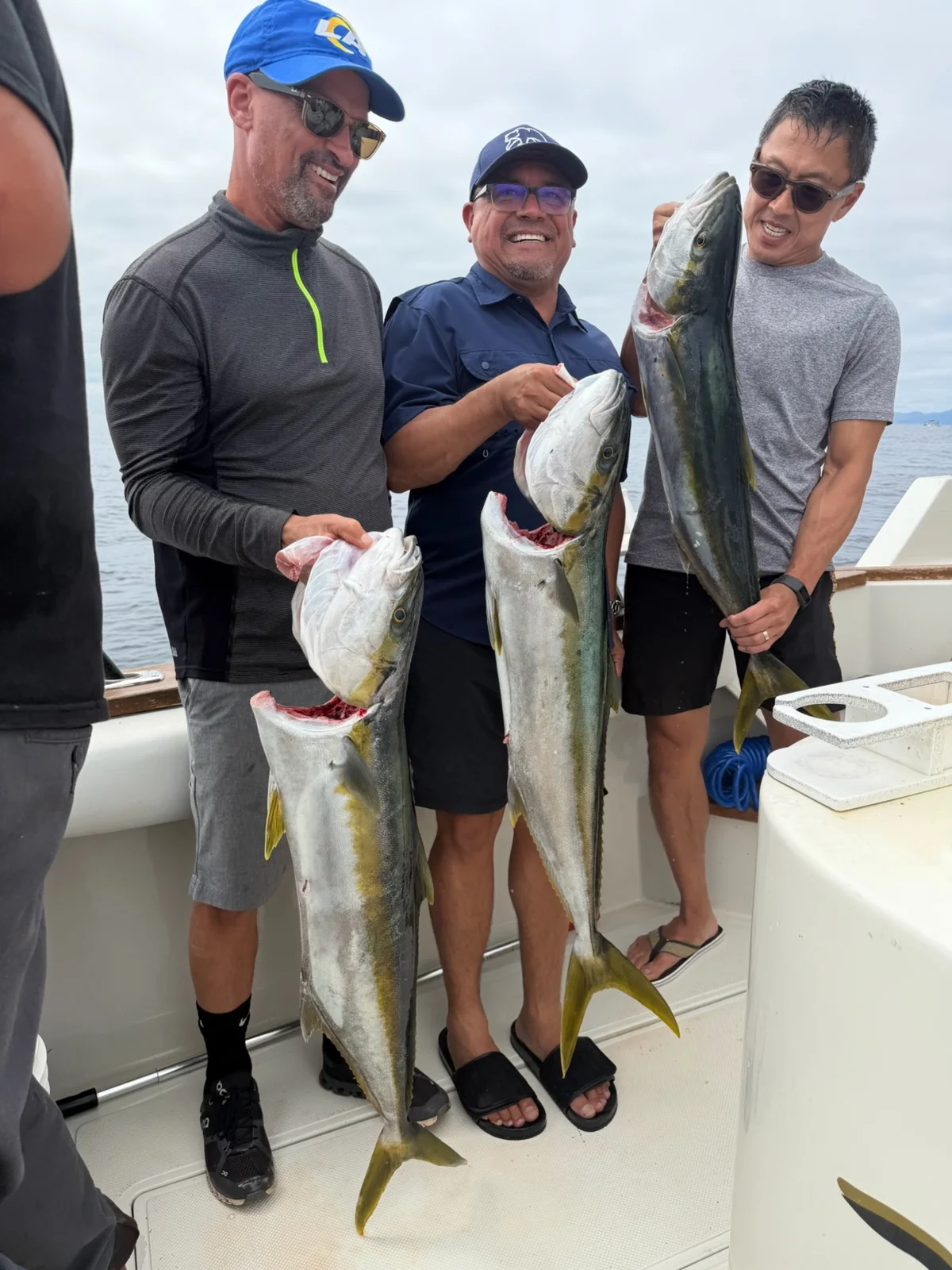
Half-day and three-quarter-day charters departing Newport Harbor primarily target the Huntington Flats, local artificial reefs, and the coastal shelf of Catalina Island. These zones yield consistent numbers of yellowtail (Seriola lalandi), especially when live Pacific mackerel or northern anchovies are available in local bait barges.
Bottom fishing along the nearshore shelf remains a high-volume activity, producing substantial returns of California sheephead (Bodicnus pulcher), lingcod (Ophiodon elongatus), and an array of rockfish species (Sebastes spp.).
Offshore Pelagic Grounds
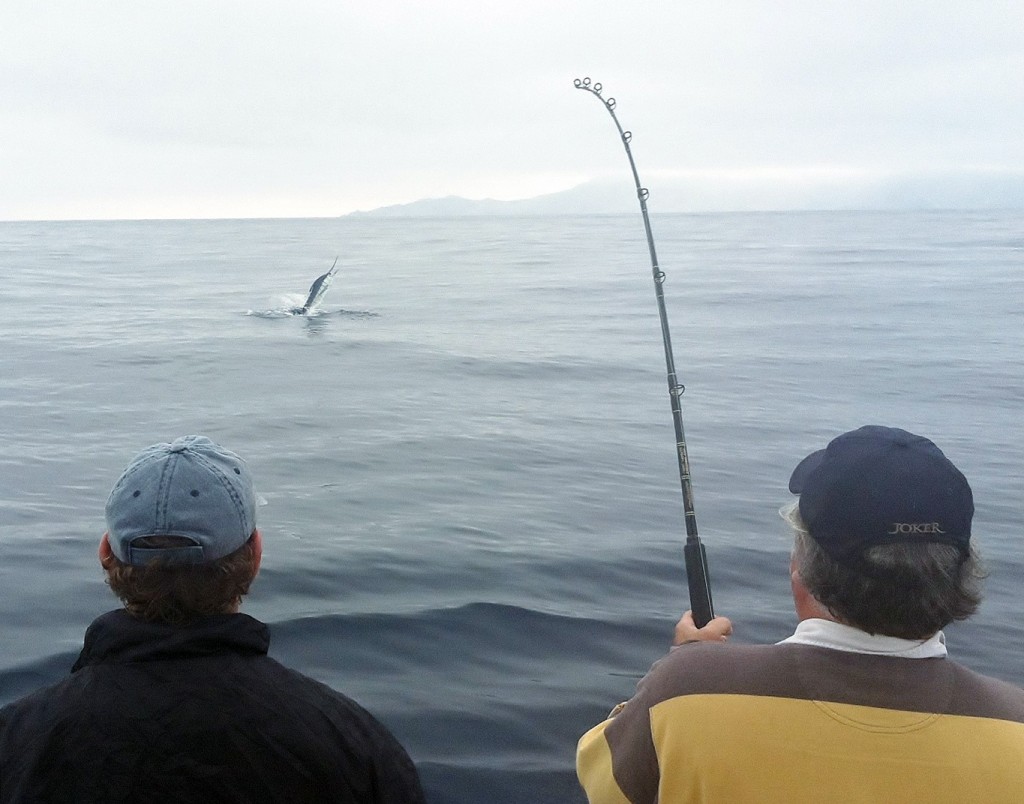
For full-day, overnight, and multi-day vessels pushing out to the 14-Mile Bank, 209 Spot, or outer banks, pelagic species dictate the seasonal effort. Bluefin tuna (Thunnus orientalis) ranging from 30-pound schooling fish to specimens exceeding 200 pounds remain a primary target for offshore anglers utilizing live bait, heavy jigs, and kite-rigged artificials. Seasonal warm-water currents occasionally bring yellowfin tuna (Thunnus albacares) and dorado (Coryphaena hippurus) within reach of Newport-based fleets.
Recent Catch Numbers and Species Performance Matrix
Catch statistics recorded by Newport Harbor landings illustrate the seasonal distribution and volume of target species. Management of these fisheries is governed by the California Department of Fish and Wildlife (CDFW) under the Ocean Sportfishing Regulations for the Southern Management Area.
| Target Species | Peak Catch Season | Daily Bag Limit (CDFW Rules) | Minimum Size Limit | Primary Gear / Technique |
|---|---|---|---|---|
| Yellowtail | Late Spring – Autumn | 10 fish (5 under 24 inches allowed) | 24 inches fork length (for 5 of 10) | Live surface bait, surface iron, deep jigging |
| Bluefin Tuna | Spring – Late Autumn | 2 fish per day | None | Night jigging, live squid/anchovy, kite fishing |
| White Seabass | Spring – Early Summer | 1 fish (Mar 15–June 15); 3 fish (rest of year) | 28 inches total length | Live squid, heavy dropper loops near kelp structures |
| Kelp Bass / Sand Bass | Late Spring – Summer | 5 fish combined limit | 14 inches total length | Leadheads with swimbait, live anchovy, hook-and-line |
| California Halibut | Spring – Autumn | 5 fish (South of Pt. Arguello) | 22 inches total length | Bounce balling, live finbait, drift fishing |
| California Sheephead | Year-Round (subject to closures) | 2 fish per day | 12 inches total length | Live crab, ghost shrimp, heavy dropper loop |
| Rockfish (Complex) | Seasonal (CDFW open months) | 10 fish total (sub-limits apply to specific species) | None (species-specific) | Bottom rigs, heavy metal jigs, multi-hook feathers |
Note: Fishery regulations, open seasons, and depth boundaries are subject to real-time emergency updates by the California Department of Fish and Wildlife and the Pacific Fishery Management Council.
Core Regulatory Debates Impacting Newport Beach Sportfishing
The marine waters off Newport Beach are central to several ongoing resource management debates involving state fisheries biologists, environmental organizations, commercial operations, and recreational angling associations.
Regional Fisheries Management Structure:
- Pacific Fishery Management Council (PFMC - Federal Waters / EEZ)
- Groundfish Depth Waypoints
- Highly Migratory Quotas
- Bycatch Protection Measures
- California Dept of Fish & Wildlife (CDFW - State Waters & Delivery)
- Marine Protected Areas (MPAs)
- Bag & Size Limit Regulations
- Barotrauma Mandates
1. Groundfish Management and Depth Boundary Shifts
The management of groundfish—specifically nearshore shelf rockfish and deepwater species—remains one of the most contentious issues facing local sportfishing fleets. The Pacific Fishery Management Council (PFMC) and CDFW periodically adjust groundfish depth constraints to prevent overfishing of sensitive species like quillback rockfish (Sebastes maliger) and copper rockfish (Sebastes caurinus).
In recent regulatory cycles, managers implemented split-season frameworks that alternate between shoreward access (in waters shallower than specified depth contours) and offshore access (in seaward waters beyond 50 or 75 fathoms), while prohibiting bottom fishing in mid-depth shelf zones during specific months.
- The Recreational Perspective: CPFV operators and sportfishing advocates argue that complex depth-waypoint rules create user confusion, increase fuel costs by forcing vessels further offshore, and compress fishing pressure into narrower spatial zones.
- The Managerial Perspective: State and federal biologists maintain that spatial closures are essential toolsets for rebuilding vulnerable nearshore rockfish stocks while still permitting anglers to harvest abundant deepwater species like bocaccio (Sebastes paucispinis) and vermilion rockfish (Sebastes miniatus).
2. Marine Protected Area (MPA) Network Evaluations
Southern California's network of Marine Protected Areas, established under the Marine Life Protection Act (MLPA), includes key coastal preserves adjacent to Newport Beach, such as the Crystal Cove State Marine Conservation Area (SMCA) and the nearby Laguna Beach State Marine Reserve (SMR).
As the state conducts ongoing decadal reviews of the MPA network, debates continue regarding the balance between conservation efficacy and recreational access:
- Access Boundaries: Local angling groups advocate for periodic re-evaluations of boundaries, proposing adaptive management models that allow limited catch-and-release fishing or rotational access in select SMCAs.
- Conservation Efficacy: Environmental researchers emphasize that no-take marine reserves serve as critical sanctuaries for large, highly fecund female fish ("BOFFF" – Big Old Fat Fecund Female fish), which disproportionately contribute to larval replenishment along non-protected reefs in Newport and Huntington Beach.
3. Pinniped Depredation and Fishery Conflicts
Interactions between sportfishing vessels and California sea lions (Zalophus californianus) have reached unprecedented levels along the Newport coastline and around local bait barges. Sea lions frequently strip hooked catches (particularly yellowtail, white seabass, and salmon grouper) from lines before fish can be boated—a phenomenon known as depredation.
- Economic and Survival Impacts: Depredation results in lost tackle, lost catch, and unrecorded mortality when damaged fish break free.
- Legal Constraints: California sea lions remain protected under the federal Marine Mammal Protection Act (MMPA). While non-lethal deterrents (such as acoustic acoustic hazing or boat maneuvering techniques) are permitted, anglers face strict federal limitations on non-lethal deterrent methods, leading to persistent friction between recreational boaters and wildlife management authorities.
4. Bass Stock Conservation and Minimum Length Limits
The management of kelp bass and barred sand bass underwent structural reforms following scientific stock assessments that demonstrated historic population declines. The increase of minimum size limits to 14 inches and the reduction of the combined bag limit to 5 fish aimed to allow a greater percentage of juvenile bass to reach reproductive maturity.
While recent catch reports indicate a positive trend in average fish size throughout the Huntington Flats and Newport structures, discussions persist regarding whether further management measures—such as seasonal spawning closures on sand bass aggregation mounds—are necessary to protect spawning aggregations during summer months.
Angler Compliance: Licensing, Ethics, and Barotrauma Mitigation
Anglers launching from Newport Harbor or booking trips on local charters must maintain compliance with California state laws and environmental handling standards.
Licensing Requirements
To legally target ocean fish species off Newport Beach, anglers aged 16 and older must possess a valid California Sportfishing License.
- Ocean Enhancement Validation: Required for sportfishing in ocean waters south of Point Arguello (Santa Barbara County).
- Report Cards: Mandatory for specific fisheries, such as spiny lobster (Panulirus interruptus), requiring accurate recording of location, gear, and harvest numbers.
Mitigation of Barotrauma
When bringing groundfish up from depths exceeding 60 feet, rapid pressure changes cause the fish's swim bladder to expand, leading to barotrauma symptoms such as protruding eyes, inflated abdomens, and stomach eversion.
Barotrauma Release Sequence:
- Catch & Identification of Deepwater Groundfish
- Attachment of Weighted Descending Device (e.g., SeaQualizer)
- Controlled Descent to Depth of Capture (or >60 ft)
- Automatic Pressure Release & Re-compression of Swim Bladder
Under CDFW regulations, sportfishing vessels targeting rockfish are strongly encouraged—and on commercial vessels, required—to carry operational descending devices (such as weighted clamps, pressure-actuated release clips, or inverted barbless hooks). Recompressing the fish at its depth of capture dramatically increases post-release survival rates, supporting sustainable fishery practices.
Frequently Asked Questions
What licenses and validations are required to fish out of Newport Beach?
Anglers 16 years of age and older must hold a valid California Sportfishing License along with a Southern California Ocean Enhancement Validation. If targeting specific species like spiny lobster, a dedicated report card is also required prior to fishing.
How do seasonal depth restrictions affect bottom fishing in Newport Beach?
The California Department of Fish and Wildlife and PFMC establish variable depth restrictions throughout the year to protect specific shelf rockfish stocks. These boundaries restrict groundfish angling to specific depth zones (e.g., shallower than 20 fathoms or deeper than 50/75 fathoms) depending on the calendar month and management sub-region.
Are Marine Protected Areas near Newport Beach completely closed to fishing?
It depends on the specific designation. State Marine Reserves (SMRs), such as the Laguna Beach SMR, are strict no-take zones where all fishing is prohibited. State Marine Conservation Areas (SMCsAs), such as Crystal Cove SMCA, may allow limited recreational take of specific species (such as pelagic finfish or lobster) while prohibiting the harvest of bottomfish. Always consult official CDFW marine reserve maps before deploying gear.
What are the size and bag limits for kelp bass and sand bass in Newport Beach?
Kelp bass (calico bass) and barred sand bass have a minimum size limit of 14 inches total length. The combined bag limit for both species is 5 fish per angler per day.
Why are sea lion interactions such a persistent problem for Newport charters?
California sea lion populations have stabilized near carrying capacity along the Pacific coast. Marine mammals quickly habituate to vessel engine noises and live bait activity, learning to intercept hooked gamefish. Federal protections under the Marine Mammal Protection Act strictly limit the methods anglers can use to deter these animals.
Practical Recommendations for Anglers
- Verify Real-Time Regulations: Before departing Newport Harbor, check the official California Department of Fish and Wildlife Ocean Sportfishing page for updated depth boundaries, emergency in-season closures, and species-specific bag limits.
- Equip Barotrauma Release Gear: Keep a pressure-release descending device rigged on a dedicated heavy rod when fishing in waters deeper than 60 feet to ensure non-retained groundfish are safely returned to depth.
- Monitor Water Temperatures and Offshore Reports: Track sea-surface temperature (SST) charts and local landing updates from Davey's Locker or Newport Landing to gear up appropriately for pelagic runs (bluefin/yellowtail) or nearshore reef trips.
- Respect Marine Boundaries: Use GPS chartplotters with integrated MPA layer overlays to ensure drift paths do not drift into closed zones such as the Crystal Cove SMCA or Laguna Beach SMR.
Image Gallery