Why Bacterial DNA is Circular: Biological Advantages and Functional Significance
Bacterial DNA is typically organized into a single, closed-loop circular chromosome to maximize replication efficiency and genetic stability. Unlike the linear chromosomes found in humans, this circular structure eliminates the "end-re...
Bacterial DNA is typically organized into a single, closed-loop circular chromosome to maximize replication efficiency and genetic stability. Unlike the linear chromosomes found in humans, this circular structure eliminates the "end-replication problem," protects the genome from enzymatic degradation, and allows for rapid cell division—a critical survival trait for prokaryotic organisms in diverse environments.
Contents
The Architectural Blueprint of the Bacterial Genome
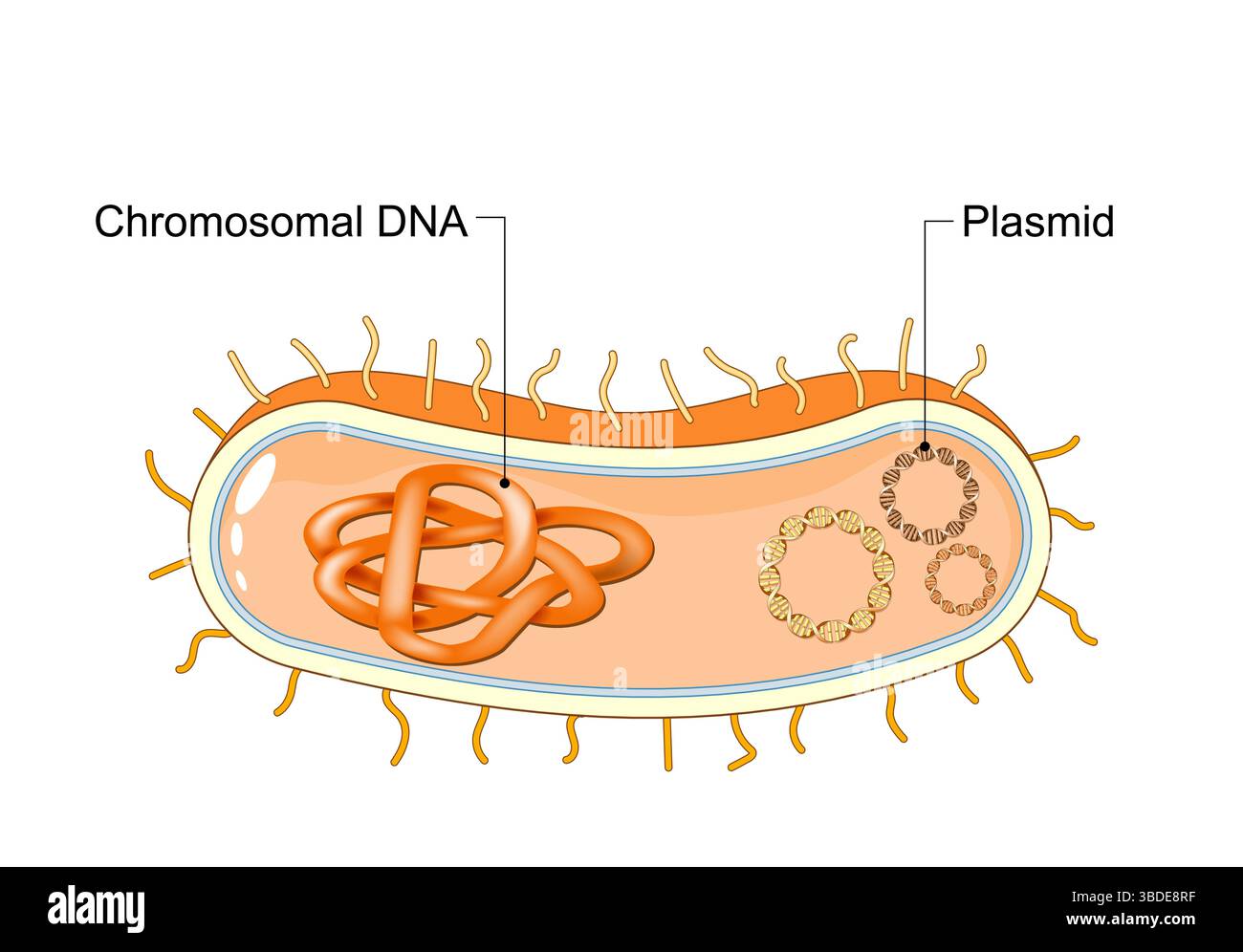
In the world of microbiology, the organization of genetic material is a fundamental differentiator between domains of life. While eukaryotes (such as plants, animals, and fungi) package their DNA into multiple linear strands within a membrane-bound nucleus, bacteria (prokaryotes) generally possess a single circular chromosome located in an irregularly shaped region called the nucleoid.
This circularity is not merely a geometric curiosity; it is a highly evolved structural solution to the challenges of storing, replicating, and protecting genetic information in a single-celled format. In a circular molecule, the 5' and 3' ends of the DNA strands are covalently joined, creating a continuous loop. This lack of free ends is the defining characteristic that dictates almost every aspect of bacterial physiology, from how they reproduce to how they evolve antibiotic resistance.
Understanding why bacteria maintain this shape requires looking at the molecular mechanics of DNA replication and the evolutionary pressures that favor speed and durability. As we evaluate these structures in 2026, our mastery of circular DNA has become the cornerstone of modern synthetic biology and metabolic engineering.
Solving the End-Replication Problem
One of the primary biological drivers for circular DNA is the avoidance of the end-replication problem. In linear DNA molecules, the enzymes responsible for copying DNA (DNA polymerases) require a short "primer" to begin work. When the replication machinery reaches the very end of a linear chromosome, there is no room to place a primer for the final segment of the lagging strand. Consequently, with every round of replication, a small piece of DNA at the tips is lost.
Eukaryotes solve this by having telomeres—long stretches of non-coding "junk" DNA—and the enzyme telomerase to replenish them. However, this is a complex and energy-intensive system.
How Circularity Sidesteps the Issue
Bacteria bypass this complexity entirely. Because a circle has no "end," the replication machinery eventually travels all the way around and meets its starting point.
- Continuous Template: The DNA polymerase can complete the circle without leaving an unreplicated gap.
- Resource Efficiency: Bacteria do not need to invest energy in synthesizing telomeres or maintaining telomerase enzymes.
- Genomic Integrity: Every gene, regardless of its position on the chromosome, is replicated with equal fidelity, ensuring that essential genes are not "nibbled away" over successive generations.
Protection Against Enzymatic Degradation
The cellular environment is rife with enzymes called exonucleases. These enzymes are part of the cell's immune system and metabolic cleanup crew; their primary job is to latch onto the free ends of DNA molecules and "chew" them up, breaking them down into individual nucleotides.
In a bacterial cell, a linear DNA fragment is often a sign of danger—it could be a fragment of a viral invader or a broken, damaged piece of the host's own genome. By keeping their primary genome in a closed circle, bacteria effectively "hide" the ends of their DNA from these exonucleases. This physical configuration provides an inherent layer of stability that allows the genome to remain intact even in harsh environmental conditions.
Supercoiling and Spatial Packaging
A bacterial chromosome is massive compared to the cell that houses it. For instance, the DNA of Escherichia coli is about 1.6 millimeters long—roughly 1,000 times longer than the cell itself. To fit this into the nucleoid, the DNA must be folded and condensed.
Circular DNA is uniquely suited for supercoiling. Imagine a rubber band: if you anchor one end and twist the other, the band begins to coil upon itself, becoming much tighter and smaller. Bacteria use enzymes called topoisomerases (specifically DNA gyrase) to introduce "negative supercoils" into the circular DNA.
The Benefits of Negative Supercoiling
- Compaction: It allows the massive loop to be packed into a tiny volume without tangling.
- Strand Separation: Negative supercoiling creates a form of torsional tension that makes it easier for the DNA double helix to "unzip." This is vital for transcription (reading genes) and replication (copying the genome), as the cell doesn't have to spend as much energy breaking the hydrogen bonds between bases.
- Regulation: The degree of supercoiling can change based on the cell's environment (like temperature or acidity), acting as a global regulator of gene expression.
The Mechanics of Circular Replication: The Theta Structure
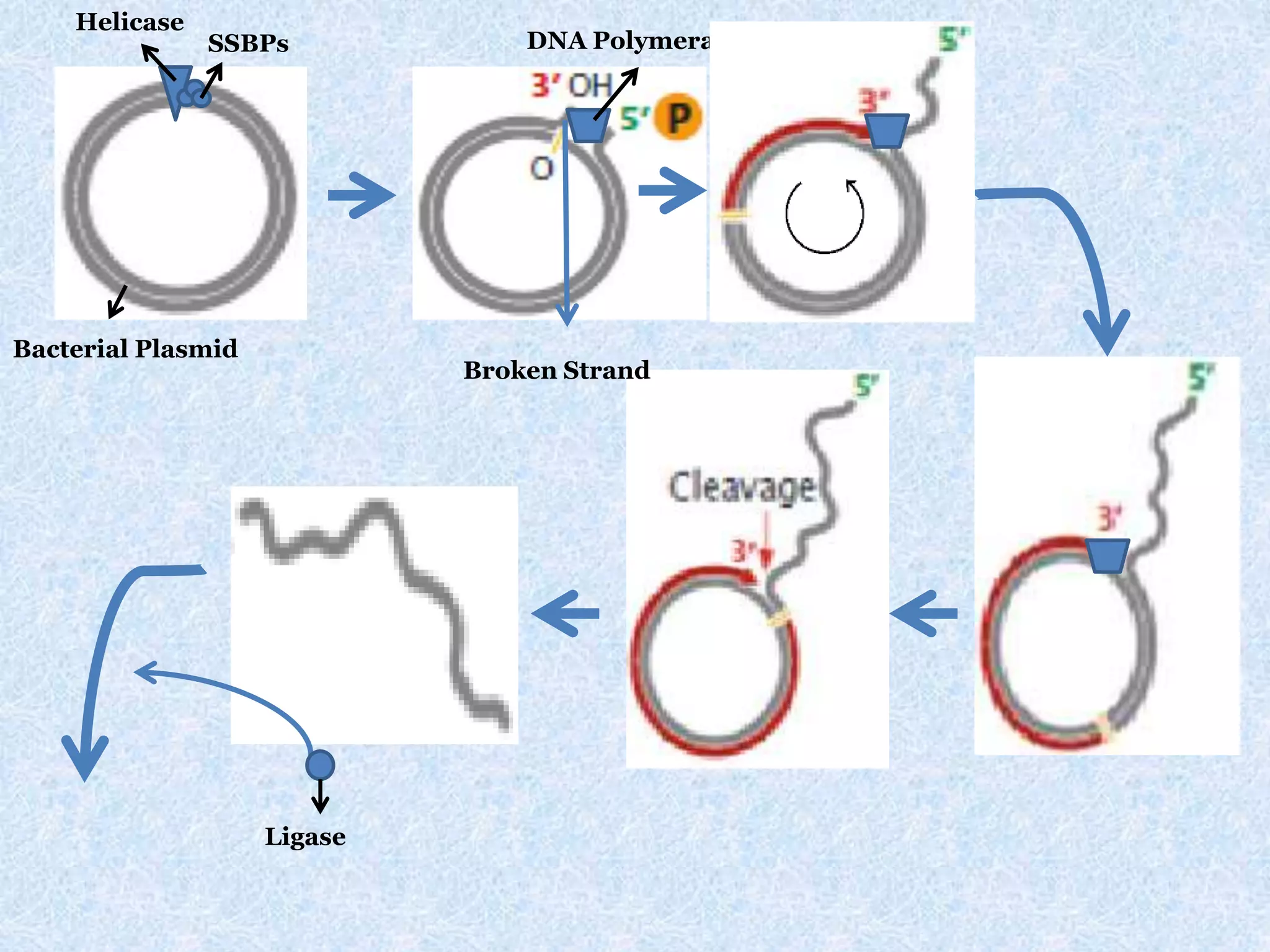
The process by which a circular chromosome replicates is distinct and highly efficient. It usually begins at a single, specific location called the Origin of Replication (oriC).
- Initiation: Proteins bind to the oriC, causing the two strands of the circle to peel apart.
- Bidirectional Progress: Two replication "forks" move in opposite directions around the circle. This creates a shape that looks like the Greek letter theta (θ), which is why it is often called Theta Replication.
- Termination: The two forks eventually meet at a region called the terminus (ter).
- Decatenation: At the end of the process, the result is two interlocked circles (like links in a chain). An enzyme called Topoisomerase IV performs a "molecular magic trick," cutting one circle, passing the other through it, and resealing the cut. This process, known as decatenation, is essential for the two daughter cells to separate during cell division.
Plasmids: The "Mobile" Circular DNA
In addition to the main chromosome, many bacteria carry plasmids. These are small, extra-chromosomal circles of DNA. While the main chromosome contains the "operating system" and essential genes for life, plasmids contain "specialized apps."
Plasmids frequently carry genes for:
- Antibiotic Resistance: Allowing the bacteria to survive drugs like penicillin or carbapenems.
- Virulence Factors: Enabling the bacteria to cause disease in a host.
- Metabolic Versatility: Allowing the bacteria to break down unusual chemicals, such as oil or plastic.
Because they are circular, plasmids are incredibly stable and can be easily transferred between different bacteria through a process called conjugation (horizontal gene transfer). This circular nature ensures that when a bacterium "shares" its resistance genes with a neighbor, the genetic package arrives intact and ready to function.
Comparing Genome Structures
The following table highlights the key functional differences between the circular DNA found in most bacteria and the linear DNA found in eukaryotes.
| Feature | Bacterial DNA (Circular) | Eukaryotic DNA (Linear) |
|---|---|---|
| End-Replication Problem | Naturally avoided; no ends to lose. | Requires telomeres and telomerase. |
| Stability | Highly resistant to exonucleases. | Vulnerable at ends; requires protective caps. |
| Replication Origins | Typically a single origin (oriC). | Multiple origins per chromosome. |
| Packaging Method | Supercoiling via DNA gyrase. | Wrapping around histone proteins. |
| Separation | Requires decatenation (unlinking). | Chromosome segregation via mitosis. |
| Gene Density | Very high; very little "junk" DNA. | Lower; contains many introns and non-coding regions. |
Exceptions to the Rule: Linear Bacterial DNA
While the vast majority of bacteria utilize circular DNA, biology rarely lacks exceptions. Some bacterial species have evolved to use linear chromosomes. The most notable examples include:
- Borrelia burgdorferi: The causative agent of Lyme disease, which possesses a linear chromosome and numerous linear plasmids.
- Streptomyces: A genus of soil bacteria famous for producing most of our clinical antibiotics.
These organisms have developed specialized proteins that bind to the ends of their linear DNA to protect them from degradation, mimicking the function of a circular structure or eukaryotic telomeres. The existence of these exceptions proves that while circularity is the "gold standard" for prokaryotic efficiency, nature has multiple ways to solve the problem of genomic stability.
What it Means for Science and Medicine in 2026
Our understanding of circular DNA is no longer just theoretical; it is a vital tool in medical and industrial biotechnology.
1. Antibiotic Development
Since bacteria rely on specific enzymes like DNA gyrase to manage their circular DNA, these enzymes are perfect targets for antibiotics. Drugs like fluoroquinolones work by inhibiting these enzymes, causing the bacterial DNA to become hopelessly tangled or fragmented, leading to cell death. In 2026, researchers are developing "next-gen" gyrase inhibitors to combat multi-drug resistant "superbugs."
2. Genetic Engineering (CRISPR and Beyond)
Plasmids are the workhorses of genetic engineering. By inserting a human gene (like the code for insulin) into a circular plasmid and "feeding" it to E. coli, we can turn bacteria into tiny factories. The stability of the circular plasmid ensures that the factory keeps running efficiently.
3. Forensic Microbiology
Because circular DNA is so much more durable than linear DNA, it often survives longer in environmental samples. This allows scientists to track the spread of specific bacterial strains through soil, water, or hospitals by sequencing the circular genomic "fingerprints" left behind.
Summary and Next Steps
The circularity of bacterial DNA is a masterclass in biological optimization. It provides a robust, end-free template that simplifies replication, protects against environmental threats, and allows for the extreme compaction necessary for life at a microscopic scale. While humans rely on the complexity of linear chromosomes to manage trillions of cells, the humble bacterium uses its simple circle to remain the most versatile and resilient form of life on Earth.
For those interested in exploring this topic further, the next logical step is to investigate Horizontal Gene Transfer, which explains how these circular plasmids move between species, or to study DNA Topoisomerases to understand the mechanical forces that keep DNA from tangling.
Frequently Asked Questions
Can a bacterium survive if its circular DNA is broken? A break in the circular chromosome is usually lethal if not repaired immediately. Because the DNA is under torsional tension (supercoiled), a break causes the loop to "unravel," disrupting gene expression and preventing replication. Bacteria have repair mechanisms like RecA to fix these breaks, but extensive damage will lead to cell death.
Do all prokaryotes have circular DNA? Most do, including both Bacteria and Archaea. However, as mentioned, a few specific genera like Borrelia and Streptomyces have linear chromosomes. Even in these cases, they often use clever biochemical tricks to make the ends of their linear DNA "behave" like a circle.
How does circular DNA affect the speed of evolution? Circularity facilitates the use of plasmids, which are the primary vehicles for horizontal gene transfer. This allows bacteria to evolve much faster than eukaryotes in some respects, as they can "swap" beneficial traits like antibiotic resistance or heat tolerance across different species almost instantly.
Is human mitochondrial DNA circular because of bacteria? Yes. According to the endosymbiotic theory, mitochondria were once free-living bacteria that were engulfed by ancestral eukaryotic cells. This is why mitochondria still have their own small, circular DNA molecules, which replicate much like bacterial chromosomes.
Why don't humans have circular DNA? Linear chromosomes allow for much larger genomes and more complex regulation. In a large genome, a single circle would become too massive and prone to breaking or tangling. Linear DNA also makes meiosis (the process of making sperm and eggs) and genetic recombination much easier to manage in complex multicellular organisms.
Image Gallery