Cyber Security Maturity Assessment for Modern Servers
A cyber security maturity assessment for modern servers is a systematic evaluation process used to measure an organization’s server infrastructure security posture against established frameworks, identifying vulnerabilities, configurat...
A cyber security maturity assessment for modern servers is a systematic evaluation process used to measure an organization’s server infrastructure security posture against established frameworks, identifying vulnerabilities, configuration drift, and operational gaps to prioritize remediation and risk mitigation.
Contents
Modern server environments present an exponentially more complex attack surface than traditional on-premises data centers did a decade ago. Distributed cloud instances, ephemeral containerized workloads, microservices architectures, and hybrid infrastructure models mean that organizations no longer control a neat perimeter. Attackers routinely target server operating systems, container runtimes, API endpoints, and identity management planes to achieve lateral movement and data exfiltration. Consequently, organizations require a structured way to measure their defensive posture. Conducting a cyber security maturity assessment for modern servers provides the operational visibility necessary to move away from reactive firefighting and toward a predictable, measurable security posture.
Understanding Server Security Maturity Frameworks
Evaluating server security requires a structured reference model. Rather than relying on arbitrary checklists, mature organizations anchor their evaluations in recognized frameworks such as the Center for Internet Security (CIS) Benchmarks, the National Institute of Standards and Technology (NIST) Special Publication 800-53 or Cybersecurity Framework (CSF), and the Cloud Security Alliance (CSA) guidance. These frameworks offer tiered maturity levels that help security teams understand where their infrastructure stands on a spectrum from ad-hoc security to optimized automation.
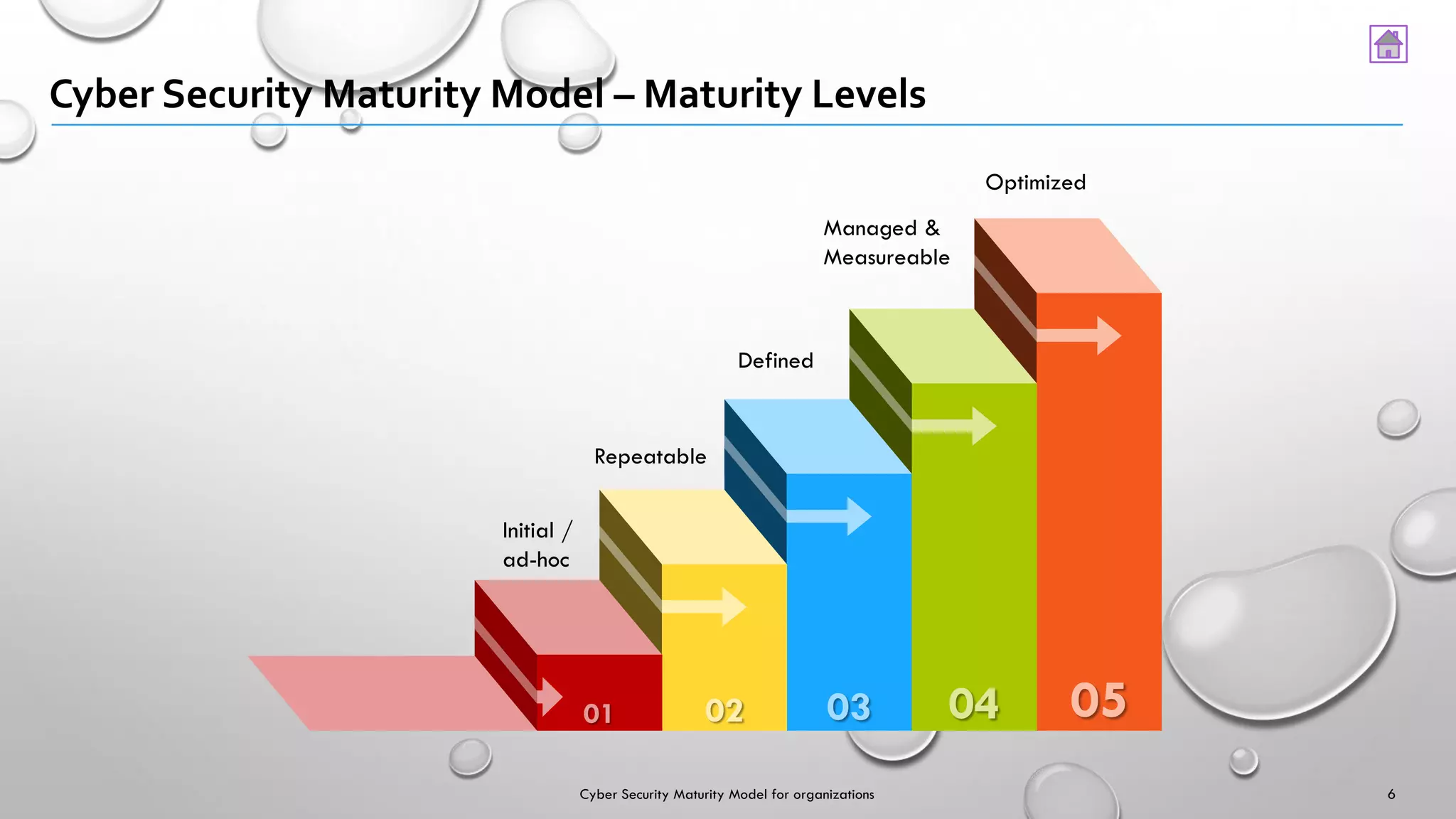
Maturity models typically span five distinct phases. At Level 1 (Initial), server hardening is ad-hoc, manual, and dependent on individual system administrator habits. Level 2 (Managed) introduces basic repeatability, where patching policies and standard operating procedures exist but are enforced inconsistently. Level 3 (Defined) establishes organization-wide standards with centralized documentation and mandatory baseline configurations. Level 4 (Quantitatively Managed) brings metrics into play, allowing security teams to measure vulnerability remediation velocity and configuration drift rates. Finally, Level 5 (Optimized) represents continuous adaptation, where automated remediation, threat intelligence feeds, and automated compliance checking run continuously without heavy human intervention.
| Maturity Level | Characteristics in Modern Server Environments |
|---|---|
| Level 1: Initial | Manual patching, ad-hoc hardening, zero visibility. |
| Level 2: Managed | Basic policies exist; enforcement is inconsistent. |
| Level 3: Defined | Standardized baselines, documented configs, oversight. |
| Level 4: Quantitatively Managed | Metrics-driven remediation, drift tracking, SLAs. |
| Level 5: Optimized | Automated remediation, continuous compliance, AI-driven. |
Core Pillars of Modern Server Security
A thorough maturity assessment cannot focus solely on operating system patches. Modern servers operate within complex software stacks, requiring evaluators to audit multiple interconnected technical pillars.
Operating System and Kernel Hardening
The foundation of server security lies within the underlying OS kernel and base image configuration. Assessors evaluate how disabled services, restricted root access, and kernel-level parameters are managed. Modern Linux and Windows servers must run stripped-down images where unnecessary packages, compilation tools, and legacy network protocols are completely removed. Evaluations check whether systems use secure boot mechanisms, disk encryption at rest via tools like LUKS or BitLocker, and mandatory access control frameworks such as Security-Enhanced Linux (SELinux) or AppArmor.
Identity, Credential, and Access Management (IAM)
Servers are frequently compromised through stolen administrative credentials or misconfigured service accounts. Assessments examine how human users and machine identities access servers. Key evaluation criteria include the mandatory enforcement of phishing-resistant multi-factor authentication (MFA) for all interactive shell sessions, the elimination of static passwords in favor of short-lived SSH keys or certificate-based authentication, and the strict auditing of sudoers files and local administrative groups. Furthermore, the assessment looks closely at how service accounts interact with the operating system, ensuring principle-of-least-privilege enforcement.
Network Segmentation and Exposure Control
Modern servers frequently expose ports to internal VPCs, public internet gateways, and service meshes. A maturity assessment inspects host-based firewalls (such as nftables, iptables, or Windows Firewall) alongside cloud security groups. Evaluators verify that administrative ports like SSH (port 22) and RDP (port 3389) are never exposed directly to the public internet without a zero-trust network access (ZTNA) gateway or a bastion host with session recording. Inbound and outbound traffic rules are scrutinized to prevent lateral movement if a single server node is compromised.
Step-by-Step Methodology for Conducting the Assessment
Executing a rigorous server security assessment requires a deliberate sequence of discovery, analysis, validation, and reporting. Skipping preliminary phases frequently leads to incomplete asset inventories and flawed remediation priorities.
Phase 1: Automated Asset Discovery and Inventory
An organization cannot secure servers it does not know about. Shadow IT, forgotten staging environments, and orphaned cloud instances represent primary vectors for compromise. The assessment must begin with comprehensive network and cloud API scans to build an authoritative inventory of all physical servers, virtual machines, container hosts, and serverless compute nodes. This phase identifies OS versions, active listening ports, installed software packages, and assigned ownership tags.
Phase 2: Configuration Baseline Auditing
Once the inventory is established, automated auditing tools compare actual server configurations against hardened industry standards. Tools like OpenSCAP, Chef InSpec, or commercial posture management platforms scan server filesystems, registry settings, and system parameters. This analysis highlights configuration drift—instances where servers deviate from the approved baseline due to manual hotfixes or administrative shortcuts.
Phase 3: Vulnerability and Dependency Scanning
Infrastructure assessment must go beyond OS packages to include runtime dependencies, installed libraries, and container image layers. Authenticated vulnerability scanners query the local package manager database and application binaries to identify missing security updates, known Common Vulnerabilities and Exposures (CVEs), and deprecated cryptographic libraries.
Phase 4: Threat Simulation and Log Review
To test detection and response capabilities, mature organizations complement configuration audits with targeted penetration testing or tabletop exercises. Evaluators analyze the telemetry generated by Endpoint Detection and Response (EDR) agents, Security Information and Event Management (SIEM) platforms, and centralized logging pipelines to verify whether malicious actions on modern servers trigger immediate alerts and automated containment plays.
Common Pitfalls and Operational Challenges
Organizations frequently encounter recurring obstacles when attempting to elevate their server security maturity. Recognizing these challenges helps prevent wasted effort and misallocated resources.
- Treating Compliance as Security: Passing an annual compliance audit does not equate to server resilience. Checkbox security often leaves organizations blind to novel exploit vectors or zero-day vulnerabilities that bypass standard rulesets.
- Neglecting Non-Production Environments: Development, staging, and test servers often harbor weaker security controls, fewer monitoring agents, and overly permissive firewall rules. Attackers routinely compromise these auxiliary servers to pivot into high-value production clusters.
- Alert Fatigue and Poor Remediation Velocity: Generating thousands of vulnerability findings without a clear risk-prioritization matrix overwhelms system administrators. When every alert is treated as critical, nothing gets fixed efficiently.
- Ignoring Container and Microservice Boundaries: Treating containers like traditional virtual machines hides critical security gaps. Assessments must evaluate container escape risks, insecure image registries, and improper namespace isolation.
Remediation, Tooling, and Continuous Improvement
A maturity assessment holds value only if its findings drive actionable remediation and long-term architectural improvements. Modern server environments require infrastructure-as-code (IaC) and configuration management tools—such as Terraform, Ansible, Puppet, or SaltStack—to enforce baseline security programmatically. When a server drifts from its approved state or a new vulnerability is discovered, remediation should occur at the code or template level rather than via manual shell intervention.
Organizations should establish clear Service Level Agreements (SLAs) for vulnerability patching based on severity scores. Critical vulnerabilities affecting internet-facing modern servers demand remediation within hours, while low-severity configuration findings can be scheduled during regular maintenance windows. By integrating vulnerability management tools directly into CI/CD pipelines, security teams ensure that insecure server images never reach production environments in the first place.
Frequently Asked Questions
How often should a server security maturity assessment be conducted?
Full formal assessments should occur annually or immediately following major architectural shifts, such as a migration to a new cloud provider or a significant merger. However, automated configuration audits and vulnerability scans should run continuously or at least weekly to catch drift and newly disclosed CVEs.
What is the difference between a vulnerability scan and a maturity assessment?
A vulnerability scan identifies specific software flaws and missing patches on a given date. A maturity assessment evaluates the broader people, processes, and technical controls an organization uses to discover, remediate, and prevent those vulnerabilities over time.
How do modern containerized servers impact security maturity?
Containers share the host operating system kernel and introduce unique risks such as shared namespace vulnerabilities and untrusted base images. Maturity assessments for containerized environments must evaluate container runtime security, image provenance scanning, and orchestration platform permissions (such as Kubernetes RBAC).
Who should be involved in executing a server security maturity assessment?
Effective assessments require cross-functional collaboration. Cloud architects, system administrators, security engineers, and compliance officers must contribute to ensure technical accuracy, operational feasibility, and alignment with business risk tolerance.
Next Actions for Security Leaders
To begin improving server security maturity today, infrastructure and security leaders should first establish an immutable, comprehensive inventory of all active server assets across multi-cloud and on-premises environments. Next, select a recognized baseline standard—such as CIS Benchmarks—and run an automated audit against a representative sample of production servers. Review the resulting configuration drift and vulnerability metrics to build a prioritized remediation roadmap, shifting your organization away from reactive patching and toward continuous infrastructure assurance.
Image Gallery