The Wasserman Family Legacy: History, Key Figures, and Cultural Impact
Casey Wasserman’s family background connects Hollywood royalty with modern global sports leadership. As the grandson of legendary Music Corporation of America (MCA) chief Lew Wasserman, Casey carries forward a multigenerational legacy...
Casey Wasserman’s family background connects Hollywood royalty with modern global sports leadership. As the grandson of legendary Music Corporation of America (MCA) chief Lew Wasserman, Casey carries forward a multigenerational legacy defined by talent representation, media control, and civic philanthropy. Today, that influence continues through the Wasserman Foundation, his agency Wasserman, and his presidency of the Los Angeles 2028 Olympic and Paralympic Games.
Contents
The Roots of a Hollywood Dynasty: Lew and Edie Wasserman
To understand Casey Wasserman's place in American media and sports management, one must examine the foundation laid by his maternal grandparents, Lew Wasserman (1913–2002) and Edith "Edie" Beckerman Wasserman (1916–2011).
Lew Wasserman was widely regarded as the most powerful executive in 20th-century Hollywood. Rising through the ranks of the Music Corporation of America under founder Jules Stein, Lew took over as president of MCA in 1946. Over the next five decades, he fundamentally reshaped the business mechanics of the entertainment industry.
- Jules Stein (MCA Founder)
- Lew Wasserman (MCA Mogul, 1913–2002) married Edith "Edie" Beckerman (Philanthropist, 1916–2011)
- Lynne Wasserman (Attorney / Philanthropist) married Jack Myers (Divorced)
- Casey Wasserman (Born Casey Myers, 1974) m. Laura Ziffren (div. 2024)
- Stella Wasserman
- Emmett Wasserman
- Carol Ann Wasserman (Philanthropist)
- Casey Wasserman (Born Casey Myers, 1974) m. Laura Ziffren (div. 2024)
- Lynne Wasserman (Attorney / Philanthropist) married Jack Myers (Divorced)
- Lew Wasserman (MCA Mogul, 1913–2002) married Edith "Edie" Beckerman (Philanthropist, 1916–2011)
Lew Wasserman's Industry Innovations
- The Death of the Studio Contract System: Lew pioneered the strategy of packaging talent—writers, directors, and stars—as a single bundle to studios, shifting power away from traditional studio heads and into the hands of talent agencies.
- Profit Participation Deals: In 1950, Lew negotiated a groundbreaking deal for actor Jimmy Stewart for the film Winchester '73. Instead of a standard flat fee, Stewart received a percentage of the film's net profits. This established the modern gross-profit participation model used by top-tier talent today.
- Acquisition of Universal Pictures: Under Lew's direction, MCA acquired Universal Pictures in 1959 and the Universal Studios lot in 1962. MCA evolved from a talent agency into a consolidated media conglomerate operating across television, film, and recorded music.
- The Blockbuster Film Model: Working alongside young directors such as Steven Spielberg, Lew backed Jaws (1975), establishing the wide-saturation release model and summer blockbuster template that continues to drive theatrical distribution strategy.
Alongside Lew, Edie Wasserman established herself as a formidable force in Los Angeles civic life. Often described as the matriarch of Hollywood royalty, she managed the family's extensive political and social networks, hosting U.S. presidents, business leaders, and cultural icons at their Beverly Hills estate. Together, Lew and Edie cultivated deep political alliances, particularly within the Democratic Party, serving as advisers and major donors to presidents ranging from Lyndon B. Johnson to Bill Clinton.
Parentage and Early Life: From Casey Myers to Casey Wasserman
Casey Wasserman was born Casey Myers on September 22, 1974, in Los Angeles, California. He is the son of Lynne Wasserman and Jack Myers.
Lynne Wasserman
Lynne Wasserman, Lew and Edie’s daughter, established her own career in law and public service. An attorney by training, she has devoted much of her professional life to philanthropic governance and civic initiatives. She has served as a trustee for major educational and cultural institutions across California, including the California State University system and the Wasserman Foundation.
The Decision to Change His Surname
Casey’s parents divorced when he was young. Raised primarily under the guidance of his mother and his maternal grandparents, Casey formed an exceptionally close relationship with Lew Wasserman. Lew served not only as a grandfather but as a primary mentor in business, negotiations, and civic responsibility.
As a young adult, Casey made the decision to legally change his surname from Myers to Wasserman. This step was taken to honor his grandfather's legacy and signal his intention to carry forward the family’s business and philanthropic commitments in Southern California.
Casey attended Harvard-Westlake School in Los Angeles before enrolling at the University of California, Los Angeles (UCLA). He graduated in 1996 with a Bachelor of Arts in Political Science, anchoring his academic training in the same city where his family held deep roots.
Immediate Family: Marriage, Children, and Personal Life
In 2001, Casey Wasserman married Laura Ziffren, bringing together two influential Southern California families deeply rooted in law, music, and entertainment governance.
Laura Ziffren Wasserman
Laura Ziffren Wasserman is a prominent music supervisor in the film and television industry. Her grandfather, Paul Ziffren, was an influential California Democratic leader, attorney, and key figure in bringing the 1984 Summer Olympics to Los Angeles.
Laura has built an independent career selecting soundtrack material and managing music clearance for major motion pictures. Her credits include notable studio releases such as 50 First Dates, The Devil Wears Prada, A Knight's Tale, and Monster-in-Law.
The couple has two children:
- Stella Wasserman
- Emmett Wasserman
While Casey and Laura maintained a high-profile presence in Los Angeles civic and charitable circles for over two decades, Laura filed for divorce in late 2023, initiating the formal dissolution of their marriage. Throughout their public careers, both parents have kept their children's private lives out of the media spotlight, focusing public attention instead on their corporate initiatives and charitable foundation commitments.
The Wasserman Foundation: Philanthropic Governance
Established in 1952 by Lew and Edie Wasserman, the Wasserman Foundation serves as the primary charitable vehicle for the Wasserman family's philanthropic initiatives. Following the passing of Lew in 2002 and Edie in 2011, leadership of the foundation passed to Lynne Wasserman and Casey Wasserman, who serves as its President.
The foundation operates primarily as a grant-making organization targeting five core areas: education, health and human services, arts and culture, service, and global initiatives.
- WASSERMAN FOUNDATION (Established 1952)
- EDUCATION
- UCLA Grants
- LAUSD Support
- HEALTH & CARE
- Cedars-Sinai
- MPTF Fund
- ARTS & CULTURE
- LACMA
- Music Center
- EDUCATION
Key Philanthropic Priorities and Endowments
Higher Education and UCLA: The family maintains an enduring connection to UCLA. The foundation endowed the Wasserman Football Center, a state-of-the-art athletic training facility, and funded the Wasserman Scholars Program, which provides merit-based financial aid to undergraduate and graduate students.
Motion Picture & Television Fund (MPTF): Continuing Lew and Edie's lifelong dedication to Hollywood workers, the foundation remains a primary benefactor of the MPTF. This organization provides healthcare, financial assistance, and retirement residential care to veteran film and television industry crew members.
Public Education Reform: In local Los Angeles public education, the foundation funds initiatives aimed at improving teacher retention, supporting charter school innovation, and delivering resources to underserved schools within the Los Angeles Unified School District (LAUSD).
Healthcare Infrastructure: Major gifts have been allocated to medical research facilities, including Cedars-Sinai Medical Center in Los Angeles, funding specialized research departments and patient care wings.
The Family Business Evolution: From MCA to Wasserman Media Group
While Lew Wasserman dominated 20th-century Hollywood through film, television, and agency packaging, Casey Wasserman built his own business network focused on modern sports marketing, athlete representation, and music management.
- 1940s-1990s: LEW WASSERMAN ERA
- [MCA / Universal Pictures]: Film Packaging, Studio Mogul, Talent Management
- Shift to Modern Sports & Media
- 2000s-Present: CASEY WASSERMAN ERA
- [Wasserman]: Sports Marketing, Athlete Representation, Music, LA28
Founding and Scaling Wasserman
In 1998, at age 24, Casey purchased the Los Angeles Avengers of the Arena Football League (AFL), marking his independent entry into professional sports ownership. Shortly thereafter, in 2002, he founded Wasserman Media Group (now known simply as Wasserman).
Over two decades, Casey orchestrated strategic acquisitions to expand the business into a global sports, music, and culture agency:
- Action Sports & Talent Agency Acquisitions: Acquired Arn Tellem’s management group, establishing a major footprint in National Basketball Association (NBA) and Major League Baseball (MLB) player representation.
- Global Expansion: Expanded operations into Europe, Asia, and Latin America, managing media rights, brand partnerships, and athlete sponsorship portfolios worldwide.
- Wasserman Music: In 2021, the agency acquired the music assets of Paradigm Talent Agency, creating a live music representation unit that handles premier global touring acts across multiple genres.
Leadership of the LA28 Olympic Games
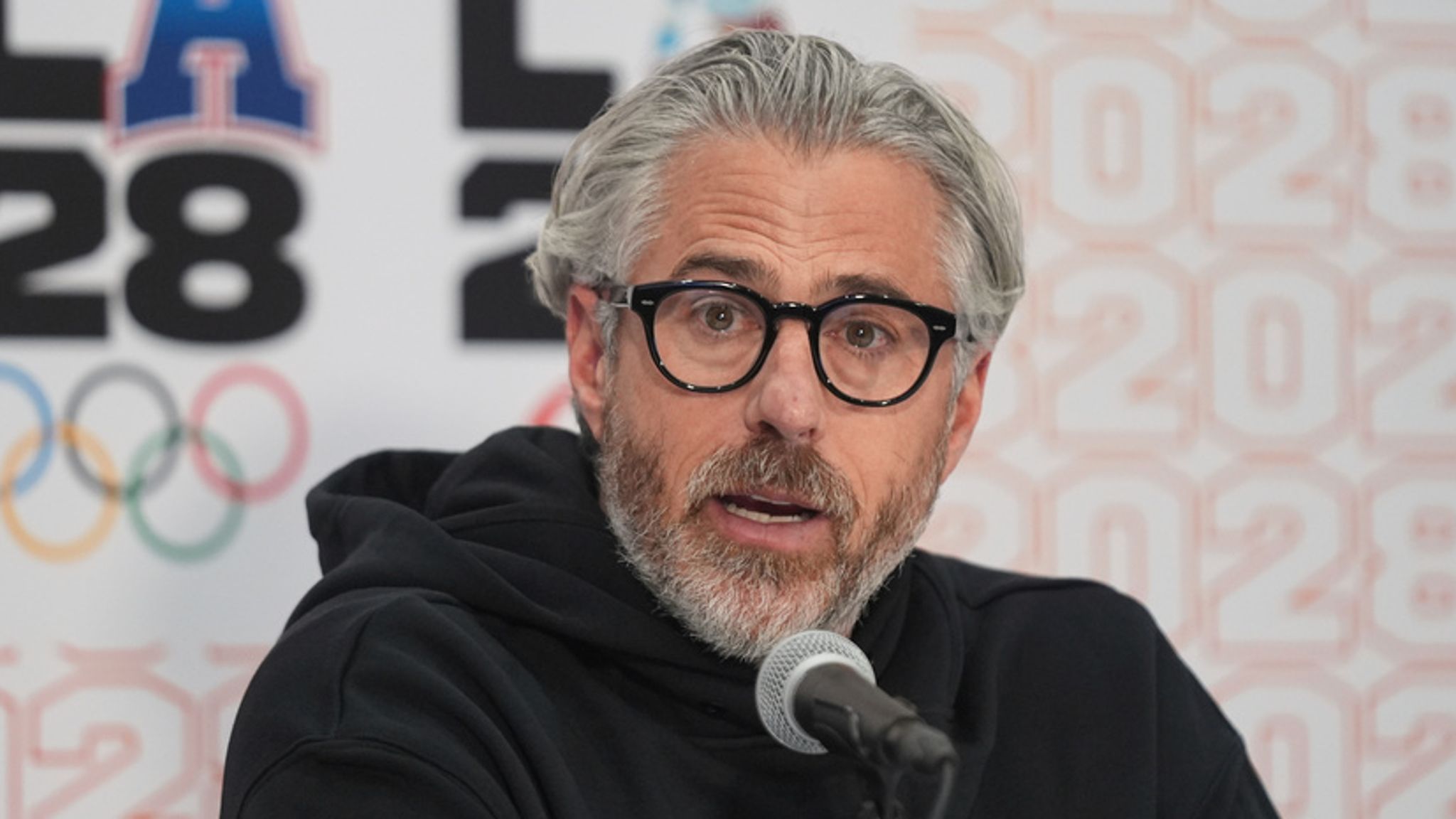
Carrying forward his family’s tradition of high-level civic involvement, Casey Wasserman served as the President of the Los Angeles Bid Committee for the Olympic Games. Following a successful bid process conducted alongside local civic leaders, the International Olympic Committee (IOC) awarded Los Angeles the right to host the 2028 Summer Olympic and Paralympic Games.
As Chairperson of the LA28 Organizing Committee, Casey oversees a privately funded budget model aimed at utilizing existing sports venues, stadiums, and infrastructure across Southern California rather than constructing temporary venues.
Detailed Overview: Key Figures in the Wasserman Lineage
The following table outlines the roles, primary sectors, and major contributions of key figures within the Wasserman family structure.
| Family Member | Relationship to Casey Wasserman | Primary Industry / Sector | Key Contributions & Institutional Roles |
|---|---|---|---|
| Lew Wasserman | Grandfather (Maternal) | Entertainment / Media | CEO of MCA/Universal; pioneer of talent packaging and modern blockbuster distribution; Democratic political mega-donor. |
| Edith "Edie" Wasserman | Grandmother (Maternal) | Philanthropy / Civic | Matriarch of LA civic society; major benefactor to Motion Picture & Television Fund and Cedars-Sinai Medical Center. |
| Lynne Wasserman | Mother | Law / Philanthropy | Trustee of the Wasserman Foundation; advocate for California higher education and public policy boards. |
| Casey Wasserman | Subject | Sports, Media, Entertainment | Founder and CEO of Wasserman; Chairperson of the LA28 Olympic Organizing Committee; President of the Wasserman Foundation. |
| Laura Ziffren Wasserman | Ex-Wife | Film Music Supervision | Film music supervisor (The Devil Wears Prada, 50 First Dates); member of the Ziffren legal and civic family lineage. |
| Stella Wasserman | Daughter | Media / Communications | Next-generation family member; active in private career pursuits. |
| Emmett Wasserman | Son | Private Citizen | Next-generation family member. |
Frequently Asked Questions
How is Casey Wasserman related to Lew Wasserman?
Casey Wasserman is the grandson of Lew Wasserman. Casey's mother, Lynne Wasserman, is the daughter of Lew Wasserman and his wife, Edith "Edie" Wasserman.
Why did Casey Wasserman change his last name from Myers?
Born Casey Myers, he legally adopted his mother's maiden name, Wasserman, in his young adulthood. He chose to take the name to honor his grandfather, Lew Wasserman, who acted as his primary mentor in business, philanthropy, and executive leadership.
What is the primary purpose of the Wasserman Foundation?
The Wasserman Foundation is a private grant-making institution founded in 1952. It focuses on funding initiatives in public education, higher education (specifically UCLA), healthcare research, arts organizations, and human services throughout Southern California and nationally.
What business empire did the Wasserman family build?
Lew Wasserman built MCA into a talent representation and entertainment powerhouse that eventually controlled Universal Pictures. Casey Wasserman independently founded Wasserman (formerly Wasserman Media Group), which grew into one of the largest global agencies for sports marketing, athlete representation, and music touring.
What role does Casey Wasserman play in the Los Angeles 2028 Olympic Games?
Casey Wasserman serves as the Chairperson of the LA28 Organizing Committee. He led the private bid effort that secured the 2028 Olympic and Paralympic Games for Los Angeles and oversees the committee responsible for financing, organizing, and executing the Games.
Lessons in Modern Family Business Continuity
The evolution of the Wasserman family from mid-20th-century Hollywood agents to 21st-century global sports executives provides a clear case study in generational business transition:
- Adapting Core Competencies to New Markets: While Lew Wasserman capitalized on the growth of broadcast television and studio filmmaking, Casey recognized early that live sports and music representation offered long-term stability in a fragmented media environment.
- Institutionalized Philanthropy: By consolidating charitable giving within the Wasserman Foundation, the family preserved a consistent public presence in Los Angeles, ensuring their civic impact extended beyond corporate success.
- Strategic Mentorship: Casey’s early integration into Lew Wasserman's network allowed for a transfer of negotiation strategies, political diplomacy, and institutional relationships long before he assumed major leadership roles.
Organizations, family offices, and executives analyzing generational business transitions can track the family's institutional philanthropic actions through official disclosures made by the Wasserman Foundation and review official corporate organizational structures through the organizing portal for the LA28 Olympic Games.
Image Gallery