Navigating Workers Compensation Terminology in English and Spanish
Mastering workers compensation terminology in both English and Spanish is essential for human resources professionals, insurance agents, legal practitioners, and safety managers who operate in bilingual workplaces. Workers' compensatio...
Mastering workers compensation terminology in both English and Spanish is essential for human resources professionals, insurance agents, legal practitioners, and safety managers who operate in bilingual workplaces. Workers' compensation is a specialized branch of insurance and labor law, meaning that literal translations often fail or create dangerous legal ambiguities. Understanding how specific legal, medical, and administrative terms translate across languages ensures compliance with state regulations, protects employee rights, and streamlines the claims process for injured workers.
Contents
The Importance of Accurate Bilingual Workers Compensation Terminology
In multicultural workplaces, clear communication following a workplace injury is both a legal requirement and an ethical necessity. State labor boards and regulatory bodies often mandate that employers provide critical injury notification documents and policy explanations in the primary language of their workforce. When terms are mistranslated, injured employees may miss critical filing deadlines, misunderstand their right to medical treatment, or fail to comprehend the scope of wage replacement benefits.
Furthermore, insurance adjusters and bilingual case managers rely on standardized vocabulary to evaluate risk, determine fault, and coordinate medical care. Using precise terminology minimizes disputes between employers, carriers, and medical providers. It prevents administrative delays that can stall benefit disbursements, ultimately fostering a safer and more transparent organizational culture.
Foundational Insurance and Policy Terms
To understand how workers compensation functions, stakeholders must first master the high-level policy and administrative terms used by insurance carriers and state funds. These concepts form the backbone of coverage agreements and premium calculations.
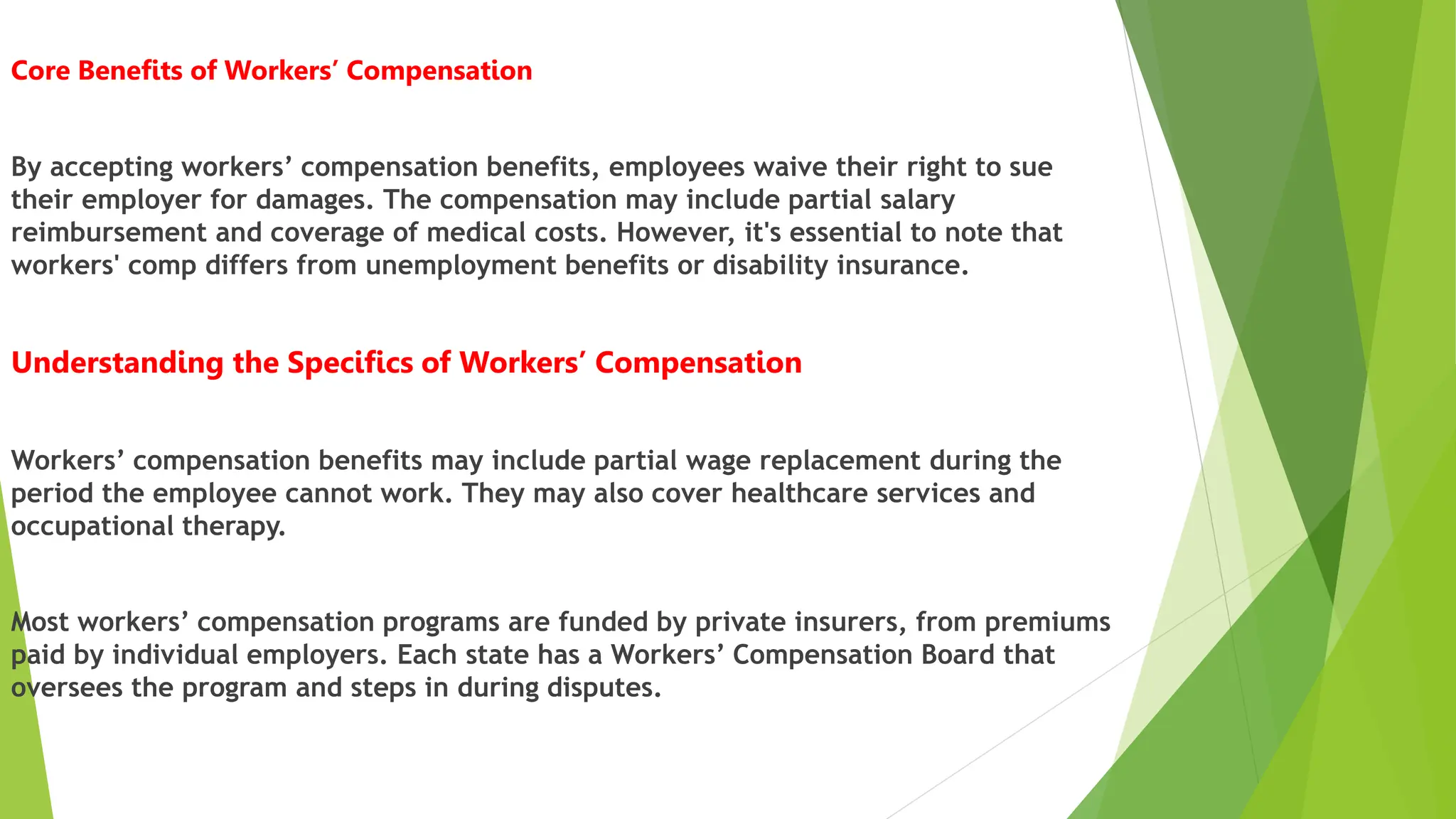
- Workers' Compensation: Compensación para trabajadores (or seguro de compensación al trabajador). This is the mandatory insurance coverage that provides wage replacement and medical benefits to employees injured on the job, in exchange for relinquishing the employee's right to sue the employer for negligence.
- Premium: Prima. The periodic payment made by an employer to the insurance carrier to keep the workers' compensation policy active.
- Policyholder: Titular de la póliza. The employer or business entity that purchases and holds the insurance contract.
- Claim: Reclamo or demanda de indemnización. The formal request filed by an injured worker to obtain benefits under the insurance policy.
- Experience Modification Rate (EMR): Tasa de modificación de experiencia. A statistical factor used by insurance companies to adjust an employer's premium based on their past safety record and claim history compared to other businesses in the same industry.
Key Stakeholders and Roles
A workers compensation claim involves several distinct parties, each with specific legal responsibilities and procedural duties. Clear bilingual identification of these roles prevents confusion during administrative hearings and medical evaluations.
- Employer: Empleador. The business or individual that hires workers and maintains the insurance policy.
- Employee / Worker: Empleado or trabajador. The individual performing services under an employer-employee relationship who is protected by the policy.
- Insurance Adjuster: Adjustador de seguros or representante de reclamaciones. The professional assigned by the insurance carrier to investigate, evaluate, and settle the claim.
- Injured Worker: Trabajador lesionado. The primary beneficiary of the system who has suffered an occupational injury or illness.
- Treating Physician: Médico tratante. The licensed medical professional authorized to direct the medical care of the injured worker and determine work restrictions.
- State Board / Commission: Junta de compensación laboral or comisión industrial. The state-level regulatory agency that oversees dispute resolution, compliance, and benefit guidelines.
Essential Workers Compensation Terms Comparison
| English Term | Spanish Translation | Operational Definition |
|---|---|---|
| Average Weekly Wage (AWW) | Salario semanal promedio | The standard calculation of an employee's earnings prior to the injury, used to determine benefit rates. |
| Temporary Total Disability (TTD) | Discapacidad temporal total | Benefits paid when an employee is completely unable to work for a temporary period due to an injury. |
| Permanent Partial Disability (PPD) | Discapacidad permanente parcial | Compensation awarded when an employee retains a permanent physical impairment but can still work in some capacity. |
| Maximum Medical Improvement (MMI) | Mejoría médica máxima | The point at which an injured worker's condition has stabilized and no further significant recovery is expected. |
| Independent Medical Examination (IME) | Examen médico independiente | An evaluation performed by a neutral physician to resolve disputes regarding treatment, diagnosis, or disability status. |
| Subrogation | Subrogación | The insurance carrier's legal right to pursue a third party that caused the injury to recover paid benefits. |
Medical and Injury Classification Terminology
Navigating medical records and physician notes requires a firm grasp of clinical and administrative health terms in both languages. Misinterpreting medical restrictions can lead to premature return-to-work orders or failure to accommodate necessary limitations.
- Occupational Disease: Enfermedad profesional. A medical condition caused by exposure to workplace hazards over time, such as repetitive stress injuries or chemical toxicity.
- Cumulative Trauma: Trauma acumulativo. Damage to the body caused by repeated micro-traumas over an extended duration, frequently seen in manufacturing or office settings.
- Work Restrictions: Restricciones laborales. Specific medical limitations placed on an employee's physical activity by the treating physician to prevent further injury.
- Light Duty: Trabajo liviano or trabajo adaptado. Modified employment tasks assigned to an injured worker that accommodate their medical restrictions while allowing them to remain productive.
- Vocational Rehabilitation: Rehabilitación vocacional. Services designed to help an injured worker who cannot return to their previous occupation train for a new line of work.
Financial Benefits and Legal Settlements
When a claim is accepted, financial compensation is distributed according to statutory formulas. Understanding the nomenclature of these payments helps human resources teams explain compensation statements clearly to workers.
- Indemnity Benefits: Beneficios por indemnización. Payments made to replace lost wages resulting from a qualifying workplace injury.
- Medical Benefits: Beneficios médicos. Coverage for all reasonable and necessary medical treatments, surgeries, medications, and physical therapy related to the injury.
- Death Benefits: Beneficios por fallecimiento. Financial support provided to the surviving dependents of an employee who dies as a result of a work-related accident or illness.
- Settlement / Compromise and Release: Acuerdo de conciliación or liquidación. A legally binding agreement that resolves a claim in exchange for a lump-sum payment or structured financial settlement, often closing future medical rights.
- Lien: Gravamen or lio. A legal claim placed against workers' compensation settlement proceeds by a third party, such as a hospital or attorney, for services rendered.
Common Challenges in Bilingual Workers Compensation Claims
Translating documents and conversations in a workers compensation context involves more than a simple dictionary lookup. Several structural challenges routinely surface in bilingual environments:
- Regional Variations in Spanish: Legal and insurance terminology varies significantly across Spanish-speaking countries. A term commonly used by workers from Mexico may differ from the formal legal terminology recognized in state codes or used by immigrants from Central or South America.
- Lack of Direct Equivalents: Certain legal concepts unique to the United States jurisdiction, such as "Exclusive Remedy" (recurso exclusivo), do not have direct functional equivalents in Latin American labor codes, requiring explanatory translations rather than literal ones.
- Medical Literacy: Complex clinical diagnostics often overwhelm bilingual translation if the translator lacks specialized knowledge in medical terminology, leading to misunderstood rehabilitation plans.
To mitigate these risks, organizations should partner with certified medical and legal interpreters, utilize state-approved bilingual notice forms, and establish standardized glossaries for internal human resources operations.
Frequently Asked Questions
What should an employer do immediately after a bilingual employee is injured?
The employer must immediately ensure the worker receives appropriate medical attention, report the incident to their insurance carrier, and provide the employee with official state-required claim forms in their preferred language. Prompt reporting prevents administrative penalties and ensures uninterrupted benefit processing.
Are employers legally required to provide workers compensation documents in Spanish?
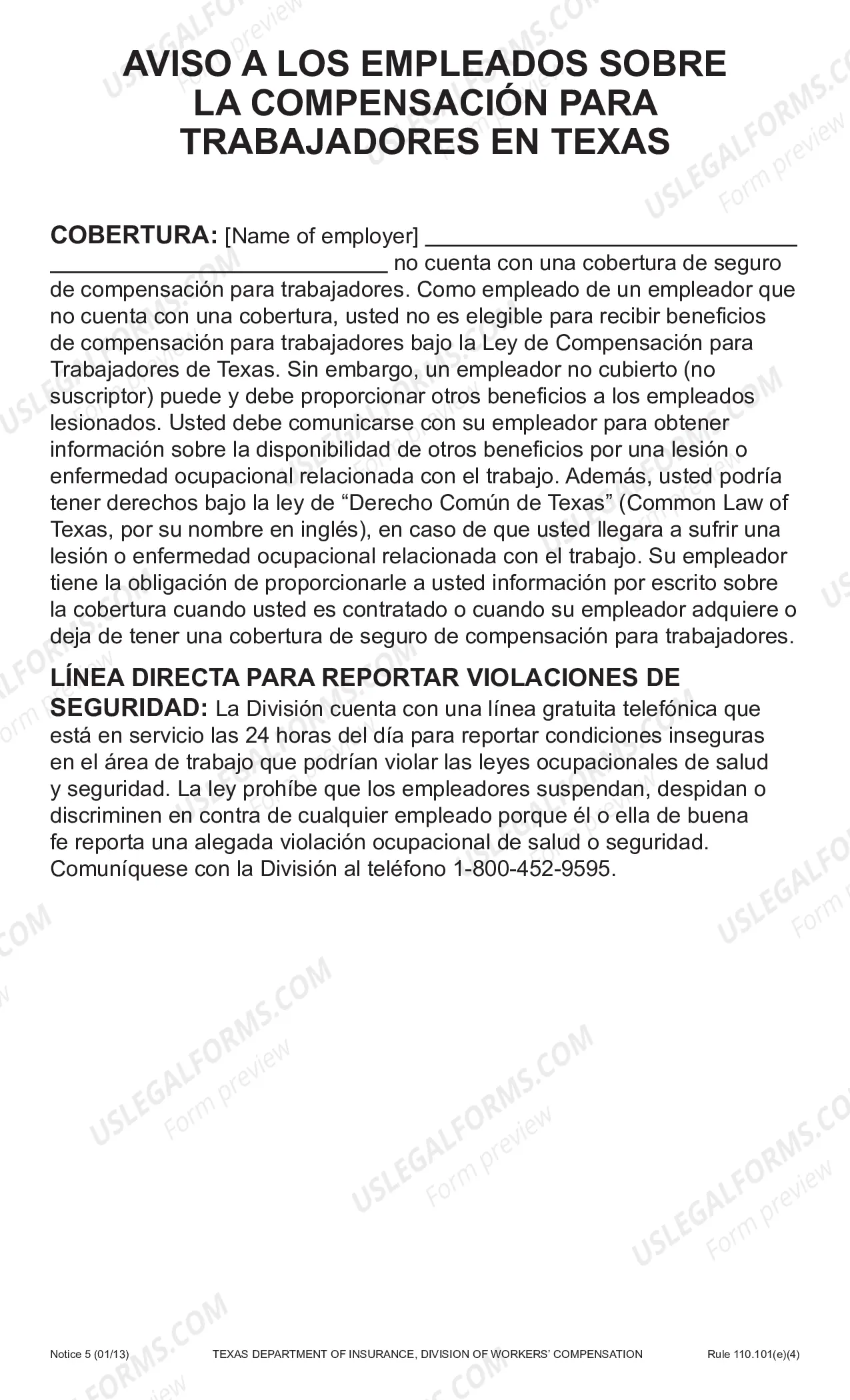
Legal requirements vary by jurisdiction. Many states with high populations of Spanish-speaking workers mandate that employers post informational posters, distribute injury reporting guides, and offer claim paperwork in Spanish or other primary languages spoken by the workforce.
How are medical restrictions communicated to Spanish-speaking employees?
Medical restrictions must be provided in writing in Spanish by the treating physician or a qualified medical interpreter. Employers are responsible for ensuring that supervisors and the injured worker fully understand these limitations before assigning light-duty tasks.
What is the difference between temporary and permanent disability benefits?
Temporary benefits (beneficios temporales) replace lost wages while the employee is actively recovering and unable to work. Permanent benefits (beneficios permanentes) are awarded when the worker reaches maximum medical improvement but retains a lasting physical deficit that impacts their earning capacity.
Can an injured worker choose their own doctor?
Doctor selection rules vary entirely by state. Some jurisdictions allow employees to select a physician from an approved network (red médica aprobada), while others permit the employer or insurance carrier to direct initial medical care. Employers must consult local statutory guidelines.
How does the Experience Modification Rate affect business insurance costs?
The Experience Modification Rate compares an employer's actual claim history against industry averages. A clean safety record lowers the EMR, resulting in reduced insurance premiums, while frequent or high-cost claims raise the EMR, increasing annual operating costs.
Practical Next Actions for Employers
To maintain compliance and support a bilingual workforce effectively, organizations should audit their existing human resources documents to ensure all injury reporting workflows are accessible in both English and Spanish. Collaborate with insurance carriers to secure certified bilingual claim packets, establish partnerships with certified medical translation services, and conduct regular safety training sessions in the primary languages of all employees to minimize workplace injuries.
Image Gallery