Mastering How to Pay Alipay When Traveling in China
Navigating China’s predominantly cashless society requires setting up digital payment ecosystems before departure, with Alipay serving as an essential tool for foreign travelers to pay for everything from high-speed rail tickets to str...
Navigating China’s predominantly cashless society requires setting up digital payment ecosystems before departure, with Alipay serving as an essential tool for foreign travelers to pay for everything from high-speed rail tickets to street food securely and efficiently.
Contents
Understanding China's Cashless Transformation and the Role of Alipay
China has undergone a profound digital transformation over the past decade, shifting away from physical currency and traditional plastic credit cards toward mobile-first payment platforms. For international travelers, understanding this landscape is no longer optional; it is a fundamental prerequisite for a smooth journey. While cash is still legally accepted in many establishments, merchants frequently lack the necessary change, and unattended vending machines, automated ticketing kiosks, and modern restaurants rely entirely on digital scans.
At the center of this ecosystem are two dominant applications: Alipay, operated by Ant Group, and WeChat Pay, operated by Tencent. While both platforms control the vast majority of daily transactions, Alipay has historically been more accommodating to international credit card integration. By allowing foreign visitors to link international Visa, Mastercard, JCB, or Diners Club cards to a digital wallet, Alipay bridges the gap between global banking networks and China's domestic QR-code infrastructure.
The primary search intent for travelers looking into this subject revolves around practical enablement: how to download the app, link a foreign credit card, verify identity, and execute transactions without running into unexpected blocks or exorbitant fees. Recognizing that foreign bank cards operate under different security protocols than mainland Chinese bank accounts, Alipay has evolved its interface to offer an "International Version" tailored specifically to tourists and business visitors.
Prerequisites and Pre-Travel Setup Steps
Successfully paying with Alipay in China requires preparation before you board your flight. Attempting to download the application and link your cards upon arrival can lead to frustrating delays, particularly if you encounter network restrictions or verification SMS delays while abroad.
Step 1: Download and Installation
Begin by downloading the official Alipay application from the Apple App Store or Google Play Store. Ensure you are downloading the authentic application managed by Ant Group to protect your personal and financial data. Once installed, open the application and select your country code to register using your mobile phone number. Crucially, you can use your home country mobile number; you do not need a Chinese SIM card to set up the basic international traveler features, though having reliable mobile data once you land in China is mandatory.
Step 2: Identity Verification (KYC)
Like all major financial services, Alipay requires Identity Verification (Know Your Customer or KYC) to comply with international anti-money laundering regulations and Chinese financial laws.
- Navigate to your profile or tap on the "Account" or "Bank Cards" section.
- Select the option to verify your identity.
- You will be prompted to enter your full legal name as it appears on your passport, your passport number, and date of birth.
- The application will require you to upload a clear, glare-free photo of your passport information page and complete a brief facial recognition scan using your phone's front camera.
Step 3: Linking International Bank Cards
Once your identity is verified, you can link your foreign credit or debit cards. Alipay supports major international networks, including Visa, Mastercard, Diners Club, and JCB.
- Go to the "Me" tab and select "Bank Cards."
- Tap the "+" icon in the top right corner to add a new card.
- Enter your card number, expiration date, CVV, and the billing address associated with the card.
- Complete any required multi-factor authentication, such as a one-time password (OTP) sent by your home bank.
| Feature / Requirement | Standard Domestic Account | International Traveler Version |
|---|---|---|
| Required ID | Chinese Resident ID | Foreign Passport |
| Bank Account | Mainland Chinese Bank Account | International Credit/Debit Card (Visa, MC, etc.) |
| Transaction Limits | High limits based on tier | Single transaction and annual cumulative caps apply |
| Peer-to-Peer Transfers | Fully enabled | Restricted or unavailable without a Chinese bank account |
| Core Utility | Full ecosystem (wealth management, etc.) | Focused on retail, transit, dining, and travel booking |
Core Mechanics: How Transactions Work on the Ground
Once you arrive in China, understanding the two primary methods of executing a transaction will prevent awkward moments at checkout counters. Alipay utilizes dynamic QR-code technology, meaning transactions are executed either by scanning the merchant's code or by having the merchant scan your code.
Merchant-Presented QR Codes (Scan-to-Pay)
This is the most common method encountered in small shops, restaurants, and taxis.
- Open your Alipay app and tap the "Scan" icon at the top of the home screen.
- Point your camera at the merchant’s printed QR code displayed at the register or on their mobile device.
- Enter the exact purchase amount in Chinese Yuan (CNY / RMB) as instructed by the merchant or displayed on their terminal.
- Confirm the payment. The app will prompt you to select which linked card you wish to use, display any applicable foreign transaction fees, and require your pre-set 6-digit payment password or biometric authentication (Face ID / fingerprint).
Consumer-Presented QR Codes (Show-to-Pay)
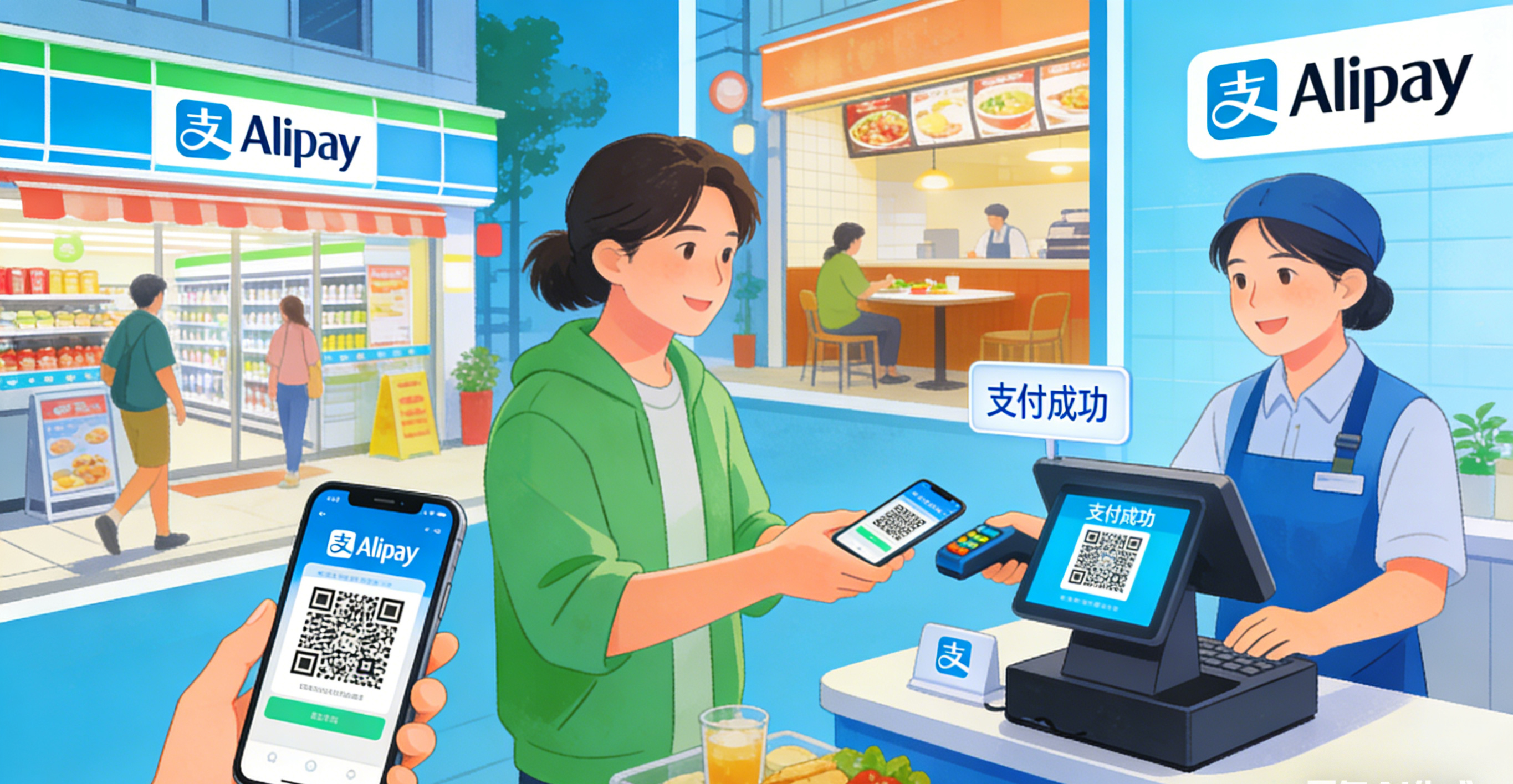
This method is standard in larger supermarkets, convenience store chains like 7-Eleven, subway stations, and department stores.
- Tap the "Pay" or "Collect/Pay" button on the Alipay home screen.
- A dynamic QR code and barcode will appear on your screen.
- Present your screen to the cashier, who will scan it using a handheld barcode reader or counter scanner.
- The transaction processes instantly, and a confirmation screen will appear on your device.
Managing Fees, Limits, and Currency Conversions
Using foreign credit cards through Alipay involves specific financial parameters that travelers must manage to avoid unexpected costs or declined transactions.
Understanding Transaction Limits
To mitigate financial risk, Alipay enforces specific limits on international traveler accounts. While these limits are periodically adjusted by regulatory bodies and platform updates, they generally feature a per-transaction cap (often around 3,000 to 5,000 RMB) and an annual cumulative limit (frequently capped around 50,000 RMB). For standard tourism and business travel, these limits are more than sufficient to cover dining, shopping, hotels, and transportation. However, travelers planning high-value luxury purchases should verify their limits or prepare alternative payment methods.
Fee Structures and Currency Conversion
Alipay does not charge a direct service fee for transactions under 200 RMB. For transactions exceeding 200 RMB, a small transaction fee (typically around 3%) may apply, reflecting processing costs associated with international card networks. Additionally, pay close attention to currency conversion. Your home bank will convert your home currency into Chinese Yuan. It is vital to use a credit card that does not charge foreign transaction fees to avoid compounding costs on every purchase. Furthermore, always select the option to be charged in Chinese Yuan (CNY) rather than your home currency if a point-of-sale terminal offers a dynamic currency conversion choice, as local conversion rates are notoriously unfavorable.
Essential Travel Services Built Into Alipay
Alipay is far more than a simple payment gateway; it is a "super app" that integrates numerous mini-programs designed to solve common travel friction points in China.
Public Transportation Integration
Navigating the subway and bus networks in major Chinese cities like Beijing, Shanghai, Guangzhou, and Shenzhen is seamless with Alipay.
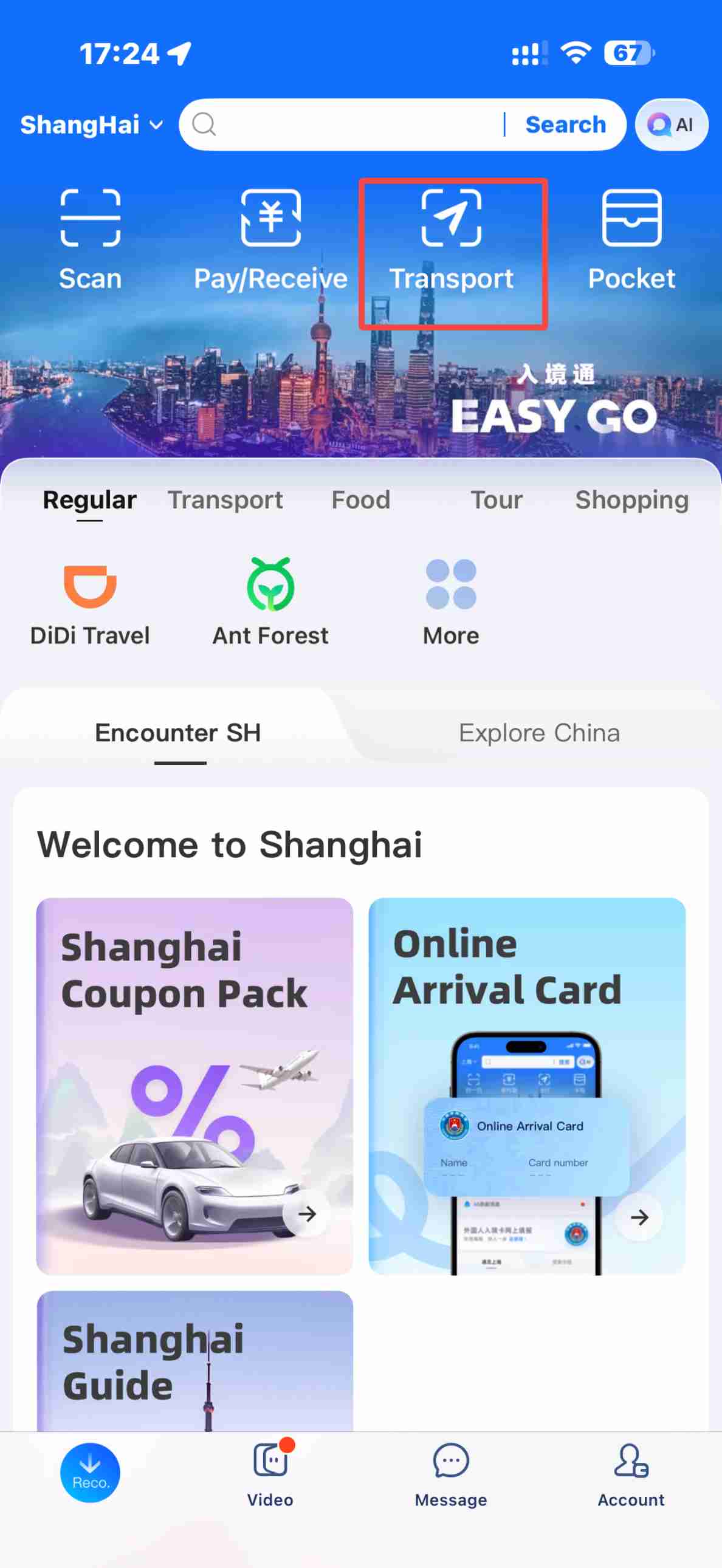
- Navigate to the "Transport" or "Metro" section within the app.
- Select your destination city.
- Follow the prompts to issue a virtual transit card.
- When entering or exiting subway turnstiles, scan your generated transit QR code at the reader. The fare is automatically deducted from your linked card or balance.
High-Speed Rail and Flight Bookings
Booking domestic high-speed rail tickets through official channels can be intimidating for foreigners due to language barriers on the state-run 12306 platform. Alipay features built-in third-party mini-programs (such as Trip.com or direct rail services) that allow you to search schedules, purchase tickets using your passport for verification, and board high-speed trains by simply scanning your passport at the station gates.
Translation and Utility Services
Language barriers can complicate interactions. Alipay includes a built-in translation tool and currency converter. Furthermore, travelers can access ride-hailing mini-programs (similar to Uber) directly within Alipay, allowing you to summon registered taxis or private cars without needing to download separate local apps like Didi, though Didi itself also operates as an integrated Alipay mini-program.
Troubleshooting Common Payment Failures
Even with careful preparation, foreign travelers occasionally experience payment declines or technical hurdles. Knowing how to diagnose and resolve these issues ensures minor glitches do not disrupt your itinerary.
Bank Security Blocks
The most frequent cause of an Alipay payment failure is a security flag triggered by your home bank. Because transactions originate from mainland China, foreign fraud-detection algorithms may flag the activity as suspicious and temporarily freeze your card.
- Solution: Before leaving your home country, notify your bank of your travel dates and destinations. If a payment fails, check your SMS or email for fraud alerts from your bank, authorize the transaction, and attempt the payment again.
Insufficient Identity Verification
If your transactions are repeatedly declined or if you are restricted from making purchases over certain amounts, your KYC verification may be incomplete or pending review.
- Solution: Return to your profile settings, check your identity status, and ensure that your passport details match your physical documents precisely. If required, re-upload a clearer image of your passport page.
Merchant Acceptance Issues
While Alipay is ubiquitous, smaller street vendors or merchants in very remote rural areas may occasionally utilize personal merchant accounts that restrict foreign credit card processing, even if they accept domestic Alipay users.
- Solution: Always carry a modest amount of physical cash (Chinese Yuan) as a reliable backup for small street vendors or emergencies where digital systems are temporarily unavailable.
Frequently Asked Questions
Can I use Alipay in China without a Chinese bank account?
Yes. International travelers can link foreign credit and debit cards—including Visa, Mastercard, JCB, and Diners Club—directly to the Alipay app after completing passport-based identity verification. This allows you to pay merchants seamlessly without opening a local bank account.
What happens if my phone battery dies while I am out?
Because China's infrastructure is heavily digital, a dead phone presents a logistical challenge. It is strongly recommended to carry a portable power bank (power bank rental stations are ubiquitous in Chinese cities and can be unlocked via Alipay or WeChat) and a small amount of physical cash to cover emergency expenses or transportation fares if your device fails.
Are there transaction fees when paying with a foreign card on Alipay?
Alipay waives transaction fees for single purchases under 200 RMB. For transactions exceeding 200 RMB, a standard international transaction fee (typically around 3%) is applied. Additionally, your home credit card issuer may charge foreign transaction fees unless you use a card designed with zero foreign transaction fees.
Will I need a Chinese mobile phone number to use Alipay?
No. You can register, verify your identity, and link your foreign credit cards using your home country's mobile phone number. However, you must ensure your phone has an active international roaming plan or an eSIM/local tourist SIM card with data access to use the app while moving around China.
Is Alipay safe for foreign tourists to use?
Alipay utilizes advanced encryption, facial recognition, and multi-factor authentication protocols to protect user data and financial transactions. It complies with stringent international security standards and Chinese financial regulations, making it as secure—if not more secure—than carrying physical credit cards or cash while traveling.
Conclusion and Next Actions
Mastering how to pay Alipay when traveling in China transforms what could be a logistically challenging trip into a seamless, modern travel experience. By downloading the application, completing your passport verification, and linking a zero-foreign-transaction-fee credit card well before departure, you eliminate the friction of a cashless society. Take action today by downloading Alipay, completing your KYC verification, and notifying your home bank of your upcoming travel plans to ensure uninterrupted access throughout your journey.
Image Gallery