Comprehensive Guide to Workers’ Compensation Laws in NYC (2026)
Workers’ compensation laws in NYC require nearly all employers to provide insurance coverage for their employees, regardless of the worker’s immigration status or the size of the business. As of 2026, this no-fault system ensures that...
Workers’ compensation laws in NYC require nearly all employers to provide insurance coverage for their employees, regardless of the worker’s immigration status or the size of the business. As of 2026, this no-fault system ensures that workers injured on the job receive medical care and wage replacement benefits without needing to prove employer negligence, while shielding employers from most personal injury lawsuits.
Contents
Understanding the NYC Workers’ Compensation Framework
The workers' compensation system in New York City is governed by the New York State Workers’ Compensation Board (WCB). While the laws are state-wide, the NYC landscape is unique due to the high density of construction, the prevalence of municipal employees, and specific local safety regulations that intersect with compensation claims.
In its simplest form, workers’ compensation is a social contract: the employee gives up the right to sue the employer for negligence in exchange for guaranteed medical coverage and a portion of lost wages. In 2026, the system continues to evolve, reflecting modern workplace dynamics including remote work arrangements and updated disability rating schedules.
Who Is Covered Under the Law?
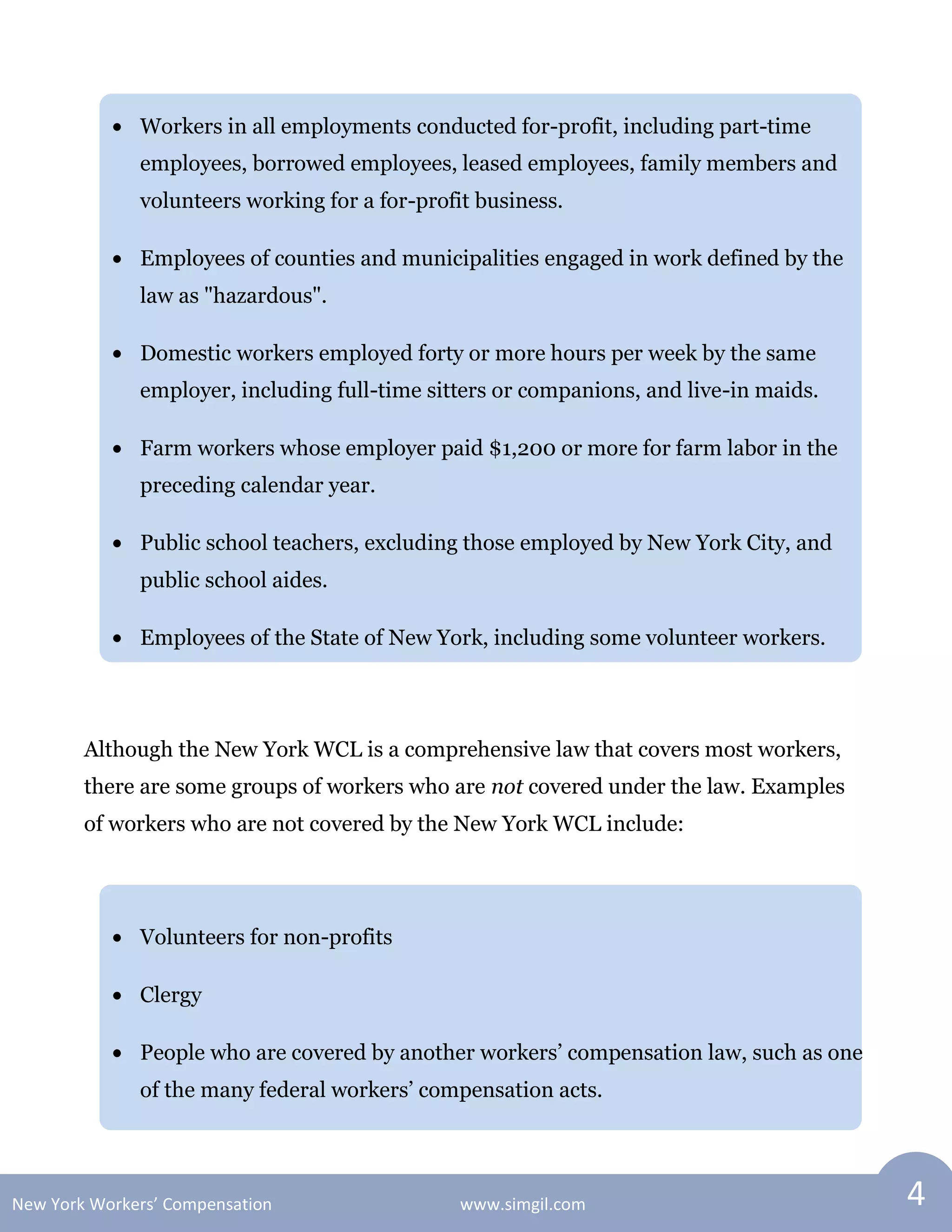
New York law is among the most inclusive in the United States. In NYC, the following categories must be covered:
- Full-time and Part-time Workers: All employees in the private sector.
- Domestic Workers: Nannies, cooks, and housekeepers working 40 or more hours per week for a single employer.
- Construction Workers: High-risk industries have the strictest enforcement and oversight.
- Undocumented Workers: New York State law explicitly protects the rights of workers to collect benefits regardless of their legal residency status.
- For-Profit and Non-Profit Employees: Even most small non-profits must carry coverage if they have compensated individuals.
Critical Deadlines and the Claims Process
Navigating a claim in New York City requires strict adherence to statutory timelines. Failure to meet these deadlines is the most common reason for claim denials.
Step 1: Immediate Medical Attention
The priority after any workplace accident is seeking medical care. In NYC, you must visit a healthcare provider authorized by the Workers' Compensation Board, except in emergency situations. The provider must submit medical reports directly to the Board and the insurance carrier to establish the medical link between the injury and the employment.
Step 2: Notice to Employer (30-Day Rule)
Under Section 18 of the Workers' Compensation Law, an injured worker must provide written notice to their employer within 30 days of the accident. This notice should include the time, place, and nature of the injury. For occupational diseases (such as repetitive stress injuries or toxic exposure), the 30-day window begins when the worker knew or should have known the condition was work-related.
Step 3: Filing Form C-3 (2-Year Limit)
While the employer must be notified within 30 days, the official claim (Form C-3) must be filed with the Workers’ Compensation Board within two years of the accident or the onset of the illness. Waiting until the two-year mark is generally discouraged, as it complicates the evidence-gathering process.
Cash Benefits and Medical Coverage in 2026
The financial support provided by the system is divided into two primary categories: medical treatment and cash indemnity benefits.
Medical Benefits
The insurance carrier is responsible for all "necessary and appropriate" medical care related to the injury. This includes surgeries, physical therapy, prescription medications, and even travel expenses to and from medical appointments. In 2026, the WCB utilizes strict Medical Treatment Guidelines (MTGs) that dictate what treatments are pre-authorized. If a doctor recommends treatment outside these guidelines, they must file a "Variance" request.
Cash Indemnity (Wage Replacement)
Cash benefits are not intended to replace a worker’s full salary. Instead, they are calculated based on a specific formula: ** (2/3) x (Average Weekly Wage) x (Percentage of Disability) **
For the 2026 period, the maximum weekly benefit is tied to the New York State Average Weekly Wage (NYSAWW). This cap is adjusted annually every July 1st. If a worker is deemed 100% disabled and their average weekly wage was $1,500, they would receive two-thirds of that amount ($1,000), provided it does not exceed the state's maximum cap for 2026.
| Benefit Category | Description | Duration / Limit |
|---|---|---|
| Temporary Total Disability | Worker is completely unable to work for a limited time. | Until worker returns or reaches MMI*. |
| Temporary Partial Disability | Worker can perform light duty or part-time work. | Paid at a reduced rate based on "lost earnings." |
| Permanent Partial Disability | Long-term impairment that doesn't prevent all work. | Subject to "caps" on the number of weeks (based on 2011 reforms). |
| Scheduled Loss of Use (SLU) | Permanent injury to a limb, vision, or hearing. | Lump sum or structured payments based on a "schedule." |
| Death Benefits | Paid to surviving spouse or minor children. | Weekly payments plus funeral expenses (up to $12,500 in NYC). |
*MMI = Maximum Medical Improvement
Special Considerations for NYC Construction Workers
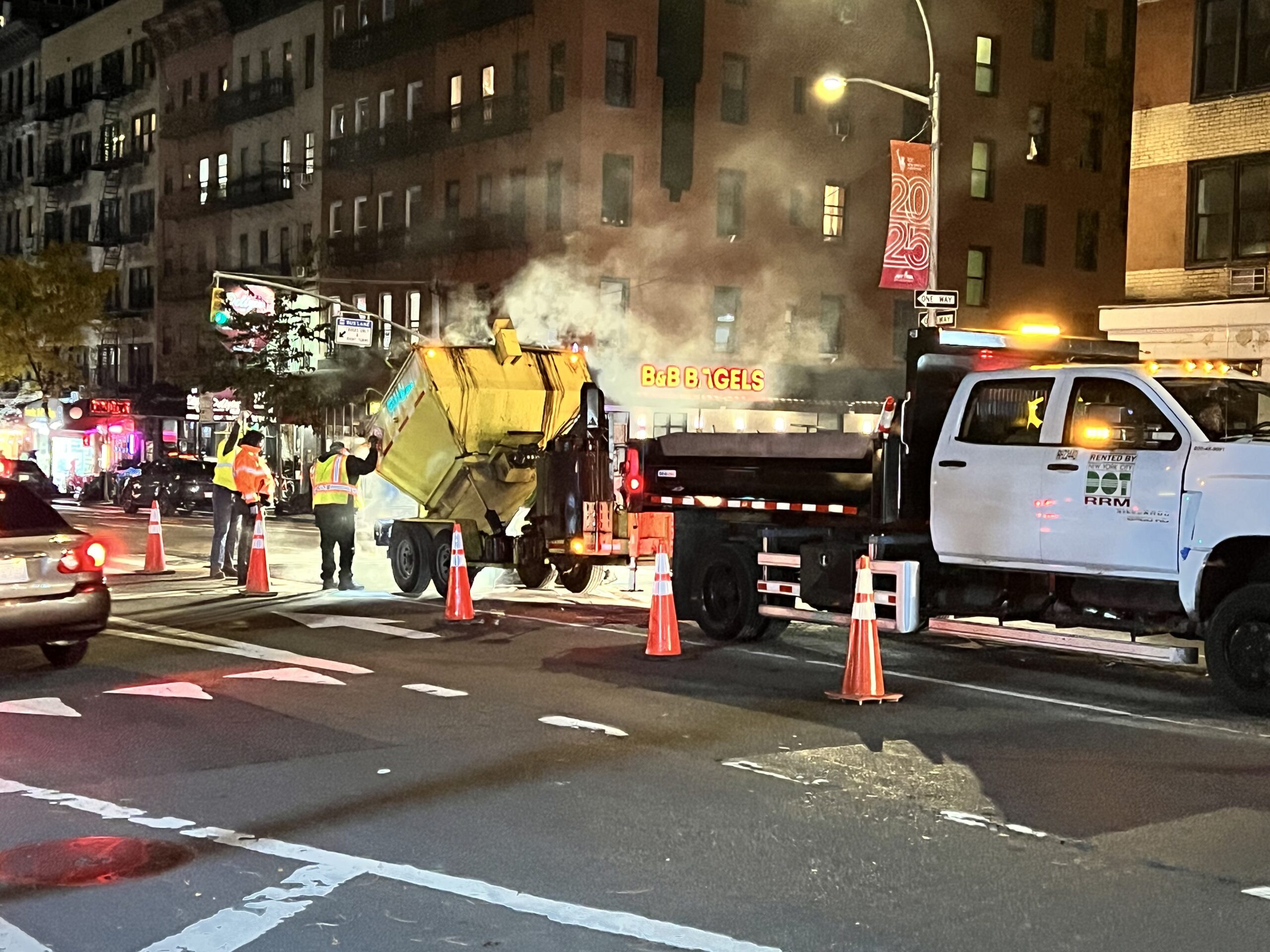
In New York City, construction is a dominant industry with unique legal protections. While workers' compensation is usually the "exclusive remedy," NYC workers often have additional paths to recovery through the New York Labor Law.
The "Scaffold Law" (Section 240)
Section 240 of the NY Labor Law provides special protections for workers injured in "gravity-related" accidents, such as falls from heights or being struck by falling objects. Unlike workers' comp, a Section 240 claim allows a worker to sue the property owner or general contractor for full compensatory damages, including pain and suffering, which workers’ comp does not cover.
Local Law 196 and Safety Training
NYC requires construction workers to hold Site Safety Training (SST) cards. In 2026, if an injury occurs on a site where the employer failed to enforce these safety training requirements, it can significantly impact the litigation surrounding the case, though it does not disqualify the worker from basic workers' compensation benefits.
Common Challenges: Denials and IMEs
Insurance carriers in NYC frequently contest claims to minimize payouts. The most common tool they use is the Independent Medical Examination (IME).
An IME is not actually independent; the doctor is hired and paid by the insurance company. Their goal is often to find that the worker has reached Maximum Medical Improvement or that the disability percentage is lower than what the treating physician stated. Under 2026 regulations, workers must attend these exams or risk having their benefits suspended. If there is a disagreement between the worker’s doctor and the IME doctor, a Workers' Compensation Law Judge will resolve the dispute through a hearing.
Grounds for Claim Denial
- Pre-existing Conditions: The carrier may argue the injury is a result of an old condition.
- Off-site Injuries: Arguments that the injury did not occur "in the course of employment."
- Intoxication: Benefits may be denied if the injury was solely caused by the worker’s intoxication by alcohol or drugs.
- Horseplay: Willful intent to injure oneself or others can disqualify a claim.
FAQs About Workers’ Comp in NYC
Can I be fired for filing a workers' compensation claim? No. Section 120 of the Workers' Compensation Law prohibits employers from discriminating or retaliating against an employee for filing a claim. If you are fired or demoted because of your claim, you may be entitled to reinstatement and back pay through a separate discrimination filing.
What if my employer doesn't have insurance? In NYC, if an employer fails to carry insurance, the Uninsured Employers’ Fund (UEF) steps in to pay the benefits. Additionally, the employer may face severe criminal penalties and civil fines, and in this specific instance, the worker may have the right to sue the employer directly in civil court.
Does workers' comp cover mental health and stress? Yes, but the burden of proof is high. In 2026, claims for post-traumatic stress disorder (PTSD) or chronic stress are compensable if the worker can demonstrate the stress was "greater than that which usually occurs in the normal work environment."
Do I need a lawyer for a NYC workers' comp claim? While not legally required, the system is highly bureaucratic. In New York, workers' compensation attorneys do not charge an upfront fee; instead, their fees are set by a judge and deducted from the back-pay portion of your award. This "contingency" structure makes legal representation accessible to most workers.
How does remote work affect my NYC claim in 2026? The WCB has established that if an employee is authorized to work from home, the "workplace" extends to the home office. Injuries occurring during work hours while performing job duties at home are generally covered, though the distinction between personal and work activity remains a frequent point of litigation.
Strategic Recommendation for 2026
If you are injured on the job in New York City, the most critical action is to document everything immediately. Photographs of the accident site, witness contact information, and a clear record of the initial report to the supervisor are vital. Given the complexity of NYC’s specific labor laws and the aggressive nature of insurance carriers, consulting with a specialized Workers' Compensation Board authorized attorney or advocate early in the process is the best way to ensure your medical treatments are approved and your wage benefits are maximized.
Image Gallery