Comprehensive Pool Table Reviews 2026: A Buyer’s Guide to Quality and Performance
To select the best pool table in 2026, you must prioritize a one-inch three-piece slate bed, a solid hardwood frame, and high-quality K-66 profile gum rubber cushions. These technical specifications ensure a level playing surface, cons...
To select the best pool table in 2026, you must prioritize a one-inch three-piece slate bed, a solid hardwood frame, and high-quality K-66 profile gum rubber cushions. These technical specifications ensure a level playing surface, consistent ball rebound, and structural longevity, distinguishing professional-grade equipment from lower-quality recreational alternatives.
Contents
The Foundation of Play: Slate vs. Alternative Materials
When analyzing pool table reviews, the most critical specification is the playing surface material. For over a century, slate has remained the industry standard, and in 2026, it continues to outperform all synthetic alternatives. Slate is a metamorphic rock that naturally splits into wide, flat layers, which are then ground and polished to within 1/10,000th of an inch of perfect flatness.
The Superiority of Three-Piece Slate
Most high-end reviews emphasize three-piece slate over one-piece slate. A three-piece set allows for precise leveling during installation. Installers can adjust each piece individually to compensate for floors that are not perfectly level. Furthermore, three-piece slate is less prone to sagging over time under its own weight. In the 2026 market, professional tables typically use slate that is at least one inch thick, providing the necessary mass to prevent vibration and ensure a "quiet" roll.
Risks of MDF and Slatron
Entry-level "recreational" tables often utilize Medium Density Fiberboard (MDF) or Slatron (a synthetic plastic-slate hybrid). While these materials significantly reduce the cost and weight of the table, they are susceptible to warping from humidity and temperature changes. Reviews of MDF tables frequently note that the playing surface develops "hills and valleys" within 12 to 24 months, rendering the table useless for serious practice. If your goal is longevity, slate is the only viable option.
Structural Integrity: Frame and Leg Construction
A pool table’s frame must support anywhere from 400 to 1,000 pounds of slate and hardwood. Technical reviews focus on how that weight is distributed. A quality frame should feature cross-beam construction, where two long beams and two or more cross-beams create a grid that supports the slate at multiple points.
Solid Wood vs. Veneer
In 2026, the distinction between solid hardwood and wood veneers is a major price driver. Solid wood frames (typically Oak, Maple, or Walnut) provide superior screw-holding power. This is vital because the slate is often bolted directly to the frame. Over years of play and potential moves, solid wood maintains its integrity, whereas particle board or thin veneers may strip or crack.
Leg Design and Leveling
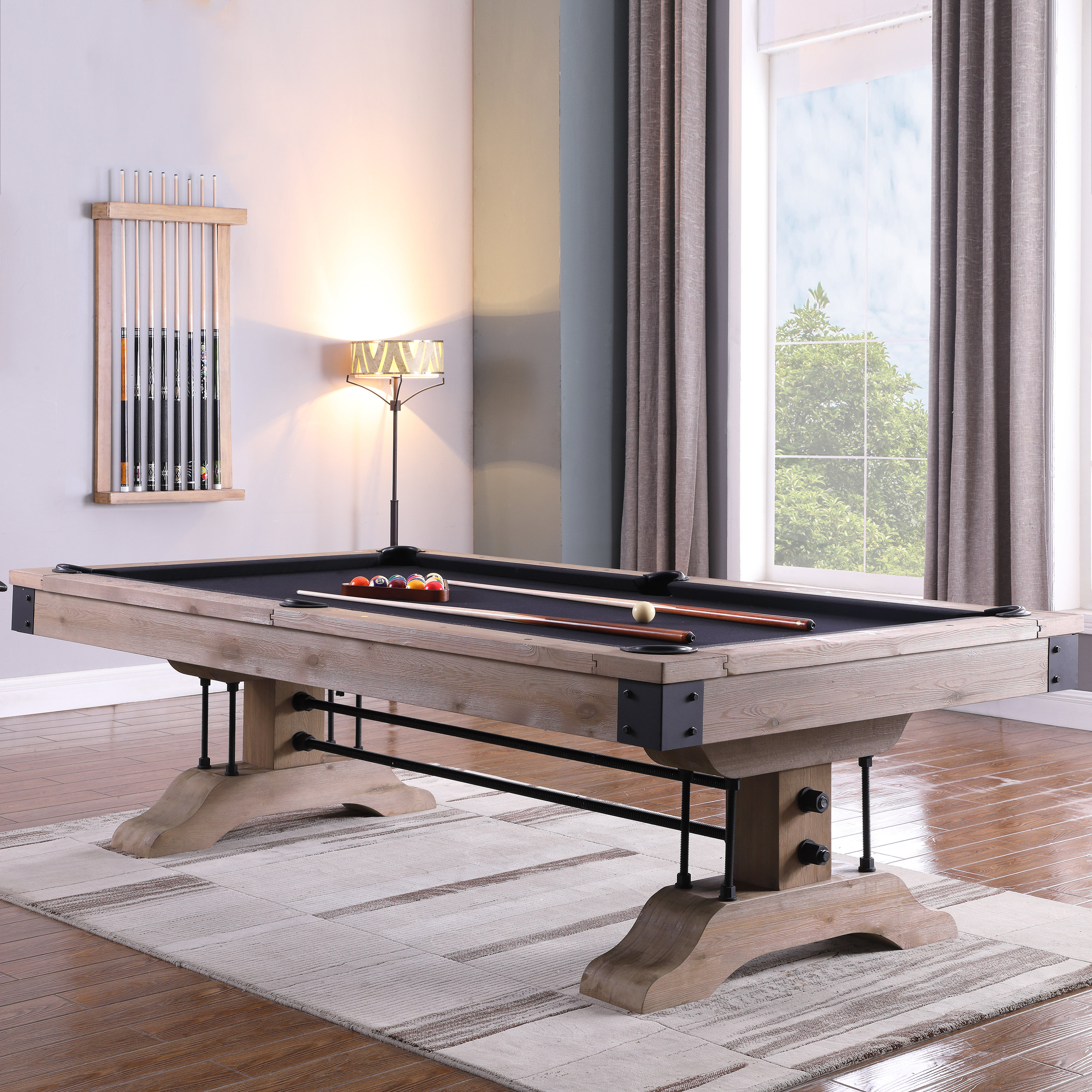
The legs are the anchors of the table. Reviews often highlight "pedestal" legs versus "tapered" legs. While aesthetics vary, the mechanical connection is what matters. Legs that are bolted using heavy-duty hardware rather than simple wood screws offer better stability. Most modern tables also include hidden leg levelers, allowing for micro-adjustments without having to lift the entire unit.
The Physics of the Game: Cushions and Cloth
A common mistake in reading pool table reviews is overlooking the "soft goods"—the cushions and the felt. These components dictate the speed and accuracy of the game.
Cushion Profiles and Material
The industry standard for cushions is the K-66 profile. This refers to the specific triangular shape of the rubber. However, the composition of the rubber is equally important. Reviews should specify "Grade A" natural gum rubber. Synthetic fillers in cushions can cause them to become "dead" or brittle over time, losing their bounce. A high-quality cushion should provide a predictable rebound for at least 10 to 15 years.
Cloth Types: Napped vs. Worsted
The "felt" is actually a blend of wool and nylon. There are two primary types found in 2026 reviews:
- Napped Cloth: This is thicker and has a visible "direction" to the fibers. It is slower and more common on home recreational tables.
- Worsted Cloth (Speed Cloth): Used in professional tournaments (e.g., Simonis 860). It is woven tightly so there is no nap. This allows the balls to roll faster and more accurately, though it requires more frequent cleaning and is generally more expensive.
Categorizing the 2026 Market: From Value to Professional
To help categorize your search, the following table compares the three primary tiers of pool tables available in 2026 based on standard review metrics.
| Feature | Entry-Level (Recreational) | Mid-Range (Residential) | Professional / Heirloom |
|---|---|---|---|
| Play Surface | MDF or 1/2" Slate | 7/8" or 1" Slate | 1" or 1-1/4" Slate (Honed) |
| Frame Material | Engineered Wood / Laminate | Solid Wood Veneers | Solid Hardwood (Maple/Oak) |
| Cushions | Synthetic Blend | K-66 Natural Rubber | K-66 Premium Tournament Grade |
| Cloth Quality | Standard Wool Blend | Napped Professional Grade | Worsted Speed Cloth |
| Typical Weight | 200 - 400 lbs | 600 - 800 lbs | 850 - 1,100+ lbs |
| Expected Lifespan | 2-5 Years | 10-25 Years | Lifetime |
Dimensional Requirements and Room Fit
One of the most frequent complaints in pool table reviews is that the table "didn't fit" the room. This rarely means the table physically wouldn't fit, but rather that there wasn't enough space to swing a cue.
The standard sizes are 7-foot (Bar size), 8-foot (Standard Home size), and 9-foot (Tournament size).
- 7-foot table: Requires a room of approximately 13' x 16'.
- 8-foot table: Requires a room of approximately 13.5' x 17'.
- 9-foot table: Requires a room of approximately 14' x 18.5'.
These measurements assume a standard 57-inch cue. If your room has "dead spots" or pillars, you may need to use shorter "trouble cues," which are usually 48 or 52 inches. Reviews for 2026 models often highlight "space-saving" designs, but the physics of the game remains unchanged: you need clearance for your backswing.
Interpreting Professional vs. User Reviews
When browsing pool table reviews, it is essential to distinguish between expert technical assessments and casual user feedback. Expert reviews from organizations like the Billiard Congress of America (BCA) focus on slate flatness, cushion accuracy, and rail bolt torque.
In contrast, user reviews often focus on the delivery process or the color of the felt. While delivery feedback is useful, it shouldn't overshadow the technical merits of the table itself. Look for reviews that mention the ease of leveling and the sturdiness of the pockets. Low-quality pockets made of thin plastic can crack within a few years, whereas heavy-duty leather or reinforced rubber pockets are much more durable.
Maintenance and Long-Term Value
A high-quality slate table is an investment that should hold its value. Reviews that track a table's performance over five or ten years are the most valuable. Key maintenance factors to look for include:
- Cloth Replaceability: Can the cloth be replaced without damaging the slate?
- Rail Design: Are the rails easy to remove for re-cushioning?
- Sunlight Resistance: If the table is near a window, check reviews for mentions of wood finish fading or cloth bleaching.
In 2026, many premium manufacturers are offering "convertible" tables that include dining tops. While these are popular in reviews for multi-functional living spaces, ensure that the dining top is sturdy and does not put undue pressure on the table's rails.
Frequently Asked Questions
Is a one-piece slate table better than a three-piece?
No, for most home installations, a three-piece slate is superior. One-piece slates are extremely heavy and difficult to transport without cracking. More importantly, they cannot be adjusted to compensate for a floor that is slightly out of level, whereas a three-piece slate can be perfectly shimmed and leveled at the seams.
How do I know if the cushions are "dead"?
A "dead" cushion occurs when the rubber loses its elasticity. To test this, roll a ball firmly against the cushion. It should bounce back across the table several times. If it hits with a thud and stops quickly, the rubber has likely hardened. This is a common issue noted in reviews of older or lower-priced synthetic-cushion tables.
Can I move a slate pool table myself?
It is highly discouraged. Moving a slate table requires complete disassembly. Attempting to move it while assembled can warp the frame, crack the slate, or pop the wax seals at the seams. Professional movers use specialized tools to ensure the table is re-leveled and re-clothed correctly at the new location.
What is the difference between "drop pockets" and "ball return"?
Drop pockets hold the balls in leather or plastic cups at each hole. Ball return systems use an internal gutter to funnel all balls to a single collection box at the end of the table. While ball returns are convenient, they can be noisier and are more difficult to repair if a blockage occurs.
How often should I replace the cloth?
For a home table with moderate use, the cloth should be replaced every 3 to 5 years. If you notice "pilling" (small balls of fuzz), visible tracks, or if the balls seem to be rolling slower than usual, it is time for a change. Worsted cloth generally lasts longer than napped cloth but is more susceptible to "burn marks" from high-speed shots.
Final Recommendation for 2026 Buyers
When finalizing your purchase based on pool table reviews, prioritize the "bones" of the table. A model with a one-inch three-piece slate bed and a solid wood frame is a lifetime purchase. Even if the cloth or cushions eventually wear out, these core components can be refurbished indefinitely. Avoid the temptation of low-cost MDF tables unless the unit is intended strictly for temporary or children's use. For the best experience, budget for professional installation, as the quality of the setup is just as important as the quality of the table itself.
Image Gallery