How Small Dating Agencies Choose CRM and Management Software
Small dating agencies and matchmakers choose CRM and management software by evaluating client profile depth, matching algorithm support, data privacy compliance, and billing flexibility. Unlike standard sales pipelines, matchmaking wor...
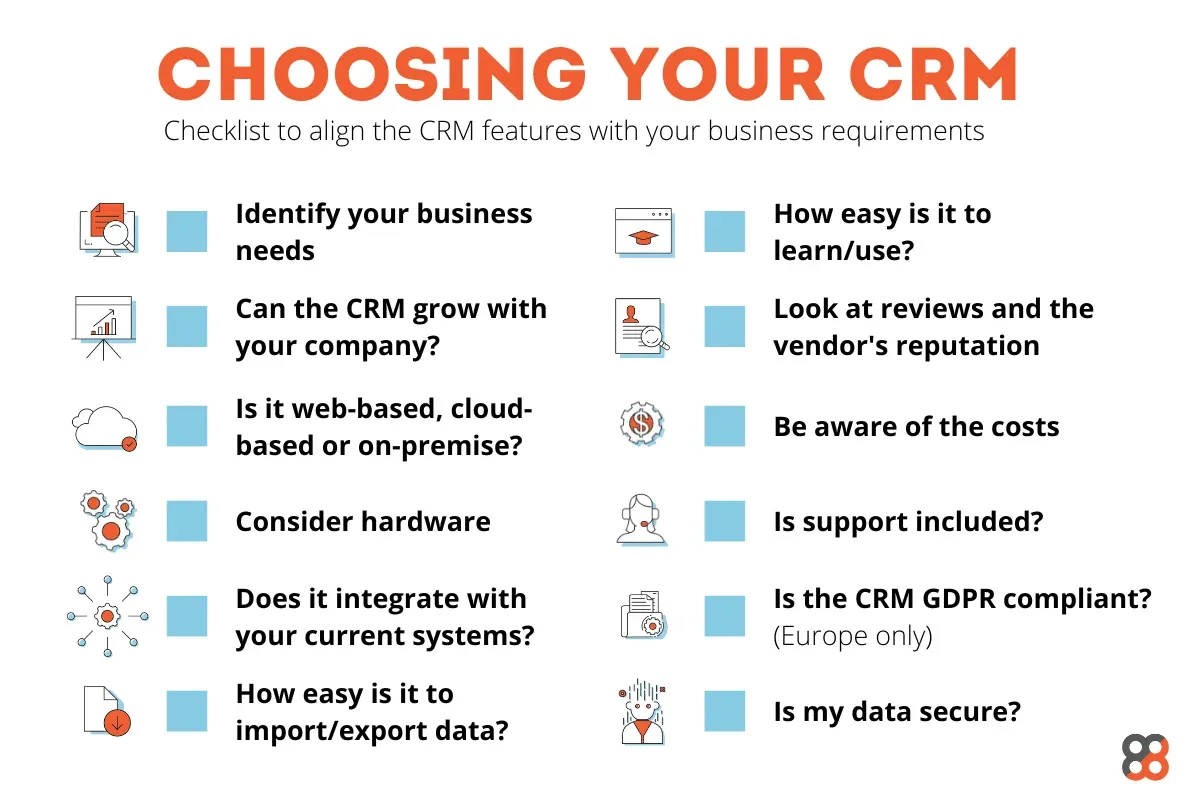
Small dating agencies and matchmakers choose CRM and management software by evaluating client profile depth, matching algorithm support, data privacy compliance, and billing flexibility. Unlike standard sales pipelines, matchmaking workflows require specialized data handling for personal preferences, relationship histories, and confidential communications.
Contents
The operational success of a boutique matchmaking business depends heavily on the technology stack it employs. When a matchmaker transitions from spreadsheets, email inboxes, and disparate calendars to a unified platform, the choice of customer relationship management (CRM) and management software dictates how efficiently they can scale. Small agencies face unique constraints, including limited IT support, tight software budgets, and the need for a deeply personalized client experience. Selecting the right system requires balancing off-the-shelf automation capabilities with the nuanced, high-touch requirements of human-driven matchmaking.
Understanding the Matchmaking Software Landscape
The software market serving the matchmaking and dating agency sector includes general-purpose small business CRMs, industry-specific matchmaking platforms, and bespoke custom-built solutions. General CRMs like HubSpot or Salesforce offer extensive automation and integration ecosystems, but they lack native features tailored to relationship matching, such as compatibility scoring, photo privacy controls, and dual-client record linking. Conversely, vertical-specific software built explicitly for matchmaking agencies incorporates these essential components out of the box.
Evaluating these platforms requires understanding how agencies manage their client lifecycle. A typical agency workflow begins with an initial lead capture, moves through a consultation phase, progresses to a paid membership agreement, and continues through active curation, date feedback sessions, and eventual renewal or closure. Software must seamlessly support each of these transitions without forcing staff to re-enter data across multiple systems.
General-Purpose CRMs Versus Niche Matchmaking Platforms
General CRMs excel at managing standard sales funnels, tracking email correspondence, and automating marketing campaigns. However, configuring a generic CRM to manage two-sided marketplaces—where one client must be matched with another client based on complex criteria—often requires expensive custom development and third-party plugins.
Niche platforms designed for dating agencies typically include:
- Dual-record database architectures that link two separate client profiles during an introduction.
- Secure vaults for sensitive data, such as background checks, ID verifications, and private notes.
- Integrated scheduling tools that accommodate mutual availability checks between matched parties.
- Client-facing portals where members can view curated introductions, accept or decline matches, and provide structured date feedback.
Core Feature Requirements for Boutique Agencies
When small agencies evaluate software options, they must prioritize features that directly influence matching efficiency and client satisfaction. While flashy user interfaces are appealing, the underlying data structure determines whether the software can handle real-world matchmaking scenarios.
Client Profile Management and Compatibility Fields
A robust dating agency CRM must capture both objective criteria and subjective preferences. Objective data includes age, location, marital status, and occupation. Subjective data encompasses lifestyle choices, core values, relationship goals, deal-breakers, and psychological preferences.
The software should allow matchmakers to create custom fields and weight them during searches. If an agency specializes in high-net-worth clientele or specific cultural communities, the database must accommodate these specialized filters without performance degradation. Furthermore, profile privacy settings are paramount. Matchmakers must be able to share anonymized profile summaries with prospective matches while keeping full contact details strictly confidential until both parties agree to an introduction.
Introduction Tracking and Feedback Loops
The core product of a dating agency is the introduction. Management software must track the entire lifecycle of a match, from the initial idea generated by the matchmaker to the post-date review.
The system should record:
- The rationale behind why two clients were paired together.
- The date and time the introduction was proposed to each party.
- The response status (pending, accepted, declined with reason).
- Post-date feedback scores, qualitative notes, and next-step recommendations.
This feedback loop feeds into the matchmaker's institutional knowledge, refining future match suggestions and providing verifiable data if a client questions the agency's effort during their membership term.
Data Privacy, Security, and Compliance
Dating agency software handles deeply personal, sensitive, and often intimate information, making security a non-negotiable criterion. Agencies operate under strict legal and ethical obligations to protect client data from breaches, unauthorized access, and misuse.
Regulatory Compliance Frameworks
Depending on the geographic jurisdiction in which an agency operates, it must comply with specific data protection laws. In the European Union and regions with similar frameworks, the General Data Protection Regulation (GDPR) mandates strict consent mechanisms, the right to data portability, and the "right to be forgotten." Similar standards apply under various state-level privacy laws in the United States, such as the California Consumer Privacy Act (CCPA).
When selecting management software, agency owners must verify:
- Data Encryption: Whether data is encrypted both in transit (via HTTPS/TLS) and at rest (stored securely on servers).
- Access Controls: Role-based permissions that restrict staff access to sensitive client files on a need-to-know basis.
- Data Retention Policies: Automated capabilities to purge or archive inactive profiles and confidential notes in accordance with legal requirements and company policy.
- Hosting Jurisdictions: Where physical data servers are located, ensuring compliance with cross-border data transfer regulations.
| Feature Area | General CRM Focus | Matchmaking-Specific CRM Focus | Why It Matters for Small Agencies |
|---|---|---|---|
| Data Architecture | Single-party contact records | Dual-client linked profiles | Enables pairing two active members for an introduction without data duplication. |
| Privacy Controls | Standard field-level security | Anonymized profile sharing & vaults | Protects sensitive background checks and hides contact details until mutual consent. |
| Matching Logic | Tagging and basic segmentation | Compatibility scoring algorithms | Saves manual search time by ranking candidate pools against criteria. |
| Client Portal | Support ticketing or invoices | Date feedback and match review | Engages clients digitally and collects structured post-date evaluation data. |
| Billing Models | One-off or simple SaaS invoices | Tiered memberships, milestones, retainers | Accommodates complex matchmaking contracts and payment schedules. |
Financial Considerations and Total Cost of Ownership
For small dating agencies, cash flow predictability and software return on investment (ROI) dictate purchasing decisions. Evaluating cost requires looking beyond the advertised monthly subscription fee to calculate the total cost of ownership (TCO).
Pricing Structures and Hidden Fees
Software vendors in the CRM space typically utilize tiered pricing based on active user seats, total contact volume, or advanced feature access. Small agencies should analyze how pricing scales as their database grows.
Key financial factors to examine include:
- Setup and Onboarding Fees: Many vertical-specific platforms charge implementation fees for data migration, staff training, and custom pipeline configuration.
- Per-User Versus Flat Fees: Per-seat pricing can become expensive as contract matchmakers or assistants are added. Flat-rate tier pricing may offer better predictability.
- Migration Costs: If an agency is moving from spreadsheets or an legacy system, the labor and technical cost required to clean and import historical data must be factored into the budget.
- Transaction Fees: If the software includes integrated payment processing for membership dues, verify the processing rates compared to standalone merchant accounts.
Implementation, Onboarding, and Data Migration
Choosing the right software is only half the battle; successfully deploying it without disrupting ongoing matchmaking operations requires careful planning. Small agencies rarely have dedicated IT departments, meaning the burden of migration falls on the agency owner or senior matchmakers.
Steps for a Smooth Software Transition
- Audit Existing Data: Review current spreadsheets, emails, and notes to remove duplicate entries, correct outdated contact information, and standardize data formats (e.g., date of birth structures, location names).
- Define Standard Operating Procedures (SOPs): Document how leads enter the system, what fields are mandatory during intake, and how matchmakers log notes. Software fails when team members use it inconsistently.
- Execute a Phased Rollout: Rather than cutting over entirely on a single day, run a pilot program with a small subset of clients or staff members to identify configuration errors and workflow bottlenecks.
- Conduct Staff Training: Ensure all users understand not just where to click, but why data entry discipline directly impacts matching accuracy and reporting visibility.
Common Pitfalls to Avoid
When evaluating and implementing management software, small agencies frequently encounter preventable mistakes that stall operations or waste capital.
- Overbuying Functionality: Purchasing enterprise-grade software loaded with complex features the agency will never use, paying for inflated seat counts, and getting bogged down by unnecessary configuration complexity.
- Neglecting Mobile Accessibility: Failing to test how the software performs on smartphones and tablets. Matchmakers frequently work on the go, attend networking events, or travel for client consultations, making mobile responsiveness essential.
- Ignoring Vendor Stability: Choosing a newly launched, unproven platform from a single developer that lacks financial backing, risking sudden software discontinuation or unpatched security vulnerabilities.
- Overlooking Integration Capabilities: Selecting a closed system that cannot integrate with the agency's existing email provider, calendar software, or payment gateway, creating manual data silos.
Frequently Asked Questions
Can a small dating agency use a standard CRM like HubSpot or Salesforce?
Yes, but it requires significant customization. Standard CRMs are built for sales pipelines rather than two-sided matchmaking. Agencies must configure custom objects or fields to link two clients together for an introduction, and they often need third-party extensions to handle client-facing date feedback portals and secure profile sharing.
How do matchmaking platforms protect confidential client data?
Reputable matchmaking software utilizes end-to-end encryption, secure cloud infrastructure, role-based access controls, and strict data privacy compliance measures such as GDPR and CCPA. They also feature anonymized profile viewing, ensuring contact details remain hidden until both clients consent to an introduction.
What is the typical cost range for dating agency management software?
Pricing varies widely based on agency size and feature tier. Basic general-purpose CRMs can cost between $30 and $150 per user per month, whereas specialized, vertical-specific matchmaking software platforms often range from $150 to over $500 per month depending on active database size, custom development needs, and integrated communication tools.
How long does it take to migrate client data into a new CRM?
Migration timelines depend on data cleanliness and volume. For a small agency with a few hundred active profiles stored cleanly in spreadsheets, migration can take between one and two weeks, including data mapping, testing, and verification. Messy historical data spanning multiple legacy systems can extend this process to a month or more.
Should an agency build custom software or buy an existing platform?
For almost all small dating agencies, buying an established, vertical-specific platform is vastly superior to building custom software from scratch. Custom development involves high upfront capital costs, ongoing maintenance burdens, security risks, and lengthy development cycles that divert focus from core revenue-generating matchmaking activities.
Conclusion and Next Actions
Selecting the right CRM and management software is a foundational strategic decision for any small dating agency. To move forward effectively, agency owners should first audit their current operational bottlenecks, document their exact client workflow from intake to post-date review, and establish a clear budget. Next, shortlist three software vendors that specialize in matchmaking or offer robust customizability, request live demonstrations focused on real-world matching scenarios, and conduct a trial migration with a sample dataset before committing to a long-term contract.
Image Gallery