Understanding the CIS Critical Security Controls for Cloud Security
The CIS Critical Security Controls (CIS Controls) for cloud security provide a prioritized framework of defensive actions designed to mitigate the most prevalent cyber attacks. By mapping version 8 of the controls to cloud-native envir...
The CIS Critical Security Controls (CIS Controls) for cloud security provide a prioritized framework of defensive actions designed to mitigate the most prevalent cyber attacks. By mapping version 8 of the controls to cloud-native environments, organizations can bridge the gap between traditional on-premises security and the shared responsibility models of modern cloud providers.
Contents
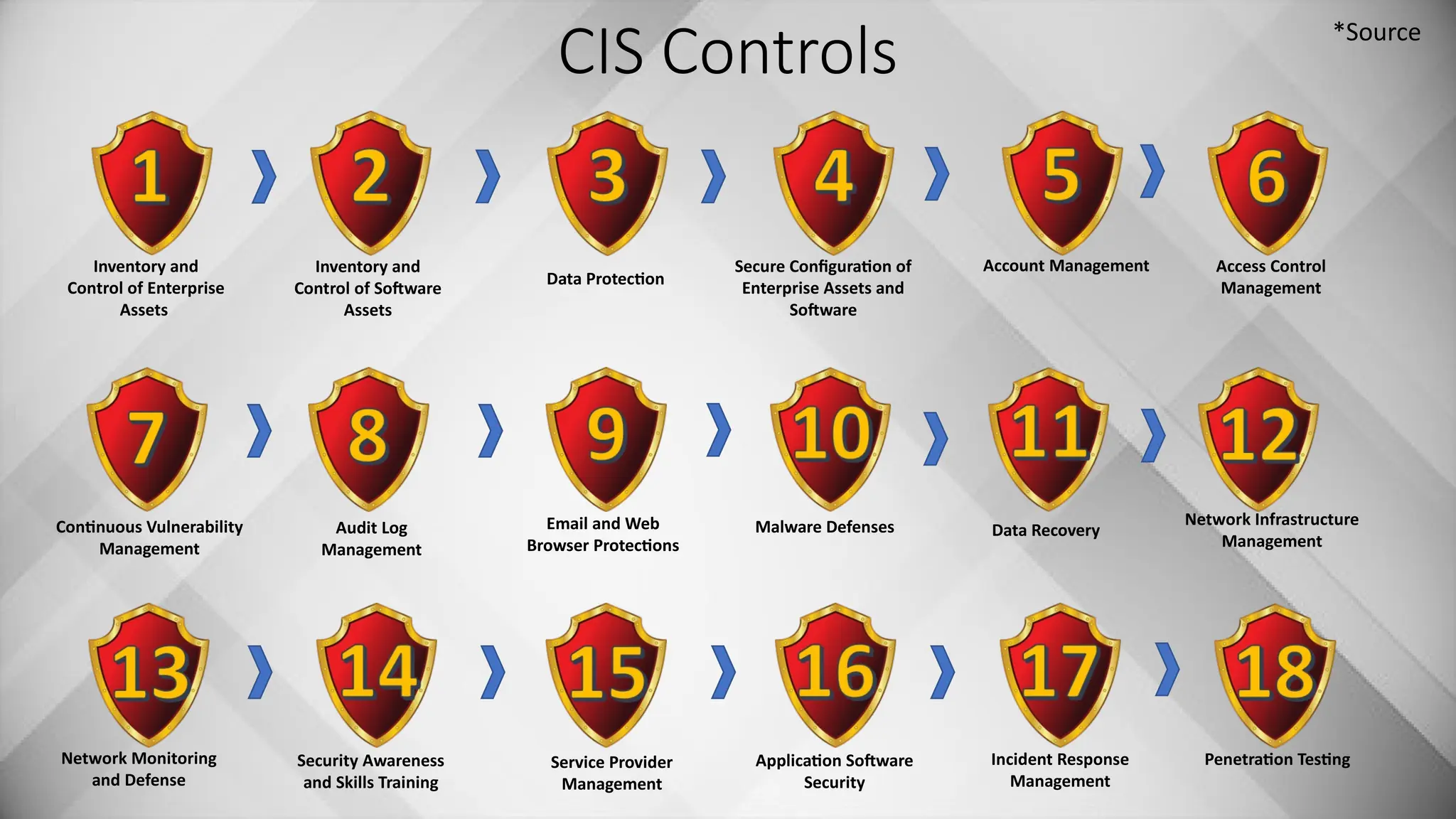
The shift to cloud computing has fundamentally altered the security perimeter. In a traditional data center, security teams had physical control over the stack—from the hardware and cabling to the operating system and applications. In 2026, the cloud landscape is defined by ephemeral resources, serverless architectures, and infrastructure-as-code (IaC). To maintain a robust posture, security professionals must understand how the Center for Internet Security (CIS) has adapted its 18 Critical Security Controls to address these unique cloud challenges.
The Evolution of CIS Controls in a Cloud-First Era
The CIS Controls, formerly known as the SANS Top 20, have long been the industry standard for "essential cyber hygiene." With the release of CIS Controls v8, the framework was streamlined from 20 controls to 18, reorganized by activity rather than device type. This change was specifically designed to accommodate modern technologies like cloud and mobile.
In cloud security, the primary obstacle is the Shared Responsibility Model. Whether an organization uses Amazon Web Services (AWS), Microsoft Azure, or Google Cloud Platform (GCP), the provider is responsible for the security of the cloud (the physical infrastructure), while the customer is responsible for security in the cloud (data, configurations, and identity). The CIS Controls provide the specific roadmap for what the customer must do to fulfill their part of this contract.
Implementation Groups (IGs)
CIS categorizes its safeguards into three Implementation Groups (IGs) to help organizations prioritize their efforts based on risk profile and available resources:
- IG1 (Essential Cyber Hygiene): These are the foundational safeguards that every organization, regardless of size, must implement to defend against general, non-targeted attacks.
- IG2 (Moderate Risk): Designed for organizations that manage more sensitive data and have a higher risk of being targeted by specific attackers.
- IG3 (High Risk): For organizations handling highly sensitive data or operating in regulated industries where sophisticated, persistent threats are a primary concern.
In a cloud context, achieving IG1 is often simplified by the native security tools provided by the Cloud Service Provider (CSP), but it requires careful configuration to ensure those tools are actually active.
Adapting Core CIS Controls for Cloud Environments
While all 18 controls apply to the cloud, several are particularly critical due to the nature of cloud orchestration and the high frequency of misconfiguration-led breaches.
Control 1: Inventory and Control of Enterprise Assets
In the cloud, "assets" are no longer just physical servers. They include Virtual Machines (VMs), containers, storage buckets, and serverless functions. Because cloud resources can be spun up in seconds, visibility is the greatest challenge.
- Cloud Application: Organizations must use automated discovery tools—often provided by the CSP, such as AWS Config or Azure Resource Graph—to maintain a real-time inventory. In 2026, security teams rely heavily on Cloud Infrastructure Entitlement Management (CIEM) to track not just the resources, but who (or what) has the power to create them.
Control 3: Data Protection
Cloud environments centralize massive amounts of data, making them lucrative targets. Control 3 focuses on identifying, classifying, and protecting this data.
- Cloud Application: This involves ensuring that data at rest is encrypted (using customer-managed keys where possible) and that data in transit uses TLS 1.3 or higher. A critical cloud-specific task is identifying "publicly accessible" storage buckets, which remains a leading cause of data leaks.
Control 4: Secure Configuration of Enterprise Assets and Software
Misconfiguration is the most common vulnerability in the cloud. Default settings provided by CSPs are often optimized for ease of use rather than maximum security.
- Cloud Application: Implementation involves using "Policy as Code" to enforce secure configurations. Tools like Terraform or CloudFormation templates should be scanned for security flaws before deployment. This control is heavily supported by the CIS Benchmarks, which provide step-by-step configuration guides for specific cloud services.
Control 5: Account Management and Control 6: Access Control Management
In the cloud, Identity is the new perimeter. Because there is no physical firewall between a user and a global cloud API, managing who can access the management console is paramount.
- Cloud Application: Multi-Factor Authentication (MFA) is non-negotiable for all accounts, especially administrative ones. Organizations should move toward "Just-In-Time" (JIT) access, where permissions are granted only for the duration of a specific task, rather than keeping permanent "standing" privileges.
The CIS Cloud Companion Guide
To assist organizations in this transition, CIS published the Cloud Companion Guide. This document maps the 18 controls specifically to cloud service models: Infrastructure as a Service (IaaS), Platform as a Service (PaaS), and Software as a Service (SaaS).
The guide clarifies who is responsible for which safeguard. For example, in an IaaS model, the customer is responsible for Control 7 (Vulnerability Management) on the guest operating system. However, in a SaaS model, the provider handles the vulnerability management of the application, and the customer's focus shifts entirely to Control 6 (Access Control) and Control 3 (Data Protection).
| Control Category | IaaS Responsibility | PaaS Responsibility | SaaS Responsibility |
|---|---|---|---|
| Inventory (C1/C2) | Shared: Provider tracks physical, Customer tracks virtual. | Shared: Customer tracks app-specific instances. | Customer: Mostly tracking users/licenses. |
| Data Protection (C3) | Customer: Full responsibility for encryption & backup. | Customer: Responsible for data layer security. | Customer: Responsible for classification and access. |
| Vulnerability Mgt (C7) | Customer: Must patch OS and Apps. | Shared: Provider patches OS, Customer patches App. | Provider: Full responsibility for patching. |
| Logging (C8) | Customer: Must configure log collection and retention. | Shared: Provider generates logs, Customer must analyze. | Provider: Generates logs, Customer may view limited logs. |
Implementation Challenges and Best Practices
Transitioning to a CIS-aligned cloud posture requires more than just a checklist; it requires a change in operational philosophy.
1. Overcoming Ephemerality
The fleeting nature of cloud resources means that traditional periodic scanning is insufficient. If a container exists for only ten minutes, a weekly vulnerability scan will never see it. Security must be integrated into the CI/CD pipeline (DevSecOps) so that images are scanned before they are deployed.
2. Monitoring the Control Plane
The "Control Plane" refers to the APIs used to manage cloud resources. An attacker who gains access to the control plane can bypass almost all traditional network security. Monitoring for unusual API calls (e.g., a sudden increase in resource deletions or unauthorized attempts to change IAM policies) is a critical component of CIS Control 8 (Audit Log Management).
3. Leveraging CIS Hardened Images
For organizations running virtual machines in the cloud, one of the most effective ways to satisfy Control 4 (Secure Configuration) is to use CIS Hardened Images. These are pre-configured virtual machine images that have been "baked" to meet CIS Benchmark standards. They are available in the marketplaces of all major CSPs and significantly reduce the manual effort required to secure an OS.
Measuring Success: The CIS Controls Self-Assessment Tool (CSAT)
Implementation is an ongoing process. CIS provides the CIS Controls Self-Assessment Tool (CSAT) to help organizations track their progress. In 2026, the Pro version of this tool allows for automated evidence collection from cloud environments. By integrating CSAT with cloud-native auditing tools, security leaders can generate real-time reports on their compliance with the 18 controls, identifying gaps as soon as they emerge.
For more detailed technical specifications, the official Center for Internet Security (CIS) website provides the complete framework documentation and mapping guides.
FAQ
1. Is CIS v8 different for cloud than for on-prem?
The 18 core controls are the same, but the "safeguards" (the specific actions within the controls) are implemented differently. On-prem implementation might involve physical locks and hardware firewalls, whereas cloud implementation involves IAM policies, VPC security groups, and API logging. The CIS Cloud Companion Guide provides the necessary context for this translation.
2. How do CIS Controls relate to the NIST Cybersecurity Framework (CSF)?
The NIST CSF is a high-level policy framework focused on managing risk, while the CIS Controls are a more technical and prescriptive set of actions. Many organizations use NIST CSF to define their security strategy and then use the CIS Controls as the "how-to" guide for implementation. They are complementary, not competitive.
3. What are CIS Foundations Benchmarks?
While the CIS Controls are high-level objectives, the CIS Foundations Benchmarks are specific, technical configuration documents for cloud platforms like AWS, Azure, and GCP. They provide prescriptive instructions (e.g., "Ensure MFA is enabled for all IAM users with a password") that help you fulfill the CIS Controls.
4. Who is responsible for CIS compliance in the cloud?
Under the shared responsibility model, the customer is responsible for ensuring their cloud configurations meet CIS standards. While CSPs like AWS or Azure provide the tools to be compliant, the customer must configure them correctly. Most CSPs are themselves compliant with the CIS benchmarks for the infrastructure they manage.
5. Can I automate CIS Control implementation?
Yes, and automation is highly recommended in the cloud. Using Infrastructure as Code (IaC) tools like Terraform or Pulumi allows you to define your security controls in code. You can then use automated scanners to ensure your code follows CIS Benchmarks before it is even deployed to the cloud environment.
Summary and Next Steps
Understanding the CIS Critical Security Controls for cloud security is about translating proven security principles into a dynamic, API-driven environment. For most organizations, the first step is to adopt Implementation Group 1 (IG1). Start by gaining total visibility into your cloud assets (Control 1) and securing your identity management (Control 5 & 6). Once the foundation is set, utilize the CIS Benchmarks to harden specific services and use the Cloud Companion Guide to ensure no gaps remain in your shared responsibility duties.
Image Gallery