Navigating the RN to MSN Program Overview: Pathways for Registered Nurses
An RN to MSN program allows registered nurses with an associate degree or diploma to earn a Bachelor of Science in Nursing and a Master of Science in Nursing through a streamlined bridge curriculum. This pathway accelerates advanced pr...
An RN to MSN program allows registered nurses with an associate degree or diploma to earn a Bachelor of Science in Nursing and a Master of Science in Nursing through a streamlined bridge curriculum. This pathway accelerates advanced practice, education, or leadership training, saving time and tuition costs compared to completing separate undergraduate and graduate degrees.
Contents
Understanding the RN to MSN Pathway
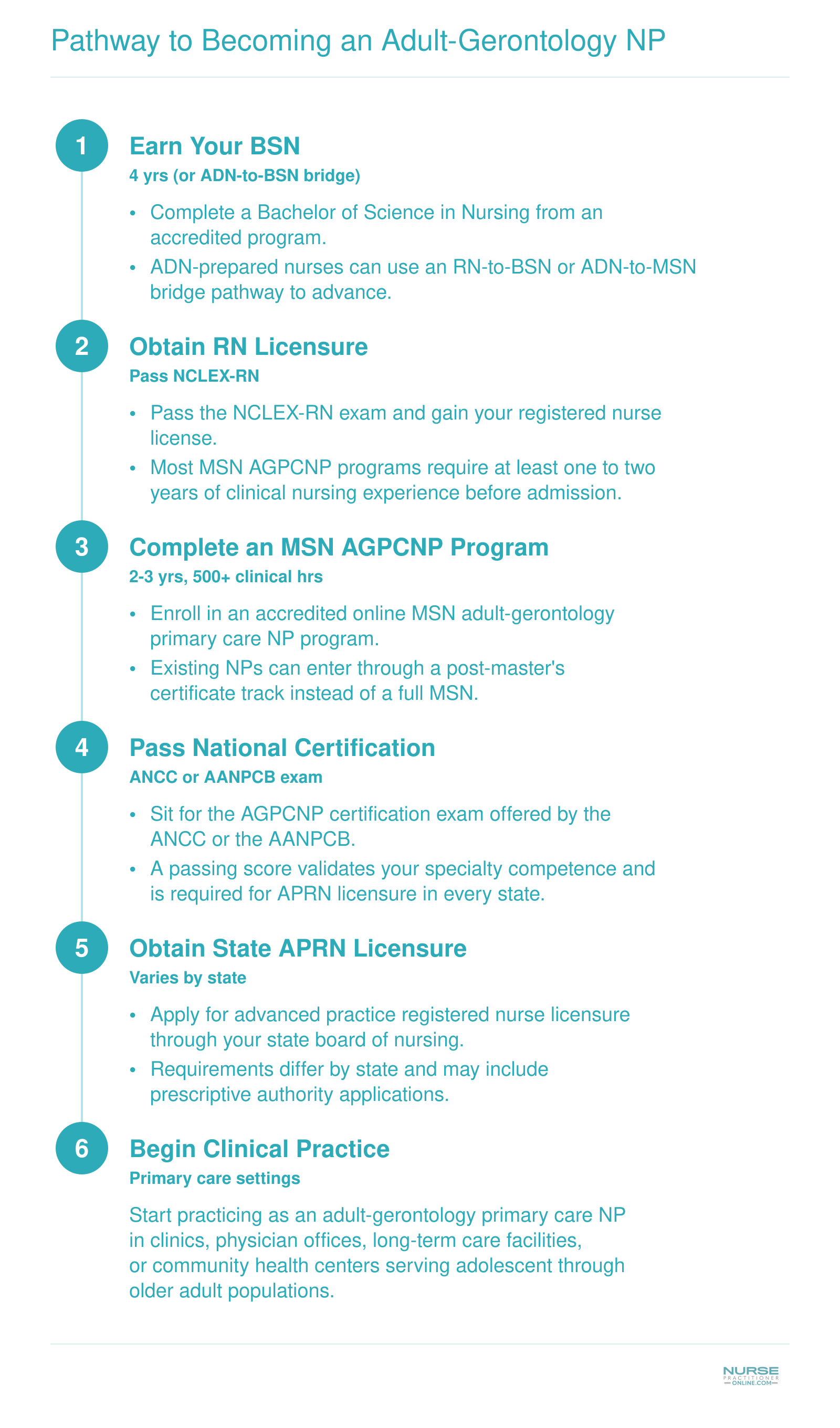
Registered nurses seeking career advancement often face a critical educational crossroad. Traditionally, professionals had to complete an RN-to-BSN degree before applying to graduate school. Modern educational design has evolved to accommodate working clinicians through the RN to MSN program. This accelerated bridge format evaluates foundational nursing competencies, bridges undergraduate learning gaps, and transitions directly into graduate-level coursework.
The primary objective of these programs is to cultivate advanced practice registered nurses (APRNs), nurse educators, and nurse administrators more efficiently. By bypassing redundant undergraduate coursework, institutions allow experienced nurses to apply clinical practice hours directly toward graduate competencies. Understanding how these pathways operate requires a close look at structural designs, target audiences, and expected academic commitments.
Target Audience and Admission Prerequisites
RN to MSN tracks cater specifically to licensed registered nurses who possess either an Associate Degree in Nursing (ADN) or a hospital diploma in nursing. Unlike traditional graduate applicants who hold a Bachelor of Science in Nursing, these candidates must meet rigorous dual-tier entrance criteria that validate both undergraduate foundational knowledge and graduate-level readiness.
Admission committees evaluate several critical metrics before granting acceptance into an RN to MSN curriculum:
- Active RN Licensure: Candidates must hold a current, unencumbered Registered Nurse license in the state where they practice or complete clinical hours.
- Undergraduate GPA: Most accredited institutions require a minimum cumulative GPA of 3.0 on a 4.0 scale for previous college coursework.
- Clinical Experience: Many programs mandate a minimum of one to two years of active bedside or clinical nursing experience prior to enrollment to ensure foundational competence.
- Prerequisite Coursework: Transcripts must reflect foundational sciences, including anatomy, physiology, microbiology, statistics, and health assessment.
Curriculum Structure and Core Phases
The curriculum of an RN to MSN program is meticulously sequenced into distinct phases. This ensures that students without a traditional bachelor's degree acquire the necessary baccalaureate-level competencies in research, leadership, and community health before diving into specialized master's courses.
Phase 1: The Transition and Bridge Phase
During the initial phase, students complete accelerated undergraduate bridge courses. These modules focus on evidence-based practice, nursing informatics, healthcare policy, and community health nursing. Successfully passing these bridge classes grants foundational credit equivalencies, bridging the gap between an ADN and graduate-level study without requiring a standalone BSN.
Phase 2: Core Graduate Coursework
Once transition requirements are met, students merge with traditional MSN cohorts. Core graduate classes explore universal advanced nursing concepts, including advanced pathophysiology, advanced pharmacology, and advanced health assessment. These subjects form the clinical foundation required across all advanced nursing specialties, ensuring every graduate commands a deep understanding of human pathology and pharmacological interventions.
Phase 3: Specialization Track
In the final phase, students concentrate on their chosen functional area. Depending on career goals, coursework pivots toward clinical specializations, educational theory, or executive leadership. This phase also incorporates intensive clinical residency hours under the direct supervision of preceptors.
| Specialization Track | Primary Focus Area | Typical Career Outcomes |
|---|---|---|
| Family Nurse Practitioner (FNP) | Primary care across the lifespan | Outpatient clinics, private practices, urgent care |
| Nurse Education | Curriculum design, pedagogy, student assessment | Academic institutions, hospital staff development |
| Nurse Administration / Leadership | Healthcare finance, operations, strategic planning | Director of Nursing, Chief Nursing Officer, Healthcare Manager |
| Nursing Informatics | Data analytics, electronic health record systems | Health tech firms, hospital informatics departments |
Program Formats and Flexibility
Balancing full-time employment with advanced education presents a significant challenge for working nurses. To accommodate diverse schedules, universities offer multiple delivery formats. Fully online RN to MSN programs provide asynchronous lectures and digital assignments, allowing clinicians to study during non-working hours.
However, hybrid models remain common, particularly for specializations requiring hands-on clinical laboratories and direct patient care hours. While theoretical lectures take place online, students must attend periodic on-campus intensives or complete supervised practicums at approved clinical sites within their local geographic area.
Clinical Practicum Requirements
A critical component of any MSN program is the supervised clinical practicum. Even in online or hybrid programs, students cannot bypass direct clinical hours. Accrediting bodies and state boards of nursing mandate hundreds of supervised practice hours to ensure graduates are competent in their chosen advanced role.
Students must coordinate with clinical preceptors—such as practicing physicians, nurse practitioners, or healthcare executives—who guide them through hands-on learning experiences. Securing appropriate preceptor sites often requires advance planning, and many nursing schools provide placement coordinators to assist students with regional site approvals.
Financial Considerations and Return on Investment
Investing in an RN to MSN program involves evaluating upfront tuition costs against long-term career earnings and professional mobility. Because these bridge programs eliminate redundant classes, they generally cost less and take less time than completing a separate BSN and MSN consecutively.
- Tuition Expenses: Costs vary widely between public in-state universities, private institutions, and for-profit online colleges. Prospective students should review per-credit tuition rates, technology fees, and clinical tracking software costs.
- Employer Assistance: Many healthcare networks offer tuition reimbursement or assistance programs in exchange for a work-service commitment following graduation.
- Salary Advancement: Transitioning from an ADN-prepared staff nurse to an advanced practice nurse or nurse administrator typically yields a substantial increase in earning potential and career autonomy.
Common Challenges and Solutions
Navigating an accelerated bridge program requires robust time management and organizational strategies. A frequent hurdle for returning students is academic burnout, caused by juggling night shifts, family responsibilities, and rigorous graduate assignments.
To mitigate these challenges, students should establish a structured study schedule, communicate workload boundaries with employers, and utilize writing centers or academic support services provided by their university. Furthermore, maintaining proactive communication with faculty advisors ensures that any academic difficulties are addressed before impacting progression.
Frequently Asked Questions
What is the difference between a traditional BSN-to-MSN and an RN-to-MSN program?
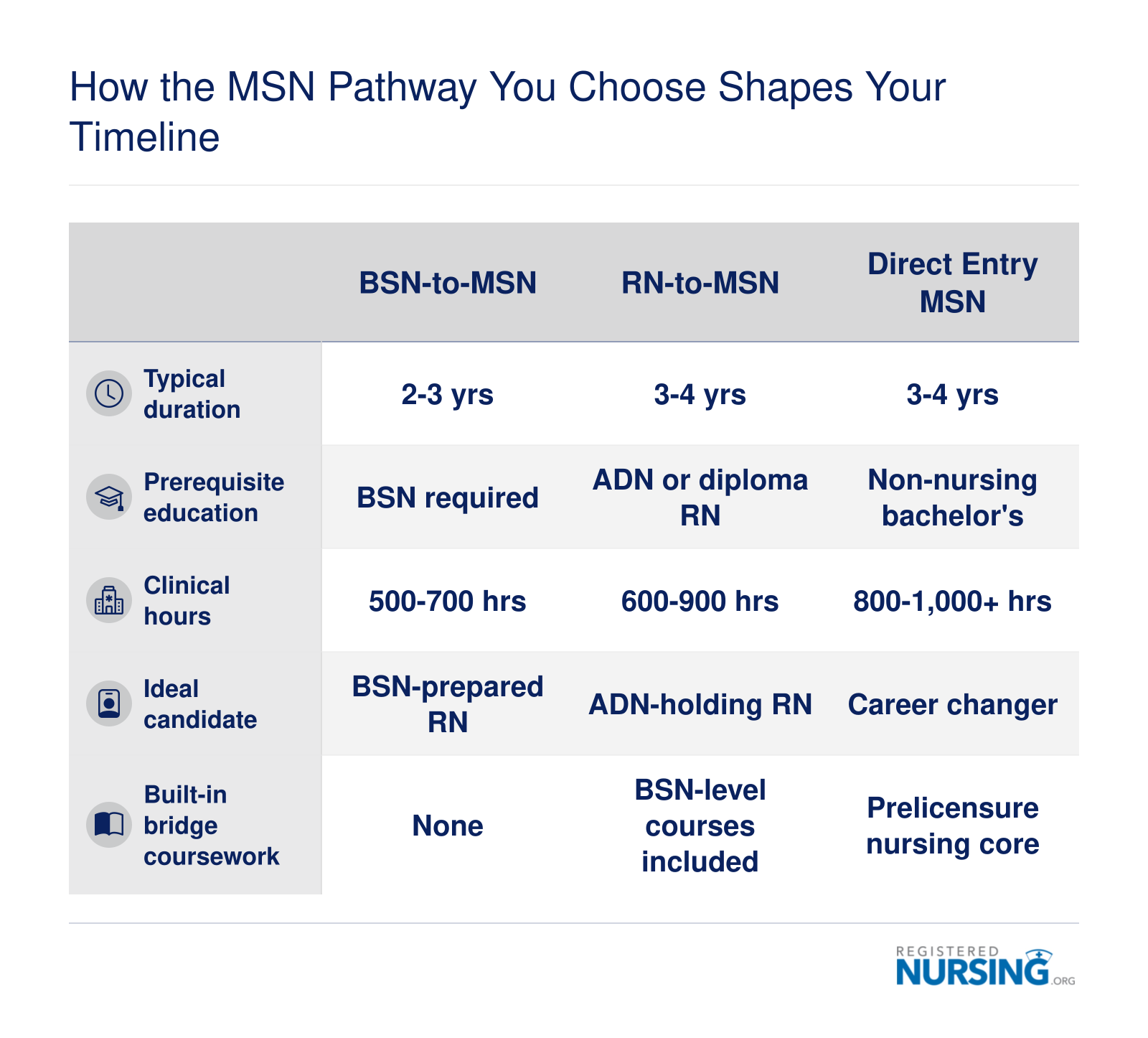
A traditional BSN-to-MSN program is designed for registered nurses who already hold a Bachelor of Science in Nursing. An RN-to-MSN program is specifically built for nurses with an Associate Degree in Nursing (ADN) or a nursing diploma, incorporating undergraduate bridge coursework into the graduate curriculum to save time.
How long does it take to complete an RN-to-MSN program?
Most programs take between three to four years of continuous part-time or full-time study. The exact duration depends on transfer credits, prerequisite completion, chosen specialization, and whether the student maintains employment during enrollment.
Can I work full-time while enrolled in an RN-to-MSN program?
Yes, many students work full-time, particularly in online or hybrid programs designed for working professionals. However, as students progress into advanced clinical practicums, balancing full-time employment with mandatory clinical hours may require shifting to part-time employment or adjusting work schedules.
Do I earn a BSN along the way in an RN-to-MSN track?
Some RN-to-MSN programs award a transitional BSN degree upon completion of the undergraduate bridge phase, while others utilize a "bridge" model where undergraduate competencies are mastered without conferring a formal bachelor's degree before the master's is awarded. Applicants should verify credentialing details with their specific institution.
What are the career prospects after graduation?
Graduates are eligible to sit for national certification examinations depending on their track—such as the ANCC or AANP board exams for nurse practitioners—opening doors to advanced clinical practice, healthcare administration, nursing education, and informatics roles.
Next Actions for Prospective Students
For registered nurses ready to advance their careers, the initial step involves requesting official transcripts from previous colleges and verifying current license standing. Candidates should research multiple accredited programs, comparing curriculum specializations, clinical placement support, and total tuition costs. Reaching out to academic advisors at prospective institutions will clarify exact credit transfer policies and application deadlines for upcoming cohorts.
Image Gallery