Protech (Protection Technologies, Inc.): A Comprehensive Guide to US-Based Perimeter Intrusion Detection
Protech (Protection Technologies, Inc.) is a premier American manufacturer specializing in outdoor perimeter intrusion detection systems (PIDS). Based in Reno, Nevada, the company provides high-security sensors—including microwave, pas...
Protech (Protection Technologies, Inc.) is a premier American manufacturer specializing in outdoor perimeter intrusion detection systems (PIDS). Based in Reno, Nevada, the company provides high-security sensors—including microwave, passive infrared (PIR), and dual-technology devices—to protect critical infrastructure such as military bases, utility substations, and data centers across the United States and globally.
Contents
Since its inception in 1980, Protech has established itself as a cornerstone of the American security manufacturing landscape. As we move through 2026, the demand for domestic, high-reliability security solutions has never been higher. Protech's focus on "Made in the USA" components and engineering provides a significant advantage for government and military contracts that require strict adherence to the National Defense Authorization Act (NDAA) and other domestic sourcing mandates. The company’s reputation is built on the technical precision of its sensors, which are designed to operate in the harshest outdoor environments while maintaining an industry-leading balance between high detection probability and low false alarm rates.
The Evolution of Outdoor Intrusion Detection
Outdoor intrusion detection is fundamentally more challenging than indoor security. Environmental variables—such as blowing debris, heavy rain, snow, wildlife, and fluctuating temperatures—can easily trigger "nuisance alarms" in lower-quality systems. Protech addressed these challenges early on by pioneering "Stereo Doppler" microwave technology and later refining "Dual-Technology" sensors.
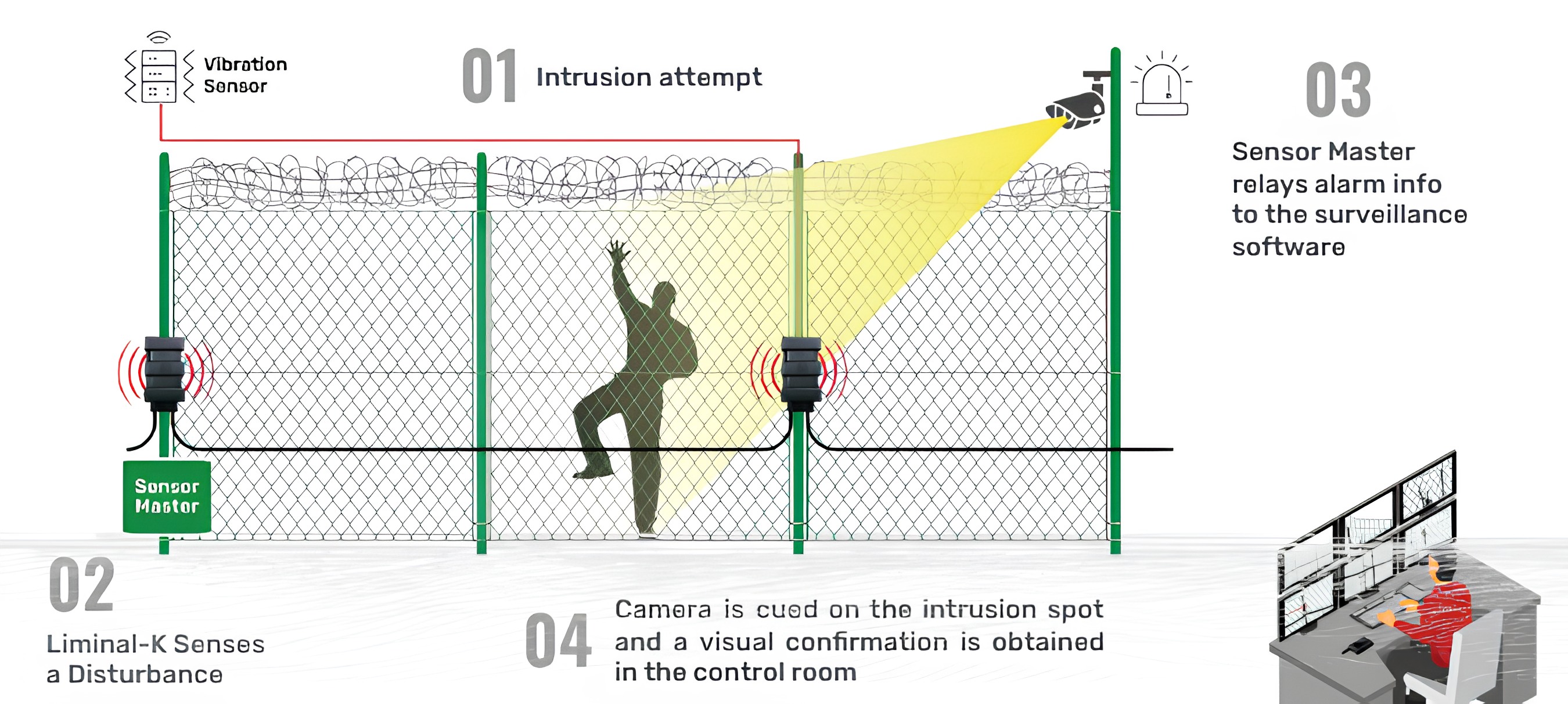
The primary goal of a Protech system is to establish a "virtual fence" or a volumetric detection zone. Unlike a physical fence, which can be climbed or cut, a volumetric sensor detects the motion and mass of an intruder within a specific three-dimensional space. By 2026, these systems have become integral to layered security strategies, where the perimeter sensor acts as the first line of defense, triggering camera presets (PTZ) and alerting security personnel before a physical breach of a building occurs.
Core Technologies: Microwave, PIR, and Dual-Tech
To understand why Protech is a leader in the field, one must examine the specific physics behind their three primary sensor categories. Each technology serves a specific environmental niche and security requirement.
1. Stereo Doppler Microwave Sensors
Protech’s microwave sensors, such as the SDI-76 and SDI-77 series, utilize the Doppler shift principle to detect movement. However, unlike standard microwave sensors that only measure frequency shifts, Protech’s Stereo Doppler technology can distinguish between the direction of movement (approaching vs. receding).
This is critical because it allows the sensor to ignore "oscillating" objects, such as tree branches moving back and forth in the wind or a chain-link fence vibrating. The sensor is tuned to identify the signature of a human-sized mass moving consistently through the detection zone. These sensors are typically used in "bistatic" (transmitter and receiver pairs) or "monostatic" (single unit) configurations depending on the layout of the site.
2. Outdoor Passive Infrared (PIR)
Standard PIR sensors are common in residential security, but outdoor environments require far more sophistication. Protech’s outdoor PIR sensors utilize advanced signal processing to filter out thermal changes caused by sunlight, clouds, or small animals. By using a multi-curtain optical pattern, these sensors can cover long distances (up to 150 feet or more) and provide precise "stop-line" detection.
3. PIRAMID Dual-Technology Sensors
The flagship of the Protech line is the PIRAMID (Passive Infrared and Microwave Intrusion Detector) series. These sensors utilize an "AND" gate logic circuit. For an alarm to be triggered, both the microwave sensor (detecting mass and motion) and the PIR sensor (detecting thermal signatures) must be activated simultaneously.
This dual-validation process virtually eliminates false alarms caused by environmental factors that might trigger one technology but not the other. For example, a gust of hot wind might trigger a PIR sensor, but since it lacks physical mass, the microwave sensor will not activate, and no alarm is sent. Conversely, a blowing piece of cardboard might trigger the microwave sensor, but its lack of a thermal signature will keep the PIR sensor silent.
Strategic Applications for Critical Infrastructure
In 2026, the protection of the electrical grid and water supplies remains a top national priority. Protech systems are frequently deployed to meet NERC CIP-014 standards, which require utilities to identify and protect "mission-critical" substations and control centers.
| Application Type | Primary Security Requirement | Recommended Protech Technology |
|---|---|---|
| Electrical Substations | High EMI/RFI immunity and weather resistance. | PIRAMID Connect (Dual-Tech) |
| Military Perimeters | Long-range volumetric detection with zero-gap zones. | SDI-76 Microwave Pairs |
| Data Centers | Integration with IP-based Video Management (VMS). | POE-enabled "Connect" Series |
| Correctional Facilities | Detection of movement in "sterile zones" between fences. | Mono-static Microwave Sensors |
| Gated Communities | Aesthetics combined with long-range "curtain" detection. | SDI-PIR Outdoor Series |
Utility Substation Protection
Substations are often located in remote areas with high electromagnetic interference (EMI). Protech sensors are engineered with heavy shielding to prevent the high-voltage environment from interfering with the low-voltage detection circuitry. The use of dual-technology sensors in these areas allows for reliable detection even when the ground is covered in snow or the air is thick with fog.
Data Center Security
As the backbone of the digital economy, data centers require multi-layered security. Protech’s "Connect" series provides Power over Ethernet (PoE) capabilities, allowing the sensors to be plugged directly into the facility's network. This enables real-time remote calibration and diagnostics, reducing the need for technicians to physically visit the perimeter for minor adjustments.
Technical Specifications and Integration
Modern security is rarely a standalone endeavor. A Protech sensor is most effective when integrated into a larger ecosystem. By 2026, the industry has standardized on IP-based communication, and Protech has kept pace with several key features:
- PoE and PoE+ Support: Simplifies installation by carrying both power and data over a single Cat6 cable.
- Web-Based Configuration: Installers can log into a sensor's IP address to adjust sensitivity, range, and "threshold" levels from a laptop or tablet.
- VMS Integration: Protech provides drivers and plugins for major Video Management Systems like Milestone, Genetec, and Avigilon. When a sensor is tripped, the VMS can automatically "slew" a PTZ camera to the exact zone of the intrusion.
- Environmental Compensation: Sensors include internal heaters and sealed housings (IP66/IP67 rated) to ensure functionality in temperatures ranging from -40°F to +150°F.
Installation Best Practices and Common Pitfalls
While Protech sensors are highly advanced, their effectiveness depends heavily on proper installation. Field experience in 2026 suggests that the following factors are critical for a successful deployment.
Clear Line of Sight
Microwave technology requires a clear path between the transmitter and receiver. Foliage, tall grass, or stored equipment can create "blind spots" or cause signal attenuation. Facilities must maintain a "sterile zone"—an area cleared of vegetation—to ensure the sensors function at peak performance.
Ground Stability and Leveling
For bistatic microwave links, the ground between the units should be relatively level. Significant dips or mounds can allow an intruder to crawl under the detection beam or jump over it. Protech provides "stacking" configurations (mounting multiple sensors at different heights) for high-security sites to counter sophisticated "low-crawl" or "ladder" breach attempts.
Avoiding "Crosstalk"
When multiple microwave sensors are used in close proximity, their signals can sometimes interfere with one another, a phenomenon known as "crosstalk." Protech addresses this by offering sensors with multiple selectable frequency channels. Installers must ensure that adjacent sensor pairs are set to different channels to prevent signal overlap.
Maintenance and Long-Term Reliability
One of the reasons Protech remains a leader in the US market is the longevity of their hardware. It is not uncommon to find Protech sensors that have been in continuous operation for over 15 years. However, to maintain high-security standards in 2026, a regular maintenance schedule is recommended:
- Walk-Testing: At least quarterly, a security officer should perform a "walk-test" by attempting to cross the detection zone at various speeds and heights (walking, running, crawling).
- Lens and Radome Cleaning: While the sensors are rugged, a buildup of heavy salt spray (in coastal areas) or thick mud can eventually impact sensitivity. Wiping down the PIR lenses and microwave radomes ensures signal clarity.
- Firmware Updates: For the "Connect" series, keeping the firmware updated is essential for cybersecurity. As a US-based manufacturer, Protech provides secure, signed firmware to protect against network-based vulnerabilities.
Frequently Asked Questions
Are Protech sensors NDAA compliant?
Yes. As a US-based manufacturer with production facilities in Nevada, Protech products are compliant with the National Defense Authorization Act (NDAA). This makes them suitable for use in US government facilities, military bases, and other sensitive installations where certain foreign-made components are prohibited.
How does weather affect Protech dual-tech sensors?
Protech dual-tech sensors (PIRAMID) are specifically designed to ignore weather-related disturbances. Heavy rain, fog, and snow rarely trigger both the PIR and microwave components simultaneously, meaning the system remains stable even in extreme conditions. Internal heaters are also available to prevent ice buildup on the sensor face.
Can Protech sensors be used for residential security?
While Protech equipment is primarily designed for industrial and military "High-Security" applications, it is frequently used for high-net-worth estates. Because of their price point and technical complexity, they are typically installed by professional security integrators rather than as DIY projects.
What is the maximum range of a Protech microwave link?
Depending on the model, Protech bistatic microwave links can cover distances of up to 200 meters (approximately 650 feet) per pair. For longer perimeters, multiple pairs are linked together to create a continuous detection boundary.
Do these sensors work in complete darkness?
Yes. Both microwave and PIR technologies are "non-optical" in the sense that they do not require visible light to function. They are equally effective in total darkness, heavy smoke, or blinding sunlight.
Practical Recommendations for Security Managers
If you are tasked with upgrading or installing a perimeter detection system in 2026, start by performing a Site Vulnerability Assessment. Identify the specific "threat vectors"—are you worried about a casual trespasser or a sophisticated saboteur?
For high-consequence environments, the PIRAMID Connect series is the gold standard for its balance of ease of integration and extreme reliability. If you are working within a limited budget but need to cover long, straight runs, the SDI-76 Microwave links offer the most cost-effective volumetric coverage per linear foot. Always consult with a certified Protech integrator to ensure that the sensor layout accounts for local topography and environmental noise.
Image Gallery