Major Refrigerator Types and Configurations for 2026
The primary types of refrigerators available in 2026 include French door, side-by-side, top-freezer, and bottom-freezer models, as well as specialized configurations like counter-depth, built-in, and under-counter units. Choosing the r...
The primary types of refrigerators available in 2026 include French door, side-by-side, top-freezer, and bottom-freezer models, as well as specialized configurations like counter-depth, built-in, and under-counter units. Choosing the right model depends on your kitchen layout, storage needs, and desired features such as smart technology or variable-zone cooling.
Contents
Understanding Refrigerator Configurations
When selecting a new appliance, the configuration—how the doors and compartments are arranged—is the most significant factor affecting daily usability. In 2026, manufacturers have refined these designs to maximize internal volume while maintaining a manageable external footprint.
French Door Refrigerators
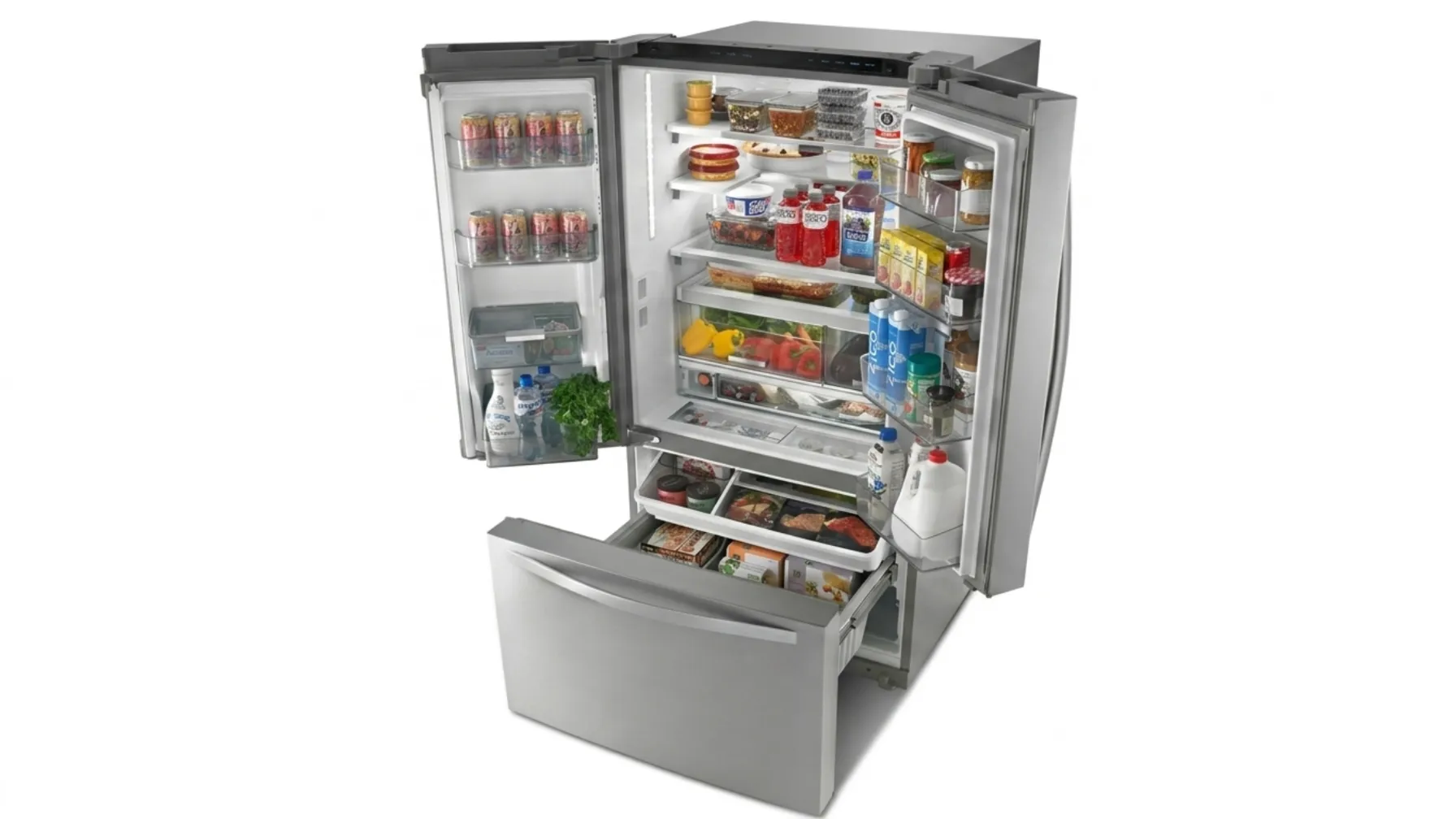
The French door refrigerator remains the most popular premium choice for modern kitchens. This configuration features two narrow doors on top for the fresh food compartment and one or more freezer drawers at the bottom. By 2026, the "four-door" and "five-door" variations have become industry standards. These often include a middle "flex" drawer that can be adjusted to specific temperatures for deli items, soft freezing, or chilled beverages.
The primary advantage of the French door style is its wide shelf space. Because the refrigerator section spans the full width of the unit, it can accommodate large platters, pizza boxes, and wide vegetable trays that would not fit in a side-by-side model. Furthermore, since the doors are narrow, they require less clearance to open, making them suitable for kitchens with islands or tight walkways.
Side-by-Side Refrigerators
Side-by-side models split the appliance vertically, with the freezer on one side (usually the left) and the refrigerator on the other. This design is ideal for households that access frozen goods frequently, as it places both fresh and frozen items at eye level.
In 2026, side-by-side units are often favored in narrow kitchens because the doors have the smallest swing radius of any full-sized configuration. However, the trade-off is the width of the interior shelves. Large items may struggle to fit, and the narrow vertical compartments can lead to "buried" items at the back of deep shelves. Modern engineering has mitigated some of this by using thinner, high-efficiency vacuum insulation panels that increase internal width without expanding the external dimensions.
Top-Freezer Refrigerators
The top-freezer configuration is the traditional layout where the freezer compartment sits above the refrigerator. While often viewed as an entry-level or "budget" option, top-freezers remain the most energy-efficient configuration per cubic foot. They lack the complex air-routing systems required for bottom-freezer models, which reduces both manufacturing costs and power consumption.
In 2026, top-freezers are frequently utilized as secondary units in garages or as the primary appliance in smaller apartments. Their simplicity often translates to higher long-term reliability, as they typically feature fewer moving parts and simpler electronics than their multi-door counterparts.
Bottom-Freezer Refrigerators
Bottom-freezer models are essentially the inverse of the top-freezer design. By placing the most-used compartment (the refrigerator) at eye level, they offer better ergonomics for the average user. You no longer have to crouch to reach the vegetable crisper or lower shelves. The freezer is usually a pull-out drawer, which makes it easier to organize and view frozen inventory from above.
Specialized Installation Styles
Beyond the door configuration, the way a refrigerator fits into your cabinetry defines the aesthetic and spatial efficiency of the kitchen.
Freestanding Refrigerators
Freestanding units are the most common and versatile. They are designed to stand alone or slide into a designated gap in the cabinetry. They typically have finished sides, allowing them to be placed at the end of a counter or even against a wall. While they offer the most storage capacity for the price, they often protrude several inches past the front of the counters.
Counter-Depth Refrigerators
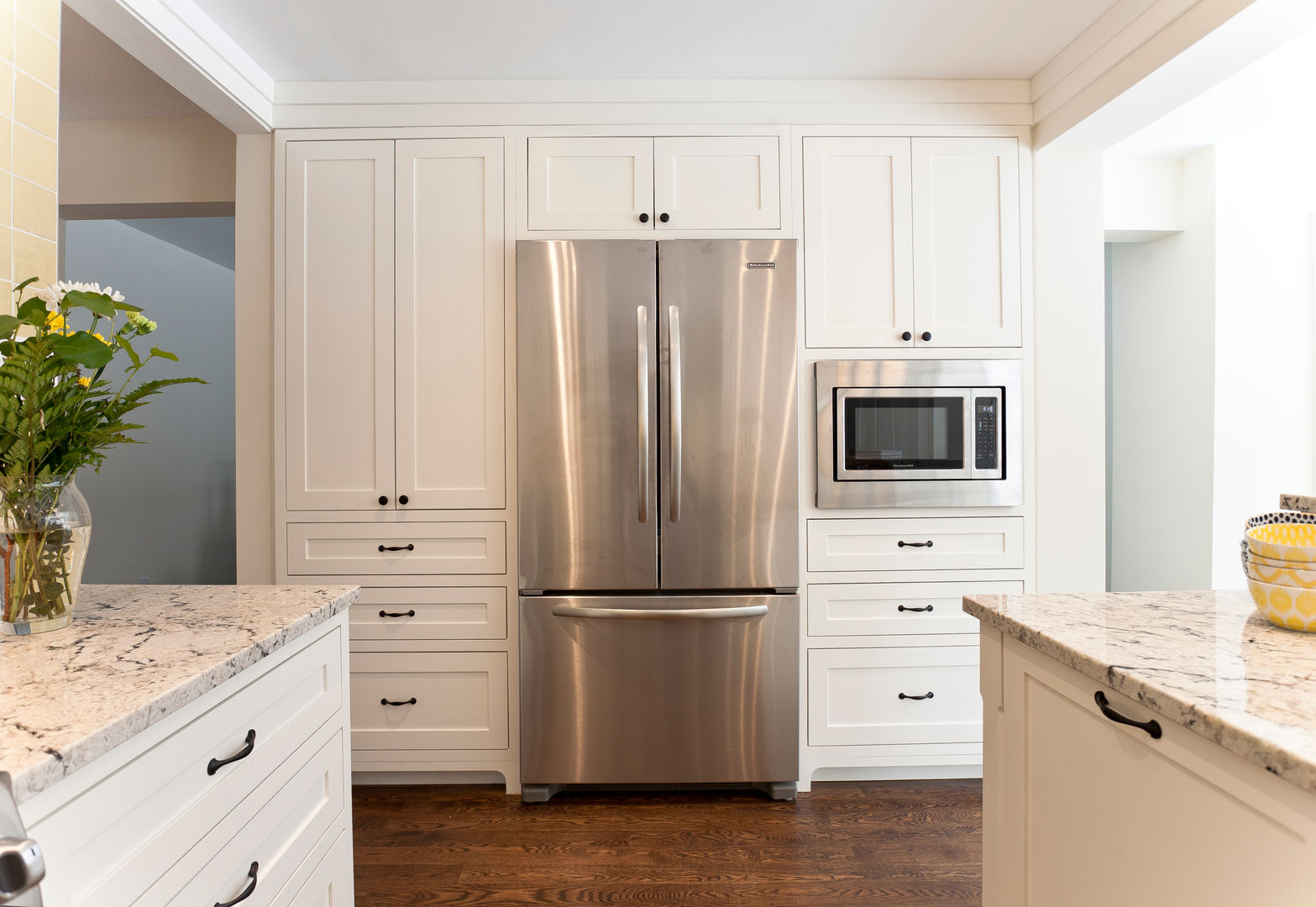
A counter-depth refrigerator is a freestanding unit designed with a shallower depth (usually 24 to 30 inches) to align nearly flush with standard kitchen cabinets. This creates a high-end, integrated look without the extreme cost of a true built-in model. In 2026, manufacturers have offset the loss of depth by making these units taller or using advanced insulation to maintain a competitive internal volume of 20 to 24 cubic feet.
Built-in and Integrated Refrigerators
Built-in refrigerators are secured into the cabinetry and are flush with the surrounding millwork. They are typically much taller than freestanding models (84 inches is standard) to recover capacity lost to their shallow depth.
Integrated models take this a step further by allowing custom cabinet panels to be mounted to the front of the appliance, making the refrigerator virtually invisible when closed. These are the hallmark of luxury kitchen design in 2026, utilizing heavy-duty articulated hinges that allow the door to open without interfering with adjacent panels.
Technical Innovations and 2026 Standards
As we move through 2026, the "types" of fridges are increasingly defined by their internal technology rather than just their external shape.
- Dual and Triple Evaporators: Modern high-end fridges use separate cooling systems for the fridge and freezer. This prevents dry freezer air from wilting produce in the refrigerator and stops odors from traveling between compartments.
- AI-Driven Inventory Management: Many smart fridges now include internal cameras and AI sensors that automatically track expiration dates and suggest recipes based on available ingredients.
- Variable-Speed Inverter Compressors: Unlike older models that simply turn "on" or "off," 2026 compressors adjust their speed based on cooling demand. This results in more stable temperatures, quieter operation, and significantly lower electricity bills.
- Sustainable Refrigerants: Compliance with environmental regulations means almost all 2026 models use R-600a (Isobutane), which has a much lower global warming potential than previous chemical refrigerants.
Comparison Table: Refrigerator Types at a Glance
| Fridge Type | Typical Width | Best For... | Key Advantage | Main Drawback |
|---|---|---|---|---|
| French Door | 30" - 36" | Large Families | Wide shelves, premium features | High price point, large footprint |
| Side-by-Side | 32" - 36" | Narrow Kitchens | Eye-level access to both zones | Narrow shelves (hard for wide items) |
| Top Freezer | 24" - 33" | Budget/Small Spaces | Energy efficiency and reliability | Poor ergonomics (crouching) |
| Bottom Freezer | 24" - 36" | Ergonomic Access | Refrigerator items at eye level | Freezer items can get buried |
| Counter-Depth | 30" - 36" | Modern Aesthetics | Sleek, near-flush appearance | Less internal depth/capacity |
| Built-in | 30" - 48" | Luxury Renovations | Seamless integration, long lifespan | Very expensive, requires pro install |
Specialized and Secondary Refrigeration
Not all refrigeration needs are met by a single primary unit. In 2026, secondary "point-of-use" refrigeration has become a standard feature in upscale home designs.
Under-Counter and Drawer Fridges
These units are installed under standard 36-inch high countertops. They are popular for beverage stations, home bars, or as "produce drawers" in a kitchen island. Refrigerator drawers, in particular, allow for specialized storage, such as a dedicated drawer for children's snacks or organic produce, separated from the main unit.
Wine and Beverage Centers
While standard fridges are kept between 35°F and 38°F, wine coolers offer higher, more stable temperatures (usually 45°F to 65°F) and vibration-dampening technology to protect delicate bottles. Beverage centers are hybrid units designed to hold both cans/bottles and wine at their respective optimal temperatures.
Compact and Mini-Fridges
Mini-fridges have evolved beyond the "dorm room" stereotype. In 2026, high-efficiency compact units are used in home offices and guest suites. Many now feature small "true freezer" compartments with separate doors, which perform much better than the integrated ice-box styles of the past.
Frequently Asked Questions
What is the most reliable type of refrigerator in 2026?
Generally, top-freezer models remain the most reliable due to their mechanical simplicity. They lack the complex water lines through doors and multiple cooling zones that often lead to repair issues in French door or side-by-side models. For premium models, built-in units often have longer lifespans (20+ years) compared to freestanding units (10-15 years), though their initial cost is significantly higher.
Are smart fridges worth the extra cost?
In 2026, the value of a smart fridge depends on how much you use its ecosystem. Modern AI features can reduce food waste by alerting you to items about to expire and can integrate with home energy management systems to run defrost cycles during off-peak electricity hours. If you do not use these features, the extra hardware (screens and sensors) represents an unnecessary point of failure.
What is the difference between counter-depth and standard-depth?
A standard-depth refrigerator is typically 30 to 34 inches deep, meaning it will stick out 6 or more inches from your cabinets. A counter-depth model is roughly 24 to 30 inches deep, designed to sit nearly flush with the cabinet carcasses. While counter-depth looks better, you lose roughly 3 to 5 cubic feet of storage space compared to a standard-depth unit of the same width.
How much capacity do I need for my household?
A general rule of thumb for 2026 is to allow for 4 to 6 cubic feet of fresh food space per adult in the household. A family of four typically finds a 20 to 25 cubic foot refrigerator sufficient. If you cook frequently or buy in bulk, opting for 26 to 30 cubic feet is recommended.
Can I install a freestanding fridge as a built-in?
You can slide a freestanding fridge into a cabinet cutout, but you must leave 1 to 2 inches of clearance on the top, back, and sides for ventilation. True built-in fridges vent from the front (usually through a bottom or top grille), allowing them to be installed with zero clearance. Installing a freestanding unit too tightly can cause the compressor to overheat and fail prematurely.
Recommendation for Choosing the Right Fridge
To make the best decision in 2026, start by measuring your space three times. Consider not just the width of the gap, but the "hinge clearance"—the space needed for the doors to swing open without hitting a wall or a pantry.
If you have a large family and the space for it, a French door refrigerator offers the best balance of features and usable space. If you are working with a tight budget or a small secondary kitchen, a top-freezer model provides the best value and longevity. For those prioritizing a high-end kitchen aesthetic, a counter-depth model offers the "built-in" look at a fraction of the price of a fully integrated unit. Always check for the Energy Star 2026 certification to ensure you are getting the most efficient cooling technology available.
Image Gallery