Understanding Louisiana Workers Compensation Insurance Rates: A Business Owner's Guide
Louisiana workers' compensation insurance rates are calculated per $100 of gross employee payroll based on specific risk classification codes established by the National Council on Compensation Insurance (NCCI). An employer's final pre...
Louisiana workers' compensation insurance rates are calculated per $100 of gross employee payroll based on specific risk classification codes established by the National Council on Compensation Insurance (NCCI). An employer's final premium is further adjusted by their Experience Modification Factor (E-Mod), insurer-specific expense multipliers, state assessments, and policy credits.
Contents
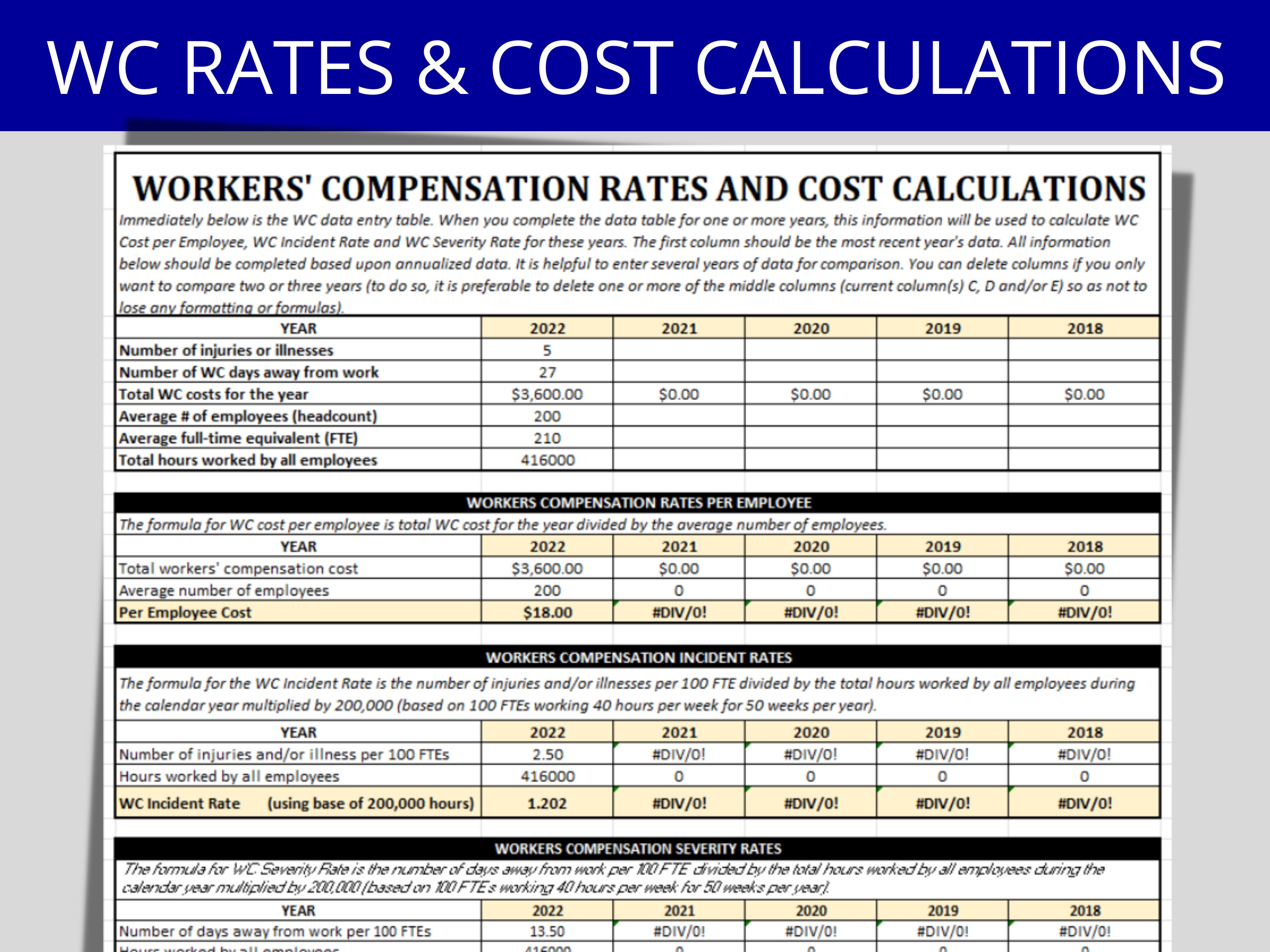
Final Premium = (Total Payroll / 100) × Base Class Rate × Experience Modification Factor + State Assessments
Navigating workers' compensation insurance costs in Louisiana requires an understanding of state statutory requirements, classification systems, experience rating adjustments, and administrative assessments. Under Louisiana law, virtually every employer with one or more employees is mandated to provide workers' compensation coverage. Whether operating a small retail establishment in Baton Rouge or managing a offshore maritime logistics firm in Houma, understanding how rates are developed enables business owners to control costs, avoid audit penalties, and ensure full statutory compliance.
Disclaimer: This guide is provided for educational and informational purposes only and does not constitute formal legal, accounting, or insurance risk management advice. For specific policy structuring or legal compliance, consult a licensed Louisiana insurance agent or qualified legal professional.
The Core Formula Behind Louisiana Workers' Compensation Rates
To effectively manage workers' compensation expenses, business owners must understand the basic mathematical equation used by standard insurance carriers in Louisiana. Premium calculation starts at the baseline exposure—payroll—and applies several risk-adjusted modifiers.
Payroll Units and Class Code Base Rates
Insurance companies measure risk exposure in $100 increments of employee payroll. Each job duties category is assigned a four-digit NCCI class code that reflects the historical hazard level of that specific occupation. Higher-risk occupations carry significantly higher rate multipliers per $100 of payroll.
For example, an office-based accounting firm with clerical employees under NCCI Code 8810 will pay a fraction of a dollar per $100 in payroll. Conversely, a roofing contractor working under NCCI Code 5551 will pay a much higher rate per $100 due to elevated loss frequencies and severe injury exposure.
Base Manual Premium = (Gross Subject Payroll / 100) × NCCI Advisory Loss Cost × Insurer Loss Cost Multiplier (LCM)
The Role of the Insurer Loss Cost Multiplier (LCM)
Louisiana operates as a competitive rating state. The Louisiana Department of Insurance (LDI) reviews base advisory loss costs filed by NCCI, but individual insurance companies apply their own Loss Cost Multiplier (LCM). The LCM accounts for the carrier’s operating expenses, overhead, taxes, and desired profit margins.
Two insurance carriers writing coverage for the exact same business in New Orleans might quote different baseline premiums simply because Carrier A maintains an LCM of 1.25 while Carrier B maintains an LCM of 1.45.
Key Factors Influencing Workers' Comp Premiums in Louisiana
Beyond base rates and payroll totals, several structural variables directly dictate what a business pays annually for coverage.
- Subject Gross Payroll
- NCCI Job Classification Code Rates
- Insurer Loss Cost Multiplier (LCM)
- Experience Modification Factor (E-Mod)
- State Mandated Assessments & Surcharges (SIF/OWCA)
1. Classification Code Allocation
Improperly classifying staff is one of the most common reasons businesses overpay—or face large audit adjustments. In Louisiana, payroll must be split accurately among applicable class codes. If an employer fails to maintain detailed, audit-compliant payroll records that separate duties (e.g., separating executive duties from field operations), the premium auditor is required to assign the entire payroll of that employee to the highest-rated applicable classification.
2. Payroll Exclusions and Inclusions
Not all employee remuneration is included in workers' compensation premium calculations.
- Included: Gross wages, salaries, commissions, bonuses, holiday/vacation pay, and payments to uninsured sub-contractors.
- Excluded: Severance pay, qualified fringe benefits, employer contributions to pension plans, premium pay for overtime (the portion that represents the excess over regular hourly rates), and tips.
3. Experience Modification Factor (E-Mod)
The Experience Modification Factor (E-Mod) is a rating multiplier that reflects a business's safety record compared to industry peers. The benchmark score is set at 1.00:
- E-Mod below 1.00 (e.g., 0.82): Indicates a favorable claims history, resulting in a credit adjustment that lowers premiums.
- E-Mod above 1.00 (e.g., 1.35): Indicates higher-than-expected claim losses, resulting in a debit surcharge that increases premiums.
NCCI calculates E-Mods using a rolling three-year experience window, excluding the most recently completed policy year. For instance, an E-Mod calculation evaluates historical claims frequency and severity across the preceding three full policy cycles.
Louisiana Statutory Requirements and Regulatory Framework
Workers' compensation in Louisiana is governed by the Louisiana Workers' Compensation Act (La. R.S. 23:1021 et seq.), administered by the Louisiana Workforce Commission (LWC) - Office of Workers' Compensation Administration (OWCA).
Mandatory Coverage Thresholds
Unlike some states that require coverage only after an employer hires three to five workers, Louisiana law mandates that any employer with one or more full-time, part-time, seasonal, or temporary employees must secure workers' compensation coverage.
Corporate Officers and Sole Proprietors
Under Louisiana law, corporate officers are automatically included in workers' compensation coverage unless they explicitly execute an election to reject coverage (Form LWC-WC-1025). Sole proprietors, partners in a partnership, and members of limited liability companies (LLCs) are generally excluded by default but may opt into coverage by written policy endorsement.
Statutory Employer Doctrine
Louisiana enforces a strict "statutory employer" doctrine (La. R.S. 23:1061). Principal contractors can be held liable for workers' compensation benefits for employees of subcontractors if those subcontractors do not maintain their own coverage. Consequently, general contractors require all subcontractors to present valid Certificates of Insurance (COI) prior to beginning work on a job site.
Louisiana State Surcharges, Assessments, and Markets
Beyond base premium rates, Louisiana imposes specific mandatory assessments and provides alternative market mechanisms for risk placement.
Standard Premium + Second Injury Fund Surcharge + OWCA Administrative Assessment = Total Paid Premium
The Second Injury Fund (SIF) Surcharge
Louisiana maintains a Second Injury Fund designed to encourage employers to hire workers with pre-existing permanent partial disabilities. If a previously injured worker suffers a subsequent work-related injury, the fund reimburses the insurer or self-insured employer for a portion of the disability compensation paid.
To finance this state fund, the Louisiana Second Injury Board assesses an annual surcharge on all workers' compensation premiums collected in the state. This assessment appears as a separate line item on policy statements.
OWCA Administrative Fund Assessment
The Office of Workers' Compensation Administration assesses a statutory fee on insurance carriers and self-insured employers to fund the administration of the state workers' comp dispute resolution system, safety compliance programs, and medical guidelines enforcement.
The Assigned Risk Market and LWCC
Employers unable to secure coverage in the voluntary commercial market due to high risk profiles or poor claims history can obtain coverage through the residual market.
In Louisiana, the Louisiana Workers' Compensation Corporation (LWCC) was created by the state legislature as a self-sufficient, competitive public corporation. LWCC serves as a private commercial writer while also maintaining market availability for employers who might otherwise struggle to find coverage in the voluntary sector.
Sample Rate Calculation and Industry Variations
Rates vary dramatically based on industry hazards. The following table provides illustrative examples of base NCCI rates and total premium variations across different Louisiana business sectors.
| Industry Sector | NCCI Class Code | Industry Risk Level | Sample Base Rate (per $100 Payroll) | Sample Payroll | Estimated E-Mod | Estimated Base Premium |
|---|---|---|---|---|---|---|
| Clerical Office | 8810 | Low | $0.22 | $500,000 | 0.90 | $990 |
| Retail Store (NOC) | 8017 | Low-Moderate | $1.45 | $350,000 | 1.00 | $5,075 |
| Automobile Repair Shop | 8380 | Moderate | $3.10 | $400,000 | 1.05 | $13,020 |
| Carpentry - Residential | 5645 | High | $8.50 | $250,000 | 1.15 | $24,438 |
| Electrical Wiring - Buildings | 5190 | Moderate-High | $3.80 | $600,000 | 0.85 | $19,380 |
Note: Figures above are representative illustrations based on statewide averages and sample LCMs. Actual rates vary based on carrier filings with the Louisiana Department of Insurance.
Actionable Strategies to Reduce Workers' Comp Expenses
Employers can take active steps to manage and reduce their workers' compensation insurance overhead through risk management and proactive administration.
- Effective Claims & Safety Management
- Reduced Claim Frequency & Severity
- Lower Experience Modification Factor (E-Mod)
- Reduced Annual Net Policy Premium
1. Implement Formal Safety Programs
Frequency of injuries impacts an E-Mod far more severely than a single catastrophic injury. NCCI's formula penalizes multiple smaller claims because they indicate an unmanaged workplace safety environment. Implementing regular safety training, enforcing personal protective equipment (PPE) requirements, and maintaining formal hazard reporting protocols reduces claim frequency.
2. Establish a Structured Return-to-Work Program
The duration of indemnity (lost wage) payments heavily influences workers' comp loss ratios. By offering transitional, light-duty work tailored to an injured employee's medical restrictions, businesses reduce lost-time compensation claims. Keeping an injured worker on modified duties keeps indemnity costs low, directly protecting the company's E-Mod rating.
3. Conduct Pre-Audit Payroll Reviews
Annual policy audits reconcile estimated payroll with actual payroll. To prevent unexpected audit billing:
- Maintain segregated payroll records for overtime (ensure overtime premiums are properly backed out of subject payroll).
- Ensure job duties are accurately recorded for each employee.
- Collect and archive Certificates of Insurance (COI) for every independent contractor and subcontractor utilized during the policy period.
4. Review NCCI Classification Codes Annually
Business operations evolve over time. Periodically audit your NCCI class code assignments with a licensed agent to ensure staff members are not placed in overly broad, higher-cost codes when lower-rated sub-classifications accurately describe their day-to-day duties.
Frequently Asked Questions
Are independent contractors required to carry workers' compensation in Louisiana?
Legally, true independent contractors are not required to cover themselves. However, under Louisiana R.S. 23:1061, if an independent contractor performs work that is part of the hiring business's regular trade, business, or occupation, they may be deemed a "statutory employee." If the contractor lacks their own insurance policy, the hiring company's insurance carrier will bill the hiring company for the contractor's payroll during the annual audit.
How does overtime pay affect Louisiana workers' comp rates?
Workers' compensation premiums are calculated on regular hourly pay rates. The extra premium portion of overtime pay (the "half-time" portion of time-and-a-half) can be excluded from payroll calculations during an annual audit, provided the employer maintains clear, audited payroll records separating regular pay from overtime increments.
What happens if a Louisiana employer fails to carry workers' compensation insurance?
Failing to secure required coverage carries serious civil and criminal penalties under Louisiana law. The OWCA can issue administrative fines up to $250 per employee for a first offense, increasing up to $500 per employee for subsequent violations (capped at $10,000). Furthermore, non-compliant employers lose their statutory immunity protection, exposing them to direct personal injury lawsuits in civil court where standard common-law damages apply.
Can business owners exclude themselves from workers' comp policies in Louisiana?
Yes. Corporate officers owning at least 10% of stock in a corporation can elect to be excluded from coverage by executing Form LWC-WC-1025 with their insurer. Members of LLCs and sole proprietors are generally excluded by default unless an endorsement is explicitly added to include them.
What is the Louisiana Construction Classification Premium Adjustment Program (PAP)?
The Construction Classification Premium Adjustment Program allows eligible employers in construction trades who pay higher-than-average hourly wages to receive a credit on their workers' compensation premiums. Because premiums are based on payroll, high-wage employers can be penalized relative to low-wage competitors; the PAP credit balances this disparity.
Strategic Next Steps for Business Owners
To control workers' compensation costs while maintaining legal compliance in Louisiana:
- Review Current Classifications: Review your current policy declaration page to confirm that NCCI class codes match actual employee duties.
- Request an E-Mod Audit: Obtain your NCCI Experience Rating Worksheet to verify that historical claims and payroll numbers were correctly reported by prior insurance carriers.
- Audit Subcontractor COIs: Implement an automated tracking system to collect valid Certificates of Insurance for every subcontractor prior to issuing payment.
- Schedule Pre-Audit Reconciliation: Work with your financial controller or CPA 60 days before policy renewal to prepare payroll records, separate overtime premiums, and avoid audit surcharges.
Image Gallery