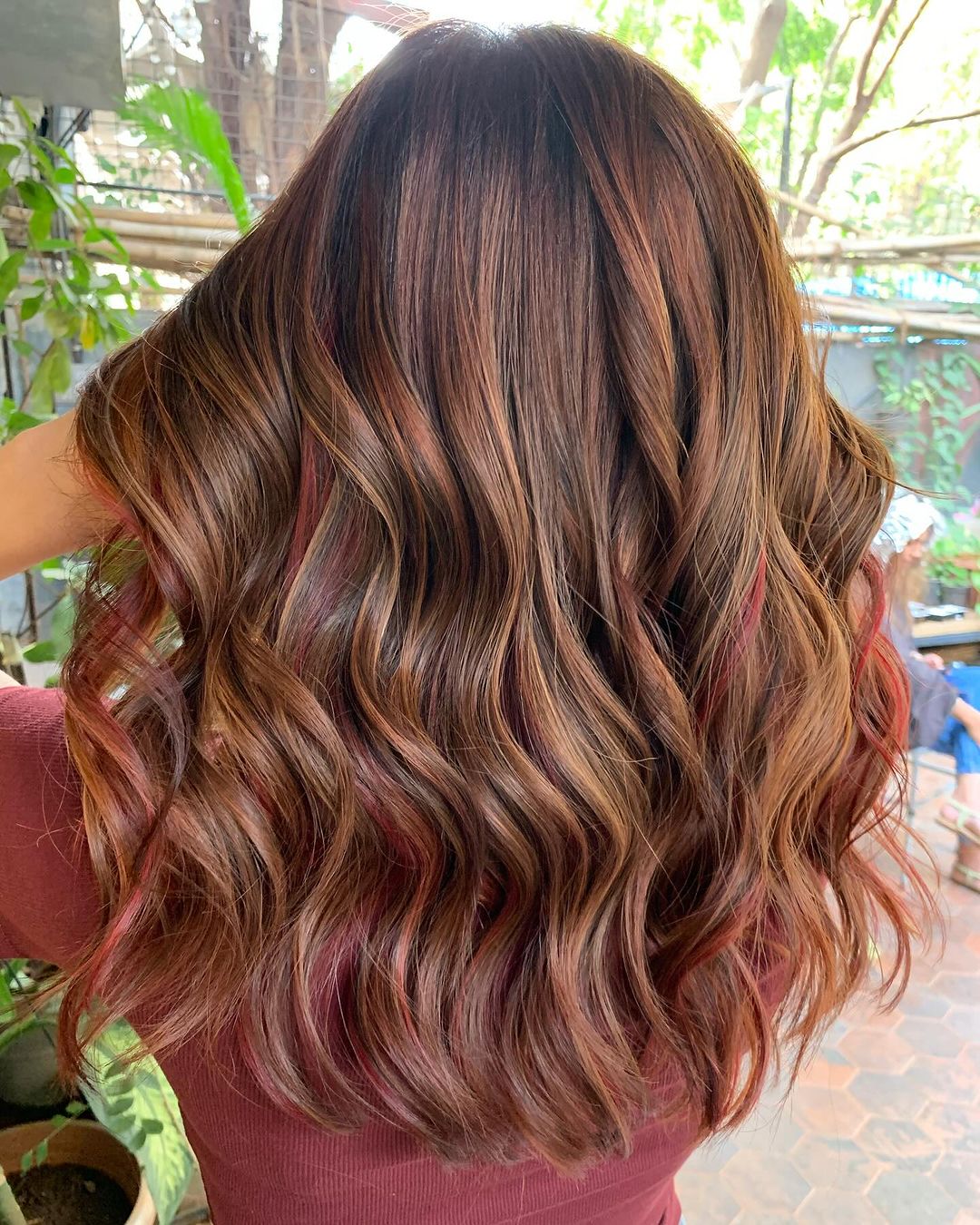
Expert Guide to Highlights for Red Brown Hair: Trending Styles and Maintenance for 2026
Red brown hair, often categorized as auburn, mahogany, or spiced chestnut, serves as one of the most versatile base colors in modern hair styling. As we progress through 2026, the shift in color theory has moved toward dimension and li...
Red brown hair, often categorized as auburn, mahogany, or spiced chestnut, serves as one of the most versatile base colors in modern hair styling. As we progress through 2026, the shift in color theory has moved toward dimension and lived-in luxury. Applying highlights to a red-brown base requires a sophisticated understanding of undertone neutralization and lift potential, as these shades are prone to revealing unwanted brassy orange or yellow pigments if not handled with professional-grade lighteners.
Contents
Understanding the Color Theory of Red-Brown Bases
The fundamental challenge with highlighting red-brown hair lies in the underlying pigment. Red-brown hair sits at a Level 3 to 5 on the professional salon color scale. When you apply lightener, the hair transitions through red, orange, and gold stages. For a successful highlight service, your colorist must determine if your base is a true copper-red (warm) or a violet-brown (cool).
- Cool-Toned Red-Brown: Pairs best with ash, mushroom, or violet-based highlights to neutralize warmth.
- Warm-Toned Red-Brown: Benefits from gold, honey, or copper-toned highlights to enhance the vibrancy of the existing base.
- Neutral Red-Brown: Offers the most flexibility, allowing for a mix of cool and warm placement to create depth.
Popular Highlighting Techniques for 2026
In 2026, we are seeing a departure from heavy, chunky highlights in favor of multi-dimensional placements that mimic natural light exposure.
- Ribbon Balayage: This technique involves hand-painting wide sections of hair to create a soft, seamless gradient. It is ideal for red-brown hair because it prevents the harsh lines of demarcation associated with traditional foils.
- Face-Framing Money Pieces: A high-contrast look that brightens the complexion. For 2026, we are seeing "muted" money pieces where the front strands are only two levels lighter than the base, rather than platinum blonde.
- Low-Light Integration: Adding deep, chocolate-toned lowlights alongside gold highlights creates a "chunky yet soft" look that adds the illusion of density to fine hair.
- Babylights: Micro-fine highlights placed near the crown to simulate natural sun-kissing. This is the gold standard for maintaining hair health while adding luminosity to a dark mahogany base.
Comparative Analysis: Choosing the Right Highlight Shade
Selecting the correct highlight tone is critical to avoiding a "striped" look. Use the following guide to determine which hue matches your specific red-brown depth.
| Highlight Tone | Base Compatibility | Visual Effect | Maintenance Level |
|---|---|---|---|
| Caramel | Medium Red-Brown | Warm, glowing, natural | Low |
| Ash Blonde | Deep Mahogany | Sophisticated, cool contrast | High |
| Copper | Spiced Auburn | Vibrant, monochromatic, bold | Medium |
| Rose Gold | Neutral Red-Brown | Trendy, soft, editorial | High |
| Mocha | Dark Chocolate-Red | Subtle dimension, professional | Very Low |
Professional Maintenance and Color Preservation
Maintaining highlights on red-brown hair requires a specialized 2026 haircare protocol. Because red molecules are larger than blonde or brown dye molecules, they tend to fade faster, leaving highlights looking dull or overly yellow.
The 2026 Professional Maintenance Protocol
pH-Balanced Cleansing Always utilize a pH-balanced shampoo designed for color-treated hair. Acidic formulas help seal the hair cuticle, which is essential after the chemical lifting process involved in highlighting.
Thermal Protection Requirements Heat styling at temperatures exceeding 350 degrees Fahrenheit will degrade your highlights and shift the tone. Always apply a silicone-free thermal protectant before using irons or blow-dryers to prevent heat-induced color fade.
Glossing Appointments Schedule a clear or color-depositing gloss service every six to eight weeks. This does not involve further lifting but refreshes the shine and corrects the tone of the highlights without the damage of permanent color.
Addressing Common Technical Failures
Even with precise technique, high-level lifting on red-brown hair can result in "hot roots" or orange bands. If you encounter these issues, the professional standard for 2026 is a shadow root application. By applying a demi-permanent color that is one shade darker than your natural root at the scalp, colorists can blend the transition between your natural hair and the highlights, effectively masking any inconsistencies in the lift.
Frequently Asked Questions
Will highlights damage my red-brown hair? All chemical highlighting involves some level of structural change to the hair cuticle, but 2026 bond-building technology significantly mitigates this risk. When performed by a professional using pH-bonding lighteners, the integrity of the hair can be maintained throughout the lightening process.
How often do I need to refresh highlights on red-brown hair? Depending on the technique, most clients require a refresh every 10 to 14 weeks. Balayage placements typically require less frequent maintenance compared to traditional foil highlights or heavy babylights.
Can I go platinum blonde starting from a dark red-brown base? It is physically possible, but rarely recommended in a single session. To maintain hair health, a transition to a lighter base should be completed over three to four appointments spaced six weeks apart to ensure the hair fiber remains intact.
Do purple shampoos work on highlighted red-brown hair? Purple shampoos are intended for very light blonde or silver hair. If you have highlights on red-brown hair, look for "blue" or "green" based toning shampoos, which are specifically formulated to neutralize the orange and red tones common in darker hair bases.
What is the best way to keep red highlights from turning brassy? The most effective way to combat brassiness is to avoid mineral buildup from hard water and to use cool-water rinses when washing. Incorporating a color-depositing conditioner with subtle red or mahogany pigments can also keep the highlights looking fresh between salon visits.
Strategic Planning for Your Next Salon Visit
When consulting with your stylist, bring high-resolution photos that show both the base color and the desired highlight intensity. Specify that you are looking for "dimensional warmth" rather than "bleached blonde," as this tells the stylist you prefer a cohesive look that complements your skin's natural undertones. Ensure your stylist checks for porosity issues before applying lightener, as previously color-treated red hair may react differently than virgin hair.
To achieve the best results, book your consultation during off-peak hours—typically mid-week in 2026—to allow for a thorough strand test. A strand test is the only scientific way to guarantee how your specific hair will lift and is a hallmark of a high-quality, professional salon experience.
Image Gallery