Navigating Workplace Injury Claims: A Comprehensive Litchfield Workers' Compensation Lawyer Overview
A Litchfield workers' compensation lawyer provides legal guidance to injured employees navigating Connecticut's workers' compensation system. They assist with filing formal claims, securing medical benefits and wage replacement, appeal...
A Litchfield workers' compensation lawyer provides legal guidance to injured employees navigating Connecticut's workers' compensation system. They assist with filing formal claims, securing medical benefits and wage replacement, appealing insurance denials, negotiating disability settlements, and representing workers during informal and formal hearings before the Workers' Compensation Commission.
Contents
Disclaimer: This guide is provided for informational purposes under Connecticut law and does not constitute formal legal advice. Injured workers should consult a licensed Connecticut attorney to discuss specific legal strategies and statutory deadlines.
The Role of a Litchfield Workers' Compensation Lawyer
Sustaining an injury or contracting an occupational illness on the job introduces sudden financial, physical, and administrative burdens. In Connecticut, the workers' compensation system was designed to provide a no-fault mechanism for injured employees to receive medical coverage and income replacement without having to prove employer negligence. However, navigating the legal technicalities, statutory deadlines, and insurance disputes often requires qualified legal counsel.
A Litchfield workers' compensation lawyer focuses on representing employees throughout Litchfield County and the broader Connecticut Workers' Compensation Commission district system (which handles local claims through regional district offices such as District 5 in Waterbury). These attorneys understand both the localized procedural nuances of regional hearing locations and the broader framework of the Connecticut Workers' Compensation Act (codified under Chapter 568 of the Connecticut General Statutes).
- Injury / Illness Occurs
- Notice to Employer & Form 30C Filed
- Claim Accepted
- Benefits Initiated (Medical / TTD / TPD)
- Claim Contested (Form 43)
- Informal Hearing Requested
- Pre-Formal / Formal Hearing
- Stipulation Settlement or Order
- Claim Accepted
Key Responsibilities of Counsel
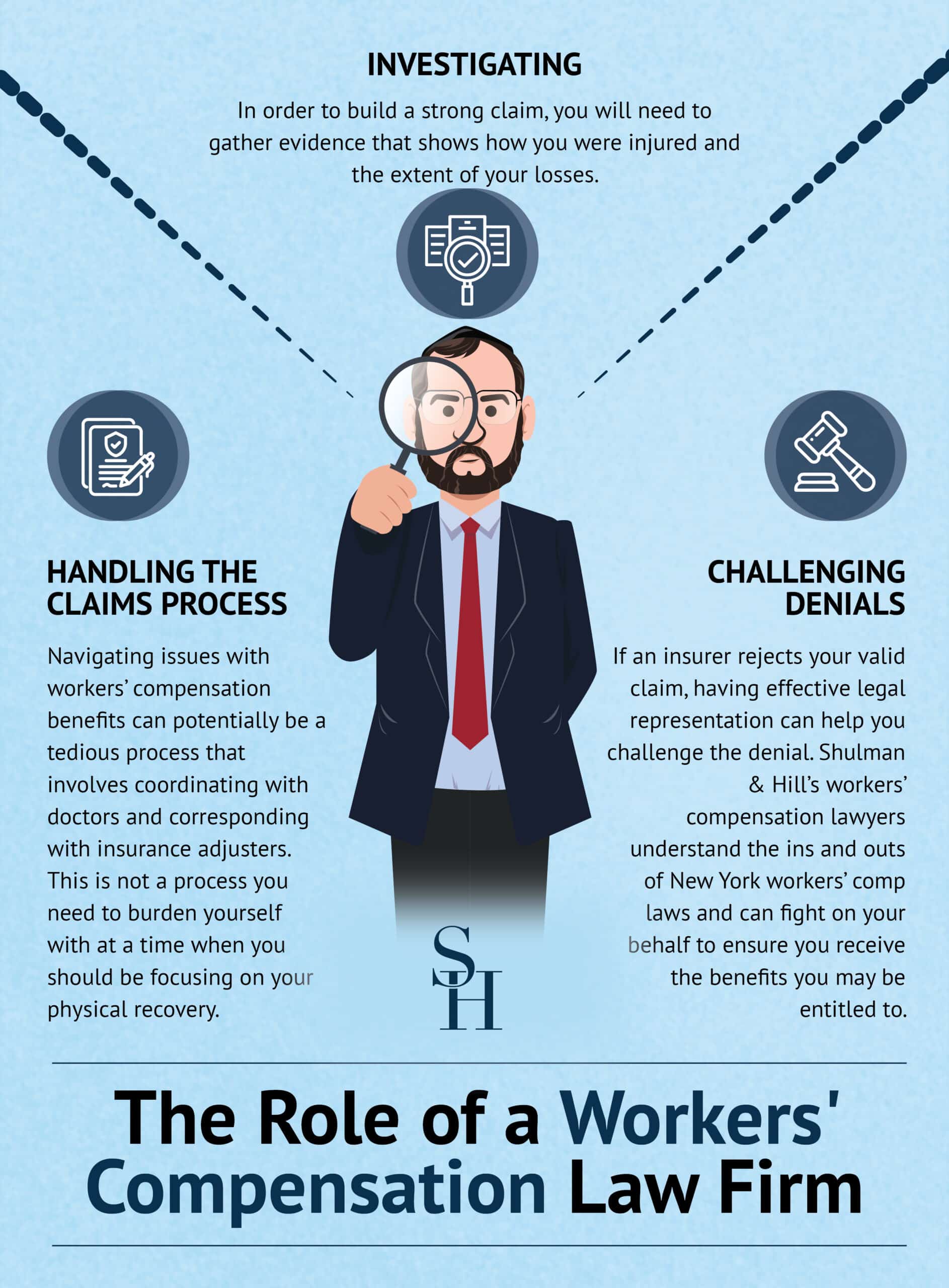
Workplace injury lawyers assist claimants at every stage of the recovery and administrative process:
- Claim Initiation & Filing Accuracy: Preparing and filing official notices, specifically Form 30C (Employee's Notice of Claim), ensuring statutory deadlines are strictly met.
- Medical Treatment Authorization: Ensuring insurers promptly approve diagnostic tests, specialist referrals, surgeries, and physical therapy prescribed by authorized treating physicians.
- Wage Calculation Disputes: Verifying that the insurance carrier calculates the employee's Average Weekly Wage (AWW) and baseline compensation rate accurately, taking into account overtime, concurrent employment, and bonuses.
- Dispute Representation: Advocating for the employee during Informal, Pre-Formal, and Formal Hearings before an Administrative Law Judge (formerly referred to as Workers' Compensation Commissioners).
- Settlement Negotiation: Evaluating long-term disability impacts, future medical costs, and negotiating structured settlements (Stipulations) with the insurer.
Core Benefits Available Under Connecticut Workers' Compensation Law
Connecticut statutes provide several categories of benefits depending on the severity of the injury, the extent of wage loss, and the degree of permanent impairment. A local attorney works to maximize entitlement across all applicable benefit categories.
- Connecticut Compensation Benefit Types
- Medical Expense Coverage
- Temporary Total Disability (TTD)
- Temporary Partial Disability (TPD)
- Permanent Partial Disability (PPD)
1. Complete Medical Coverage
Under C.G.S. § 31-294d, the employer or insurance carrier must furnish necessary medical and surgical care, hospital service, nursing care, and prescription medications. The employer has the right to designate an initial treatment center or provider; however, after initial treatment, the injured worker has the statutory right to select a primary attending physician within the appropriate medical specialty.
2. Temporary Total Disability (TTD)
If an authorized physician determines an injured employee is completely unable to perform any type of work due to their injury, the worker is entitled to Temporary Total Disability benefits under C.G.S. § 31-307.
- Calculation Rate: TTD benefits equal 75% of the worker's average weekly wage after federal and state income taxes and Social Security deductions are subtracted (referred to as the "net average weekly wage").
- Statutory Caps: Benefits are subject to statewide maximum and minimum caps updated annually by the Connecticut Department of Labor.
3. Temporary Partial Disability (TPD)
When a worker is medically cleared to return to work with light-duty restrictions, but the employer either offers light duty at reduced pay or cannot offer light duty at all, Temporary Partial Disability benefits apply under C.G.S. § 31-308(a).
- Partial Capacity: If earning lower wages on light duty, TPD pays 75% of the net difference between the pre-injury average weekly wage and current earnings.
- Job Search Requirement: If the employer cannot accommodate light duty, the employee may be required to conduct and document an active, good-faith job search to maintain eligibility for temporary partial benefits.
4. Permanent Partial Disability (PPD)
Once an injured employee reaches Maximum Medical Improvement (MMI)—the point at which no further significant medical recovery is anticipated—the treating physician assesses whether the worker has sustained permanent loss or loss of use of a specific body part or organ system under C.G.S. § 31-308(b).
- Rating Schedule: The physician assigns a percentage impairment rating (e.g., 10% loss of use of the master arm). The Connecticut Workers' Compensation Act provides a specific schedule of weeks of compensation for total loss of specific body parts.
- Payout: The worker receives weekly payments based on their compensation rate multiplied by the scheduled number of weeks corresponding to their percentage rating.
5. Discretionary Benefits (Section 31-308a)
After PPD benefits expire, if a worker's earning capacity remains significantly impaired due to the work injury, an Administrative Law Judge may award discretionary supplemental benefits under C.G.S. § 31-308a. These benefits are subject to strict evidentiary standards regarding ongoing job search efforts and wage loss.
Summary of Benefit Types, Statutory Basis, and Rates
The following table summarizes the primary benefit structures governed by Connecticut workers' compensation statutes:
| Benefit Type | Statutory Authority | Eligibility Threshold | Standard Rate / Benefit Duration |
|---|---|---|---|
| Medical Expenses | C.G.S. § 31-294d | Injury arising out of and in the course of employment | 100% of authorized treatment, prescriptions, and travel reimbursement |
| Temporary Total Disability (TTD) | C.G.S. § 31-307 | Complete medical incapacity to work | 75% of net average weekly wage (subject to state statutory maximums) |
| Temporary Partial Disability (TPD) | C.G.S. § 31-308(a) | Light-duty clearance; wage loss or lack of modified work | 75% of the net difference between pre-injury and post-injury earnings |
| Permanent Partial Disability (PPD) | C.G.S. § 31-308(b) | Reached MMI with permanent anatomical impairment | Scheduled weekly benefit based on body part loss percentage rating |
| Discretionary Post-PPD | C.G.S. § 31-308a | Exhausted PPD; ongoing earning capacity reduction | Discretionary award up to a maximum number of weeks tied to PPD award |
| Survivor/Dependents Benefits | C.G.S. § 31-306 | Fatal workplace injury or occupational disease death | 75% of net average weekly wage to surviving spouse/dependents plus burial allowance |
The Connecticut Claims Timeline and Dispute Resolution Process
Filing a workers' compensation claim in Connecticut involves specific administrative steps. Missing statutory deadlines or failing to follow formal hearing procedures can result in the loss of benefits.
- Step 1: Notice of Injury to Employer (Immediate / Formal Written Notice)
- Step 2: File Form 30C with WCC & Employer (Within 1 Year for Accidental Injury)
- Step 3: Insurer Response Window (Form 43 Contested within 28 Days or Pay without Prejudice)
- Step 4: Dispute Resolution
- Informal Hearing
- Pre-Formal Hearing
- Formal Hearing
Step 1: Immediate Employer Notification
An injured employee must notify their supervisor or employer immediately following an incident. While verbal notification is typical on the day of the injury, written notice provides essential documentation.
Step 2: Filing Form 30C
The formal legal commencement of a claim requires filing Form 30C (Notice of Claim for Compensation).
- Statute of Limitations: For accidental injuries, Form 30C must be filed within one year from the date of the injury. For occupational diseases or repetitive trauma claims, the deadline is three years from the first manifestation of a symptom or within one year of death.
- Filing Method: The form must be sent via certified mail or hand-delivered to both the employer and the appropriate District Office of the Workers' Compensation Commission. For Litchfield County workers, claims are generally submitted through the fifth district office (Waterbury) or designated administrative venues.
Step 3: Insurance Carrier Response (Form 43)
Once Form 30C is received, the insurance carrier has 28 days under C.G.S. § 31-294c to either accept the claim, begin paying benefits "without prejudice," or file a Form 43 (Notice of Intention to Contest Employee's Right to Compensation). If an insurer fails to file Form 43 or commence payments within 28 days, the claimant may file a motion for preclusion, which can prevent the insurer from contesting liability.
Step 4: Hearings Before the Workers' Compensation Commission
When disputes arise over compensability, medical treatment authorization, or disability status, either party may request a hearing:
- Informal Hearings: Informal conferences held before an Administrative Law Judge. These meetings last roughly 15 to 30 minutes. The judge reviews medical records, hears arguments from both sides, and offers non-binding recommendations. The vast majority of workers' comp disputes in Connecticut are resolved at the informal hearing level.
- Pre-Formal Hearings: If an informal hearing does not yield an agreement, a Pre-Formal Hearing is scheduled. This acts as a pre-trial conference where legal issues are narrowed, evidentiary stipulations are drafted, and hearing schedules are set.
- Formal Hearings: A formal judicial proceeding similar to a trial. Sworn testimony is taken, medical depositions are submitted into evidence, cross-examination occurs, and a court reporter creates a formal record. The Administrative Law Judge issues a legally binding Finding and Award or Finding and Dismissal.
Attorney Fee Structures and Cost Regulations in Connecticut
A major concern for injured workers considering legal representation is cost. Connecticut strictly regulates legal fees in workers' compensation matters to protect injured workers from excessive charges.
Contingency Fee Structure
Litchfield workers' compensation attorneys operate on a contingency fee basis. This means:
- There are no upfront attorney fees or hourly retainers paid by the worker.
- The attorney only collects a fee if they successfully secure a financial recovery, settlement (Stipulation), or contested retroactive benefit for the worker.
Statutory Fee Cap
The Connecticut Workers' Compensation Commission establishes guidelines capping attorney fees. In standard workers' compensation cases, attorney fees are generally capped at 20% of the net settlement or award obtained.
Case Expenses
In addition to legal fees, litigation involves administrative expenses such as obtaining official medical records, expert medical witness fees, deposition transcripts, and court filing costs. A transparent fee agreement outlines how these out-of-pocket expenses are handled upon the conclusion of the case.
Critical Mistakes Injured Workers Should Avoid
Navigating a workers' compensation claim requires precision. Committing common procedural errors can weaken a claimant's legal standing or result in a complete denial of benefits.
Common Pitfalls in CT Workers' Comp Claims:
Delaying Medical Evaluation or Notice to Employer
Failing to File Form 30C Within the 1-Year Window
Treating with Unapproved Medical Providers
Misrepresenting Pre-Existing Medical History
Stopping Light-Duty Job Searches Without Clearance
Failing to File Form 30C Early: Many workers mistakenly believe that filling out an internal incident report at their workplace satisfies the legal requirement. Internal incident reports do not trigger the statutory protection of Form 30C.
Unauthorized Provider Changes: Switching primary treating physicians without authorization from the insurer or approval from an Administrative Law Judge can lead to unpaid medical bills and denial of disability benefits.
Gaps in Medical Treatment: Skipping physical therapy sessions or failing to attend scheduled doctor appointments gives insurance adjusters grounds to argue that the injury has resolved or that the worker is non-compliant.
Ignoring Independent Medical Examinations (IMEs): Insurers have the right under C.G.S. § 31-294f to order a examination by a physician of their choice. Refusing to attend an IME can result in immediate suspension of indemnity benefits.
Posting on Social Media: Insurance defense investigators frequently monitor public social media profiles. Photos or status updates demonstrating physical activity can be used out of context to dispute disability claims.
Frequently Asked Questions
What should I do immediately after getting injured on the job in Litchfield?
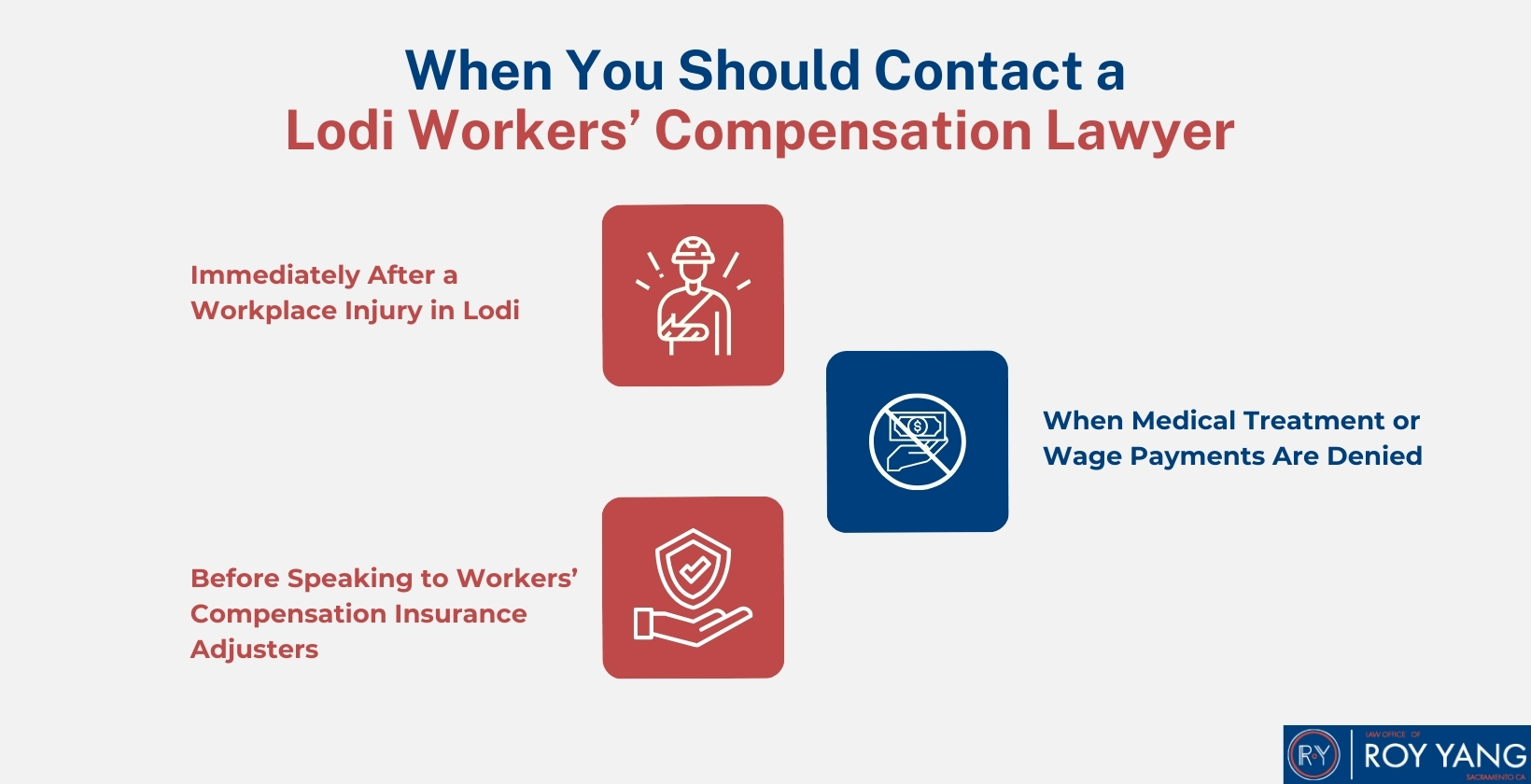
Report the injury to your employer in writing immediately. Request medical attention and inform the health care provider that the injury occurred at work. Next, file an official Form 30C with the Connecticut Workers' Compensation Commission and serve a copy to your employer via certified mail. Consult a local workers' compensation lawyer to protect your rights from the onset.
Can my employer fire me for filing a workers' compensation claim in Connecticut?
No. Under C.G.S. § 31-290a, it is illegal for an employer to discharge, discipline, or discriminate against an employee solely because the employee filed a workers' compensation claim or exercised their rights under the Workers' Compensation Act. If an employer retaliates, the worker can file a civil lawsuit or an administrative complaint with the Workers' Compensation Commission.
What is the difference between an informal hearing and a formal hearing?
An informal hearing is an unrecorded, 15-to-30-minute conference where an Administrative Law Judge reviews medical notes and helps both parties reach a voluntary compromise. A formal hearing is a structured trial with sworn witness testimony, evidentiary rules, legal briefs, and transcript recording, resulting in a binding written decision by the judge.
What happens if I had a pre-existing condition before my work injury?
You can still receive workers' compensation benefits in Connecticut if your work injury materially aggravated, accelerated, or exacerbated a pre-existing medical condition. The law does not require you to have been in perfect health prior to the workplace accident; however, medical evidence must establish that the workplace incident caused a distinct aggravation of the underlying condition.
How long does a workers' compensation claim settlement take?
The timeline varies significantly depending on medical treatment duration. Claims generally cannot settle until the injured worker reaches Maximum Medical Improvement (MMI). Once MMI is established and a permanent impairment rating is assigned, full settlement negotiations (Stipulations) typically take between two and six months, depending on the complexity of future medical needs and insurer cooperation.
Strategic Recommendations and Next Steps
If you have sustained a work-related injury or diagnosed occupational illness in Litchfield County, take systematic steps to protect your claim:
- Document the Incident: Maintain a dedicated file containing your written injury report, names of eyewitnesses, photographs of the hazard or injury, and notes on all interactions with supervisors.
- Submit Form 30C Formally: Do not rely on internal employer reporting forms alone. Complete Form 30C accurately and retain proof of certified mailing to both your employer and the Workers' Compensation Commission District Office.
- Adhere Strictly to Medical Guidance: Attend all medical appointments, physical therapy sessions, and diagnostic screenings. Obtain detailed work-status notes from your doctor after every visit.
- Schedule a Legal Consultation: Seek a case evaluation with a qualified Litchfield workers' compensation attorney. Having experienced counsel ensures your rights are protected during Informal Hearings, wage rates are correctly audited, and any final settlement reflects the full scope of your long-term medical and financial needs.
Image Gallery