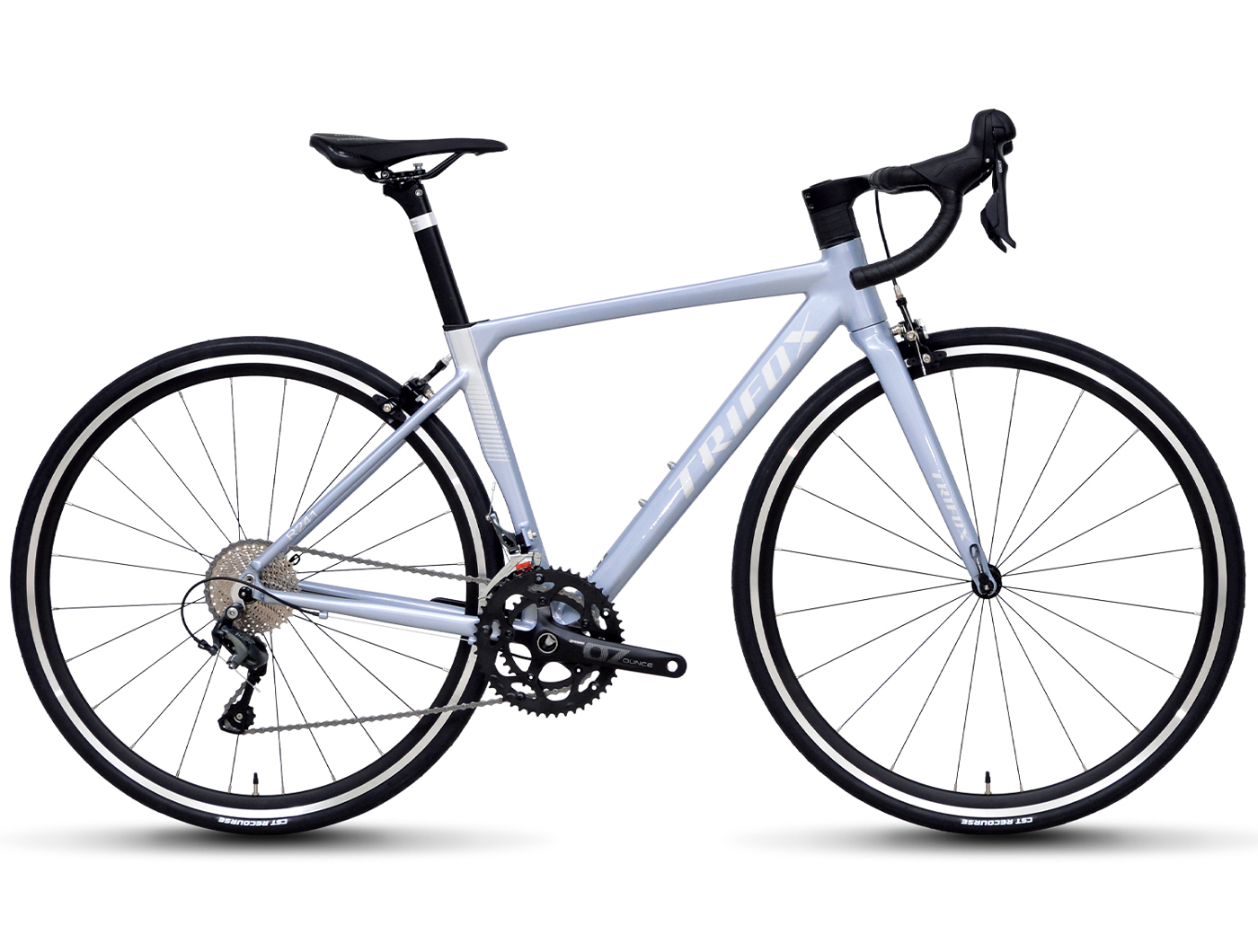
Understanding the Road Bike Top Speed You Can Expect
Most road cyclists can expect to maintain average speeds between 15 and 22 mph (24–35 km/h) on flat terrain under neutral conditions. Elite and professional riders often sustain averages of 25–30 mph (40–48 km/h). During maximum effort...
Most road cyclists can expect to maintain average speeds between 15 and 22 mph (24–35 km/h) on flat terrain under neutral conditions. Elite and professional riders often sustain averages of 25–30 mph (40–48 km/h). During maximum effort sprints, speeds can exceed 40 mph (64 km/h), while steep descents may push riders toward 60 mph (96 km/h) or more depending on skill and safety.
Contents
The Science of Velocity: Why Speed Isn't Just About Effort
To understand the top speed you can expect on a road bike, it is essential to recognize that speed is a result of a complex battle between the power you produce and the forces acting against you. Unlike walking or running, where mechanical efficiency is relatively low, a bicycle is an incredibly efficient machine. However, as you move faster, the resistance you encounter does not increase linearly; it increases exponentially.
As of 2026, the cycling industry has shifted its focus almost entirely toward managing these resistive forces. The primary obstacles to your top speed are aerodynamic drag, rolling resistance, gravity, and mechanical friction. Understanding how these forces interact allows you to set realistic expectations for your performance and identify the most effective ways to improve.
The "Wall" of Aerodynamic Drag
Aerodynamic drag is the single greatest hurdle to high speeds on a road bike. Once you exceed approximately 15 mph (24 km/h), air resistance becomes the dominant force you must overcome. Physics dictates that the power required to overcome drag increases with the cube of your speed. This means that to go twice as fast, you don’t just need twice the power; you need eight times the power.
By 2026 standards, the "aero" revolution has matured. Riders now prioritize their CdA (Coefficient of Drag multiplied by frontal Area). Because the human body accounts for roughly 80% of total wind resistance, your physical position on the bike—tucking your elbows, lowering your torso, and using the "drops" or aero-hoods—will have a more significant impact on your top speed than the bike frame itself.
Rolling Resistance and Surface Quality
While air resistance dominates at high speeds, rolling resistance (Crr) is the energy lost as your tires deform against the road surface. In recent years, the industry has moved toward wider tires (28mm to 32mm) at lower pressures, often using tubeless technology. This setup actually reduces rolling resistance on real-world roads because the tire absorbs micro-bumps rather than causing the entire bike and rider to lift, which wastes forward momentum.
Benchmarking Speed: What Is "Normal"?
Expected speeds vary significantly based on the rider's experience, fitness level, and the environment. It is helpful to categorize speeds into sustainable averages (what you can hold for an hour) and peak speeds (what you can hit for a few seconds).
Typical Speed Ranges by Rider Category (Flat Terrain)
| Rider Level | Sustainable Avg Speed (mph) | Sustainable Avg Speed (km/h) | Peak Sprint Speed (mph) | Estimated Power (Watts/kg) |
|---|---|---|---|---|
| Beginner | 12 – 15 | 19 – 24 | 20 – 25 | 1.5 – 2.0 |
| Intermediate | 16 – 19 | 26 – 31 | 26 – 32 | 2.5 – 3.2 |
| Advanced/Amateur Racer | 20 – 24 | 32 – 39 | 33 – 38 | 3.5 – 4.5 |
| Professional (UCI Elite) | 25 – 31 | 40 – 50 | 42 – 48 | 5.5 – 6.5+ |
Note: These figures assume a solo rider on flat ground with minimal wind. Group riding (drafting) can increase these averages by 20-30% for the same effort.
Equipment Factors That Dictate Your Ceiling
The bike you ride sets the mechanical limit of your potential speed. While the engine (you) is the most important component, 2026 road bike technology offers several features that help maximize your output.
Gearing and Cadence
Your top speed is physically limited by your "big gear" and how fast you can spin your legs (cadence). A standard "pro" setup usually features a 52/36 or 53/39 chainring combination paired with an 11-tooth or 10-tooth smallest sprocket on the cassette. If you are "spinning out"—meaning you cannot move your legs any faster to generate more speed—your gearing is the bottleneck. Most intermediate riders find that a cadence of 85–95 RPM (revolutions per minute) is the most efficient for maintaining high speeds without premature muscle fatigue.
Drivetrain Efficiency
Mechanical friction in the chain, derailleurs, and bearings can sap 10 to 20 watts of power. Modern enthusiasts in 2026 frequently use chain waxing instead of traditional oil-based lubricants to minimize friction. High-quality ceramic bearings in the bottom bracket and wheel hubs also offer marginal gains that contribute to a higher overall top speed, especially during long efforts where cumulative energy savings matter.
Wheel Depth and Inertia
Deep-section carbon wheels (typically 45mm to 60mm deep) act as a sail, improving aerodynamics and helping the bike maintain momentum once it reaches high speeds. While heavier wheels take more energy to accelerate, they are superior for maintaining a high "cruising" speed. For the highest possible top speed on flat roads, aerodynamic wheels are more beneficial than a lightweight "climbing" wheelset.
The Impact of Environment and Terrain
You cannot understand road bike speed without considering the "where" and "when." Environmental variables can easily double or halve the effort required to reach a specific velocity.
Gravity and Gradient
Gravity is the ultimate speed killer on inclines and the ultimate booster on declines. On a 6% uphill grade, aerodynamic drag becomes secondary to the power-to-weight ratio. Conversely, on a descent, gravity provides "free" power. Pro riders in the Tour de France have been clocked at over 65 mph (105 km/h) on technical Alpine descents. For the average rider, however, speeds above 40 mph on a descent require extreme caution, high-quality disc brakes, and excellent bike-handling skills.
Wind: The Invisible Variable
A 10 mph (16 km/h) headwind can make a fit rider feel like a beginner, while a 10 mph tailwind can make a beginner feel like an Olympian. When calculating the top speed you "can expect," always look at your two-way average (out and back) to account for wind assistance. Crosswinds are also a factor; they can create instability, especially with deep-section aero wheels, forcing you to slow down for safety.
How to Increase Your Top Speed
If you are looking to push your personal records, focus on these three pillars in order of effectiveness:
- Improve Body Position: Practice riding in the drops with a flat back. This costs nothing and provides the largest aerodynamic gain. Ensure your elbows are tucked in rather than flared out.
- Optimize Tires and Pressure: Use high-quality tubeless tires and use a pressure calculator to find the "sweet spot" for your weight. Over-inflated tires bounce off the road, while under-inflated tires create excessive drag.
- Structured Interval Training: To increase your speed, you must increase your Functional Threshold Power (FTP). Training in "Zone 4" and "Zone 5" helps your body become more efficient at clearing lactic acid and producing power when your heart rate is high.
Frequently Asked Questions
How much does a lighter bike affect my top speed?
On flat ground, weight has a negligible effect on top speed. Aerodynamics and rolling resistance are the primary factors. Weight only becomes the dominant factor when the gradient exceeds 5-6%. A bike that is 2kg lighter might save you only a few seconds over an hour-long flat ride, but it could save you minutes on a long mountain climb.
Is it safe to try for 50 mph on a road bike?
Reaching 50 mph (80 km/h) usually requires a steep descent. While modern road bikes with hydraulic disc brakes and through-axles are designed to handle these speeds, the risk of a crash increases significantly. At 50 mph, any mechanical failure or road hazard (like a pothole or gravel) can lead to a life-altering accident. Always ensure your tires are in perfect condition and you have a clear line of sight before attempting high-speed descents.
Do aero helmets and clothing actually make a difference?
Yes, surprisingly so. A standard "flappy" cycling jersey can create significantly more drag than a form-fitting "race fit" jersey. In professional testing, an aerodynamic helmet is often cited as the most cost-effective "speed per dollar" upgrade you can make, potentially saving 10-15 watts at 25 mph compared to a standard vented climbing helmet.
Why is my average speed so much lower than my "top speed"?
Average speed includes time spent slowing down for corners, stopping at traffic lights, and climbing hills. In a typical urban or hilly environment, your average speed might be 16 mph even if you spent much of the ride cruising at 22 mph. Top speed is a measure of peak capability, while average speed is a measure of endurance and environmental efficiency.
Final Recommendation
To truly understand the road bike top speed you can expect, begin by tracking your rides with a GPS computer or smartphone app. Use a power meter if your budget allows, as this provides the most objective data regardless of wind or hills. Focus first on your body position and tire setup—these are the "low-hanging fruit" of cycling speed. As your fitness improves and your CdA decreases, you will find that speeds once reserved for your "sprint" eventually become your sustainable cruising pace.
Image Gallery