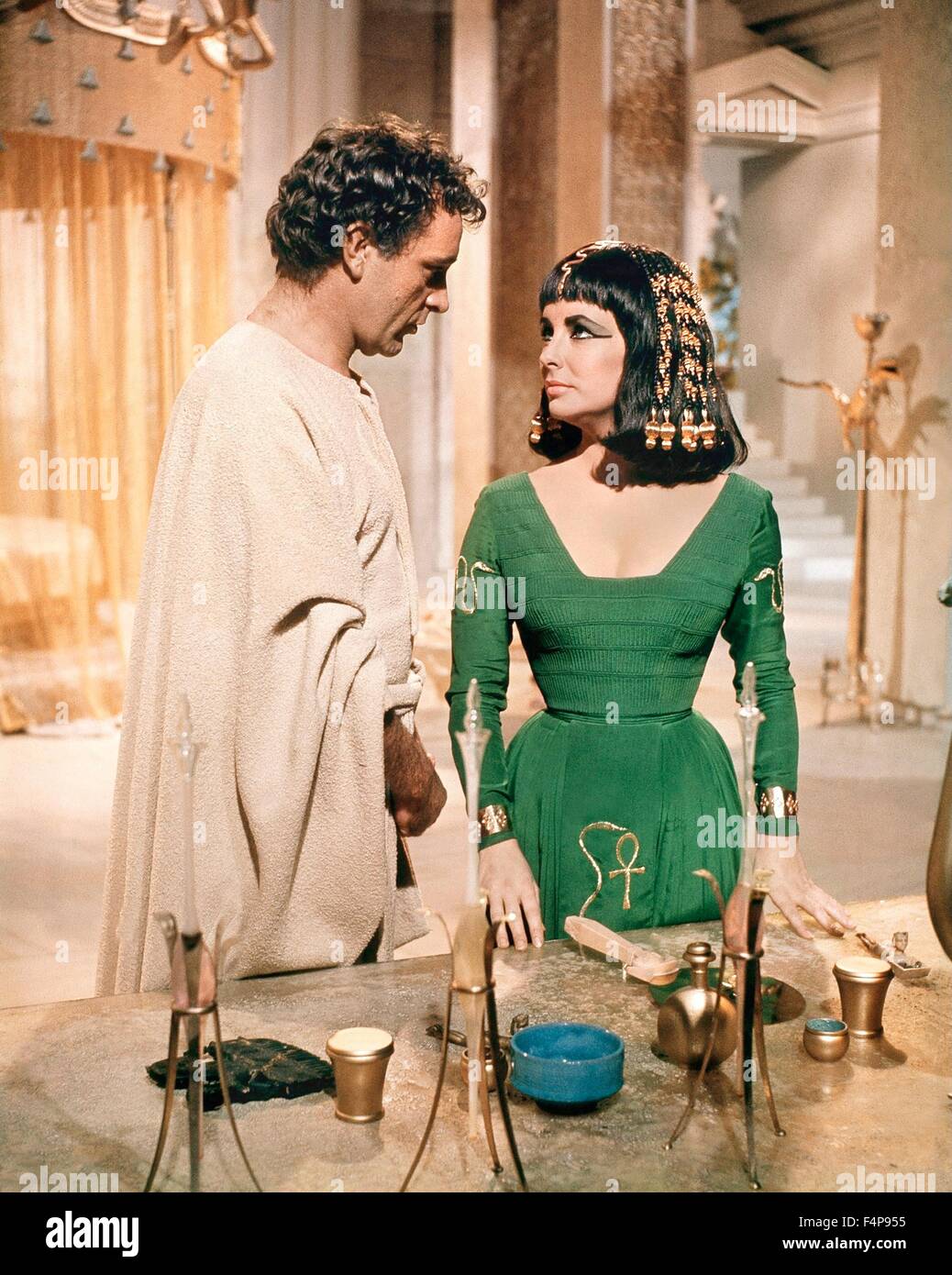
Where to Watch the Cleopatra (1963) Full Movie: Streaming, Runtimes, and Restorations
To watch the full movie Cleopatra (1963) starring Elizabeth Taylor, viewers can stream the restored 248-minute version on major digital platforms, including Disney+, Apple TV, Amazon Prime Video, and Fandango at Home. The film is widel...
To watch the full movie Cleopatra (1963) starring Elizabeth Taylor, viewers can stream the restored 248-minute version on major digital platforms, including Disney+, Apple TV, Amazon Prime Video, and Fandango at Home. The film is widely accessible across digital storefronts for rental or purchase, as well as on high-definition physical media formats like the 50th Anniversary Blu-ray release.
Contents
Legally Accessing Cleopatra (1963) Online and on Physical Media
Finding the full, legal version of Joseph L. Mankiewicz’s Cleopatra (1963) requires understanding which version is being offered by digital storefronts and streaming services. Because the film was produced by 20th Century Fox, the studio’s catalog is primarily managed under the Disney Entertainment distribution framework.
- Cleopatra (1963) Distribution Channels
- Digital Streaming & VOD
- Disney+ (Subscription)
- Apple TV (Rent/Buy)
- Amazon Prime Video (Rent/Buy)
- Fandango at Home (Rent/Buy)
- Physical Media Editions
- 50th Anniversary Blu-ray
- DVD Special Edition
- Digital Streaming & VOD
Subscription Streaming Services
- Disney+: In many regions, Cleopatra is available as part of the standard subscription library under the 20th Century Studios catalog. Disney+ hosts the high-definition restoration, presenting the full extended runtime of approximately 248 minutes, complete with the original overture and intermission markers.
- Hulu (via Disney Bundle): Viewers in the United States accessing Hulu through the integrated Disney+ portal can stream the film directly without requiring an additional digital purchase.
Digital Rental and Purchase Platforms
If you do not hold an active subscription to a service carrying the title, the full movie can be rented or purchased in High Definition (HD) or Standard Definition (SD) across major video-on-demand (VOD) providers:
- Apple TV (iTunes): Offers the 248-minute restored cut in 1080p HD with 5.1 surround sound. The digital release often includes iTunes Extras, which feature retrospective documentaries and archival behind-the-scenes footage.
- Amazon Prime Video: Provides options to rent (typically a 48-hour viewing window once started) or buy the full movie in digital format.
- Fandango at Home (formerly Vudu) & Google TV: Offer digital rentals and purchases of the full feature, defaulting to the extended 248-minute restored version.
Physical Media Releases
For collectors and film purists seeking the highest bitrates and uncompressed audio tracks, physical media remains the optimal viewing method:
- 50th Anniversary Edition Blu-ray (2-Disc Set): Released originally in 2013 by 20th Century Fox Home Entertainment, this edition contains the 8K-scanned, 4K-restored 248-minute cut. It includes extensive audio commentaries by Chris Mankiewicz, Tom Mankiewicz, Martin Landau, and Jack Brodsky, along with historical featurettes such as Cleopatra: The Film That Changed Hollywood.
- DVD Releases: Legacy multi-disc DVD releases carry the 248-minute version split across two discs to preserve video compression quality, though they lack the color depth and clarity of the Blu-ray transfer.
Understanding Cleopatra Cut Differences and Runtimes
One of the most complex aspects of viewing Cleopatra is navigating its various edits. Director Joseph L. Mankiewicz originally envisioned the project as two separate three-hour films: Caesar and Cleopatra, followed by Antony and Cleopatra. When studio head Darryl F. Zanuck rejected this concept, the film was trimmed into a single grand roadshow presentation, which was subsequently cut further for general theatrical distribution.
- Original Concept (Mankiewicz): Two 3-Hour Films (360 mins total)
- Roadshow Premiere (1963): 244–251 Minutes
- General Theatrical Cut (1963): 192 Minutes
- Restored Version (2013): 248 Minutes (Standard Modern Cut)
The 1963 Premiere/Roadshow Version (244–251 Minutes)
The original roadshow version debuted in June 1963 at reserved-seat engagements. This cut included an opening Overture, an Entr'acte (intermission music), an Intermission, and Exit Music. It ran for approximately 4 hours and 4 minutes (244 minutes without musical markers, up to 251 minutes with full overtures).
The General Theatrical Release Cut (192 Minutes)
To increase the number of daily screenings per theater and maximize box-office recovery, 20th Century Fox excised over 45 minutes of footage shortly after the initial roadshow run. This shortened 192-minute cut eliminated crucial political exposition, secondary character arcs (such as expanded scenes featuring Roddy McDowall’s Octavian), and historical context surrounding Roman senate debates.
The 2013 50th Anniversary Restored Version (248 Minutes)
The version available today on streaming platforms and Blu-ray is the reconstructed 248-minute edition. Using original film elements discovered in global archives, film preservationists restored Mankiewicz’s intended narrative structure as closely as possible, reinstating the full breadth of the Roman and Egyptian political intrigue.
Comparing Available Cuts of Cleopatra (1963)
| Cut / Edition | Total Runtime | Primary Distribution Format | Video / Audio Specifications | Key Narrative Characteristics |
|---|---|---|---|---|
| Original Roadshow Version | ~244–251 min | 1963 Theatrical Premiere (70mm) | Todd-AO 70mm, 6-Track Stereo | Full theatrical experience with Overture, Intermission, and Exit Music. |
| General Release Cut | ~192 min | 1963 Secondary Theatrical / VHS | 35mm reduction prints, Mono/Stereo | Heavy trims to Roman political subplots and character backstory. |
| 50th Anniversary Restored Edition | ~248 min | Disney+, Digital VOD, Blu-ray | 4K Digital Restoration, 5.1 DTS-HD | Reconstructs the full premiere cut with original color grading and musical roadshow elements. |
The Production History Behind Elizabeth Taylor’s Cleopatra
The historical context of Cleopatra is integral to understanding its cultural magnitude and scale. Produced during the twilight of Hollywood’s Golden Age, the film’s production history is as dramatic as the story depicted on screen.
Record-Breaking Contracts and Budgets
Elizabeth Taylor signed a record-breaking contract to play the titular Queen of Egypt, becoming the first actor to secure $1 million for a single film role. Due to extensive production delays, contract penalties, and profit-sharing clauses (10% of the gross receipts), her ultimate compensation for the film exceeded $7 million (equivalent to over $70 million adjusted for inflation).
- Initial Estimated Budget: $2 Million
- London Production Failures & Health Delays
- Move to Rome (Cinecittà) & Set Rebuilds
- Final Production Cost: ~$44 Million (Nearly bankrupting 20th Century Fox)
Originally budgeted at $2 million by producer Walter Wanger, the production's ballooning costs eventually reached $44 million—making it the most expensive film ever made up to that point. When adjusted for inflation, it remains one of the costliest cinematic endeavors in history, nearly driving 20th Century Fox to bankruptcy before the studio recovered through ticket sales and the subsequent release of The Sound of Music (1965).
Relocation from London to Cinecittà, Rome
Production initially began at Pinewood Studios in London under director Rouben Mamoulian. However, the cold, wet British climate proved incompatible with replicating sunny Alexandria, causing elaborate exterior sets to rot. Furthermore, Elizabeth Taylor suffered severe health complications, including a life-threatening bout of pneumonia that required an emergency tracheotomy, putting production on hold for months.
When Joseph L. Mankiewicz took over as director, he scrapped the existing footage, recast key roles (bringing in Rex Harrison as Julius Caesar and Richard Burton as Mark Antony), and moved the production to the famous Cinecittà Studios in Rome. Entire ancient cities were reconstructed, including a life-sized replica of the Roman Forum that spanned several acres.
Costume and Set Design Achievements
The film's visual footprint remains unmatched in scale:
- Costume Design: Designed by Irene Sharaff (along with Vittorio Nino Novarese and Renie Conley), the film featured over 26,000 costumes. Elizabeth Taylor alone had 65 costume changes, including a famous gown woven from 24-karat gold thread. The costume design earned an Academy Award.
- Set Construction: The production consumed so much building material that it caused temporary shortages of cement, timber, and decorative marble in central Italy.
Technical Specifications and 4K Digital Restoration
Understanding the technical foundations of Cleopatra helps explain why the restored version looks distinct compared to standard 1960s films.
Original Photography: The Todd-AO System
Cleopatra was photographed using the high-definition Todd-AO widescreen format, which utilized 65mm negatives projected at 70mm. This system offered an aspect ratio of 2.20:1, providing unprecedented image clarity, expansive depth of field, and rich color saturation via DeLuxe Color processing.
- 65mm Todd-AO Original Camera Negative
- Digital Scanning at 8K Resolution
- Frame-by-Frame Color & Audio Restoration
- 4K Master & 5.1 DTS-HD Master Audio Release
The 2013 Digital Restoration Process
To celebrate the film's 50th anniversary, 20th Century Fox undertaken a meticulous digital restoration overseen by studio preservation specialists.
- Scanning: The original 65mm camera negatives—which had suffered severe color fading, shrinkage, and digital instability over five decades—were scanned digitally at 8K resolution.
- Color Correction: Technicians carefully restored the natural vibrant hues of the DeLuxe Color palette, ensuring that skin tones, gilded props, and royal purples matched the color timing approved during the 1963 theatrical release.
- Defect Removal: Dirt, scratches, warp marks, and torn frames were manually cleaned frame-by-frame across the film’s total 357,000 frames.
- Audio Remastering: The original 6-track magnetic audio tapes were digitized, cleaned of background hiss and dropouts, and remixed into a contemporary 5.1 DTS-HD Master Audio track, preserving composer Alex North’s iconic orchestral score.
Detailed records of historical film preservation procedures are maintained by institutions such as the Library of Congress National Film Preservation Board.
How to Plan Your Viewing Experience
Because Cleopatra runs nearly four hours long, viewing the full film requires a structured approach to appreciate its dramatic structure and artistic design.
Utilizing the Structural Intermission
The 248-minute cut is divided into two distinct historical acts, separated by an authentic roadshow intermission:
- Act I: Caesar and Cleopatra (Approx. 2 hours 10 minutes): Focuses on Cleopatra’s political alliance and romance with Julius Caesar (Rex Harrison), culminating in Caesar's assassination in Rome and Cleopatra's return to Egypt.
- The Intermission: Includes an Entr'acte track featuring Alex North's score. This provides a natural stopping point for viewers.
- Act II: Antony and Cleopatra (Approx. 1 hour 50 minutes): Details the military alliance and tragic love story between Cleopatra and Mark Antony (Richard Burton), ending with the Battle of Actium and the fall of the Ptolemaic Kingdom.
Optimizing Audio and Visual Settings
- Aspect Ratio: Ensure your display is set to preserve the native 2.20:1 aspect ratio. Disabling auto-zoom or stretch modes prevents distortion of the Todd-AO frame layout.
- Sound Profile: Enable surround sound decoding or use high-fidelity headphones to capture the spatial audio design of the 6-track stereophonic score, particularly during major set pieces like Cleopatra’s grand entrance into Rome.
Frequently Asked Questions
Where can I stream Cleopatra (1963) online legally?
You can stream Cleopatra on Disney+ or Hulu (via the Disney Bundle) with a subscription. Additionally, the movie can be rented or purchased digitally on platforms such as Apple TV, Amazon Prime Video, Fandango at Home, and Google TV.
How long is the full, restored version of Elizabeth Taylor's Cleopatra?
The standard restored version available on modern streaming platforms and Blu-ray runs for 248 minutes (approximately 4 hours and 8 minutes). This edition includes the original overture, intermission, and entr'acte music.
Did Cleopatra (1963) win any Academy Awards?
Yes. The film was nominated for nine Academy Awards, including Best Picture and Best Actor (Rex Harrison). It won four Oscars at the 36th Academy Awards:
- Best Art Direction (Color)
- Best Cinematography (Color)
- Best Costume Design (Color)
- Best Visual Effects
Official archival details regarding historical nominees and recipients can be verified through the Academy of Motion Picture Arts and Sciences Awards Database.
What is the main difference between the theatrical cut and the restored cut?
The general theatrical release cut from 1963 was trimmed down to roughly 192 minutes, cutting significant narrative content. The modern 248-minute restored cut reinstates nearly an hour of restored footage, restoring character arcs, political intrigue, and original roadshow musical sequences.
Why was Cleopatra so expensive to make?
The film faced severe setbacks, including scrapping millions of dollars worth of unused sets built in London, relocation of production to Cinecittà Studios in Rome, rebuilding massive outdoor sets, health emergencies involving Elizabeth Taylor, and extended cast contracts that triggered substantial overtime fees.
Recommended Next Steps
To get the most authentic viewing experience of Cleopatra (1963):
- Verify Platform Edition: Check whether your preferred streaming platform (such as Disney+ or Apple TV) lists the runtime as approximately 248 minutes to ensure you are watching the restored cut rather than a truncated release.
- Plan an Intermission Break: Pause the film at the historical Entr'acte marker (around the 2-hour 10-minute point, immediately following the aftermath of the Ides of March) to break up the four-hour runtime.
- Explore Audio Commentaries: If viewing via physical media or iTunes Extras, listen to the commentary tracks by film historians and cast members to gain deeper insight into the classic Hollywood production process.
Image Gallery