The Legacy of Heath Ledger’s Joker in The Dark Knight: A Definitive Retrospective
Heath Ledger’s portrayal of the Joker in Christopher Nolan’s 2008 masterpiece The Dark Knight remains the definitive cinematic interpretation of the character. By moving away from campy theatrics toward a philosophy of "agent of chaos,...
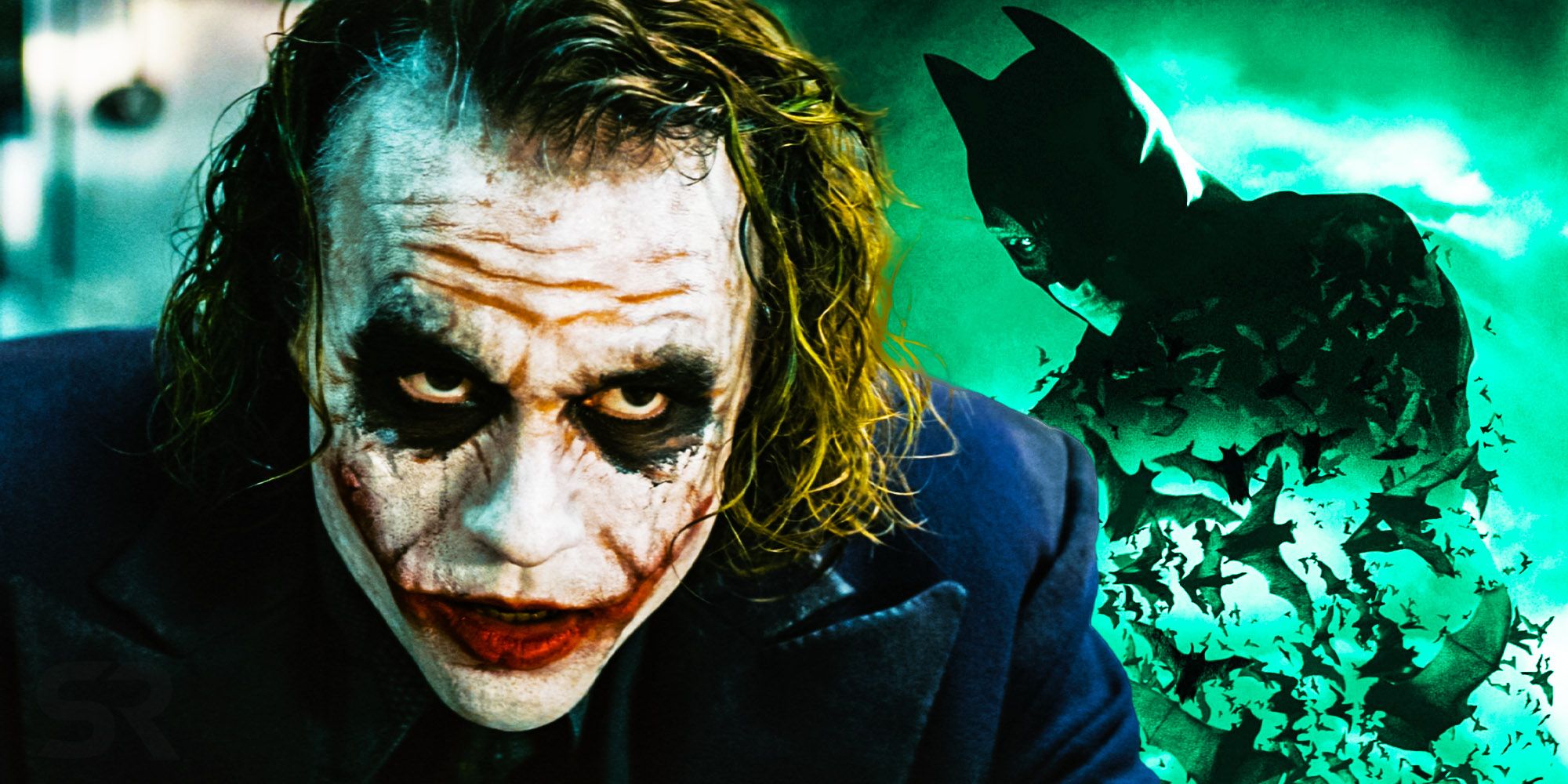
Heath Ledger’s portrayal of the Joker in Christopher Nolan’s 2008 masterpiece The Dark Knight remains the definitive cinematic interpretation of the character. By moving away from campy theatrics toward a philosophy of "agent of chaos," Ledger earned a posthumous Academy Award and fundamentally shifted how audiences and critics perceive comic book antagonists.
Contents
Nearly two decades after its release, and standing here in 2026, the performance continues to serve as the benchmark for psychological depth in blockbuster filmmaking. Ledger did not merely play a villain; he deconstructed the concept of the Joker, stripping away the character’s origin stories to present a terrifying, nihilistic force of nature that challenged the moral foundations of Batman and Gotham City alike.
Redefining an Icon: From Comic Strip to Gritty Realism
Before 2008, the public’s perception of the Joker was largely split between Cesar Romero’s playful prankster in the 1960s and Jack Nicholson’s mob-focused, chemical-drenched version in 1989. When Christopher Nolan announced Heath Ledger—then known primarily for Brokeback Mountain and 10 Things I Hate About You—the casting was met with significant skepticism. Fans struggled to see how the "pretty boy" actor could embody the grotesque, terrifying Clown Prince of Crime.
Nolan’s vision for The Dark Knight was grounded in a "heightened realism." He wanted a Joker who felt like he could exist in a modern, decaying metropolis. This Joker wasn't a man who fell into a vat of acid; he was a man who chose to paint his face, a domestic terrorist whose only motivation was to "watch the world burn." This shift from a criminal mastermind with a specific goal (money or power) to a philosophical anarchist changed the stakes of the superhero genre forever.
The Preparation: Inside the Mind of the Anarchist
Ledger’s preparation for the role has become the stuff of Hollywood legend, often blurred by myth but rooted in a disciplined, immersive technique. To find the "voice" and the "soul" of the Joker, Ledger isolated himself in a London hotel room for approximately six weeks.
The Joker Diary
During this isolation, Ledger kept a "Joker Diary." This scrapbook was filled with disturbing imagery, snippets of news stories about tragic events, and drawings of hyenas. It served as a psychological anchor for the actor, allowing him to step into a headspace where the suffering of others was the punchline of a grand, cosmic joke. Inside the diary, Ledger also wrote in the character’s voice, exploring thoughts on chaos and the hypocrisy of civilized society.
Physicality and Voice
Ledger experimented with various vocal ranges, eventually landing on a voice that could shift from a high-pitched, mocking cackle to a low, gravelly snarl. He drew inspiration from diverse sources, including Alex DeLarge from A Clockwork Orange and punk rock icon Sid Vicious. One of the most famous physical tics—the constant licking of his lips—was actually a practical adaptation. The prosthetic scars (the "Glasgow Smile") frequently came loose as Ledger spoke, and he licked his lips to keep them moist and in place. Nolan liked the habit so much he asked Ledger to keep it as a character trait, adding to the Joker’s reptilian, unsettling presence.
The Aesthetic of Decay: Makeup and Wardrobe
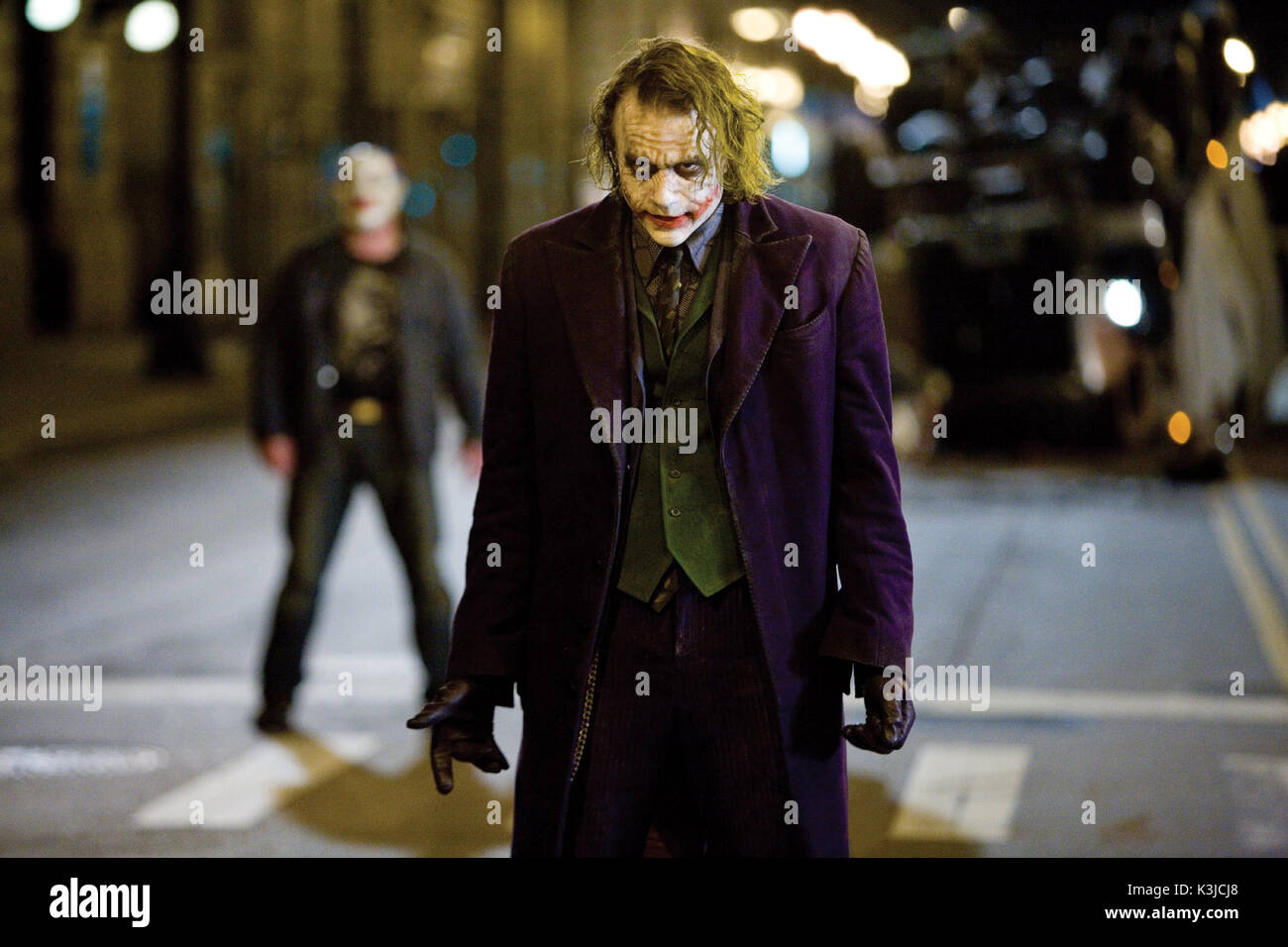
The visual design of Ledger’s Joker broke tradition by appearing unkempt and amateurish. Designed by makeup artist John Caglione Jr., the look was intended to appear as if the Joker had applied the makeup himself and slept in it for days.
- The Makeup: Unlike previous versions where the white skin was permanent, Ledger’s Joker used greasepaint that cracked and wore off during the film’s action sequences. This emphasized the man beneath the mask, making him more human and, paradoxically, more terrifying.
- The Scars: The decision to use a "Glasgow Smile" (scars extending from the corners of the mouth) gave the character a permanent, horrific grin. The Joker offers multiple conflicting stories about how he got the scars, a brilliant narrative device that denies the audience the comfort of a "tragic backstory."
- The Wardrobe: Costume designer Lindy Hemming utilized a palette of purples and greens but chose fabrics that looked worn and "thrift-store" chic. The hexagonal pattern on his shirt and the velvet textures of his coat suggested a man who had once been part of society but had since completely unraveled.
Definitive Moments: Analyzing the Narrative Impact
Ledger’s performance is anchored by several key sequences that demonstrate his range and the character’s terrifying unpredictability.
The Interrogation Scene
Widely considered the centerpiece of the film, the interrogation scene features Batman (Christian Bale) attempting to use physical force to break a man who finds pain hilarious. Ledger’s performance here is masterful; he goes from being a victim of Batman’s rage to the one in total control. He mocks Batman’s "one rule" and points out their similarities, famously stating, "To them, you're just a freak, like me!" Ledger reportedly asked Bale to actually hit him during the scene to increase the authenticity of the struggle.
The Hospital Explosion
The destruction of Gotham General Hospital showcased Ledger’s improvisational timing. While the explosion was a timed practical effect, there was a slight delay between the initial small blasts and the final collapse. Ledger, remaining entirely in character as the Joker, stayed on camera, fiddling with the detonator and looking genuinely annoyed until the final explosion occurred. This moment of dark comedy amidst mass destruction perfectly encapsulated the character's essence.
Comparative Analysis of Cinematic Jokers
To understand why Ledger’s version remains the gold standard in 2026, it is helpful to compare the primary live-action iterations of the character.
| Feature | Jack Nicholson (1989) | Heath Ledger (2008) | Joaquin Phoenix (2019) |
|---|---|---|---|
| Origin | Mobster (Jack Napier) fell in acid | Unknown/Multiple Choice | Failed Comedian (Arthur Fleck) |
| Motivation | Revenge and Greed | Chaos and Anarchy | Personal validation/Mental breakdown |
| Makeup Style | Clean, theatrical, permanent | Messy greasepaint over scars | Traditional clown paint |
| Relationship to Batman | Direct (killed Batman's parents) | Philosophical (The "Mirror Image") | Minimal (Batman is a child) |
| Performance Style | Charismatic, larger-than-life | Immersive, gritty, unpredictable | Internalized, tragic, physical |
The Posthumous Legacy and the 2009 Academy Awards
Heath Ledger passed away on January 22, 2008, months before the film’s release. His death cast a somber shadow over the movie's marketing, but the strength of his performance quickly moved the conversation from tragedy to artistic triumph.
In February 2009, Ledger was awarded the Academy Award for Best Supporting Actor. It was a historic moment, as it was only the second posthumous acting Oscar ever awarded (the first being Peter Finch for Network) and the first time a performance in a superhero film was recognized with a major acting award. This win validated the "comic book movie" as a legitimate vehicle for high-level dramatic acting, paving the way for later wins by actors like Joaquin Phoenix.
The Cultural Impact in 2026
Standing in 2026, the influence of Ledger’s Joker is visible across the entire landscape of modern media. The "Prestige Villain" trope—where an antagonist is given as much psychological weight as the protagonist—became the standard for television and film following The Dark Knight.
The performance also changed the trajectory of the DC Universe. Every subsequent iteration of the Joker, from Jared Leto’s "gangster" take to Barry Keoghan’s brief appearance in The Batman (2022), has had to contend with Ledger’s shadow. Most modern directors now opt for the "realistic/disturbing" route rather than the "colorful/comic" route, a direct testament to the path Ledger blazed.
Furthermore, Ledger’s Joker has become a symbol in digital culture. The character’s dialogue regarding the "facade of order" and "the plan" continues to be quoted in political and social commentary, demonstrating the lasting resonance of the film’s themes regarding the fragility of social structures.
Frequently Asked Questions
Did playing the Joker lead to Heath Ledger’s death?
No. This is a common misconception and a persistent Hollywood myth. While Ledger spoke about the role being physically and mentally exhausting, causing him to suffer from insomnia, his death was officially ruled an accidental overdose of prescription medications (including painkillers, anti-anxiety drugs, and sleeping pills). His family and colleagues have repeatedly stated that Ledger had a wonderful time playing the role and was very proud of the work.
Who designed the Joker’s makeup in The Dark Knight?
The makeup was designed by John Caglione Jr., who received an Oscar nomination for his work on the film. Ledger also had a significant hand in the look, applying some of the white greasepaint himself during early screen tests to ensure it looked like something a man on the street would do, rather than a professional makeup artist.
What is the "Glasgow Smile" mentioned in the film?
The Glasgow Smile (also known as a Chelsea Smile) is a physical scar caused by cutting a person's face from the corners of the mouth to the ears. It originated as a form of gang mutilation in Scotland. In the film, the Joker’s scars are prosthetic, and he gives conflicting accounts of their origin—one involving a traumatic childhood with an abusive father, and another involving a self-inflicted wound to comfort his wife.
Did Heath Ledger improvise the clapping scene?
Yes. When Jim Gordon (Gary Oldman) is promoted to Commissioner, the officers in the precinct begin to clap. Christopher Nolan kept the camera rolling, and Ledger began to clap slowly and sarcastically from inside his jail cell. This was not in the script but perfectly suited the Joker’s mocking nature, and Nolan kept it in the final cut.
Final Recommendation for Viewers
For those revisiting The Dark Knight in 2026, pay close attention to Ledger’s physicality when he is not speaking. His hunched posture, the way he fidgets with his hands, and his erratic movement patterns are just as essential to the performance as his dialogue. To truly appreciate the technical depth, consider watching the film in an IMAX format if available, as the high resolution highlights the intricate, layered textures of the makeup and the subtle micro-expressions that made Ledger's Joker a haunting masterpiece of modern cinema.
Image Gallery