Navigating Auto Insurance Endorsement Codes Explained: What They Mean and Why They Matter
Auto insurance endorsement codes are shorthand alphanumeric designations used by insurance providers to signify specific policy modifications, added coverages, or altered terms that deviate from a standard base contract. Deciphering th...
Auto insurance endorsement codes are shorthand alphanumeric designations used by insurance providers to signify specific policy modifications, added coverages, or altered terms that deviate from a standard base contract. Deciphering these codes allows policyholders to verify their exact coverages, understand premium adjustments, and ensure their policy aligns with state legal requirements and personal asset protection needs.
Contents
Understanding the Anatomy of Auto Insurance Endorsements
When you purchase a standard auto insurance policy, you receive a foundational contract that covers basic liability, comprehensive, and collision terms depending on your selections. However, life changes, driving habits, and regulatory mandates often require adjustments. An endorsement—sometimes called a rider or amendment—formally changes this contract.
Insurance companies use standardized codes, often coordinated through advisory organizations like the Insurance Services Office (ISO) or created as proprietary company-specific codes, to keep track of these modifications in administrative databases. Understanding these codes removes the guesswork from policy declarations pages, giving you a transparent look at how your contract differs from a generic policy.
To make sense of these alphanumeric markers, it helps to look at how they function within your overall policy structure. They are typically listed on your declarations (dec) page, accompanied by a brief text description, a specific form number, and a separate premium charge or credit. Ignoring these codes can lead to coverage gaps, unexpected out-of-pocket expenses after an accident, or paying for policy options you no longer require.
Common Categories of Auto Insurance Endorsements
Insurance endorsements generally fall into distinct operational categories. Recognizing the prefix or grouping of a code often hints at its primary purpose, whether it is adding a driver, modifying physical damage coverage, or addressing commercial use.
Coverage Enhancements and Add-Ons
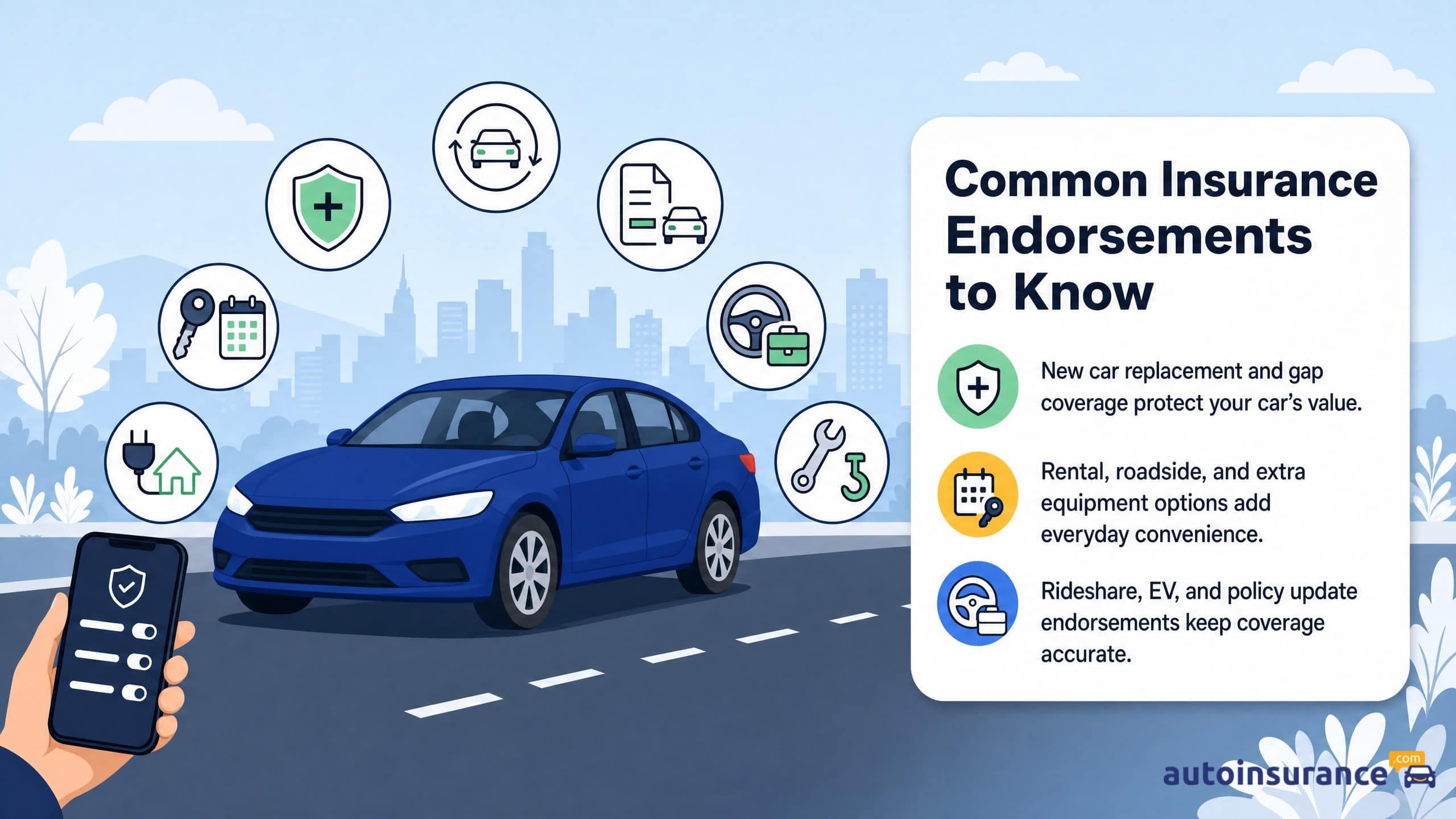
Many drivers require protections that go beyond standard policy limits. Common enhancements include:
- Roadside Assistance and Towing: Covers emergency dispatch services when a vehicle breaks down.
- Rental Car Reimbursement: Pays for a temporary vehicle while your car is in the repair shop following a covered claim.
- Gap Insurance (Loan/Lease Payoff): Covers the difference between the actual cash value of a vehicle and the remaining balance on a financing loan or lease.
Risk and Driver Modifications
Policies are rated based on who drives the vehicle and how it is used. Endorsements in this category alter the risk profile:
- Named Non-Owner Coverage: Extends liability protection to someone who does not own a vehicle but frequently drives borrowed or rented cars.
- Excluded Driver Amendment: Explicitly removes coverage for a specific household member, often used to prevent prohibitive rate spikes if that individual has a poor driving record.
- Custom Equipment and Parts (Customizing) Coverage: Adjusts physical damage limits to account for aftermarket stereo systems, custom paint, or specialized wheelchair ramps.
Financial and Deductible Adjustments
Financial endorsements directly alter how deductibles apply or how payouts are calculated:
- Disappearing Deductible (Rewards Program): Lowers your out-of-pocket deductible amount for every consecutive period you remain claim-free or accident-free.
- Original Equipment Manufacturer (OEM) Parts Endorsement: Mandates that repair shops use brand-new factory parts rather than aftermarket alternatives during collision repairs.
Decoding Common Auto Insurance Endorsement Codes
Because insurance providers utilize different internal classification systems, an identical endorsement might carry one code with State Farm and an entirely different code with Progressive or GEICO. However, industry-wide standards and regulatory filings provide recognizable patterns.
Below is a breakdown of common endorsement types, their operational impacts, and what they signify on a dec page:
| Endorsement Type | Typical Code Prefix Example | Primary Purpose | Financial Impact |
|---|---|---|---|
| Rental Reimbursement | RR-04 or CA-99 | Provides alternative transportation funds during repairs. | Small incremental premium increase ($2 to $8 per month). |
| Gap Coverage | GAP-101 or LEASE-01 | Covers negative equity between loan balance and vehicle value. | Moderate increase; often bundled with comprehensive/collision. |
| Driver Exclusion | EX-DRV-02 | Removes liability coverage for a specific named individual. | Lowers or prevents significant premium increases. |
| Custom Equipment | EQ-SUP-05 | Insures specialized aftermarket parts, electronics, or modifications. | Varies based on declared value of the modifications. |
| Roadside Assistance | TOW-01 or RSA-12 | Covers mechanical breakdown towing, flat tires, and jump-starts. | Minimal flat-rate fee per policy term. |
When reviewing your policy, always cross-reference the alphanumeric code with the explanatory text section typically found toward the back of your policy packet. If a code appears without a clear explanation, contact your carrier's customer service department to request the specific ISO or proprietary form filing referenced by the code.
Why Insurance Companies Use Endorsement Codes
The insurance industry relies heavily on automation and standardized data management. Endorsement codes serve several critical operational functions for carriers and regulators alike:
- Regulatory Compliance: State insurance departments require carriers to file all policy forms and endorsement text for approval. Codes link directly to these approved filings, ensuring that the insurer operates within legal state boundaries.
- Underwriting Accuracy: Rating engines calculate premiums based on risk variables. When an underwriter attaches a specific code, the software automatically recalculates the risk exposure and adjusts the billing ledger.
- Claim Adjudication: Adjusters review endorsement codes during the claims process to determine whether a specific loss is covered. For instance, if an adjuster sees an OEM parts endorsement, they must authorize factory-original components rather than generic alternatives.
- Contract Clarity: Rather than printing multi-page legal amendments on every single declarations page, insurers use concise shorthand codes that point back to master contract language held on file.
How to Verify and Audit Your Policy Endorsements
Policyholders should perform an annual audit of their auto insurance declarations page to ensure all active endorsement codes match their current life circumstances. Life events such as moving to a new ZIP code, adding a teenage driver, finishing a car loan, or modifying a vehicle require updates to your endorsement profile.
Step-by-Step Verification Process
- Locate the Declarations Page: Access your insurance portal or paper policy packet to find the summary pages outlining your active coverages.
- Review the Endorsements Schedule: Look for a section explicitly titled "Endorsements," "Forms Schedule," or "Policy Amendments."
- Match Codes to Descriptions: Check every alphanumeric code against the definition list provided in your policy packet. Ensure you are not paying for legacy endorsements, such as rental reimbursement on a vehicle you no longer own, or gap insurance on a car that is fully paid off.
- Confirm State Minimums: Verify that state-mandated endorsements—such as uninsured motorist property damage (UMPD) or personal injury protection (PIP) disclosures—are properly accounted for with their respective codes.
Common Mistakes When Managing Policy Endorsements
Failing to understand or manage auto insurance endorsement codes can result in unexpected financial exposure. Avoiding common pitfalls ensures your policy performs as expected when you need it most.
Assuming Automatic Coverage
Many drivers assume that modifications like custom wheels, aftermarket stereo upgrades, or business use of a personal vehicle are automatically covered under a standard policy. Without the appropriate endorsement code attached, claims involving specialized equipment or commercial delivery activities are frequently denied.
Overlooking Excluded Driver Implications
Signing an excluded driver endorsement means any damage or liability caused by that specific person while operating your vehicle is entirely uncovered. If an excluded family member drives your car and causes a severe accident, you may face catastrophic personal financial liability, even if you maintain high policy limits.
Forgetting to Remove Unnecessary Riders
Keeping redundant endorsements active wastes money over time. For example, maintaining gap insurance long after your auto loan balance drops below the market value of the vehicle provides no financial benefit during a total loss claim, yet you continue paying the associated premium.
Frequently Asked Questions
What does an endorsement code mean on my auto insurance policy?
An endorsement code is a shorthand reference number that signifies a specific change, addition, or restriction added to your base insurance contract. It links your policy to a legally filed form that alters standard coverage terms.
Are auto insurance endorsement codes standard across all companies?
No. While advisory organizations like the Insurance Services Office (ISO) provide standardized forms utilized by many carriers, major insurance companies often use proprietary alphanumeric codes unique to their own internal billing and policy management systems.
Can I add or remove endorsement codes at any time?
Yes, policyholders can generally request endorsement changes mid-term. Adding coverage may increase your premium immediately, while removing optional riders typically results in a prorated refund or a reduced rate upon your next billing cycle.
How do I know if an endorsement code resulted in a premium increase?
Your policy declarations page or billing statement itemizes each endorsement alongside its individual cost. If an endorsement carries a separate charge, it will be listed next to the code description in the premium breakdown column.
What should I do if I find an unfamiliar endorsement code on my policy?
Contact your insurance agent or carrier support line immediately. Request a complete copy of the specific form referenced by the code to verify that the coverage accurately reflects your instructions and does not introduce unwanted restrictions.
Next Actions for Policyholders
Review your current auto insurance declarations page today. Identify every endorsement code listed, match it against your policy document's definitions, and confirm that your coverages align with your current vehicle value, driving habits, and financial goals. If discrepancies exist, schedule a review with your licensed insurance producer to adjust your policy forms accordingly.
Image Gallery