Why the Can-Am Porsche 917 is Rarely a Practical Choice
The Can-Am Porsche 917, specifically the 917/10 and 917/30 variants, is rarely a practical choice due to its extreme 1,100-plus horsepower output, lack of modern electronic driver aids, and immense operational costs. Requiring a dedica...
The Can-Am Porsche 917, specifically the 917/10 and 917/30 variants, is rarely a practical choice due to its extreme 1,100-plus horsepower output, lack of modern electronic driver aids, and immense operational costs. Requiring a dedicated engineering team just to start the engine, these vehicles are specialized racing prototypes rather than accessible collector cars.
Contents
The Engineering Excess of the "Turbopanzer"
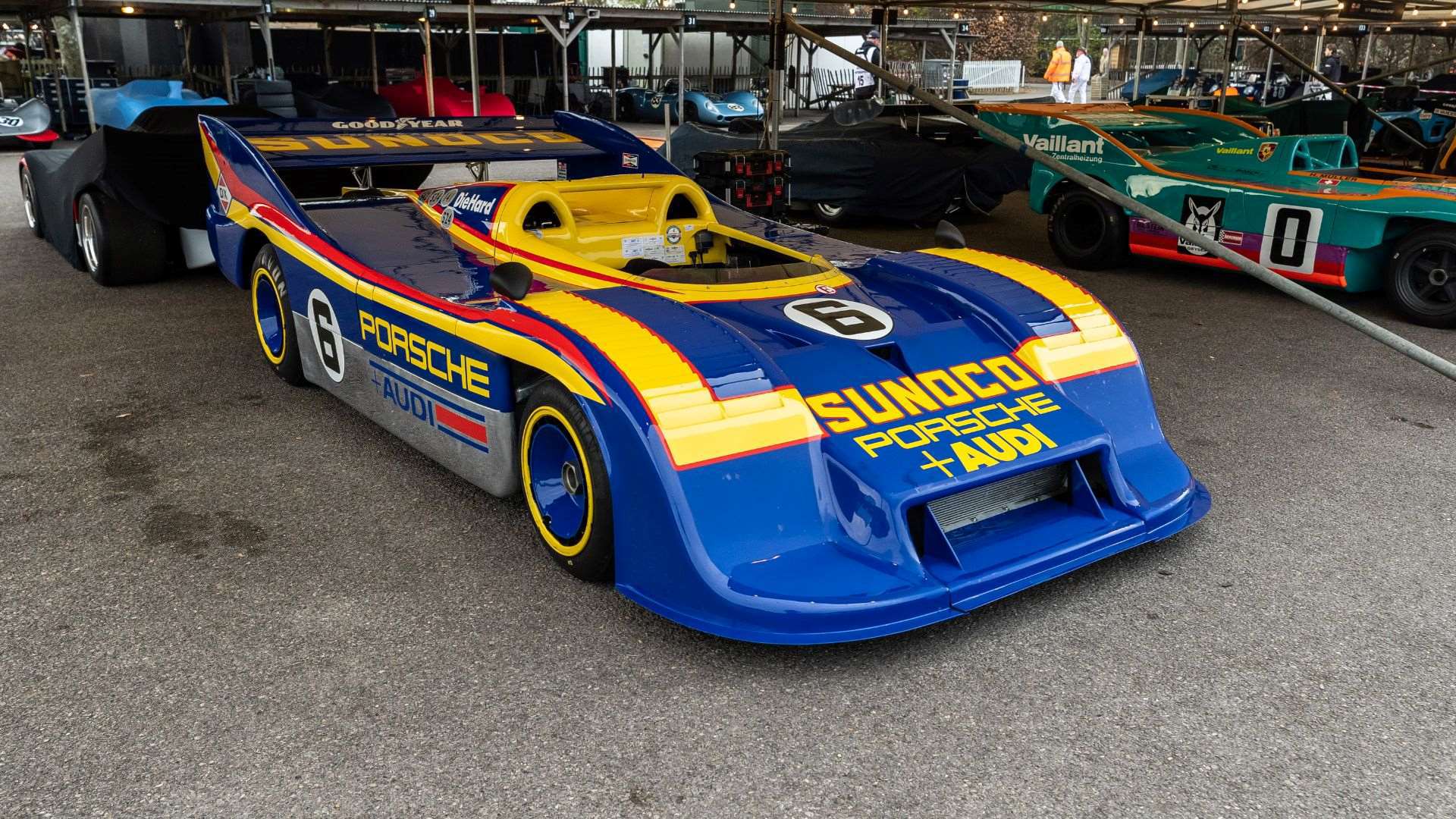
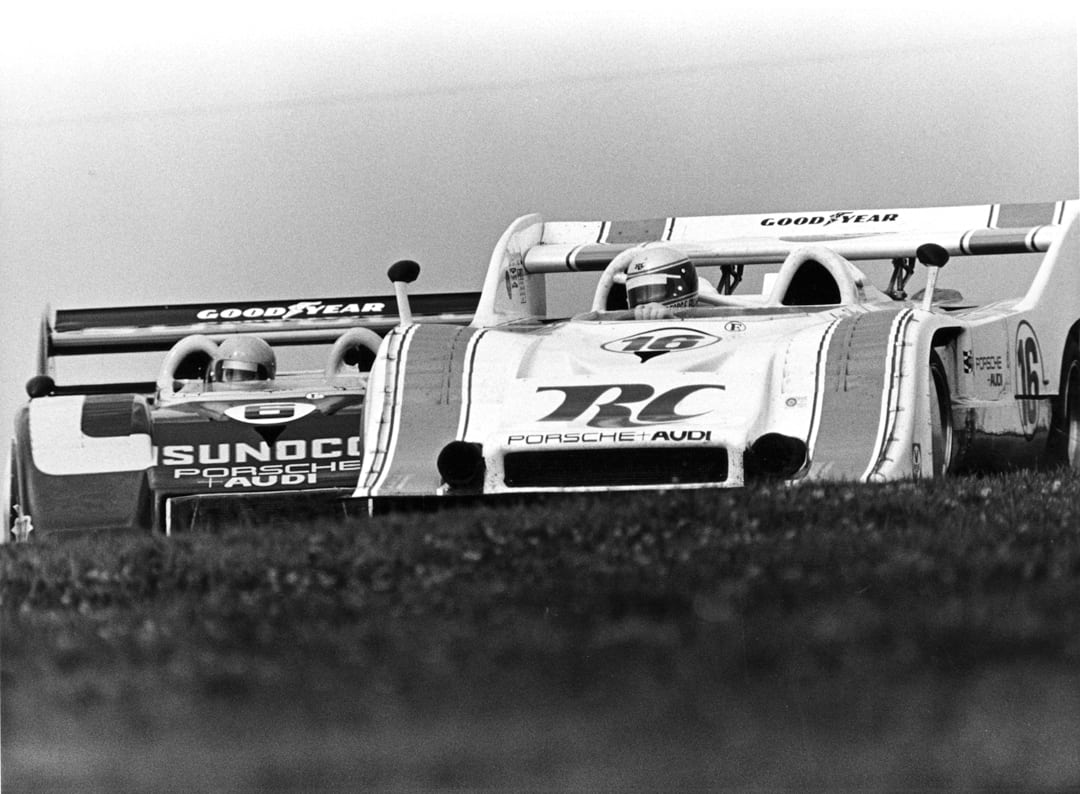
To understand why the Can-Am Porsche 917 remains an impractical acquisition for even the most seasoned collectors in 2026, one must first look at the engineering that earned it the nickname "Turbopanzer." Unlike the original 917 used at Le Mans, the Can-Am versions were designed for the virtually unrestricted Group 7 racing regulations. This resulted in the 917/30, a machine powered by a 5.4-liter flat-12 twin-turbocharged engine capable of producing over 1,200 horsepower in qualifying trim.
The sheer scale of this power makes the car functionally unusable on any standard racing circuit. Modern tracks are designed with specific safety runoff areas and barriers calibrated for cars with sophisticated traction control and aerodynamic stability. The 917/30 possesses neither. It relies on massive rear tires and primitive downforce to put power to the ground. For a private owner, finding a venue where this car can be safely "opened up" is a logistical nightmare. Most vintage racing events categorize the Can-Am 917 as too fast for mixed-field competition, often relegating it to solo demonstration laps rather than actual racing.
Furthermore, the mechanical complexity of the twin-turbocharged flat-12 is staggering. These engines utilize a complex mechanical fuel injection system by Bosch that requires precise calibration. In 2026, the number of technicians globally who possess the specialized tools and tribal knowledge to tune these systems has dwindled. An error in fuel mixture at high boost doesn't just result in a stall; it can lead to a catastrophic engine failure costing hundreds of thousands of dollars in bespoke machining and rare parts.
Operational Logistics: Why You Need a Team, Not a Key
The impracticality of the Can-Am Porsche 917 is perhaps most evident in its starting procedure. This is not a "turn-key" classic car. Operating a 917/30 requires a multi-person crew and several hours of preparation before the engine even turns over.
Pre-Heating and Fluid Management
The air-cooled engine holds a massive volume of oil (approximately 30 liters), which must be pre-heated using external immersion heaters. Attempting to start the engine with cold, thick oil can cause immediate damage to the internal bearings and the complex gear-driven camshaft system. This process alone requires a stable power source and specialized heating equipment that must be transported to the track.
Specialized Fuel and Ignition
The 1970s turbocharged engines were designed to run on high-octane leaded racing fuels that are increasingly difficult to source and transport under 2026 environmental regulations. The ignition system is similarly temperamental. Without modern engine management (ECU), the car relies on a manual boost controller. A driver who is not intimately familiar with the "lag" of 1970s turbochargers can easily find themselves in a spin as the power hits the rear wheels with the subtlety of a sledgehammer.
Support Equipment
A typical weekend with a Can-Am 917 requires a dedicated heavy-duty trailer, a nitrogen system for pneumatic jacks and tires, a specialized starting battery cart, and a suite of custom-fabricated tools. For the individual enthusiast, the overhead of maintaining a support staff and the necessary hardware often outweighs the joy of the driving experience itself.
Structural Safety and the "Leg-First" Design
From a safety perspective, the Can-Am 917 is a product of an era that prioritized speed over driver survivability. The chassis is a spaceframe constructed of thin-walled aluminum tubing. While incredibly light, this structure offers almost zero energy absorption in the event of a high-speed impact.
One of the most significant "practical" deterrents is the driver’s positioning. In the 917/10 and 917/30, the driver’s feet and lower legs are located ahead of the front axle centerline. In a frontal collision, there is no "crumple zone" other than the driver's limbs. This design reality makes many modern collectors hesitant to drive the car at any significant percentage of its capability. When compared to modern track-only hypercars, the 917 represents a level of physical risk that is difficult to justify, especially given the vehicle's astronomical market value.
The Financial Reality of 2026 Valuations
The Porsche 917 Can-Am cars have transitioned from "racing cars" to "blue-chip assets." In the 2026 market, a genuine 917/30 with racing pedigree can command prices well into the tens of millions of dollars. This valuation creates its own set of impracticalities.
- Insurance Limitations: Most specialty insurers will not provide "on-track" coverage for a vehicle of this value. Owners are essentially self-insuring every time they leave the pit lane.
- Maintenance Depreciation: Every hour put on the engine and gearbox brings the car closer to an incredibly expensive mechanical overhaul. For many owners, the cost-per-mile is so high that the car remains a static display piece, which defeats the purpose of owning a performance vehicle.
- Part Scarcity: Many components, such as the magnesium alloy uprights or specific gearbox internals, are no longer available from Porsche. Replacing them requires 3D scanning original parts and using five-axis CNC milling to create replicas, a process that is both time-consuming and prohibitively expensive.
Comparing the Can-Am 917 to Modern Alternatives
To illustrate the gap in practicality, the following table compares the Porsche 917/30 with a modern high-performance track car, such as the Porsche 911 GT3 R (992 generation).
| Feature | Porsche 917/30 (1973) | Porsche 911 GT3 R (2024/2026) |
|---|---|---|
| Peak Horsepower | 1,100 - 1,580 hp | ~565 hp |
| Driver Aids | None (No ABS, TC, or Power Steering) | Advanced ABS, TC, and ECU Maps |
| Chassis Material | Aluminum Spaceframe | Steel/Aluminum/Carbon Fiber Cell |
| Starting Procedure | Multi-hour pre-heat & crew support | Push-button start |
| Safety Equipment | Minimal rollover protection | FIA-spec roll cage and crash structures |
| Estimated Maintenance | $5,000 - $10,000 per track hour | Standard racing service intervals |
| Street Legality | None | None (Track Only) |
| Market Value (2026) | $20M - $35M+ | ~$600,000 - $800,000 |
The Challenge of Historic Authenticity
Maintaining a Can-Am 917 also presents a philosophical dilemma for the owner: original vs. functional. To keep the car running safely, many owners are forced to replace original 1970s components with modern reproductions made of safer materials. However, in the high-end collector world, replacing original parts can sometimes hurt the car’s provenance and ultimate resale value.
The fuel cells are a prime example. The original rubber bladders from the 1970s have long since degraded. Replacing them with modern, FIA-homologated cells is a safety requirement for any track use, but it requires significant modification to the internal structure of the side pods. These constant "updates" required for functionality often conflict with the goal of preserving a historical artifact.
Frequently Asked Questions
Can the Porsche 917/30 be made street-legal?
While a few 917 chassis (notably the 917-030 owned by Count Rossi) were converted for road use in the past, the Can-Am versions are almost impossible to register in 2026. Their lack of lighting, emission controls, ground clearance, and cooling systems for low-speed traffic makes road conversion an engineering and legal nightmare.
How many Can-Am 917s were actually built?
Porsche built approximately 13 units of the 917/10 and only 6 units of the 917/30. This extreme rarity means that most "917s" seen at local car shows are replicas. Genuine cars are usually held in museum collections or by ultra-high-net-worth individuals.
What is the fuel consumption of a 917/30?
Under full racing conditions, the 917/30 is notoriously thirsty, often achieving less than 2 miles per gallon. The massive fuel tanks (nearly 400 liters) were necessary just to finish a standard Can-Am race distance.
Is it possible to drive a 917 without professional training?
It is highly discouraged. The combination of massive turbo lag and the absence of any electronic safety nets means the car can "swap ends" (spin) instantly if the throttle is applied mid-corner. Most owners hire professional vintage racing drivers to pilot the cars during demonstration events.
Does Porsche still support the 917 through its Classic program?
Porsche Classic provides limited support and documentation, but they do not maintain a stock of spare parts for Group 7 racing engines. Most mechanical work must be handled by independent specialists who focus on historic racing prototypes.
Final Recommendation
For the collector seeking the thrill of 1970s motorsport, the Can-Am Porsche 917 is a magnificent but deeply flawed "choice" if the intent is regular use. It serves best as a centerpiece of a museum or a highly curated private collection where it can be appreciated as an engineering milestone.
If your goal is active participation in track days or vintage racing, a more practical path involves looking at the Porsche 956 or 962 Group C cars. While still complex, these later models offer vastly superior safety structures, better parts availability, and a more predictable driving experience thanks to improved ground-effect aerodynamics. The 917 Can-Am remains the "King of the Monsters," but like all monsters, it is best admired from a safe distance.
Image Gallery