Mexico City’s Net Worth: Evaluating the Economic Power of Latin America’s Largest Hub in 2026
As of 2026, the economic value of Mexico City (Ciudad de México) is measured primarily through its Gross Domestic Product (GDP), which is estimated at approximately $295 billion to $315 billion USD. Contributing roughly 17% of Mexico’s...
As of 2026, the economic value of Mexico City (Ciudad de México) is measured primarily through its Gross Domestic Product (GDP), which is estimated at approximately $295 billion to $315 billion USD. Contributing roughly 17% of Mexico’s national GDP, the city functions as the primary financial, corporate, and cultural engine of Latin America.
Contents
When discussing "net worth" in the context of a global megacity, the calculation differs significantly from a private individual’s balance sheet. A city’s financial standing is a composite of its annual economic output (GDP), the valuation of its real estate and infrastructure, its fiscal autonomy, and its capacity to attract Foreign Direct Investment (FDI). Mexico City, particularly in 2026, has solidified its position as a "beta+" global city, benefiting from the massive "nearshoring" trend that began earlier in the decade.
Understanding the Components of Mexico City’s Economic Value
To arrive at a comprehensive figure for Mexico City's economic standing, one must look beyond a single number. Economists typically segment the city’s value into three distinct categories: Gross Value Added (GVA), infrastructure/real estate assets, and human capital potential.
Gross Domestic Product and Metropolitan Output
While the city proper (CDMX) generates roughly $300 billion USD, the Greater Mexico City metropolitan area—which includes 60 municipalities in the State of Mexico and Hidalgo—represents a significantly larger economic footprint. By 2026, the total metropolitan GDP is estimated to exceed $520 billion USD. This makes the region’s economy larger than the entire national GDP of many sovereign nations, such as Colombia or even some European countries like Finland.
Real Estate and Infrastructure Assets
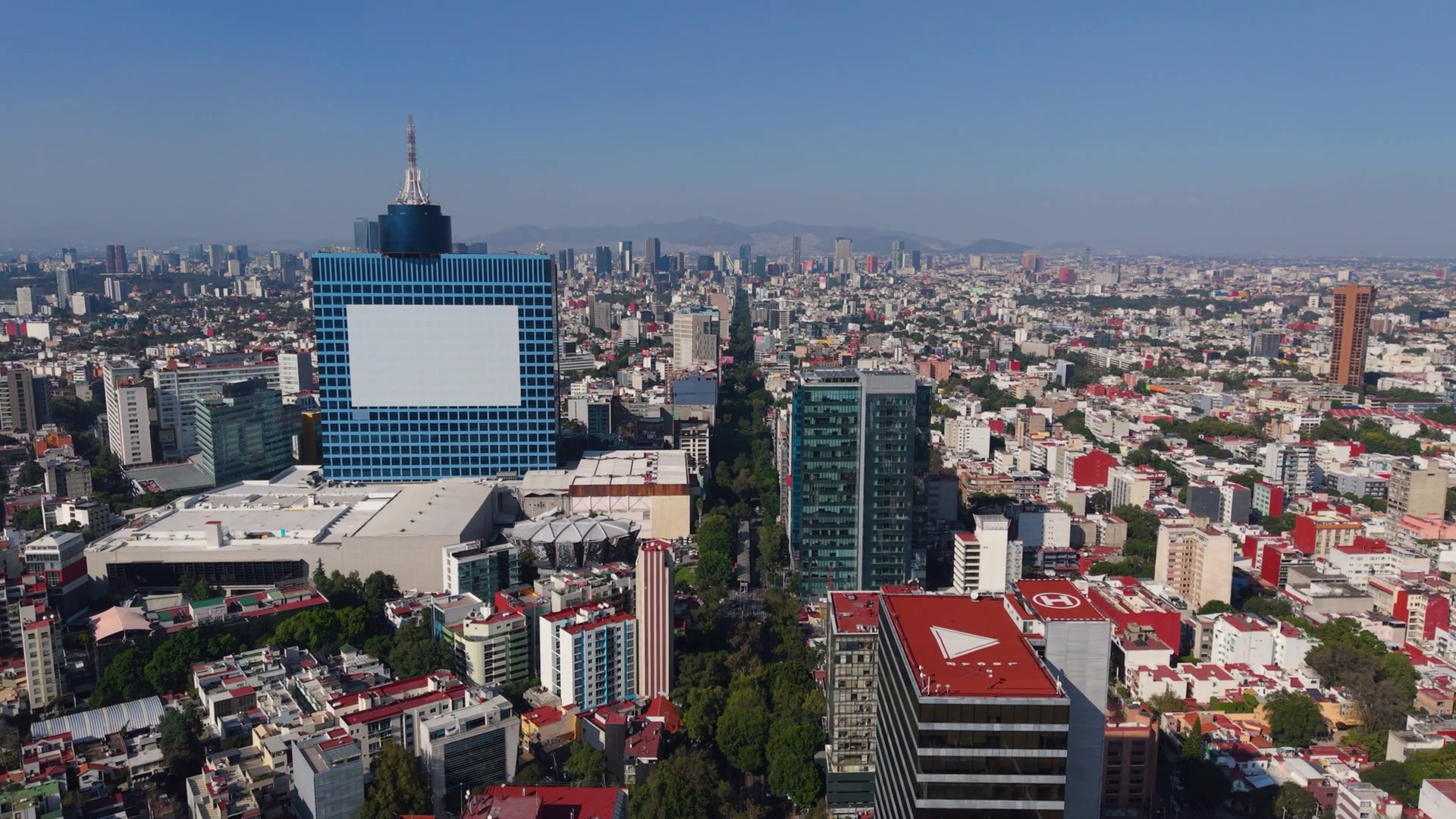
The "physical" net worth of Mexico City is anchored in its massive real estate market. The city contains over 7.5 million square meters of A-class office space, concentrated in corridors like Paseo de la Reforma, Polanco, and Santa Fe. In 2026, commercial real estate valuations have remained resilient due to the high demand for corporate headquarters managing North American supply chains. When including residential property and public infrastructure (such as the extensive Metro system and the newly modernized water management facilities), the total asset value of the city is estimated in the trillions of dollars.
Key Drivers of Economic Growth in 2026
Mexico City’s wealth is not static; it is driven by several high-performing sectors that have evolved rapidly over the last five years.
The Nearshoring Command Center
The most significant shift in the 2020s has been the relocation of global manufacturing and logistics management to Mexico. While factories are often located in the north (Monterrey or Queretaro), the administrative, legal, and financial "brains" of these operations are headquartered in Mexico City. This has resulted in a surge of high-paying professional services jobs, increasing the city's tax revenue and overall GVA.
Financial Services and Fintech Leadership
Mexico City remains the undisputed financial capital of the Spanish-speaking world. The Mexican Stock Exchange (Bolsa Mexicana de Valores) and the BIVA exchange provide the liquidity necessary for regional growth. Furthermore, the city has become a global "Fintech Hub." In 2026, companies specializing in digital payments, neo-banking, and cross-border trade finance contribute over 5% of the city’s annual growth, attracting billions in venture capital.
Tourism and the "Digital Nomad" Economy
The "net worth" of the city is also bolstered by its brand as a global cultural capital. Tourism revenue has hit record highs in 2026, driven by both traditional leisure travel and a permanent population of "remote workers" or digital nomads. This influx of foreign currency has specifically inflated the value of residential real estate in neighborhoods like Roma, Condesa, and Coyoacán, though it has also presented challenges regarding local affordability.
Comparative Economic Metrics (2026 Projections)
To understand where Mexico City stands on the global stage, it is helpful to compare its economic metrics with other major regional and global hubs.
| Metric | Mexico City (CDMX) | São Paulo, Brazil | Madrid, Spain | Los Angeles, USA |
|---|---|---|---|---|
| Estimated GDP (2026) | $305B USD | $285B USD | $260B USD | $1.2T USD |
| National GDP Contribution | ~17% | ~11% | ~19% | ~4% (of US) |
| Primary Industry | Finance/Services | Industry/Finance | Services/Tourism | Media/Tech/Trade |
| Population (Metro) | 22.5 Million | 22.1 Million | 6.7 Million | 13.1 Million |
| Economic Growth Rate | 2.4% | 1.9% | 2.1% | 1.8% |
Note: Data represents 2026 projections based on International Monetary Fund (IMF) and local statistical agency (INEGI) trends.
Fiscal Autonomy and Debt Management
A city’s "net worth" is also defined by its ability to manage its own finances. Unlike many other Mexican states, Mexico City maintains a high degree of fiscal autonomy.
- Tax Collection: The city has one of the most efficient local tax collection systems in Latin America, particularly regarding property taxes (predial) and payroll taxes.
- Credit Rating: In 2026, Mexico City maintains an investment-grade credit rating from major agencies like Moody’s and Fitch. This allows the city to issue "Green Bonds" and "Social Bonds" to fund infrastructure projects at competitive interest rates.
- Public Debt: The city’s debt-to-GDP ratio remains sustainable, generally hovering around 2.5%, which is considered healthy for a municipal entity of its size and complexity.
Challenges Impacting Long-Term Valuation
Despite its immense wealth, Mexico City faces structural challenges that could impact its future "net worth" if not managed through 2026 and beyond.
Water Scarcity and Infrastructure
The city’s economic productivity is heavily dependent on its aging water infrastructure. In 2026, significant capital expenditure is being directed toward the "Cutzamala System" and local aquifer restoration. The cost of failing to address water security is estimated to be a potential 1% drag on annual GDP growth.
Socioeconomic Disparity
The wealth of Mexico City is highly concentrated. While the "net worth" of the city as an entity is high, the Gini coefficient (a measure of inequality) remains a point of concern. The economic gap between the affluent western burroughs and the underserved eastern sectors like Iztapalapa creates a "dual economy" that limits the total potential of the city’s human capital.
Seismic Risk and Insurance
Operating in a high-seismic zone requires substantial "hidden" costs. Building codes in 2026 are stricter than ever, and a significant portion of the city’s private wealth is tied up in insurance premiums and earthquake mitigation technology. Any major seismic event represents a significant "liability" to the city’s total asset valuation.
The Role of the Digital Economy in 2026
By 2026, the "digital net worth" of Mexico City has seen an explosion. This includes the valuation of home-grown "Unicorn" startups (companies valued at over $1 billion). Mexico City is currently home to more tech unicorns than any other city in Latin America except São Paulo.
- E-commerce: The logistics network within the Valley of Mexico has become highly sophisticated, with CDMX acting as the primary hub for companies like Mercado Libre and Amazon Mexico.
- Software Development: The city has transitioned from being a consumer of technology to a producer. Exporting IT services to the United States has become a multi-billion dollar sub-sector, adding high-value service exports to the city’s balance of trade.
Frequently Asked Questions
Is Mexico City the wealthiest city in Latin America?
Yes, in terms of total GDP and the concentration of billionaire net worth, Mexico City consistently ranks at the top. While São Paulo has a similar metropolitan GDP, Mexico City often surpasses it in terms of corporate headquarters and financial service output per capita.
How does the exchange rate affect the city's "net worth"?
Because the city’s value is often reported in USD for global comparison, fluctuations in the Mexican Peso (MXN) can cause the "nominal" net worth to shift. In 2026, a stable exchange rate supported by high interest rates and nearshoring investment has helped maintain the city's value in dollar terms.
What is the average income in Mexico City compared to its total wealth?
There is a significant disparity. While the city generates over $300 billion, the average annual salary for a formal sector worker in CDMX is approximately $12,000 to $15,000 USD. However, in high-end sectors like finance and tech, salaries often exceed $60,000 USD, rivaling European capitals.
Does the city have its own sovereign wealth fund?
No, Mexico City does not operate a sovereign wealth fund like a nation-state. Instead, it manages its surplus through infrastructure trusts and contingency funds designed to handle natural disasters or economic downturns.
How much of Mexico's total wealth is in its capital?
Approximately 17% of the nation’s GDP is produced directly in Mexico City. When you include the surrounding metropolitan area, nearly 25% of all economic activity in Mexico occurs within the Valley of Mexico.
Final Economic Outlook
Mexico City in 2026 stands as a testament to the resilience of urban economies in the face of global shifts. Its "net worth" is not merely a reflection of the cash in its banks, but of its strategic position as the bridge between North American capital and Latin American labor and markets. For investors, the city represents a high-growth, high-value environment, provided they can navigate the complexities of its infrastructure and social landscape.
The primary recommendation for those looking to capitalize on Mexico City’s economic power is to focus on the service-export sector and sustainable infrastructure, as these areas are projected to provide the most significant contributions to the city's valuation over the next decade.
Image Gallery