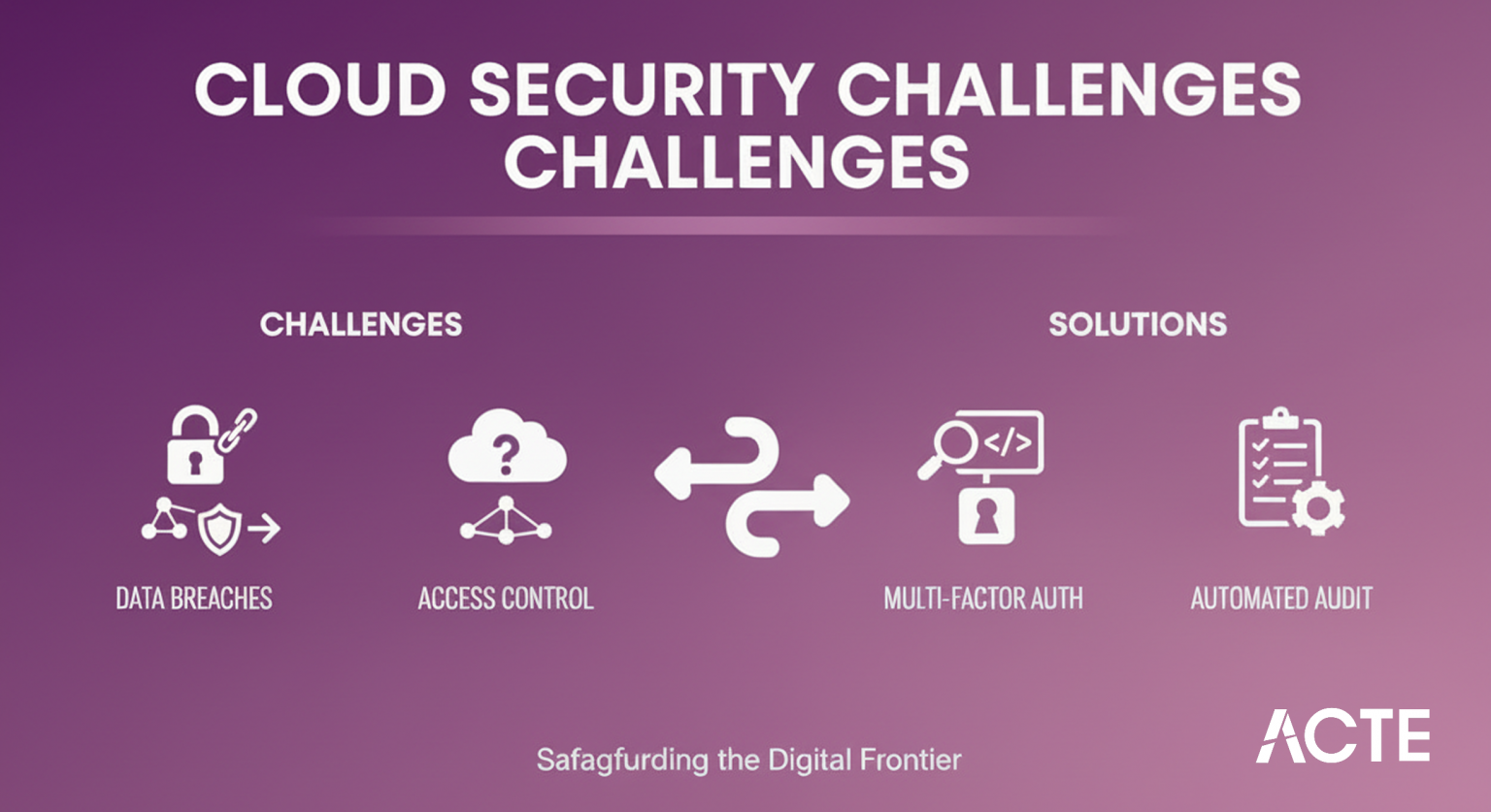
Understanding How Many Types of Cloud Security Challenge Exist in 2026
In 2026, cloud security challenges are categorized into seven primary types: misconfiguration, identity and access management (IAM) failures, insecure APIs, data privacy risks, supply chain vulnerabilities, lack of visibility, and comp...
In 2026, cloud security challenges are categorized into seven primary types: misconfiguration, identity and access management (IAM) failures, insecure APIs, data privacy risks, supply chain vulnerabilities, lack of visibility, and compliance gaps. These core categories encompass a vast ecosystem of specific threats that vary significantly across IaaS, PaaS, and SaaS environments.
Contents
The Classification of Modern Cloud Security Challenges
To understand how many types of cloud security challenge exist, one must first recognize that the landscape is not static. As of 2026, the industry has moved beyond simple "hacker" tropes to a sophisticated matrix of architectural, operational, and adversarial risks. While specific vulnerabilities change daily, they consistently fall into high-level categories defined by how they impact the cloud stack.
The Cloud Security Alliance (CSA) and NIST provide the frameworks used to group these challenges. By classifying them, organizations can move from a reactive posture—fixing leaks as they appear—to a proactive strategy that addresses the root cause of systemic insecurity.
1. Configuration and Control Plane Vulnerabilities
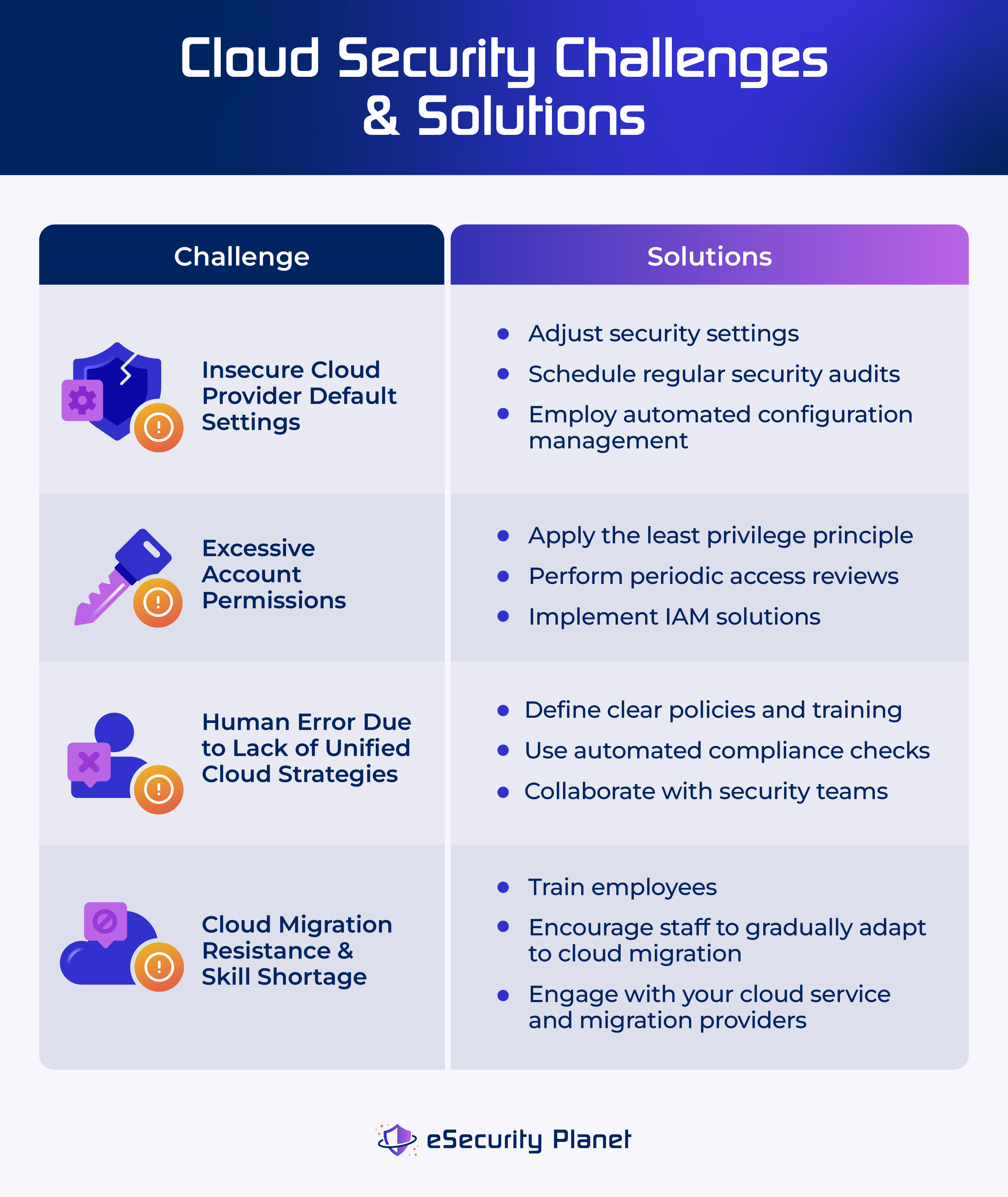
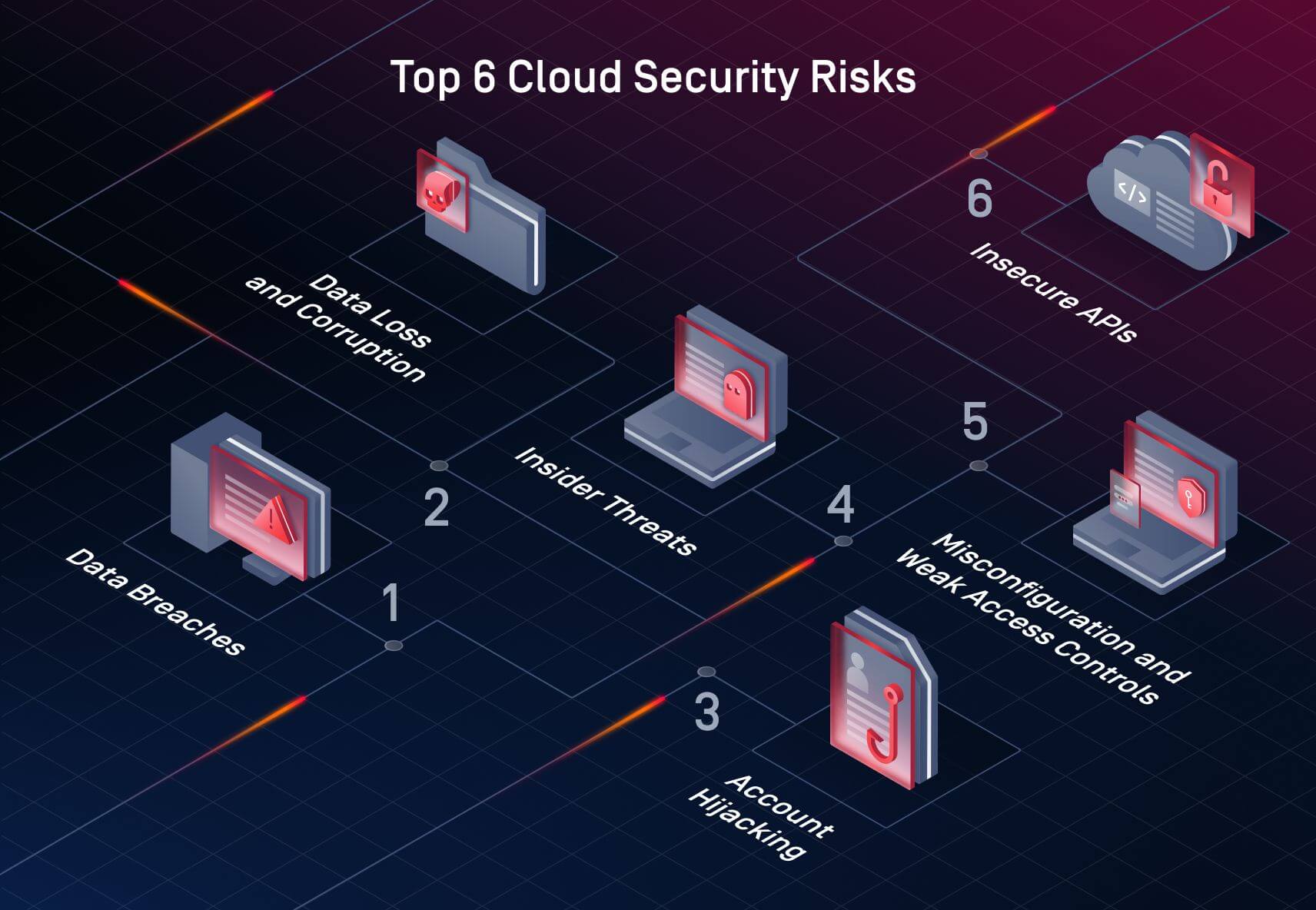
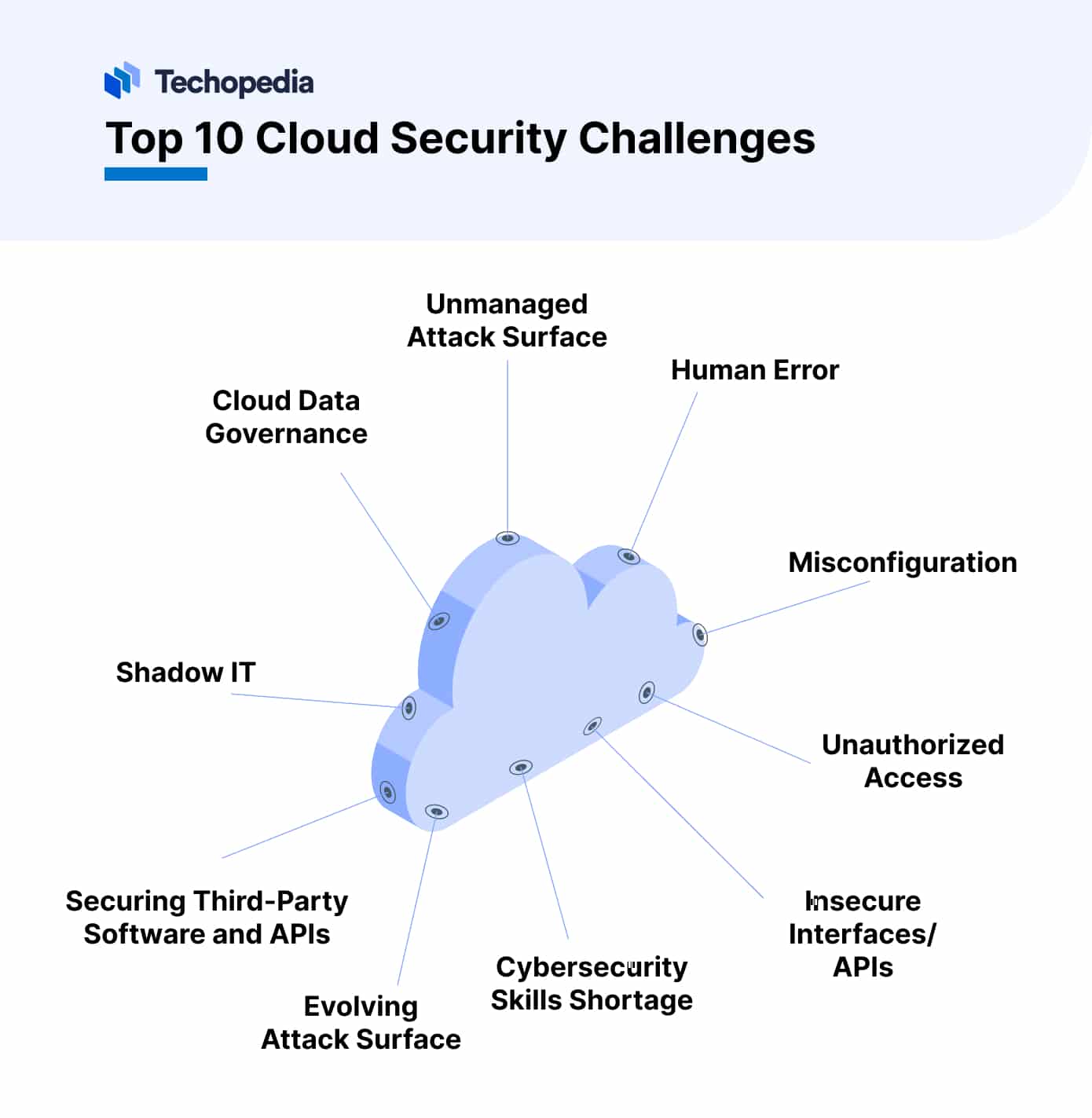
Misconfiguration remains the most prevalent type of cloud security challenge. In a highly automated, software-defined environment, a single line of incorrect code in a Terraform or CloudFormation template can expose thousands of records to the public internet.
In 2026, this challenge has evolved into "Control Plane Manipulation." Because the control plane is the nervous system of the cloud, an attacker who gains access to administrative consoles or APIs can modify the entire environment's architecture. This includes disabling logging, creating backdoor accounts, or redirecting traffic. The complexity of multi-cloud environments—where an organization uses AWS, Azure, and Google Cloud simultaneously—compounds this issue, as each provider uses different syntax and logic for their security groups and storage buckets.
2. Identity and Entitlement Management (CIEM)
Identity is the new perimeter. The shift away from traditional network firewalls toward a Zero Trust architecture means that the primary challenge is managing who (or what) has access to which resources.
Cloud Infrastructure Entitlement Management (CIEM) has emerged as a critical sub-type of challenge. Many organizations suffer from "permission creep," where users or machine identities accumulate excessive privileges over time. In 2026, machine identities (service accounts, bots, and Lambda functions) vastly outnumber human users. Securing these non-human identities is a major technical hurdle, as they often require high-level permissions to execute automated tasks but are rarely audited with the same rigor as human employees.
3. Insecure Interfaces and API Ecosystems
Application Programming Interfaces (APIs) are the primary method through which cloud services communicate. They are also the primary attack vector for data exfiltration. The challenge here lies in "Broken Object Level Authorization" (BOLA) and "Broken Function Level Authorization."
As organizations adopt microservices, the number of internal and external APIs grows exponentially. If these interfaces are not properly secured with robust authentication and rate-limiting, attackers can use them to scrape data or inject malicious commands. In 2026, the rise of AI-driven API discovery tools used by attackers has made this challenge even more urgent, as they can rapidly map an organization’s entire API surface to find undocumented or "shadow" endpoints.
4. Data Privacy, Sovereignty, and Residency
While technical vulnerabilities get the most headlines, the legal and regulatory challenges of data storage are equally daunting. "Data Sovereignty" refers to the concept that data is subject to the laws of the country in which it is located.
With the proliferation of strict regional privacy laws (such as the evolved GDPR and various US state laws in 2026), moving data across borders is a significant risk. If a cloud provider replicates data to a data center in a jurisdiction with different privacy standards, the customer may face massive fines. This challenge requires technical solutions like Confidential Computing, which encrypts data even while it is being processed in memory, and local zone deployments to ensure data stays within specific geographic boundaries.
5. Supply Chain and Third-Party Risk
In the cloud, you are only as secure as the weakest link in your software supply chain. This type of challenge involves risks inherited from third-party libraries, container images, and managed service providers.
In 2026, the industry heavily relies on the Software Bill of Materials (SBOM) to track these dependencies. However, the sheer volume of open-source components used in cloud-native development makes it difficult to patch vulnerabilities in real-time. A vulnerability in a widely used logging library or a base container image can have a "ripple effect," compromising thousands of downstream organizations simultaneously. Managing these "indirect" risks is a massive operational burden for security teams.
6. Advanced Persistent Threats (APTs) and AI-Enhanced Malware
Malware in 2026 is significantly different from the viruses of the past. Modern cloud-native malware is designed to be "fileless," existing only in a system's volatile memory to avoid detection by traditional disk-scanning antivirus software.
Furthermore, attackers now use generative AI to create highly personalized phishing campaigns and polymorphic code that changes its signature to evade detection. These Advanced Persistent Threats (APTs) often spend months inside a cloud environment, moving laterally from a low-priority resource (like a developer's sandbox) to high-value assets (like the production database). The challenge is not just keeping them out, but detecting their presence once they are inside.
7. Lack of Visibility and Shadow IT
You cannot secure what you cannot see. The ease of spinning up new cloud resources—often with just a credit card—leads to "Shadow IT," where departments deploy their own cloud services without the knowledge or approval of the central IT department.
This creates "blind spots" in the organization’s security posture. If the security team doesn't know an S3 bucket or a database exists, they cannot monitor it for breaches or ensure it follows compliance standards. Achieving total visibility across fragmented multi-cloud and hybrid environments remains one of the top operational challenges for CISO (Chief Information Security Officer) offices in 2026.
Comparison of Cloud Security Risks by Deployment Model
The severity and nature of these challenges change depending on whether you are using Public, Private, or Hybrid cloud models.
| Challenge Type | Public Cloud (IaaS/SaaS) | Private Cloud (On-Premise) | Hybrid Cloud |
|---|---|---|---|
| Misconfiguration | Very High (Due to complexity and shared tools) | Moderate (Internal control) | High (Syncing two different environments) |
| Data Sovereignty | High (Global data center locations) | Low (Data remains on-site) | Moderate (Data transit risks) |
| API Security | Very High (Standardized, public-facing) | Moderate (Internal-facing APIs) | High (Cross-environment communication) |
| Visibility | Moderate (Provider tools help) | High (Manual auditing required) | Very High (Fragmented monitoring) |
| Supply Chain Risk | High (Heavy use of managed services) | Moderate (More control over stack) | High (Complex integration points) |
Mapping Challenges to the Shared Responsibility Model
A fundamental concept in cloud security is the Shared Responsibility Model. Understanding "how many types of challenge exist" requires knowing who is responsible for solving them.
- Security OF the Cloud: This is the responsibility of the provider (e.g., AWS, Microsoft, Google). They manage the physical security of data centers, the hardware, and the virtualization layer. If a vulnerability exists in the underlying hypervisor, it is the provider’s challenge to fix.
- Security IN the Cloud: This is the responsibility of the customer. You are responsible for configuring your firewalls, managing your IAM roles, encrypting your data, and securing your application code.
Most modern cloud breaches are the result of the customer failing to meet their obligations within this model. For example, if an organization fails to enable Multi-Factor Authentication (MFA) on a root account, that is a failure in the "Security IN the Cloud" category, regardless of how secure the provider’s physical data center is.
The Role of AI and Automation in 2026
By 2026, the "cat and mouse" game of cloud security has reached a new level of automation. Organizations now use AI-driven Security Operations Centers (ASOCs) to combat the types of challenges mentioned above.
Artificial intelligence is particularly effective at addressing the "Visibility" and "Configuration" challenges. Machine learning models can analyze trillions of log events to find subtle patterns that indicate an unauthorized lateral movement or an abnormal data egress. Furthermore, "Self-Healing Infrastructure" can automatically revert a security group to its hardened state if a developer accidentally opens a port to the public internet, effectively neutralizing the misconfiguration challenge before it can be exploited.
Practical Steps to Mitigate Cloud Security Challenges
To effectively manage these various types of challenges, organizations must adopt a multi-layered defense strategy. Relying on a single security tool is no longer sufficient in 2026.
- Implement a Cloud Security Posture Management (CSPM) Tool: These tools provide continuous monitoring of your cloud environment to detect misconfigurations and compliance violations in real-time.
- Adopt a "Zero Trust" Identity Strategy: Never trust, always verify. Every request for access, whether it comes from inside or outside the network, must be authenticated and authorized based on strict policy.
- Use Secrets Management: Never hard-code credentials or API keys into your source code. Use centralized vaults to manage and rotate secrets automatically.
- Prioritize DevSecOps: Integrate security scanning into the CI/CD pipeline. By scanning container images and infrastructure-as-code templates early in the development process, you "shift left" and catch vulnerabilities before they reach production.
Frequently Asked Questions
Which cloud security challenge is the most common in 2026?
Misconfiguration remains the most frequent cause of cloud data breaches. Despite advanced security tools, the complexity of modern cloud environments and the speed of DevOps cycles often lead to human errors, such as leaving storage buckets exposed or using default security settings.
How does "Shadow IT" contribute to cloud security risks?
Shadow IT refers to cloud services used within an organization without explicit approval. It creates significant risk because these services bypass the central security team’s visibility, meaning they are likely unpatched, improperly configured, and not compliant with the company’s data protection policies.
Is the cloud more secure than on-premise data centers?
Technically, yes, but only if configured correctly. Cloud providers invest billions in the "Security OF the Cloud," providing a level of physical and architectural security that most private companies cannot match. However, the "Security IN the Cloud" depends entirely on the user's expertise and diligence.
What is the difference between a cloud threat and a cloud challenge?
A cloud challenge is an operational or structural hurdle (like managing 10,000 identities), while a cloud threat is a specific event or actor looking to exploit a vulnerability (like a ransomware group). Challenges provide the environment in which threats can succeed.
How do global regulations impact cloud security types?
Regulations like the GDPR or the EU AI Act introduce "compliance challenges." These aren't necessarily technical hacks, but they require organizations to implement specific controls over where data is stored and how it is processed, with failure resulting in severe financial and legal penalties.
Final Recommendation
To successfully navigate the various types of cloud security challenges in 2026, organizations must move away from static security models. The most effective approach is a combination of automated governance (to catch misconfigurations), Identity-first security (to manage entitlements), and continuous visibility. By acknowledging that cloud security is an ongoing operational process—rather than a one-time setup—businesses can leverage the power of the cloud without falling victim to its inherent risks.
Image Gallery