Understanding Senior Life Insurance Company AM Best Ratings
When evaluating a life insurance provider for seniors, an AM Best rating acts as a critical indicator of the insurer’s financial strength and its ability to meet long-term contractual obligations. These independent credit ratings provi...
When evaluating a life insurance provider for seniors, an AM Best rating acts as a critical indicator of the insurer’s financial strength and its ability to meet long-term contractual obligations. These independent credit ratings provide policyholders with a standardized assessment of an insurance company’s balance sheet, operating performance, and business profile, helping seniors identify carriers that are stable enough to pay out death benefits decades into the future.
Contents
The Role of AM Best in the Insurance Industry
AM Best is a global credit rating agency focused specifically on the insurance industry. Unlike general credit rating agencies that assess a wide range of corporate debt, AM Best’s methodology is tailored to the unique risks associated with insurance operations. For a senior seeking life insurance—whether it is a term policy, whole life, or final expense coverage—the company’s ability to remain solvent is the primary risk factor to consider.
An AM Best Financial Strength Rating (FSR) is an independent opinion of an insurer’s financial ability to meet its ongoing insurance policy and contract obligations. These ratings range from "A++" (Superior) to "S" (Suspended). For consumers, the rating serves as a proxy for trust. If a life insurance company carries a high rating, it suggests that the company has sufficient capital reserves, conservative investment strategies, and a proven history of claims settlement.
Interpreting the Rating Scale
Understanding how to read these ratings is essential for any senior evaluating a policy. AM Best categorizes ratings into "Secure" and "Vulnerable" groups. Most reputable companies that offer senior-focused life insurance products maintain ratings within the "Secure" category.
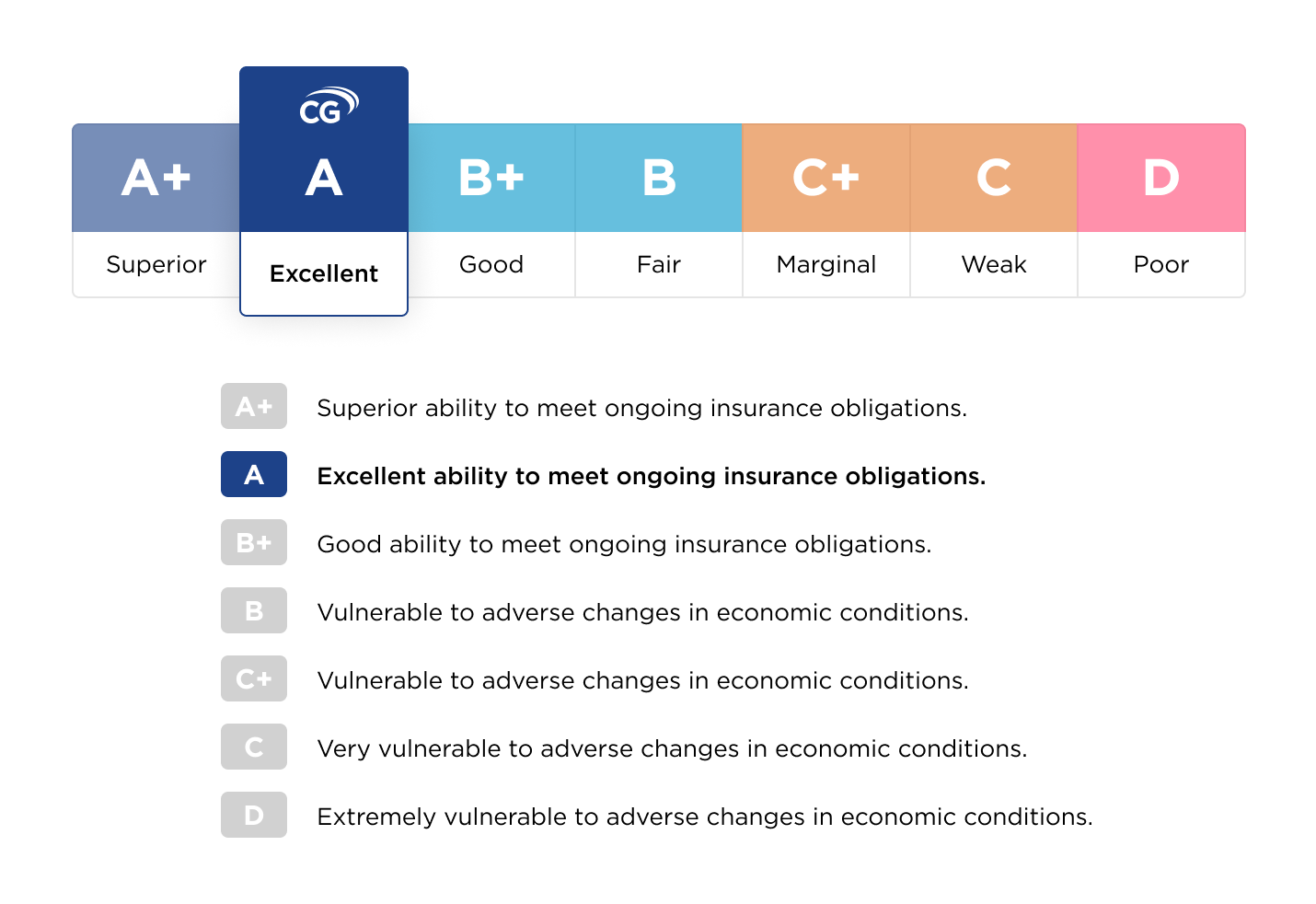
The following table breaks down the common rating tiers encountered when researching insurance providers:
| Rating Category | Rating Symbol | Meaning |
|---|---|---|
| Superior | A++, A+ | Exceptional ability to meet ongoing insurance obligations. |
| Excellent | A, A- | Strong ability to meet ongoing insurance obligations. |
| Good | B++, B+ | Good ability to meet ongoing insurance obligations. |
| Fair | B, B- | Vulnerable to unfavorable changes in economic conditions. |
| Marginal | C++, C+ | High level of uncertainty regarding ability to meet obligations. |
| Weak | C, C- | Significant difficulty in meeting obligations. |
When you are researching a senior life insurance company, you should generally focus on carriers that fall within the "Superior" or "Excellent" categories. While a "Good" rating does not imply a company is failing, it does indicate that the insurer has less of a buffer against significant market volatility or a surge in unexpected claims.
Factors Influencing a Company’s Rating
AM Best does not assign ratings based on arbitrary factors; they conduct a comprehensive analysis of the insurer’s operational environment. When analyzing a company that provides coverage for seniors, the analysts look at:
- Balance Sheet Strength: This includes the company’s capitalization, its asset-liability matching, and the quality of its investment portfolio. For seniors, this is vital because life insurance policies are long-term contracts; the company must hold enough high-quality assets today to cover a potential claim twenty or thirty years from now.
- Operating Performance: Analysts look at the profitability of the company. A company that consistently operates at a loss may eventually struggle to pay benefits or may be forced to raise premiums more aggressively.
- Business Profile: This assesses the diversity of the company’s product offerings and its market share. A company that is too concentrated in a single, high-risk insurance product might be viewed as riskier than a diversified insurance conglomerate.
- Enterprise Risk Management: This measures how well the company identifies, monitors, and mitigates risks, such as shifts in interest rates or sudden changes in mortality trends among policyholders.
Why Seniors Should Prioritize Financial Strength
Seniors are often looking for "Final Expense" insurance or permanent whole life policies that stay in effect for the remainder of their lives. Unlike term insurance, which may expire after 10 or 20 years, permanent policies are designed to remain active until the policyholder passes away. Because the payout might not occur for decades, the financial stability of the insurer is the most important factor in the purchase decision.
If you purchase a policy from a company that later becomes insolvent, the state’s Guaranty Association may step in to cover the policy, but there are often limits to these protections. Relying on state protection is a safety net of last resort; it is far safer to select a company that demonstrates strong financial health via a high AM Best rating from the outset.
Steps to Verify a Carrier’s Rating
You should never rely solely on a marketing brochure or a sales representative’s verbal claims regarding financial stability. Follow these steps to conduct your own due diligence:
- Identify the Legal Name: Insurance is often sold through subsidiaries. Ensure you have the full legal name of the specific insurance company issuing the policy, not just the marketing brand name.
- Visit the AM Best Website: AM Best maintains a searchable database on their website. Use the "Credit Rating Search" function to look up the insurer by name or NAIC (National Association of Insurance Commissioners) number.
- Check for Rating Outlooks: In addition to the letter grade, AM Best often issues an "outlook" (e.g., Stable, Positive, or Negative). A "Negative" outlook suggests that the rating might be downgraded in the near future, which warrants closer inspection.
- Confirm the Date: Ratings can be updated throughout the year. Ensure that the rating you are viewing is the most recent assessment provided by the agency.
Common Misconceptions About Insurance Ratings
One common mistake is assuming that a well-known brand name equates to a high financial rating. While many household names in the insurance industry are highly rated, brand recognition is a result of marketing spend, not necessarily financial health. Always verify the rating independently.
Another misconception is that all life insurance companies are rated by AM Best. While most major carriers participate in the rating process because it is a standard industry practice, some smaller or newer companies may not have an AM Best rating. If a company is "Not Rated" (NR), it does not necessarily mean they are insolvent, but it does mean that they have not provided the transparency required for an independent assessment. In such cases, you should seek alternative ways to assess their financial stability, such as checking their NAIC financial statement filings or looking for ratings from other agencies like S&P or Moody’s.
Frequently Asked Questions
Does a high AM Best rating guarantee that my claim will be paid? While no rating is a guarantee, an AM Best rating is the industry standard for evaluating the likelihood that a company will meet its obligations. A "Superior" rating indicates a very high degree of confidence, but it is still a measure of financial strength rather than an absolute legal promise.
How often do these ratings change? AM Best monitors companies continuously. If a material change in a company’s financial condition occurs, the agency may update the rating or the outlook at any time. It is a good practice to check the rating again if you are considering purchasing a new policy.
Should I consider other rating agencies? Yes. For a holistic view, you can check ratings from other agencies like Standard & Poor’s, Moody’s, or Fitch. These agencies use slightly different methodologies, and comparing them can provide a more comprehensive picture of a company’s financial position.
What should I do if a company has a low rating? If a company has a low or "vulnerable" rating, it is advisable to look elsewhere. There are many highly-rated life insurance providers, and there is rarely a compelling reason to accept the risk associated with a financially weaker company.
Do these ratings apply to the insurance agent or broker? No. AM Best ratings apply specifically to the insurance carrier—the entity that actually underwrites the policy and holds the financial liability. The broker or agent is simply the intermediary.
Final Recommendation
When shopping for life insurance in 2026, prioritize companies with an AM Best rating of "A" (Excellent) or higher. Financial strength is the foundation of any life insurance contract, especially for seniors relying on their policies to provide for heirs or cover end-of-life expenses. Perform your verification through the official AM Best portal, verify the specific legal entity issuing your policy, and maintain a focus on long-term stability over short-term premium savings.
Image Gallery