What Debtors Anonymous Offers: A Comprehensive Guide to Financial Recovery Tools
Debtors Anonymous (DA) offers a structured, 12-step recovery program designed to help individuals stop incurring unsecured debt and achieve long-term financial solvency. Its core offerings include peer-led support meetings, a specializ...
Debtors Anonymous (DA) offers a structured, 12-step recovery program designed to help individuals stop incurring unsecured debt and achieve long-term financial solvency. Its core offerings include peer-led support meetings, a specialized system of daily record-keeping, "Pressure Relief Groups" for personalized financial planning, and a set of twelve specific tools focused on changing behavioral patterns regarding spending, saving, and earning.
Contents
In 2026, the challenges of digital currency, "buy now, pay later" services, and invisible credit streams have made the compulsive debting cycle more complex. Debtors Anonymous provides a non-clinical, spiritual (though not religious) framework for those who find themselves powerless over their financial lives. Unlike traditional debt consolidation or credit counseling, DA focuses on the behavioral and emotional roots of spending, offering a community-based approach to financial sobriety.
The Twelve Tools of Debtors Anonymous
The primary value of Debtors Anonymous lies in its "Twelve Tools." These are practical actions that members use to achieve solvency and maintain it. While the Twelve Steps provide the spiritual foundation for recovery, the tools provide the daily mechanics required to handle money without fear or compulsion.
1. Meetings and Membership
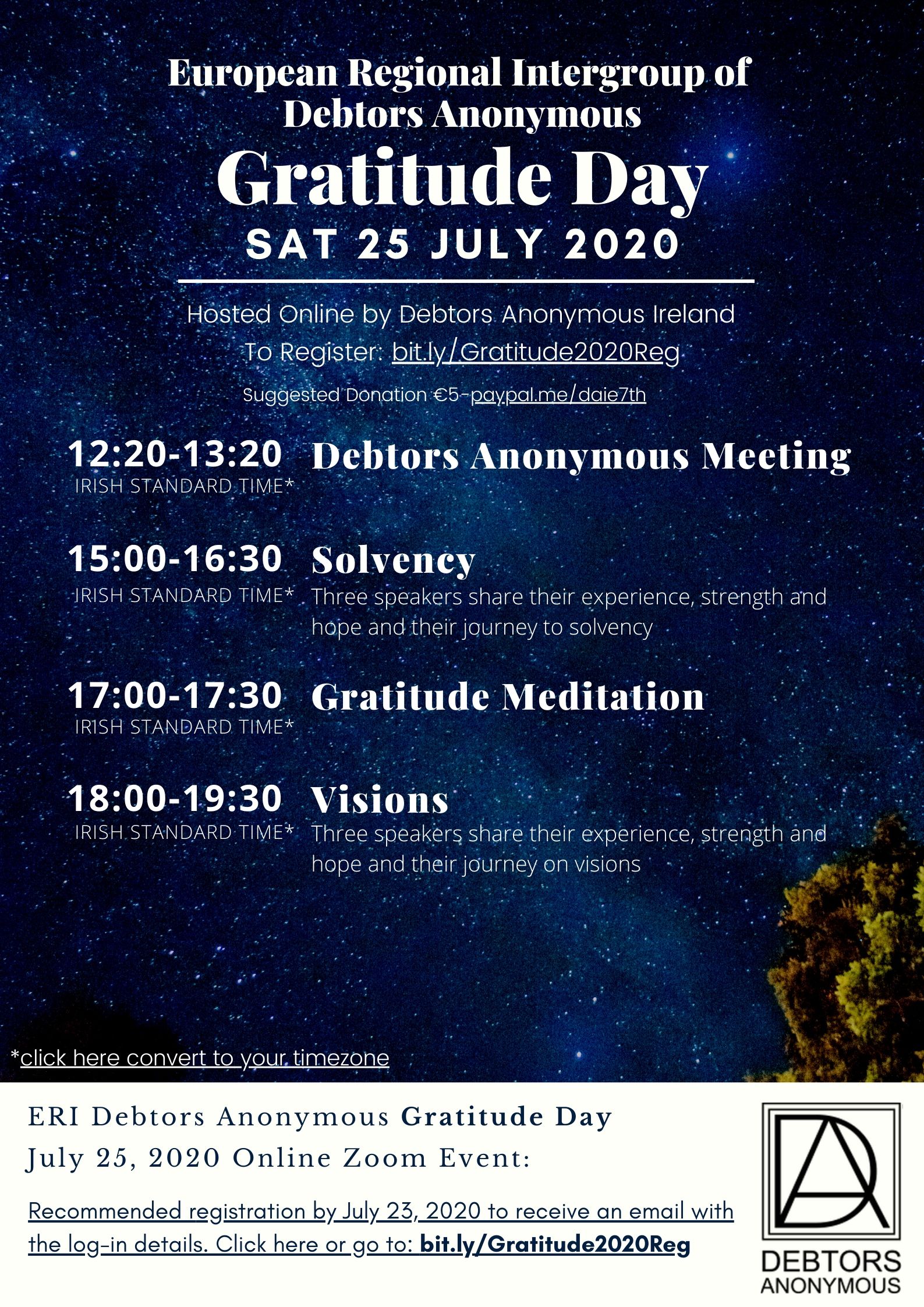
The cornerstone of DA is the meeting. Members gather to share their experience, strength, and hope. In 2026, meetings are available in several formats: in-person, via telephone, and through various secure digital platforms. There are no dues or fees for membership; the only requirement is a desire to stop incurring unsecured debt. This accessibility ensures that anyone, regardless of their current financial state, can access help immediately.
2. Record-Keeping
DA emphasizes the importance of rigorous honesty regarding money. Members are encouraged to keep a daily record of every penny spent and received. This practice is not about restriction; it is about awareness. By documenting every transaction, debtors begin to see the reality of their financial situation, stripping away the "vagueness" that often fuels compulsive debting.
3. Sponsorship and Fellowship
A sponsor is a member of DA who has progress in the program and is willing to share their journey on a one-on-one basis. This relationship offers accountability and guidance through the Twelve Steps. The fellowship at large provides a support network that replaces the isolation often felt by those in deep debt.
4. Pressure Relief Groups and Meetings
One of the most unique offerings of DA is the Pressure Relief Meeting (PRM). This is a focused session where a member meets with two other experienced members (usually those who have at least one year of solvency and have had their own PRMs). Together, they review the member’s financial records and help them develop a Spending Plan and an Action Plan. This peer-review process provides objective insights that a debtor, clouded by stress or compulsion, might not see.
5. The Spending Plan
While the world uses "budgets" to restrict, DA uses "Spending Plans" to empower. A spending plan prioritizes "Categories of Need" (food, shelter, utilities) and "Categories of Want" (entertainment, hobbies). The goal is to live within one's means today while gradually addressing past debts.
6. The Action Plan
An action plan is a list of specific steps to resolve financial, legal, or professional complications. This might include drafting letters to creditors, seeking legal advice regarding bankruptcy, or setting goals for increased income. By breaking these tasks into manageable pieces, the program helps reduce the "paralysis" that often accompanies financial crisis.
Comparing Debtors Anonymous to Professional Financial Services
It is important to distinguish what Debtors Anonymous offers from what professional financial institutions provide. DA is a peer-support group, not a legal or financial advisory firm.
| Feature | Debtors Anonymous (DA) | Credit Counseling Agencies | Debt Settlement Companies |
|---|---|---|---|
| Primary Goal | Behavioral change and recovery | Debt repayment management | Reducing total debt amount |
| Cost | Free (voluntary donations) | Monthly fees / Setup fees | Percentage of debt "saved" |
| Mechanism | 12-Step peer support | Debt Management Plans (DMP) | Negotiation with creditors |
| Long-term Focus | Spiritual and emotional health | Credit score and repayment | Immediate debt reduction |
| Eligibility | Anyone with a desire to stop debting | Usually requires steady income | Usually requires significant debt |
The Concept of Solvency in DA
In most financial contexts, solvency refers to having assets that exceed liabilities. In Debtors Anonymous, "solvency" has a specific definition: the act of not incurring any new unsecured debt, one day at a time.
Unsecured debt is defined as any debt not backed by collateral. This includes:
- Credit card balances.
- Payday loans.
- Unsecured personal loans.
- Borrowing from friends or family without collateral.
- Unpaid taxes or overdue rent/utilities (which essentially act as "loans" from the provider).
Debtors Anonymous offers a way to stop this cycle immediately. By focusing on "not debting today," members remove the immediate pressure of an expanding debt load, allowing them the mental space to work on the underlying causes of their spending.
Addressing Under-earning and Compulsive Spending
Debtors Anonymous recognizes that the problem is not always just overspending; it is often under-earning. Many members struggle with an inability to claim their worth in the marketplace, a tendency to work for little or no pay, or a failure to realize their full professional potential.
DA offers specialized "Business Debtors Anonymous" (BDA) meetings for those who are self-employed or own businesses. These meetings focus on the specific challenges of running a business without debting, such as managing cash flow, paying taxes on time, and avoiding the "rob Peter to pay Paul" mentality often found in struggling enterprises.
How the Program Handles Existing Debt
A common misconception is that Debtors Anonymous offers a way to "get out of" paying what is owed. On the contrary, the program emphasizes personal responsibility. However, it teaches that a debtor cannot pay back what they owe if they are still actively incurring new debt or if they are not meeting their basic needs for survival.
The DA approach follows a specific hierarchy of payments:
- Current Living Expenses: Ensuring the member has food, shelter, and basic necessities so they can remain functional and employed.
- Current Obligations: Paying current taxes, rent, and utilities on time to prevent further legal or social complications.
- Debt Repayment: Once a stable spending plan is in place, the member uses their Action Plan to contact creditors and arrange for realistic, sustainable repayment schedules.
The Role of Anonymity and Safety
As a "Twelve Step" organization, DA offers a high degree of privacy. In a world where financial failure is often met with intense social stigma, the "Anonymous" part of the name is a vital offering. It allows individuals to speak openly about their shame, their "hiding" of bills, and their legal troubles without fear that this information will be used against them in a professional or social capacity.
This safety allows for the "stripping away of the mask," which is a prerequisite for recovery. When a debtor no longer has to pretend they have everything under control, they can finally begin to address the reality of their situation.
Professional Advice and Jurisdictional Limits
While Debtors Anonymous provides powerful peer support, it does not offer legal, tax, or professional investment advice. Members are frequently encouraged in their Action Plans to consult with qualified professionals, such as bankruptcy attorneys or certified public accountants. The program provides the emotional and behavioral support to follow through on professional advice, but it does not replace it.
Laws regarding debt collection, bankruptcy, and credit reporting vary significantly by jurisdiction. Individuals are advised to verify local statutes regarding debt statutes of limitations and consumer protection rights through official channels such as the Consumer Financial Protection Bureau (CFPB) in the United States or equivalent regulatory bodies in other countries.
Frequently Asked Questions
Does Debtors Anonymous lend money to its members?
No. Debtors Anonymous does not provide loans, grants, or any form of financial assistance. Its purpose is to provide a program of recovery from compulsive debting. Lending money would be contrary to the program's goal of helping members stop incurring debt.
Is DA only for people who are "broke"?
No. Compulsive debting affects individuals across all income levels. Some members may have high six-figure incomes but find themselves in constant financial crisis due to compulsive spending, over-extension, or under-earning. The program focuses on the compulsion and the behavior, not just the balance in a bank account.
Is Debtors Anonymous a religious organization?
DA is a spiritual program, not a religious one. It is based on the 12 Steps of Alcoholics Anonymous. While the steps mention "God" or a "Power greater than ourselves," each member is free to define that power in whatever way works for them, including non-theistic interpretations like "the group" or "the process of recovery."
How do I find a Debtors Anonymous meeting?
In 2026, the most reliable way to find a meeting is through the official Debtors Anonymous website. They maintain a real-time directory of in-person, telephone, and online meetings globally. Most meetings are "open," meaning anyone interested in the program can attend.
What is the difference between an "Open" and "Closed" meeting?
An "Open" meeting is available to anyone—students, professionals, or family members—who wants to learn about DA. A "Closed" meeting is restricted to those who have a desire to stop incurring unsecured debt, ensuring a higher level of privacy for those sharing their personal financial struggles.
Recommendation for Next Actions
If you are struggling with the weight of unmanageable debt or find yourself unable to stop using credit cards despite the consequences, the first step is to attend a meeting. DA suggests attending at least six meetings before deciding if the program is right for you. This allows you to hear a variety of stories and understand the different ways the tools are applied.
Before your first meeting, you may find it helpful to read the "12 Signs of Compulsive Debting" on the official DA website to see if your behaviors align with the patterns of the fellowship. If you decide to proceed, your next practical action should be to start a simple daily record of your spending—even if it is just in a notebook—to begin lifting the veil of financial vagueness.
Image Gallery