What Happened to the US Government? Operational Status, Budget Battles, and System Overview
When public interest spikes around what happened to the U.S. government, the query almost always stems from federal funding lapses, potential or active government shutdowns, debt ceiling negotiations, or sweeping presidential administr...
When public interest spikes around what happened to the U.S. government, the query almost always stems from federal funding lapses, potential or active government shutdowns, debt ceiling negotiations, or sweeping presidential administrative shifts. The federal government operates under strict constitutional rules and statutory spending laws, meaning operational disruptions trigger automatic, legal pauses in non-essential public services while essential functions continue uninterrupted.
Contents
Understanding the U.S. Federal Funding Mechanism
To understand operational changes within the United States federal government, one must first examine how the federal budget is authorized and distributed. Under Article I, Section 9 of the U.S. Constitution, no money can be drawn from the Department of the Treasury without explicit appropriations made by federal law.
Congress fulfills this obligation through twelve annual appropriations bills that fund executive departments, independent agencies, judicial operations, and legislative branch offices. When Congress fails to pass these twelve bills before the start of the fiscal year on October 1—or fails to pass a temporary stopgap measure known as a Continuing Resolution (CR)—the legal authority of federal agencies to spend money expires.
- Congress Fails to Pass Appropriations
- Antideficiency Act Enforced (31 USC)
- Excepted Personnel (Safety/Life/Property)
- Continue Unpaid Work (Backpay Promised)
- Non-Excepted Personnel (Furloughed)
- Stop All Activity Until Appropriations Pass
- Excepted Personnel (Safety/Life/Property)
The underlying statutory driver behind government shutdowns is the Antideficiency Act (codified across 31 U.S.C. § 1341 and related sections). Originally enacted in 1884 and significantly amended in 1950 and 1982, the Act prohibits federal officers and employees from:
- Incurring financial obligations or spending federal funds without prior congressional authorization.
- Accepting voluntary services on behalf of the government, except in emergency cases involving the safety of human life or the protection of property.
- Exceeding the amount authorized by an appropriation or spending funds in advance of an appropriation.
Violations of the Antideficiency Act carry administrative penalties—including suspension or removal from office—as well as potential criminal penalties, including fines and imprisonment. Consequently, agency heads cannot simply keep offices running on credit; they are legally mandated to shut down operations non-essential to immediate safety when funding expires.
Shutdown Dynamics: Excepted vs. Non-Excepted Employees
During a funding lapse, the Office of Management and Budget (OMB) directs federal agencies to execute predetermined contingency plans. Agency operations split into two primary personnel categories:
Excepted (Essential) Personnel
Employees designated as excepted must continue working during a shutdown. This classification applies strictly to positions performing duties vital to national security, public safety, constitutional continuity, or the protection of life and property. Key groups include:
- Active-duty military service members and federal law enforcement officers (e.g., FBI, DEA, U.S. Marshals, Border Patrol).
- Transportation Security Administration (TSA) screeners and Federal Aviation Administration (FAA) air traffic controllers.
- Federal correctional officers and emergency medical staff at Veterans Affairs (VA) hospitals.
- Inspectors monitoring immediate public health risks, such as high-risk food safety operations.
Non-Excepted (Furloughed) Personnel
Employees designated as non-excepted are placed on mandatory administrative leave, known as a furlough. Furloughed workers are legally prohibited from performing work duties, accessing official agency systems, logging into work emails, or utilizing government-issued mobile devices. Non-excepted services typically include:
- National Park Service operations, visitors centers, and public outreach programs.
- Routine administrative processing, such as non-urgent passport renewals or routine regulatory permits.
- Policy research, statistical reporting (e.g., Bureau of Labor Statistics updates), and agency website maintenance.
- Small Business Administration (SBA) loan application approvals and non-emergency grant disbursements.
Under the Government Employee Fair Treatment Act of 2019 (GEFTA), all regular federal employees affected by a lapse in appropriations are legally guaranteed back pay once the shutdown ends, regardless of whether they worked as excepted staff or were furloughed. Contract employees working for private companies on federal agreements, however, are not protected by GEFTA and often experience permanent revenue losses unless their contracts are fully funded in advance.
Operational Comparison Across Federal Statuses
The operational reality of the U.S. federal government varies substantially depending on its fiscal status. The table below outlines how public services, agency workflows, and federal payroll are impacted under different governing conditions:
| Government Status | Legal & Funding Basis | Impact on Essential Services | Impact on Non-Essential Services | Employee Payroll Status |
|---|---|---|---|---|
| Normal Appropriations | Full 12 Enacted Annual Appropriation Bills | Fully operational; normal staffing levels across all agencies | Fully operational; full processing capacity | Regular bi-weekly pay issued on standard schedule |
| Continuing Resolution (CR) | Temporary stopgap legislation preserving prior funding levels | Fully operational; programs run based on historical spending caps | Fully operational, but new multi-year initiatives or major projects are restricted | Regular bi-weekly pay issued on standard schedule |
| Partial Shutdown | Appropriations passed for some cabinet departments; others expired | Fully operational in funded agencies; excepted operations only in unfunded agencies | Paused in unfunded agencies; normal in funded departments | Delayed for unfunded agency staff; regular for funded agency staff |
| Full Government Shutdown | Complete lapse of annual appropriations across all agencies | Limited to life-safety, national defense, and law enforcement duties | Completely suspended; public facilities closed, permits paused | Pay deferred until Congress passes funding (back pay guaranteed by GEFTA) |
| Debt Ceiling Emergency | Statutory debt limit reached; Treasury utilizes extraordinary measures | Depends on Treasury cash balances and debt service prioritization | Operational until Treasury cash depletes; potential for delayed federal payments | Risk of systemic delays across federal disbursements if cash reserves empty |
Federal Administrative Transitions and Systemic Policy Shifts
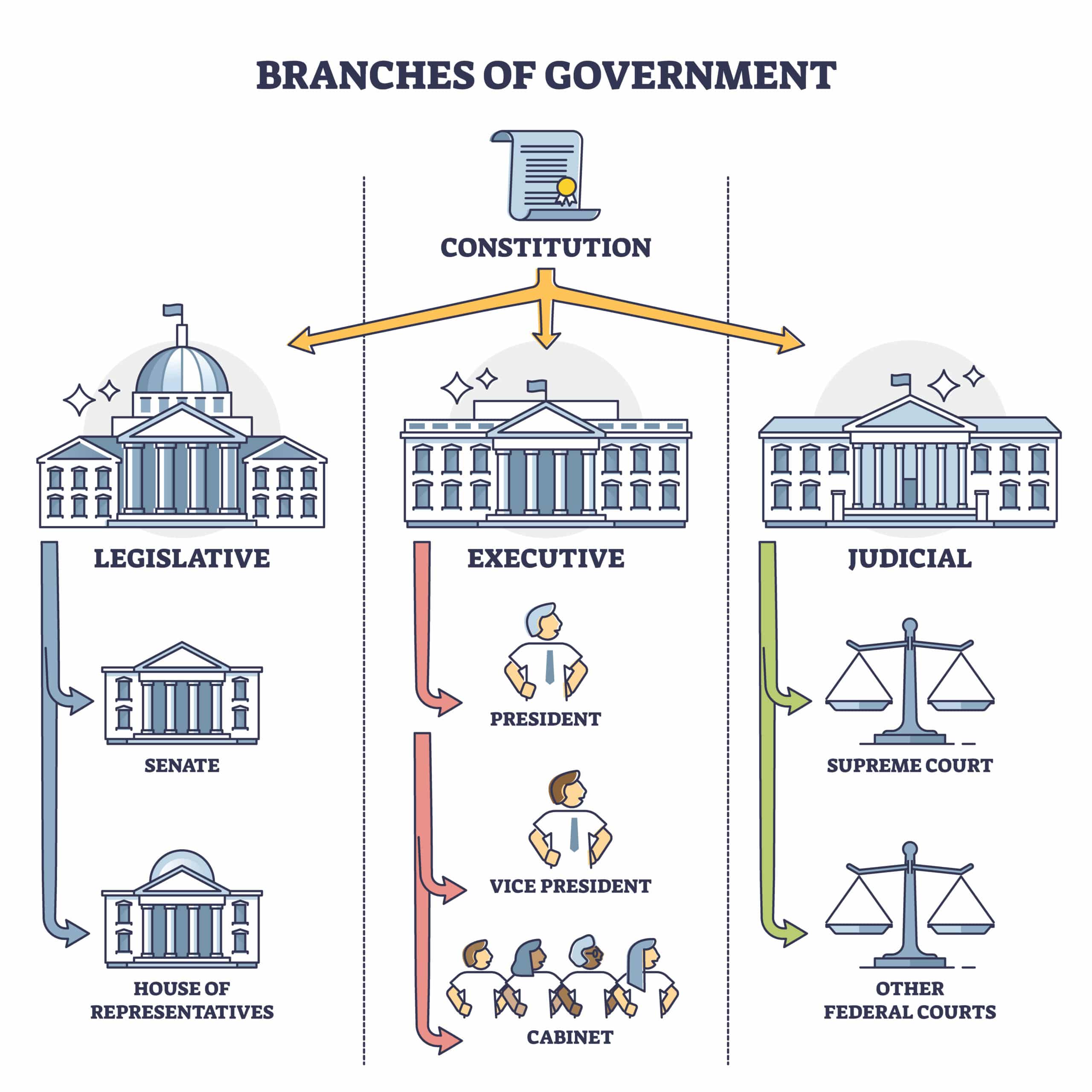
Beyond budget standoffs and shutdowns, major operational changes in the U.S. government often stem from administrative transitions and executive policy overhauls.
When a presidential administration changes or shifts internal policy priorities, structural transformations take place across cabinet departments:
- Executive Orders & Policy Directives
- Structural Realignments (Reorganizing Agencies, Refocusing Budgets)
- Civil Service Rules (Schedule F & Merit-Based Hiring Standards)
- Implementation & Regulatory Changes
1. Executive Orders and Regulatory Reviews
Presidents hold executive authority under Article II of the Constitution to issue directives that guide federal agency enforcement priorities. A new administration can quickly issue executive orders that halt regulatory rules initiated by previous administrations, pivot federal enforcement focus (such as environmental compliance or immigration policy), and redirect unallocated agency resources toward new policy initiatives.
2. Civil Service Regulations and Workforce Restructuring
The core operations of the federal government rely on more than two million career civil service workers. Reforms aimed at how federal employees are hired, evaluated, or classified can dramatically impact operations. Initiatives such as adjusting civil service protections (for example, debates over confidential policy-determining roles known historically as "Schedule F" classifications) alter how senior agency personnel are appointed or removed, influencing policy implementation across regulatory bodies like the Environmental Protection Agency (EPA) or the Securities and Exchange Commission (SEC).
3. Technological and Digital Modernization
The federal government frequently updates operational capabilities through infrastructure upgrades led by entities like the General Services Administration (GSA) and the Cybersecurity and Infrastructure Security Agency (CISA). System modernizations transition legacy federal software to cloud systems, introduce standardized cybersecurity architecture, and centralize identity verification platforms such as Login.gov across public agencies.
How Debt Ceiling Crises Differ From Government Shutdowns
A common area of confusion when evaluating federal stability is the distinction between a government shutdown and a debt ceiling standoff. While both stem from congressional stalemates, their legal foundations, financial mechanisms, and risks differ fundamentally.
FEDERAL FISCAL CRISES
- GOVERNMENT SHUTDOWN
- Issue: Spending Authority
- Rule: Antideficiency Act
- Cause: Expired Appropriations
- Impact: Furloughs & Suspended Public Services
- DEBT CEILING STANDOFF
- Issue: Borrowing Authority
- Rule: Statutory Debt Limit
- Cause: Cap on Net Debt Reached
- Impact: Risk of Default on Treasury Securities & Obligations
- GOVERNMENT SHUTDOWN
Government Shutdown (Spending Authority): A shutdown occurs when Congress does not pass budget legislation granting agencies legal authority to spend money. The government still has tax revenue coming in, but it lacks the statutory approval to spend it.
Debt Ceiling Standoff (Borrowing Authority): The debt ceiling is a statutory limit set by Congress (31 U.S.C. § 3101) on the total amount of national debt the Department of the Treasury can incur to pay for legal obligations already authorized by Congress. Reaching the debt ceiling does not mean Congress is authorizing new spending; it means Treasury cannot borrow additional funds to pay for previously approved commitments.
If the debt ceiling is reached without an increase or suspension, the U.S. Treasury must rely exclusively on incoming daily cash revenues and "extraordinary measures"—such as temporarily suspending investments in federal employee retirement funds—to meet debt service, Social Security payments, military payroll, and federal vendor contracts. Exhausting those measures without raising the cap risks an unprecedented sovereign default, which carries wide financial market consequences distinct from operational furloughs.
Practical Steps: How to Verify Government Status and Services
During periods of federal operational disruption or policy transitions, citizens, business owners, and government contractors can monitor agency status and access services using official government platforms:
- Check Agency-Specific Contingency Plans: The Office of Management and Budget maintains public access to all active agency shutdown plans on the official OMB Agency Contingency Plans portal. These documents detail exactly which percentage of staff is furloughed and which services remain operational during a lapse.
- Verify Operating Status via USA.gov: The primary federal web portal, USA.gov, provides real-time notifications regarding federal building closures, agency operational delays, emergency declarations, and modified service hours across federal regions.
- Review Federal Employee Status at OPM.gov: Federal workers can verify operating status for the Washington, D.C. area and federal regional centers through the U.S. Office of Personnel Management (OPM). OPM issues standard announcements for open status, delayed arrivals, early departures, or full administrative shutdowns.
- Confirm Payment Schedules for Entitlement Programs: Mandatory benefit programs—including Social Security Administration (SSA) benefits, Supplemental Nutrition Assistance Program (SNAP) distributions, and Medicare coverage—run on permanent statutory funding mechanisms. Beneficiaries can verify payment timelines via official agency portals, as processing continues during standard appropriations shutdowns.
Frequently Asked Questions (FAQs)
1. Does a U.S. government shutdown mean all government services stop completely?
No. A government shutdown only affects programs funded through annual discretionary appropriations. Essential services—such as military operations, federal law enforcement, air traffic control, emergency medical services, and postal operations—continue working. Additionally, mandatory spending programs like Social Security, Medicare, and Veterans Affairs benefits continue issuing payments because their funding is authorized by permanent underlying legislation rather than annual appropriations bills.
2. How are federal employees paid during a government shutdown or budget delay?
Federal employees do not receive regular paychecks during an active funding lapse because the Department of the Treasury lacks the statutory authorization to disburse funds. However, under the Government Employee Fair Treatment Act (GEFTA) of 2019, both excepted employees (who worked unpaid during the lapse) and non-excepted employees (who were furloughed) are legally guaranteed full back pay once Congress enacts funding legislation. Back pay is disbursed as soon as administrative payroll processing resumes.
3. What is the main difference between a government shutdown and reaching the debt ceiling?
A government shutdown occurs when legal spending authority expires due to unpassed appropriations bills, forcing non-essential agencies to pause operations. Reaching the debt ceiling occurs when the Treasury reaches its statutory limit on borrowing money to pay for spending Congress has already authorized. While a shutdown suspends day-to-day agency workflows, exceeding the debt ceiling without extraordinary measures threatens a federal financial default on sovereign bonds, federal pensions, and social programs.
4. How do mandatory and discretionary spending differ during federal funding standoffs?
Discretionary spending represents the roughly one-third of the federal budget that Congress must re-approve each year through the twelve appropriations bills (e.g., defense, national parks, education funding). Mandatory spending accounts for the remaining budget authority created by permanent law (e.g., Social Security, Medicare, Medicaid, and federal debt interest payments). Mandatory programs remain active during a standard budget shutdown because their funding authority does not expire annually.
5. Where can public contractors check the status of active federal contracts during a funding lapse?
Federal contractors should review the terms of their specific contracts and contact their Contracting Officer Representative (COR). Contracts that are fully funded in advance using multi-year or non-expiring appropriations generally continue uninterrupted. However, contracts that require day-to-day government supervision on federal premises, rely on incremental funding commitments, or operate inside closed federal buildings may receive formal Stop-Work Orders until regular appropriations are restored.
Recommended Next Steps
To track or prepare for shifts in U.S. federal operations, take the following steps:
- For Federal Employees and Contractors: Review your agency's designated contingency plan via the OMB portal to confirm your classification (excepted vs. non-excepted). Verify that your contact details are updated in your agency's emergency notification system.
- For Businesses and Applicants: If you are awaiting federal approvals, grants, Small Business Administration (SBA) loans, or routine regulatory filings, submit documentation well ahead of anticipated legislative budget deadlines to avoid backlog delays.
- For Travelers and Program Beneficiaries: Plan passport renewals and international travel well in advance. While core security and border functions remain active, administrative support, processing centers, and phone help lines experience significant backlogs during transitions or funding pauses.
Image Gallery