Understanding the Self-Insured Workers' Compensation Bond
A self-insured workers' compensation bond is a financial guarantee required by state regulators for companies that choose to self-fund their workers' compensation liabilities rather than purchasing traditional insurance. The bond ensur...
A self-insured workers' compensation bond is a financial guarantee required by state regulators for companies that choose to self-fund their workers' compensation liabilities rather than purchasing traditional insurance. The bond ensures that even if the employer faces insolvency or default, injured workers will continue to receive their legally mandated benefits, including medical expenses and lost wages.
Contents
In the corporate risk management landscape of 2026, many large-scale enterprises prefer self-insurance to gain greater control over claims handling and to capture the financial benefits of lower-than-average loss ratios. However, because self-insurance removes the "safety net" of a commercial insurance carrier, state governments mandate a security deposit—most commonly in the form of a surety bond—to protect the integrity of the workers' compensation system.
The Mechanics of Self-Insurance and Financial Security
To understand the bond, one must first understand the mechanism of self-insurance. When a corporation becomes "qualified" to self-insure, it assumes the legal responsibility to pay all workers' compensation claims out of its own pocket. This is not a "pay-as-you-go" system in a casual sense; it is a highly regulated financial status that requires the employer to maintain specific reserves.
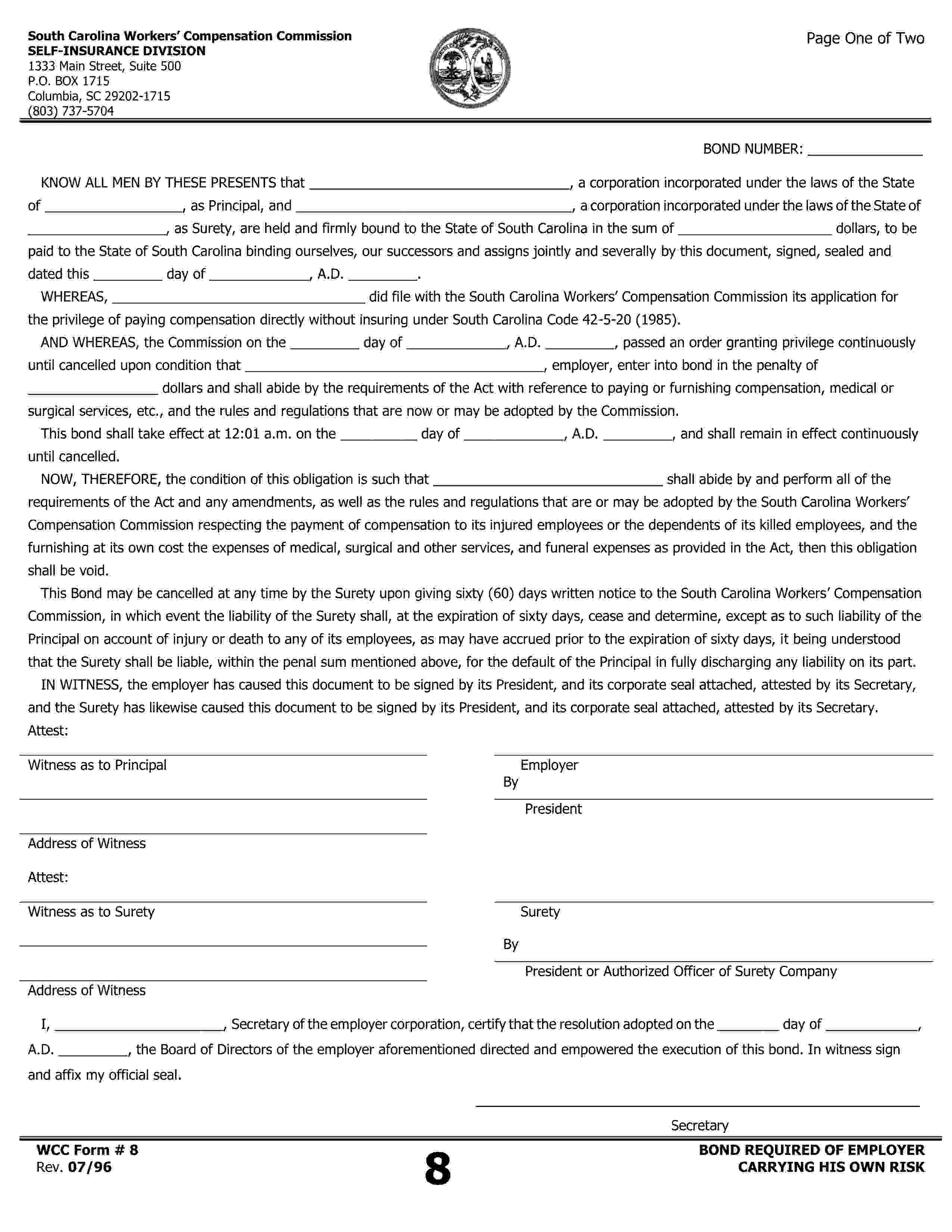
The self-insured workers' compensation bond acts as a three-party agreement:
- The Principal: The employer (the company) that is self-insured.
- The Obligee: The State Workers' Compensation Board or Department of Industrial Relations that requires the security.
- The Surety: The insurance company that issues the bond and guarantees the Principal’s performance.
If the Principal fails to pay a valid claim—typically due to bankruptcy or severe liquidity crises—the Obligee can make a claim against the bond. The Surety then steps in to provide the funds to cover those liabilities up to the "penal sum" (total face value) of the bond. Crucially, the Surety will later seek reimbursement from the Principal for any funds paid out, as surety bonds are not traditional insurance but a form of credit.
Regulatory Requirements and State Oversight
Every state has its own specific statutes regarding self-insurance. For example, the California Department of Industrial Relations (DIR) and its Office of Self-Insurance Plans (OSIP) maintain rigorous standards for the amount of security a company must post. Generally, the bond amount is determined by an actuarial analysis of the company's "total estimated future liability."
In 2026, regulators utilize advanced predictive modeling to set these bond amounts. Factors influencing the required bond value include:
- Historical Loss Experience: A three-to-five-year history of workplace injuries and the resulting costs.
- Industry Risk Profile: A construction firm will face significantly higher bond requirements than a software development company of the same size.
- Projected Payroll: As payroll grows, the exposure to potential injury increases, often necessitating an upward adjustment in the bond amount.
Most states require a minimum net worth (often $5 million to $10 million) and a consistent record of profitable operations before a company can even apply for self-insured status. The bond serves as the final layer of protection that allows the state to grant this status with confidence.
Surety Bonds vs. Irrevocable Letters of Credit (ILOC)
When posting security for self-insurance, companies usually choose between a surety bond and an Irrevocable Letter of Credit (ILOC) issued by a bank. While both satisfy the state's requirement, they have different impacts on a company's financial health.
| Feature | Surety Bond | Irrevocable Letter of Credit (ILOC) |
|---|---|---|
| Impact on Credit Lines | Does not typically reduce bank credit lines. | Directly reduces available bank credit/liquidity. |
| Collateral Requirements | Often issued without collateral for strong companies. | Usually requires 100% collateral or strict bank ties. |
| Cost/Premium | 1% to 3% of the bond amount annually. | Variable bank fees plus "opportunity cost" of tied-up credit. |
| Complexity | Requires financial underwriting by a surety. | Requires a pre-existing banking relationship. |
| Default Handling | Surety investigates before paying. | Bank pays immediately upon "sight" of the draft. |
For many CFOs in 2026, the surety bond is the preferred instrument because it preserves the company's borrowing capacity for capital expenditures and operational growth, whereas an ILOC effectively "freezes" a portion of the company's credit line.
The Underwriting Process: How Sureties Evaluate Risk
Because a self-insured workers' compensation bond represents a long-tail liability—meaning claims can stay open for decades—surety companies conduct exhaustive underwriting. Unlike a performance bond for a single construction project, this bond covers an indefinite period of the company's existence.
Financial Statement Analysis
The surety will demand at least three years of audited financial statements. They focus on liquidity ratios (current assets vs. current liabilities), debt-to-equity ratios, and consistent cash flow. If a company’s financial health declines, the surety may increase the premium rate or require collateral to maintain the bond.
Actuarial Reports
Sureties require an independent actuarial report that estimates the company's ultimate losses. This includes "Incurred But Not Reported" (IBNR) claims. Underwriters look for "reserve adequacy"—proof that the company has set aside enough money on its balance sheet to pay for injuries that have already happened but have not yet been fully settled.
Safety Record and Loss Control
A company with a high Experience Modification Rate (Ex-Mod) suggests poor safety protocols. Sureties prefer principals who invest in robust loss-control programs, as lower injury rates reduce the probability that the bond will ever be called.
Determining the Cost of the Bond
As of 2026, the annual premium for a self-insured workers' compensation bond typically ranges from 1% to 3% of the bond's face value. For a large corporation required to post a $10 million bond, the annual cost would be between $100,000 and $300,000.
Several variables can drive this cost higher:
- Credit Rating: A downgrade by agencies like Moody's or S&P will almost certainly result in a higher bond premium.
- Market Capacity: The number of surety companies willing to write "long-tail" workers' comp risk can fluctuate. In a "hard market," where sureties are more cautious, rates rise.
- Specific Excess Insurance: Most states require self-insured entities to carry "excess insurance" (stop-loss). If the employer's excess insurance policy is weak or has a very high retention (deductible), the surety may view the bond as higher risk and increase the price.
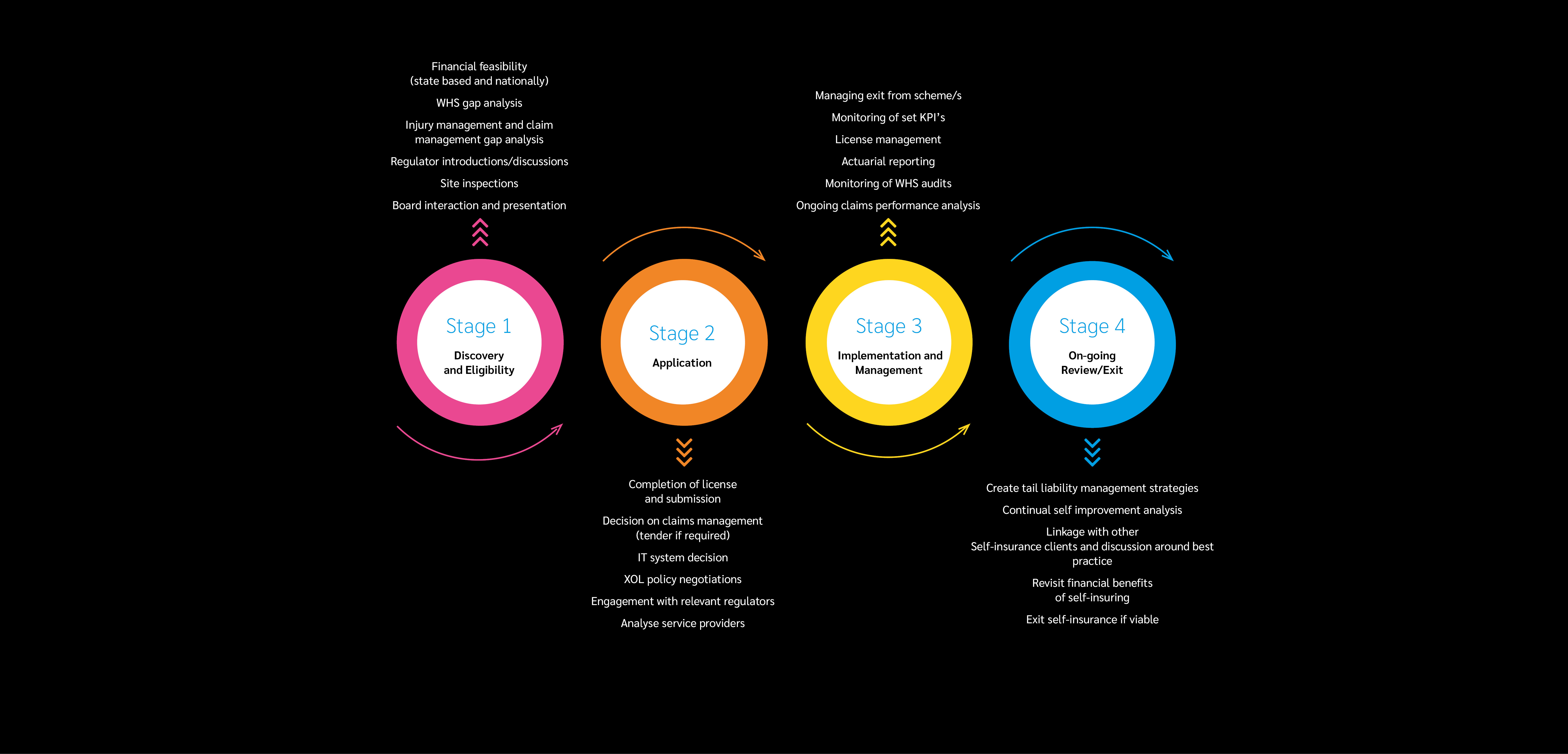
Practical Steps to Obtain or Renew a Bond
If your organization is transitioning to a self-insured model or renewing its current status in 2026, follow these steps to ensure a smooth bonding process:
- Select a Specialized Broker: Use a broker who specializes in surety and understands the specific workers' compensation regulations of your state.
- Prepare the "Submission Package": This includes the last three years of audited financials, the most recent interim financial statement, and the latest actuarial report.
- Demonstrate Loss Control: Provide documentation of your internal safety programs and how you manage claims. Showing that you utilize a Third-Party Administrator (TPA) for claims handling is often viewed favorably by underwriters.
- Allow Lead Time: Underwriting a multi-million dollar workers' comp bond can take 30 to 60 days. Do not wait until the state-mandated deadline to begin the application.
Common Pitfalls and Troubleshooting
The most common issue companies face is a "demand for collateral." If a company's financial performance dips, the surety company may refuse to issue or renew the bond unless the company provides cash or a letter of credit as collateral. To avoid this, maintain a strong balance sheet and communicate proactively with your surety underwriter about any temporary financial setbacks.
Another issue involves "stacking." In some jurisdictions, if a company switches surety providers, the old bond stays in effect for claims that occurred during its term, while the new bond covers new claims. This can lead to a period where the company is paying for two bonds simultaneously. It is vital to coordinate with legal counsel to ensure the new bond "replaces" the old one in a way that satisfies state regulators and avoids duplicate costs.
Frequently Asked Questions
Can a small business use a self-insured workers' compensation bond?
Generally, no. Most states have minimum payroll or net worth requirements that exclude small businesses. Self-insurance is typically reserved for large enterprises or "group self-insurance funds" where multiple smaller companies in the same industry pool their risks.
What is the difference between this bond and workers' comp insurance?
Insurance is a two-party contract where the insurer takes on the risk in exchange for a premium. A bond is a three-party guarantee where the employer retains the risk; the bond simply guarantees to the state that the employer has the financial backing to fulfill its obligations.
Is the bond amount the same as the total claims cost?
No. The bond amount (penal sum) is usually a percentage of the estimated total future liability, determined by the state regulator. It is meant to provide a sufficient buffer to cover claims if the company fails, but it is not a "fund" for daily claim payments.
Does the bond cover penalties and fines?
Usually, the primary purpose of the bond is to cover indemnity (wages) and medical benefits for injured workers. Whether it covers state-imposed penalties or interest depends on the specific bond form language required by that state's statutes.
What happens if my surety company goes out of business?
State regulators typically maintain a list of "admitted" or "Treasury-listed" sureties. If your surety fails, the state will require you to replace the bond immediately with a new one from a solvent provider to maintain your self-insured status.
Final Recommendation
For organizations with the financial scale to self-insure, the self-insured workers' compensation bond remains the most capital-efficient way to satisfy state security requirements in 2026. To minimize costs, focus on maintaining high credit quality and a rigorous safety culture. Always work with a surety partner who has a deep understanding of the Department of Labor's overarching guidelines and specific state-level nuances to ensure continuous compliance and financial protection.
Image Gallery