How Mold Remediation Works in Exeter: A Step-by-Step Guide
Professional mold remediation in Exeter follows standardized containment, filtration, removal, and drying protocols designed to eliminate fungal growth and prevent cross-contamination. Certified technicians locate hidden moisture, erec...
Professional mold remediation in Exeter follows standardized containment, filtration, removal, and drying protocols designed to eliminate fungal growth and prevent cross-contamination. Certified technicians locate hidden moisture, erect physical barriers under negative air pressure, remove non-salvageable materials, apply antimicrobial treatments, and dry the structure to safe relative humidity levels.
Contents
Understanding Professional Mold Remediation Standards
Mold remediation is not simply spraying bleach over visible discoloration. Bleach consists primarily of water, which can exacerbate sub-surface fungal growth on porous materials like drywall, plywood, and fiberglass insulation. True remediation requires removing active fungal colonies, capturing airborne spores, and permanently resolving the moisture intrusion that allowed the infestation to take root.
In Exeter and throughout the region, qualified remediation contractors adhere to the standard of care set by the Institute of Inspection, Cleaning and Restoration Certification (IICRC), specifically the IICRC S520 Standard for Professional Mold Remediation. This standard defines mold contamination into three distinct conditions:
- Condition 1 (Normal Fungal Ecology): An indoor environment that has a normal amount and type of mold spores, comparable to baseline outdoor conditions.
- Condition 2 (Settled Spores): An environment contaminated with settled spores or fungal fragments that are not actively growing, often located on surfaces adjacent to active growth.
- Condition 3 (Actual Growth): An indoor environment with active fungal growth, visible accumulation, or heavy contamination requiring physical containment and specialized removal.
The primary objective of any professional remediation project in Exeter is returning a Condition 2 or Condition 3 environment back to a healthy Condition 1 state while protecting building occupants and technicians during the process.
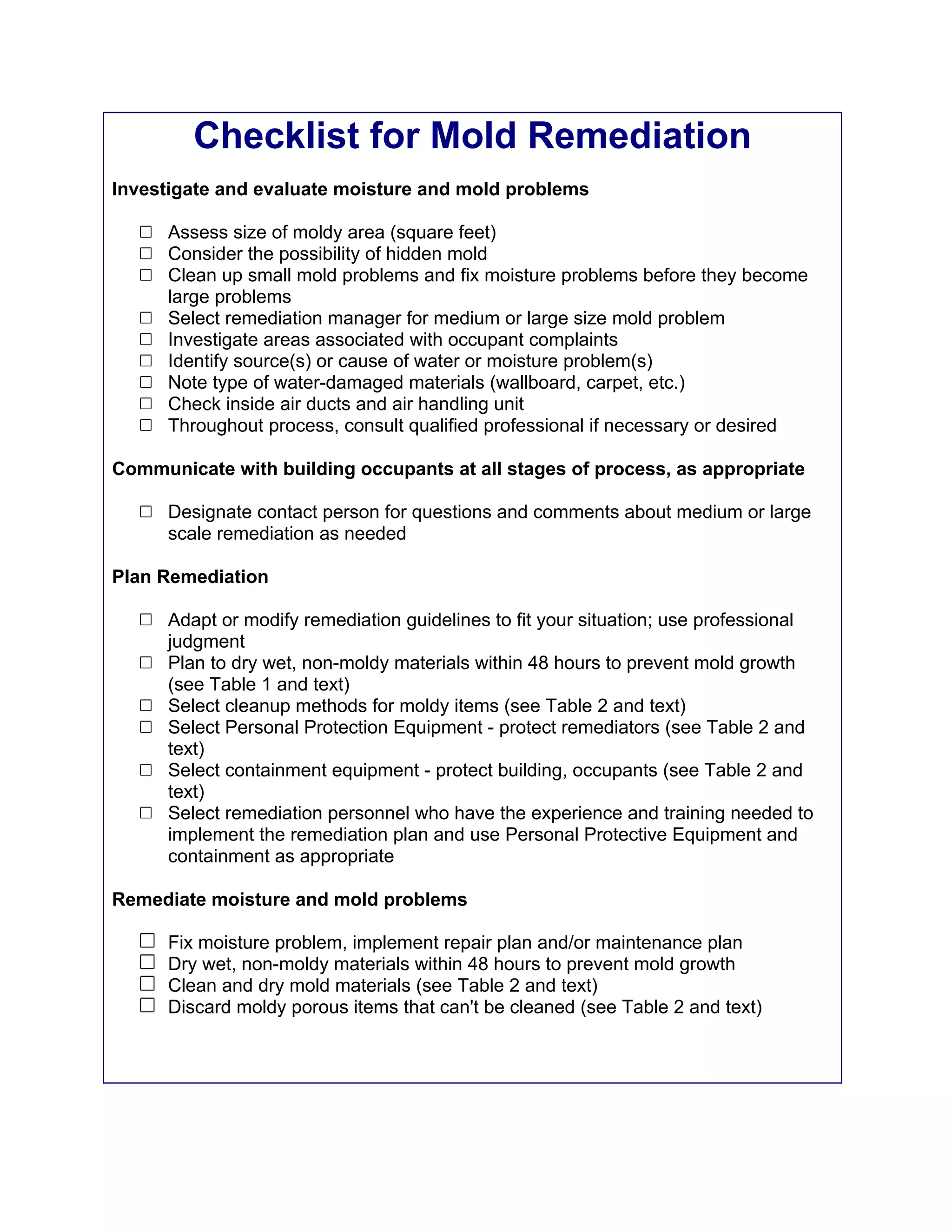
Step 1: Comprehensive Inspection and Moisture Assessment
Before any physical removal begins, technicians conduct a thorough environmental inspection to determine the scope of contamination and map moisture migration within the building envelope. Mold spores exist naturally in the air, but they require organic nutrients (wood, paper, dust) and sustained moisture (relative humidity above 60% or direct liquid water) to germinate.
In regional climates like Exeter's, moisture intrusion commonly originates from several sources:
- Uninsulated basement walls experiencing hydrostatic pressure or groundwater seepage.
- Attic condensation driven by inadequate ventilation and ice damming during winter months.
- Plumbing leaks within wall cavities or subflooring.
- Elevated indoor relative humidity during humid summer months combined with inefficient air conditioning.
Technicians use specialized diagnostic equipment during this phase:
- Thermal Imaging (Infrared Cameras): Detects subtle surface temperature variations that indicate trapped moisture behind drywall, under subflooring, or inside insulation.
- Pin and Pinless Moisture Meters: Measures the actual moisture content (PMC) of building materials. Wood framing is typically considered vulnerable to fungal growth when moisture content exceeds 16% to 19%.
- Hygrometers: Evaluates ambient air temperature, relative humidity, and dew point throughout affected and unaffected areas of the home.
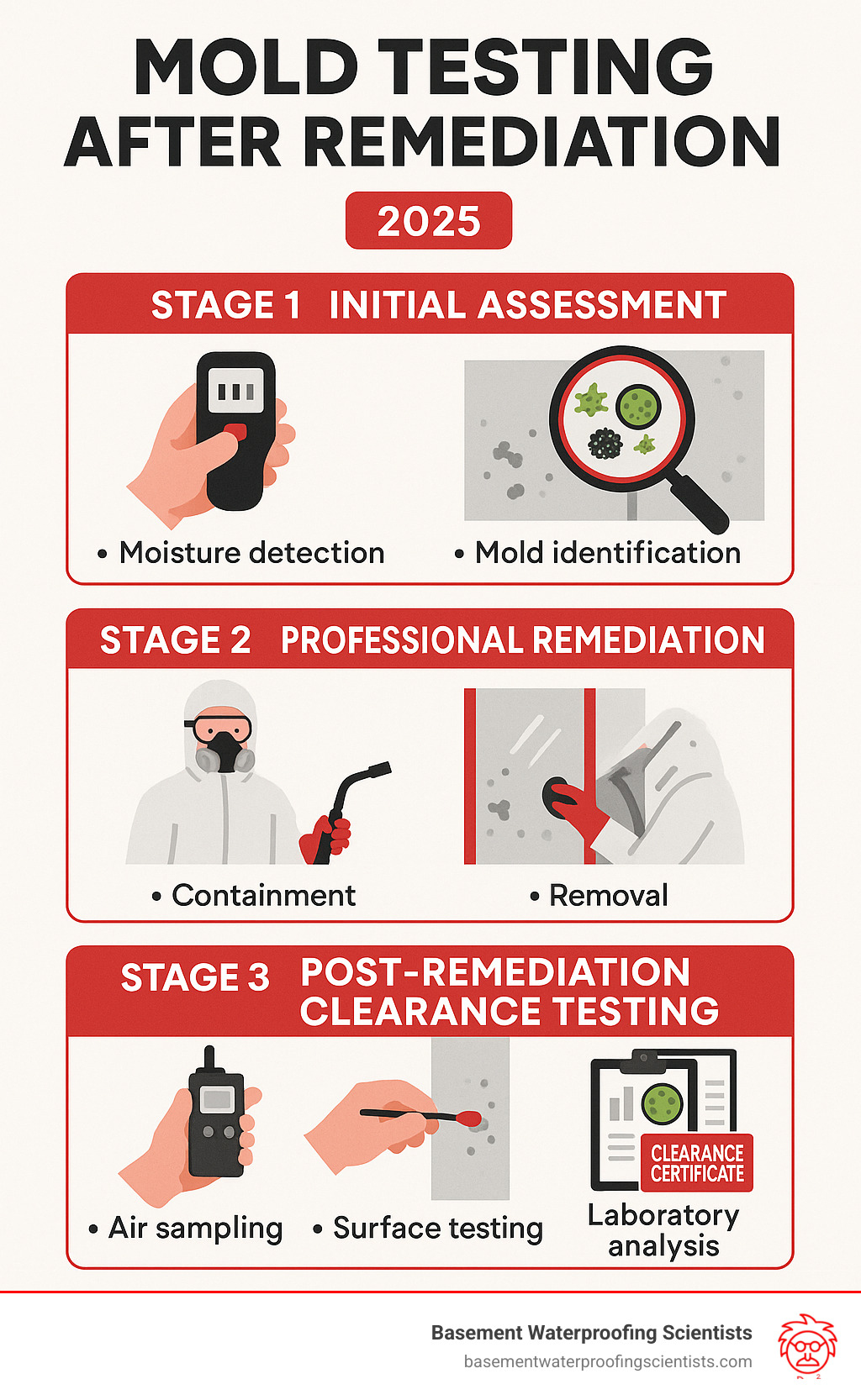
- Air and Surface Sampling: When necessary, independent Indoor Environmental Professionals (IEPs) collect air cassettes or tape-lift samples to identify spore concentrations and dominant fungal genera (such as Aspergillus, Penicillium, Cladosporium, or Stachybotrys chartarum).
Step 2: Containment Setup and Negative Air Pressure
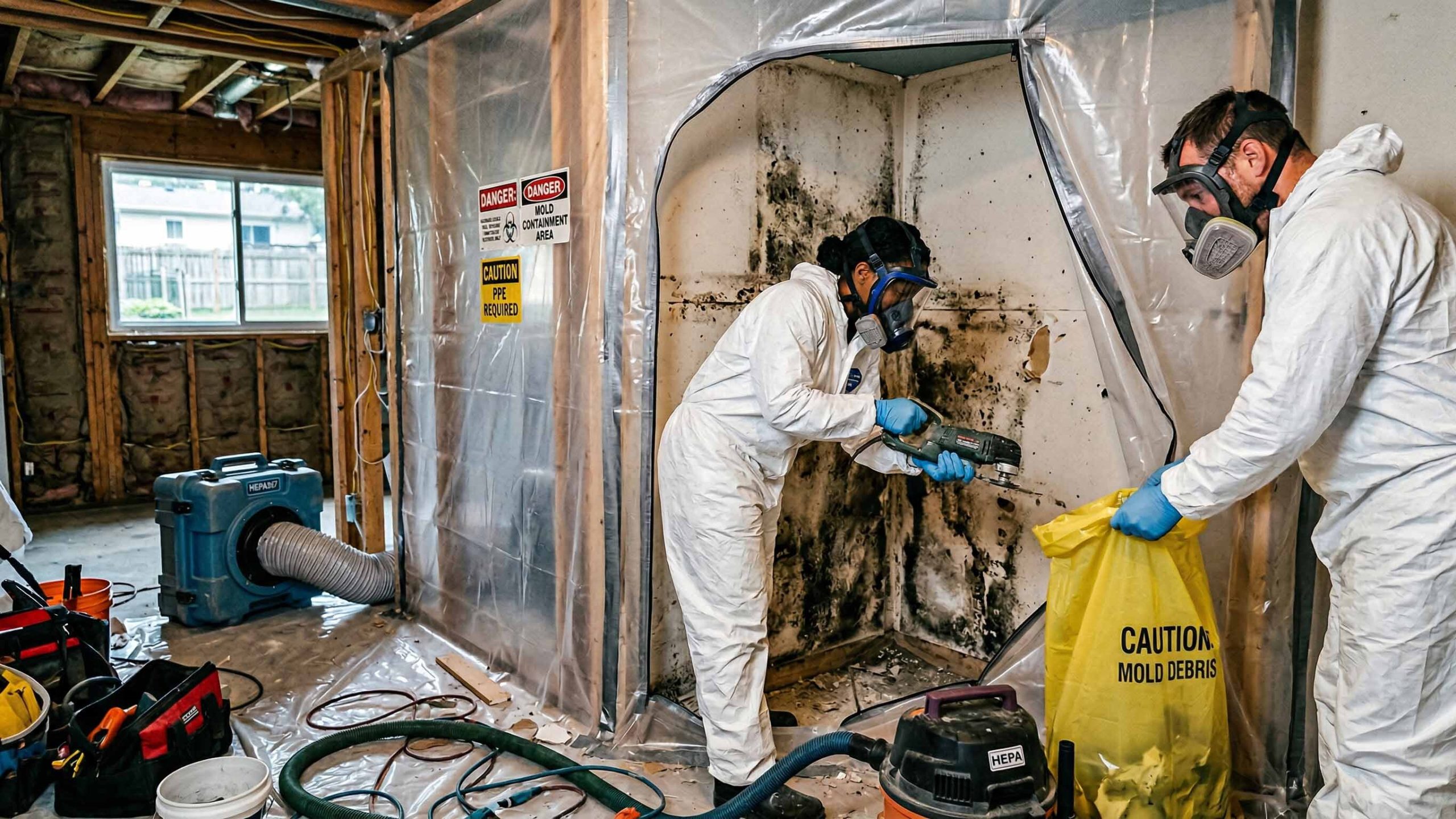
To prevent fungal spores, hyphal fragments, and mycotoxins from migrating into unaffected areas of the property, technicians construct engineering controls known as containment zones. Physical movement and demolition generate millions of microscopic airborne particles; without containment, cross-contamination across the property is virtually guaranteed.
Critical Barriers
Technicians seal off all doorways, supply and return HVAC vents, windows, and structural openings using heavy-duty 6-mil flame-retardant polyethylene sheeting. Zippered entry doors are installed to allow technicians access while maintaining a sealed envelope.
Negative Pressure Differential
Within the containment zone, remediation crews install high-capacity High-Efficiency Particulate Air (HEPA) air scrubbers vented to the outdoors or directly into the containment chamber. These units continuously draw air out of the room, creating a lower atmospheric pressure inside containment compared to the surrounding structure.
Because air naturally flows from areas of high pressure to low pressure, air rushes into the containment area whenever access doors are opened, ensuring no spores leak into adjacent living spaces. According to guidelines from the U.S. Environmental Protection Agency (EPA), maintaining proper air exchange rates—typically 4 to 8 air changes per hour—is critical during active remediation.
Step 3: Continuous Air Filtration and Environmental Controls
Air filtration begins before structural demolition starts and runs continuously throughout the project lifecycle. HEPA filtration devices are the workhorses of this phase.
True HEPA filters are rated to capture at least 99.97% of airborne particles down to 0.3 microns in size. Because individual mold spores generally range from 2 to 20 microns (and fungal fragments can be smaller than 1 micron), standard HVAC filters or household vacuums are insufficient and will simply redistribute spores into the air column.
During filtration:
- Air scrubbers scrub ambient air, pulling suspended particles out of circulation.
- Pre-filters (1st and 2nd stage) capture large dust debris, prolonging the operational lifespan of the primary HEPA filter.
- Airflow direction is managed to eliminate dead zones where spores might settle out of air currents.
Step 4: Material Removal, Media Blasting, and Surface Cleaning
Once containment and negative pressure are established, technicians begin physical removal of contaminated materials. Materials are categorized based on their porosity and cleanability:
Porous Materials (Non-Salvageable)
Materials such as sheetrock, fiberglass batt insulation, acoustic ceiling tiles, carpet padding, and soft textiles that have sustained deep hyphae penetration cannot be effectively restored. These items are carefully cut out, sprayed with a light mist of water to suppress dust, double-bagged in heavy 6-mil poly bags, wiped down on the exterior, and transported through containment for proper disposal.
Semi-Porous Materials (Salvageable via Mechanical Cleaning)
Structural wood framing, subflooring, and solid timber cannot easily be removed without compromising structural integrity. Technicians use specialized mechanical abatement techniques to remove surface root structures:
- HEPA Vacuuming: Surfaces are thoroughly vacuumed using equipment fitted with HEPA filtration to eliminate loose surface spores.
- Abrasive Sanding and Wire Brushing: Hand tools or power sanders strip away infected outer wood layers.
- Media Blasting: In extensive attic or basement projects, technicians utilize dry-ice blasting (CO2 pellets) or soda blasting. Dry-ice blasting sublimates upon contact, leaving no secondary liquid waste while instantly stripping mold colonies off irregular framing surfaces.
Non-Porous Materials
Hard surfaces like metal, glass, tile, and sealed hard plastics are thoroughly cleaned using EPA-registered antimicrobial disinfectants, fungicides, and damp-wiping techniques.
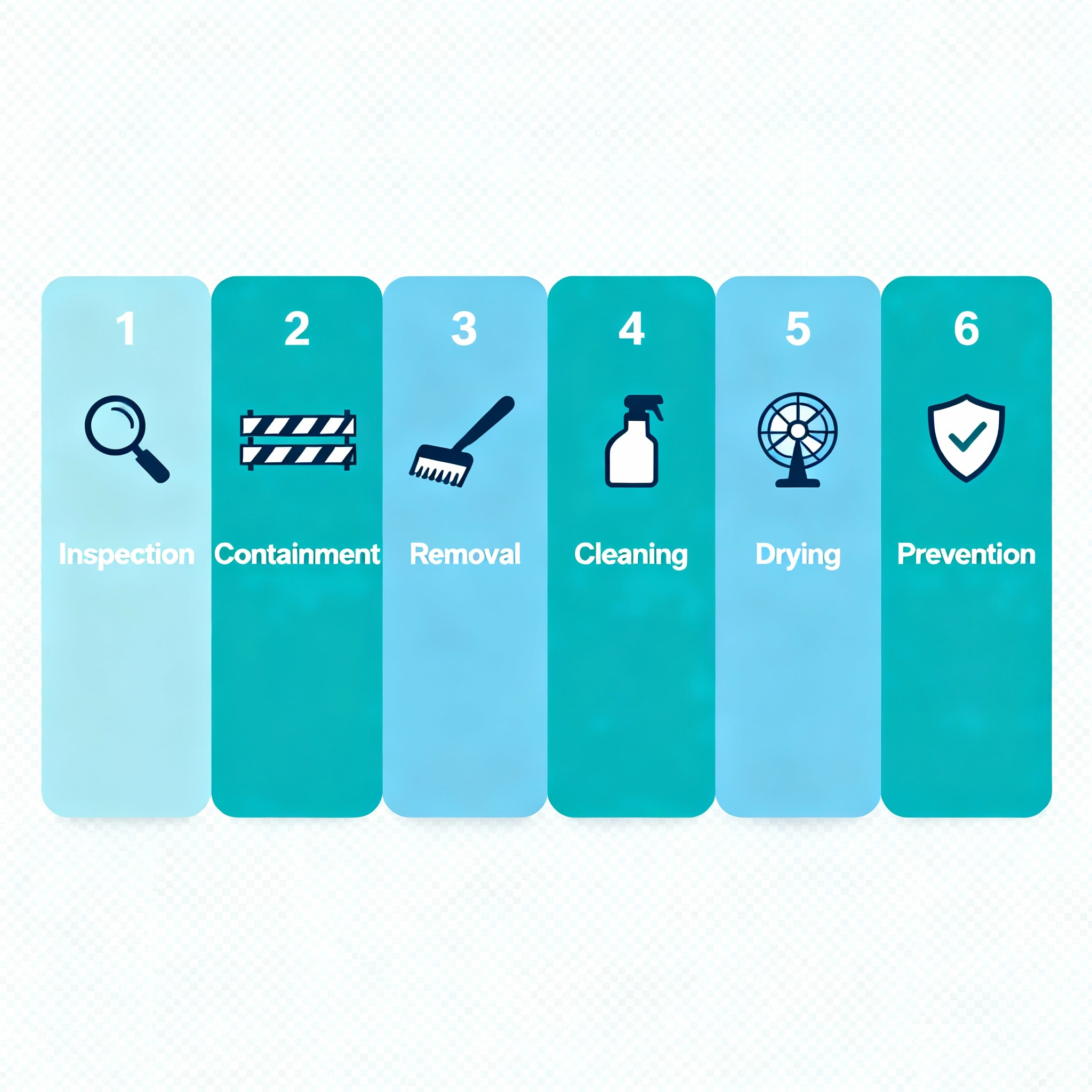
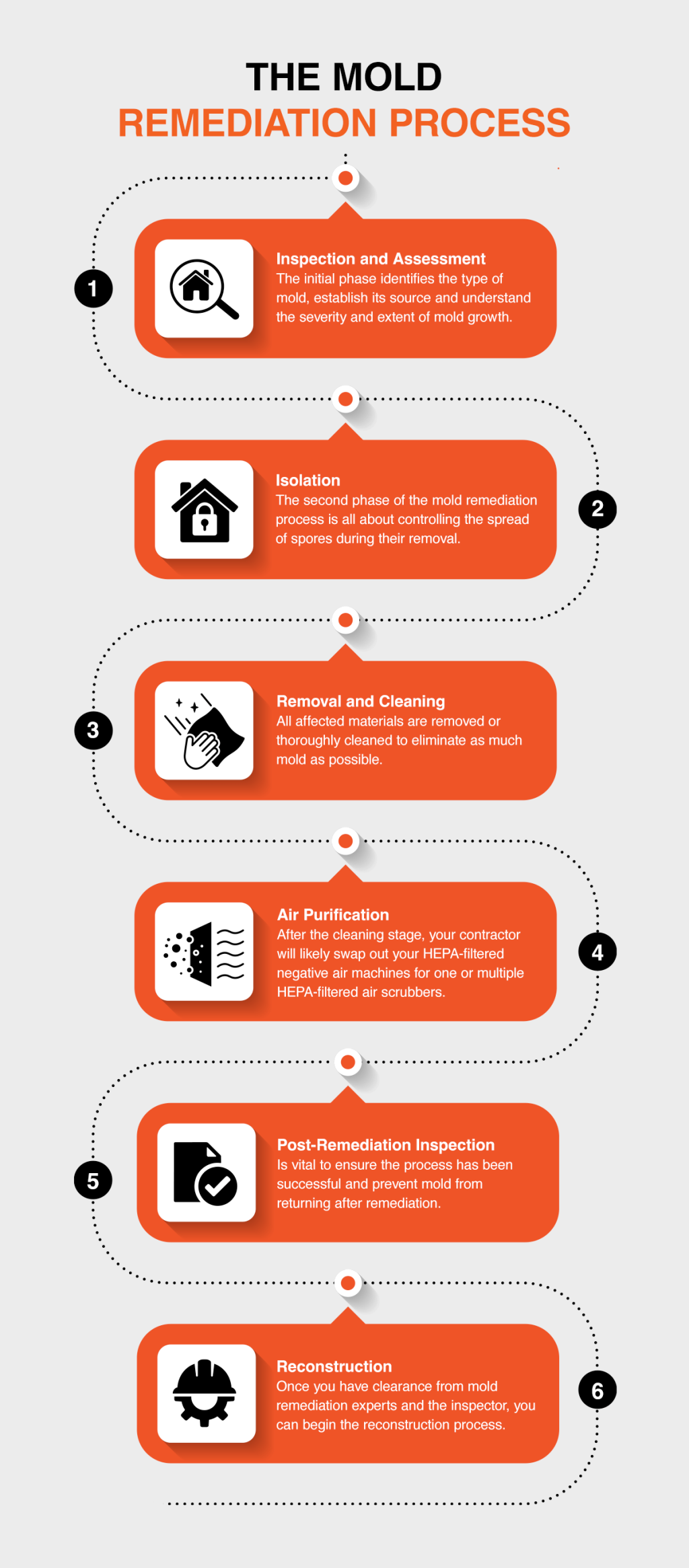
- Inspection & Moisture Mapping
- Thermal imaging & moisture meter audits
- Containment & Isolation
- Polyethylene barriers & negative pressure
- HEPA Air Scrubbing
- Continuous 99.97% particulate removal
- Abatement & Demolition
- Removal of porous items & media blasting
- Antimicrobial Treatment
- Application of EPA-registered fungicides
- Structural Drying
- LGR Dehumidifiers & air movers (<16% PMC)
- Post-Remediation Verification
- Independent clearance testing & report
Step 5: Antimicrobial Treatment and Encapsulation
After physical removal and mechanical cleaning, all remaining structural surfaces undergo chemical treatment to neutralize any residual micro-hyphae embedded in wood pores.
- Fungicidal Application: EPA-registered antimicrobial solutions are applied via direct wipe-down or cold-fogging equipment. These products break down cellular walls of remaining fungi and prevent spore germination.
- Encapsulant Application: In specific scenarios—such as attics, crawl spaces, or non-finished basement ceiling joists—technicians apply a semi-gloss or clear antimicrobial sealant (encapsulant). This breathable coating seals the wood surface, locks down microscopic residual particles, and incorporates moisture-resistant additives that deter future mold colonization.
Step 6: Structural Drying and Dehumidification
Removing mold without controlling moisture guarantees that growth will return. The drying phase restores building materials to acceptable moisture levels before containment is taken down or rebuilding begins.
Technicians deploy specialized industrial drying equipment:
- Low Grain Refrigerant (LGR) Dehumidifiers: Removing large volumes of water vapor from the air, LGR units can reduce specific humidity to extremely low levels, pulling deep-bound moisture out of framing lumber and masonry.
- High-Velocity Air Movers: Positioned to direct laminar air across wet surfaces, accelerating the evaporation rate.
- Desiccant Dehumidifiers: Used in complex structural drying or low-temperature environments (such as unheated winter attics in Exeter), utilizing chemical desiccants like silica gel to absorb water vapor.
Drying continues until moisture meter readings confirm that structural wood has dropped below 15% to 16% moisture content and ambient indoor relative humidity remains consistently between 30% and 50%.
Step 7: Post-Remediation Verification (Clearance Testing)
Before containment barriers are dismantled, the remediation work must be verified. To avoid conflicts of interest, industry standards recommend hiring an independent third-party Indoor Environmental Professional (IEP) who was not involved in the actual cleanup work.
The IEP performs a Post-Remediation Verification (PRV), which includes:
- Visual Inspection: Confirming the containment zone is completely free of visible dust, debris, microbial growth, and residual odors.
- Surface Testing: Swab or tape-lift sampling of cleaned structural components to ensure zero residual active growth.
- Air Clearance Sampling: Indoor air cassette samples are collected inside containment while air scrubbers are turned off. These samples are analyzed under a microscope by an accredited laboratory and compared against baseline control samples taken outside the property.
To pass clearance, indoor spore counts within containment must be numerically lower than or comparable to outdoor control samples, and the indoor air must be free of target marker species associated with water damage (such as Stachybotrys or Chaetomium). Once clearance is granted, containment is carefully dismantled, and building restoration can proceed.
Scope, Timeline, and Cost Factors for Exeter Remediation
The total scope, timeline, and financial investment required for mold remediation in Exeter depend on several variables, including property size, structural accessibility, duration of water exposure, and whether toxic mold strains are present.
| Remediation Scope | Typical Root Cause | Key Work Elements | Estimated Duration | Typical Cost Range (USD) |
|---|---|---|---|---|
| Localized Spot Remediation | Small pipe leak under sink; isolated bathroom ceiling condensation. | Surface cleaning, minor drywall removal (<10 sq ft), containment, localized drying. | 1 – 2 Days | $500 – $1,500 |
| Basement or Crawl Space | Hydrostatic pressure, foundation dampness, poor sump pump operation. | Full perimeter containment, insulation stripping, media blasting ceiling joists, encapsulation, LGR dehumidification. | 2 – 4 Days | $2,500 – $7,500 |
| Attic Remediation | Ice damming, inadequate soffit/ridge venting, bathroom fan venting into attic space. | Baffle installation, dry-ice blasting roof sheathing, replacing compromised insulation, antimicrobial sealant application. | 2 – 4 Days | $3,000 – $8,000 |
| Whole-Home / Category 3 Flood | Major plumbing rupture, long-term unmitigated roof leak, storm surge intrusion. | Multi-zone containment, major structural demolition (drywall, subfloors), deep HEPA air scrubbing, independent PRV clearance. | 5 – 10+ Days | $8,000 – $20,000+ |
Primary Factors Influencing Costs
- Accessibility: Confined crawl spaces or steep attics require specialized personal protective equipment (PPE) and extra labor setup time.
- Material Removal Needs: Removing tile, plaster, or hardwood subflooring requires significantly more labor and disposal fees than cutting standard sheetrock.
- HVAC Contamination: If mold has entered the HVAC ductwork, mechanical system cleaning and sanitization using specialized duct-cleaning equipment will be required.
Preventing Mold Recurrence in Exeter Properties
Once professional remediation is complete, property owners must address underlying environmental vulnerabilities to keep mold from returning. The coastal and seasonal weather patterns in Southern New Hampshire and surrounding regions present distinct moisture management challenges.
Basement and Crawl Space Protection
- Encapsulation: Install a continuous 12-mil or 20-mil vapor barrier over exposed crawl space dirt floors, sealing seams with specialized waterproof tape.
- Sump Pump Maintenance: Install a primary sump pump paired with a battery-powered backup system to handle seasonal water table spikes during spring snowmelt.
- Dehumidification: Run a dedicated heavy-duty basement dehumidifier set to maintain relative humidity strictly below 50%.
Attic and Roof Management
- Prevent Ice Dams: Ensure proper attic insulation depth (R-49 to R-60 recommended for northern zones) and clear soffit vents to maintain a "cold roof" design in winter.
- Exhaust Duct Routing: Verify that all bathroom exhaust fans and clothes dryer vents exhaust directly through the roof or exterior sidewall, never terminating inside the attic cavity.
Indoor Air Quality and Maintenance
- HVAC Maintenance: Replace furnace and air handler filters quarterly using MERV 11 or MERV 13 rated filters.
- Gutter and Grading Care: Keep rain gutters free of debris and ensure exterior soil grading slopes downward away from foundation walls by at least 6 inches over the first 10 feet.
Frequently Asked Questions
Can I just use household bleach to clean up mold?
No. Bleach (sodium hypochlorite) is diluted with water. When applied to porous building materials like drywall or wood, the chlorine chemical stays on the surface while the water penetrates deep into the material. This feeds the sub-surface fungal roots (hyphae), often causing the mold to return stronger within weeks. Professional remediation uses EPA-registered fungicides combined with physical removal.
How long does the mold remediation process take?
For a standard residential project (such as an attic or basement), the physical remediation process typically takes between 2 and 4 business days. Complex whole-house projects or cases requiring extensive structural drying may take 5 to 10 days. Post-remediation clearance lab results usually take an additional 24 to 48 hours.
Does homeowners insurance cover mold remediation in Exeter?
Insurance coverage depends on the cause of the moisture damage. Standard homeowners policies generally cover mold remediation if it results directly from a "sudden and accidental" covered peril, such as a burst supply pipe. However, mold resulting from long-term deferred maintenance, unaddressed roof leaks, or surface flooding typically requires separate flood insurance or may be excluded.
Is it safe to stay in the home during mold remediation?
If the mold infestation is isolated to a specific room, basement, or attic, residents can usually remain in the home provided proper containment and negative air pressure are established. However, if containment spans major common areas, if ductwork is contaminated, or if occupants have severe asthma, mold allergies, or compromised immune systems, temporary relocation is strongly advised.
How do I know if the remediation was successful?
Success is verified through an independent Post-Remediation Verification (PRV) inspection conducted by a certified Indoor Environmental Professional. The inspector performs a visual check for cleanliness and takes air cassette and surface samples inside the containment zone. A written lab report confirming that spore levels inside containment are normal and comparable to outdoor baselines serves as proof of successful remediation.
Recommended Next Steps
If you suspect mold growth in your Exeter property, take immediate action to limit structural damage and health exposure:
- Identify and Stop Active Water Leaks: Shut off plumbing fixtures or apply temporary tarps to roof leaks to halt continuous moisture intake.
- Avoid Disturbance: Do not run household fans, scrub surfaces dry, or tear down drywall without containment. Disturbing dry mold colonies releases millions of spores into your air system.
- Schedule an Inspection: Contact a certified Indoor Environmental Professional or IICRC-accredited mold remediation specialist to perform moisture mapping and outline a targeted scope of work.
Image Gallery