Examples of Public Policy: A Comprehensive Guide to Modern Governance
Public policy is a system of laws, regulatory measures, courses of action, and funding priorities concerning a specific topic promulgated by a governmental entity or its representatives. Examples of public policy include environmental...
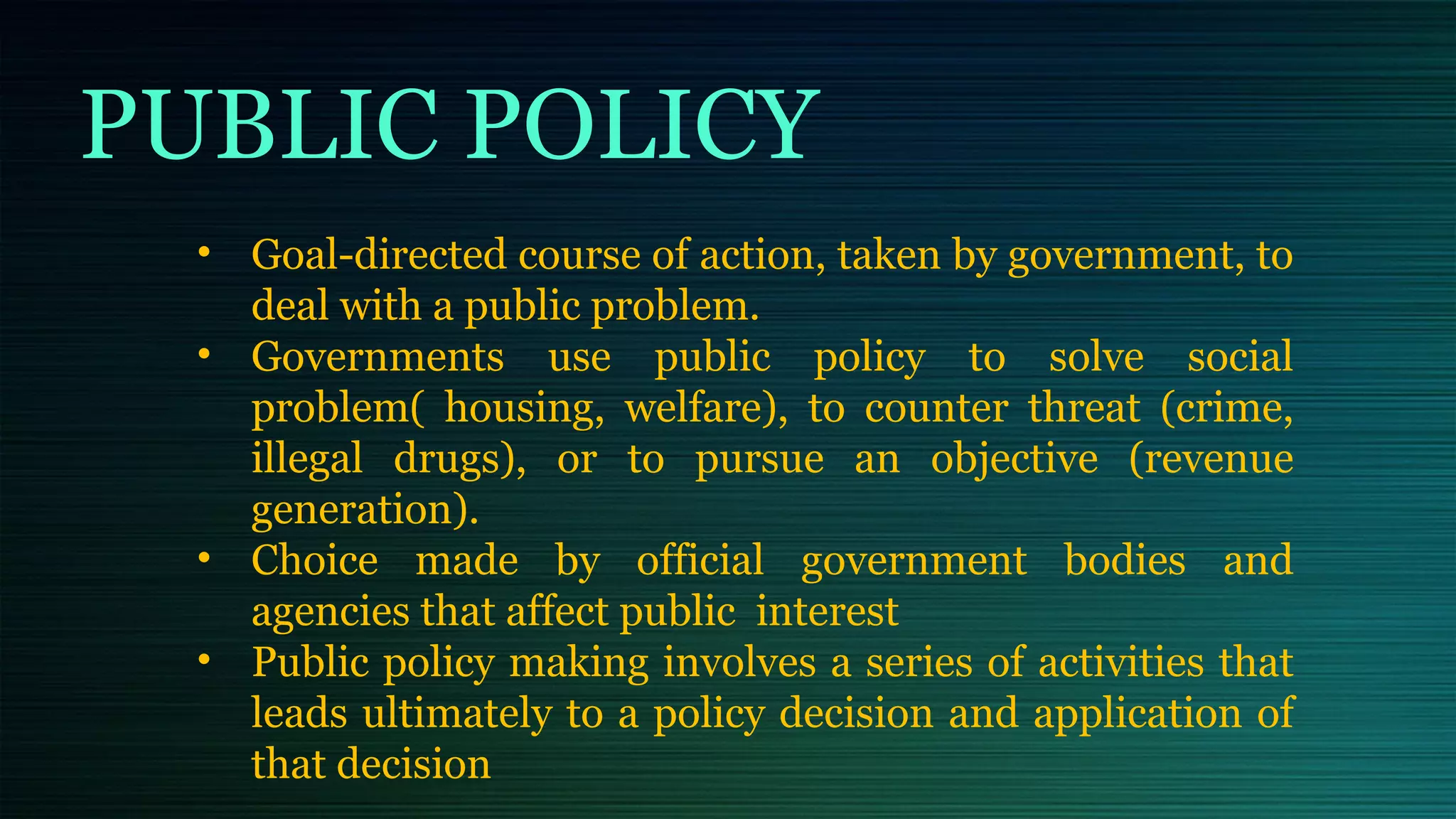
Public policy is a system of laws, regulatory measures, courses of action, and funding priorities concerning a specific topic promulgated by a governmental entity or its representatives. Examples of public policy include environmental regulations like carbon emission limits, social programs such as subsidized healthcare, and economic interventions like minimum wage laws or federal interest rate adjustments.
Contents
Public policy serves as the primary mechanism through which governments translate their political visions into tangible societal outcomes. Whether it is the local zoning ordinance that dictates where a new park can be built or a federal mandate regarding digital privacy, these policies shape the daily lives of citizens. In 2026, the complexity of public policy has increased as governments navigate the intersection of rapid technological advancement, climate change mitigation, and shifting economic paradigms. Understanding these examples requires looking beyond the text of a law to the intent, implementation, and long-term impact on the public.
The Fundamental Typologies of Public Policy
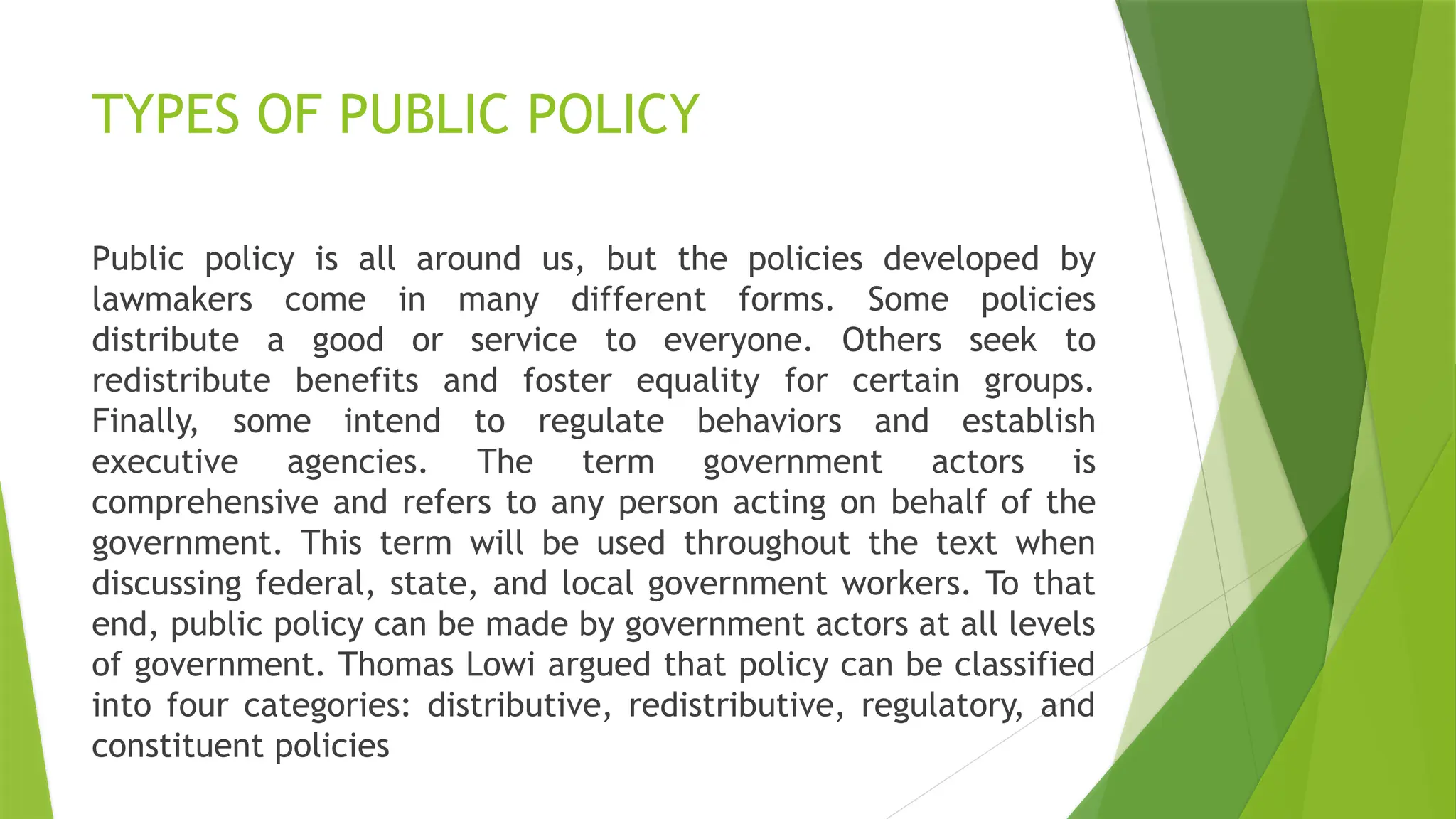
To categorize examples of public policy effectively, political scientists often use the framework established by Theodore Lowi. This classification helps in understanding who the policy affects and how the government exerts its authority.
Distributive Policy
Distributive policies involve the allocation of services or benefits to particular segments of the population. These are often funded by the general tax base and are rarely controversial because the costs are diffused across the entire population while the benefits are concentrated.
- Public Infrastructure: The construction of highways, bridges, and public transit systems.
- Scientific Research: Grants provided by organizations like the National Science Foundation (NSF) or the National Institutes of Health (NIH) to universities.
- Agricultural Subsidies: Financial support provided to farmers to manage the supply of agricultural commodities and influence the cost of food.
Redistributive Policy
Redistributive policies involve a deliberate effort by the government to shift resources from one group to another. These policies are often the subject of intense political debate because they involve a visible transfer of wealth or rights.
- Progressive Taxation: A tax system where the tax rate increases as the taxable amount increases, redistributing wealth to fund social services.
- Social Security: A program where current workers contribute to a fund that provides income for retirees and the disabled.
- Housing Assistance: Vouchers or subsidized housing projects designed to provide affordable living options for low-income families.
Regulatory Policy
Regulatory policies limit the discretion of individuals and agencies or otherwise compel certain behaviors. These are designed to protect the public from harm or ensure fair competition in the marketplace.
- Environmental Protection: The Environmental Protection Agency (EPA) sets limits on pollutants that factories can release into the air or water.
- Consumer Safety: Regulations from the Food and Drug Administration (FDA) that require rigorous testing for new medications before they hit the market.
- Labor Laws: Mandates regarding workplace safety (OSHA standards) and maximum working hours.
Examples of Economic Public Policy
Economic policy is perhaps the most scrutinized area of governance. As of 2026, economic policies are increasingly focused on stabilizing volatile global markets and addressing the automation of the workforce.
Fiscal Policy and Taxation
Fiscal policy refers to the use of government spending and tax policy to influence the economy. For instance, during a recession, a government might implement an expansionary fiscal policy by increasing infrastructure spending to create jobs. Conversely, to combat high inflation, a government might reduce spending or increase taxes. An example in 2026 is the implementation of "Digital Services Taxes" on large multinational tech firms to ensure that tax revenue is captured in the jurisdictions where value is generated, regardless of physical presence.
Monetary Policy
While often managed by independent central banks like the Federal Reserve, monetary policy is a vital arm of public policy. It involves managing the money supply and interest rates. A modern example is the exploration and implementation of Central Bank Digital Currencies (CBDCs). These policies dictate how digital currency is issued, how it interacts with commercial banking, and how it can be used to provide direct stimulus to citizens more efficiently than traditional banking rails.
Trade and Industrial Policy
Trade policy dictates how a nation interacts with the global economy. Examples include tariffs, trade agreements (like the USMCA), and export controls. Industrial policy has seen a resurgence in 2026, with many nations implementing "Green Industrial Policies." These involve providing tax credits and subsidies to domestic manufacturers of electric vehicles (EVs) and renewable energy components to ensure national security and meet climate goals.
Examples of Social and Healthcare Policy
Social policies are designed to improve the well-being of citizens and ensure a basic standard of living. These policies often reflect the core values of a society.
Healthcare Access and Reform
Healthcare policy remains a cornerstone of public debate. Examples include:
- The Affordable Care Act (ACA): A comprehensive reform that expanded Medicaid eligibility and created insurance marketplaces.
- Universal Health Coverage (UHC): Policies in countries like the UK or Canada where the government provides healthcare for all citizens funded through taxes.
- Telehealth Regulations: Following the shifts in the early 2020s, 2026 has seen permanent policies that allow for cross-state medical licensing and standardized reimbursement rates for virtual care, increasing access for rural populations.
Education and Workforce Development
Education policy spans from early childhood to post-secondary vocational training. A significant example is the "P-20" policy framework, which seeks to align educational standards from preschool through graduate school. In 2026, many governments have implemented "Lifelong Learning Accounts," which are government-subsidized savings accounts that citizens can use throughout their lives to reskill in response to AI-driven changes in the job market.
Examples of Environmental and Energy Policy
In 2026, environmental policy is no longer a niche concern but a central pillar of national security and economic planning.
Carbon Pricing and Emissions Trading
One of the most effective examples of environmental policy is the Carbon Tax. By placing a specific price on carbon emissions, the government incentivizes industries to innovate and reduce their carbon footprint. Another variation is the "Cap-and-Trade" system, where the government sets a limit on total emissions and issues tradable permits. The European Union Emissions Trading System (EU ETS) serves as a primary global example of this policy in action.
Renewable Energy Mandates
Governments often set "Renewable Portfolio Standards" (RPS), which require utility companies to source a certain percentage of their electricity from renewable sources (wind, solar, geothermal) by a specific year. By 2026, many jurisdictions have accelerated these deadlines, targeting 80% or higher renewable integration by 2035, supported by policies that streamline the permitting process for new transmission lines.
Comparing Public Policy Implementation Strategies
The success of a policy often depends on its implementation strategy. The following table compares three common approaches to public policy.
| Implementation Approach | Primary Mechanism | Example | Key Advantage | Key Challenge |
|---|---|---|---|---|
| Command and Control | Direct regulation and penalties | EPA Clean Air Act standards | Predictable outcomes and clear limits | High enforcement costs and lack of flexibility |
| Market-Based | Economic incentives (taxes/subsidies) | Carbon credits or EV tax rebates | Encourages innovation and efficiency | Can be difficult to predict exact results |
| Nudge / Behavioral | Choice architecture and information | Automatic enrollment in retirement plans | Low cost and preserves individual freedom | May be too weak to solve major systemic issues |
The Digital Frontier: Technology and Privacy Policies
As we move through 2026, the most rapidly evolving sector is technology policy. Governments are struggling to keep pace with the implications of artificial intelligence, data sovereignty, and cybersecurity.
Artificial Intelligence Governance
Policies regarding AI range from ethical guidelines to strict prohibitions on certain use cases. For example, the AI Act provides a framework for classifying AI systems based on risk. High-risk systems, such as those used in autonomous driving or law enforcement, are subject to rigorous transparency and safety requirements before they can be deployed.
Data Privacy and Protection
Following the precedent set by the GDPR in Europe, many nations have adopted comprehensive data privacy policies. These policies grant citizens the "right to be forgotten," require companies to report data breaches within 72 hours, and limit how personal data can be sold to third-party brokers. In 2026, these policies have expanded to include "Biometric Privacy," regulating how facial recognition and DNA data can be stored and used by both private companies and state agencies.
Frequently Asked Questions
What is the difference between a law and a public policy?
A law is a specific, legally binding rule passed by a legislative body. Public policy is a broader term that encompasses laws, but also includes the administrative rules, executive orders, and funding decisions that determine how those laws are carried out. A law might mandate "clean water," but the public policy includes the specific chemical limits set by an agency and the budget allocated for water treatment plant inspections.
Why do public policies often fail to achieve their goals?
Policy failure can stem from several factors:
- Inadequate Funding: A policy may be well-designed but lack the resources for implementation.
- Unintended Consequences: A policy to subsidize corn for fuel might inadvertently raise food prices.
- Lack of Political Will: Changes in administration can lead to the "hollowing out" of policies through lack of enforcement.
- Complex Social Variables: Issues like poverty or crime are multifaceted and may not respond to a single policy intervention.
How can a citizen influence public policy?
Citizens influence policy through several channels:
- Voting: Electing representatives whose policy platforms align with their interests.
- Public Comment: During the "rulemaking" phase of regulatory policy, agencies are often required to solicit and respond to comments from the public.
- Advocacy and Lobbying: Joining interest groups that meet with lawmakers to provide data and perspectives on specific issues.
- Litigation: Challenging the constitutionality or legality of a policy in court.
What are "Sunset Provisions" in public policy?
A sunset provision is a clause within a policy or law that provides for its automatic repeal on a specific date unless the legislature takes action to renew it. This is used to ensure that policies are periodically re-evaluated to see if they are still necessary or effective.
Recommendation for Navigating Public Policy Issues
For professionals, students, or advocates looking to engage with public policy in 2026, the most effective approach is to focus on the administrative level. While legislative debates capture headlines, the actual impact of a policy is often decided in the "rulemaking" phase within government agencies.
If you are concerned with a specific sector—such as healthcare or the environment—monitor the Federal Register or your local equivalent for notice of proposed rulemaking. Providing technical, evidence-based feedback during these windows is often more impactful than general political advocacy. Additionally, always consider the jurisdictional limits; a policy may be federal in scope but its execution often relies on state or municipal cooperation, making local engagement equally vital.
Image Gallery