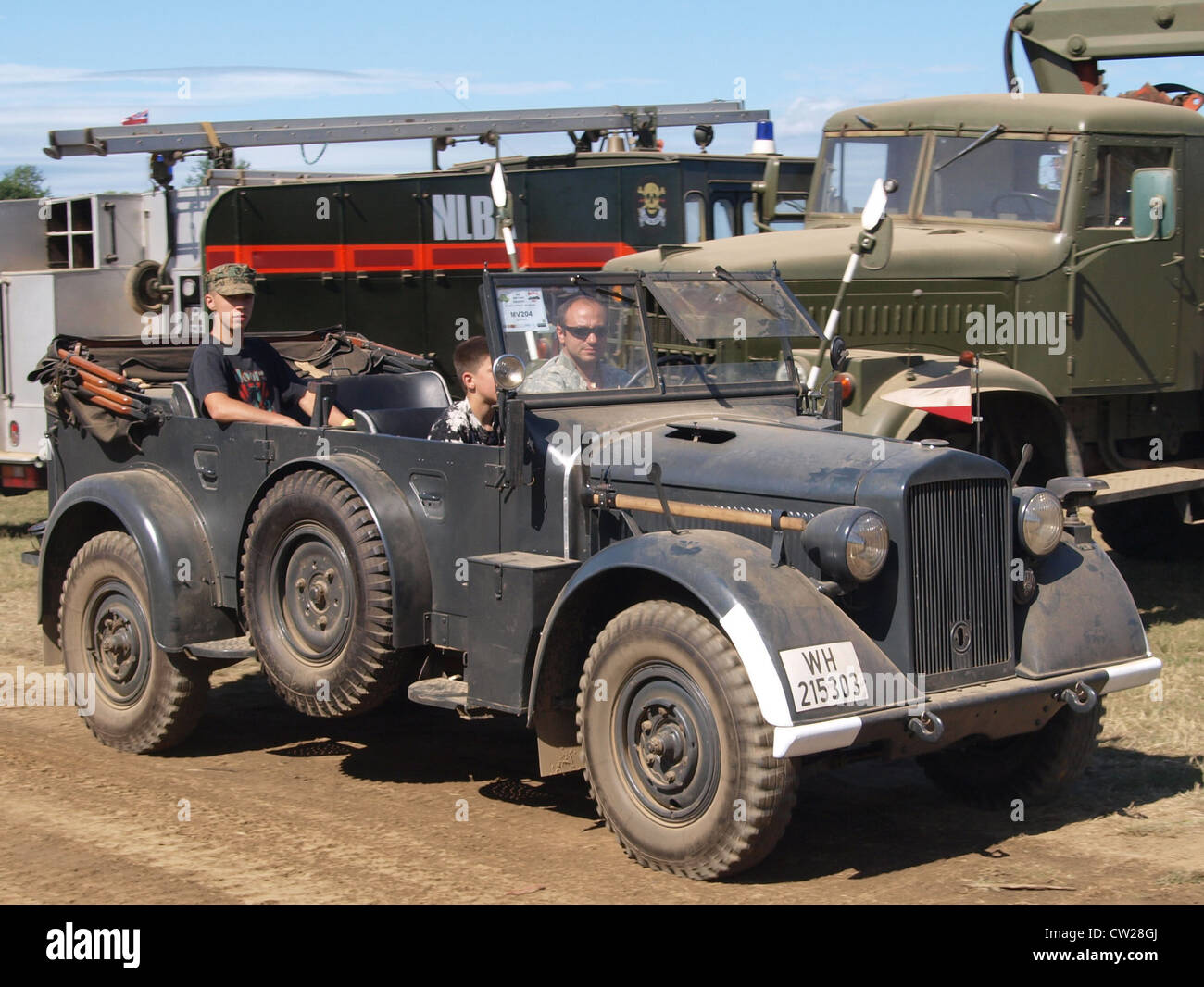
The Role of German Military Vehicles WWII in Combat
German military vehicles during World War II played a pivotal role in operational doctrine, enabling the rapid mechanized warfare known as Blitzkrieg, providing mobile firepower, and maintaining logistical lines across vast and hostile...
German military vehicles during World War II played a pivotal role in operational doctrine, enabling the rapid mechanized warfare known as Blitzkrieg, providing mobile firepower, and maintaining logistical lines across vast and hostile European and North African theatres.
Contents
The role of German military vehicles in WWII combat was fundamentally intertwined with the doctrine of Blitzkrieg (lightning war), emphasizing speed, surprise, and deep operational penetration. Unlike their adversaries, who initially viewed armored cars, half-tracks, and tanks as infantry support elements or independent cavalry replacements, the German Wehrmacht integrated motorization into a combined-arms system. Tanks, armored personnel carriers, self-propelled artillery, and supply trucks moved together to isolate enemy pockets, bypass strongpoints, and collapse opposing frontlines before organized resistance could form.
Understanding how these vehicles functioned in actual combat requires examining their engineering philosophies, tactical deployment, logistical challenges, and performance across diverse operational environments from the mud of the Eastern Front to the arid expanses of North Africa.
Strategic Doctrine and Motorization Realities
At the onset of the war, the popular perception of the German military often portrays a fully mechanized juggernaut. In reality, the Wehrmacht was a hybrid force. While elite Panzer and motorized infantry (Panzergrenadier) divisions received high concentrations of tracked and wheeled vehicles, the vast majority of standard infantry divisions relied on horse-drawn transport for artillery and supply.
Military planners categorized vehicles into specific operational niches:
- Radfahrzeuge (Wheeled Vehicles): Used for reconnaissance, liaison, command, and logistical transport. Trucks like the Opel Blitz formed the invisible backbone of army supply lines.
- Halbkettenfahrzeuge (Half-Tracks): Vehicles such as the Sd.Kfz. 251 provided infantry units with cross-country mobility and armor protection against small arms fire, allowing troops to keep pace with fast-moving Panzers.
- Vollkettenfahrzeuge (Fully Tracked Vehicles): Encompassing main battle tanks (Panzer series), assault guns (StuG series), and tank destroyers (Panzerjäger), designed for direct combat, breakthrough operations, and mobile anti-tank defense.
This tiered system required intricate coordination. When supply lines functioned smoothly, motorized spearheads moved with breathtaking speed. However, German vehicle design prioritized complex engineering over mass production, leading to severe logistical bottlenecks later in the conflict.
Armored Cars and Reconnaissance
Reconnaissance units acted as the eyes and ears of German armored formations. Lightly armored, highly mobile wheeled vehicles were tasked with locating enemy concentrations, screening flanks, and securing vital river crossings before heavier forces arrived.
Vehicles like the Sd.Kfz. 222 and the heavier eight-wheeled Sd.Kfz. 231 series were equipped with powerful radios and decent off-road capabilities for wheeled platforms. In combat, their primary directive was to avoid heavy engagements while gathering tactical intelligence. However, their reliance on wheeled mobility proved problematic during the Rasputitsa (mud seasons) on the Eastern Front, where deep mud rendered rear-wheel and all-wheel-drive cars immobile, forcing a heavier reliance on tracked or half-tracked alternatives.
| Vehicle Designation | Type | Primary Role | Notable Strength | Tactical Limitation |
|---|---|---|---|---|
| Opel Blitz | 3-Ton Truck | Logistical Transport | Exceptional reliability, high payload capacity | Vulnerable to enemy fire, poor off-road mud performance |
| Sd.Kfz. 251 | Medium Half-Track | Infantry Transport / Combat Support | Good cross-country mobility, versatile variants | Open-topped crew compartment vulnerable to grenades and shrapnel |
| StuG III | Assault Gun / Tank Destroyer | Infantry Support / Anti-Tank | Low profile, cost-effective, heavy frontal armament | Fixed superstructure lacked a rotating turret |
| Sd.Kfz. 231 | Heavy Armored Car | Long-Range Reconnaissance | Dual-steering capability, high road speed | Complex mechanical transmission, vulnerable to anti-tank rifles |
Half-Tracks and Mechanized Infantry Combat
The introduction of armored half-tracks transformed infantry tactics. The Sd.Kfz. 251 (Sonderkraftfahrzeug 251) and the lighter Sd.Kfz. 250 allowed infantrymen to accompany tanks directly into battle, suppressing enemy anti-tank teams and clearing fortified positions.
In combat, Panzergrenadiers mounted in half-tracks could deploy rapidly under armor protection. These vehicles were often fitted with MG 34 or MG 42 machine guns, providing suppressive fire during assaults. Specialized variants emerged out of combat necessity, including mortar carriers, flame-thrower vehicles (Flammpanzerwagen), and anti-tank variants mounting the 7.5 cm PaK 40.
Despite their tactical utility, half-tracks suffered from high manufacturing costs and complex mechanical maintenance requirements. The interleaved road wheel suspension systems found on heavier German tracked vehicles, while providing a smooth ride and good weight distribution, collected mud and stones that froze solid during Russian winters, frequently causing catastrophic track failures.
Assault Guns and Defensive Doctrines
As the war progressed and the strategic initiative shifted from offensive Blitzkrieg to prolonged defensive attrition, the role of German military vehicles evolved. Tank destroyers and assault guns (Sturmgeschütze) gained prominence due to their mechanical simplicity and lower production costs compared to traditional fully-turreted tanks.
The Sturmgeschütz III (StuG III), originally conceived as an infantry support weapon to blast through fortified bunkers, evolved into one of the most effective anti-tank vehicles of the war. Because it lacked a rotating turret, the entire vehicle had to be pointed at the target, but this design flaw in flexibility offered a major advantage: a lower silhouette that made the vehicle much harder to spot and hit on the battlefield.
As Allied and Soviet tank production outpaced German industrial output, mobile anti-tank units (Panzerjäger) equipped with vehicles like the Marder series and later the Hetzer relied on ambush tactics. These vehicles operated from concealed positions, exploiting terrain to neutralize superior enemy numbers through defensive depth rather than mobile breakthroughs.
Logistical Vulnerabilities and Maintenance Challenges
The tactical effectiveness of German combat vehicles was consistently undermined by systemic logistical and industrial shortcomings. Unlike American and Soviet industries, which prioritized standardization, ease of repair, and mass production, German automotive engineering favored technological sophistication, over-engineering, and frequent design modifications.
German forces utilized hundreds of different vehicle chassis types, complicating spare parts distribution. A maintenance crew might service a dozen different trucks, each requiring distinct engine components, gaskets, and tracks. In combat zones, a lack of spare parts often forced crews to abandon otherwise salvageable vehicles.
Furthermore, fuel shortages crippled mobile operations in the later stages of the war. The reliance on synthetic fuel derived from coal, alongside shrinking crude oil supplies from fields in Romania, meant that tanks and supply trucks frequently had to be abandoned or blown up by their own crews simply due to an empty fuel tank during strategic retreats.
Common Strategic Mistakes and Operational Limitations
Analyzing the combat performance of German military vehicles reveals recurring strategic errors:
- Over-Engineering: Prioritizing thick armor and high-velocity guns over mechanical reliability led to chronic transmission and suspension breakdowns, particularly in heavy tanks like the Tiger and Panther.
- Underestimating Industrial Capacity: Entering a war of attrition with an industrial base incapable of mass-producing replacement vehicles ensured that initial qualitative superiority was eroded by quantitative adversaries.
- Neglecting Standardization: Failing to streamline automotive production created a logistical nightmare where front-line units struggled to maintain basic operational readiness.
Frequently Asked Questions
What was the primary purpose of German half-tracks in WWII combat?
German half-tracks, such as the Sd.Kfz. 251, were designed to transport mechanized infantry (Panzergrenadiers) across rough terrain alongside tanks. They provided protection against small-arms fire and shrapnel while keeping pace with armored spearheads during fast-moving operations.
Why did the German military rely on horse-drawn transport if they were famous for mechanized warfare?
Despite the propaganda image of a fully mechanized army, German industrial capacity was insufficient to motorize every division. The majority of standard infantry divisions relied on horses and foot transport for supplies and artillery, while trucks and tracked vehicles were concentrated in elite armored and motorized formations.
How did the role of German military vehicles change from 1939 to 1945?
During the early years of the war (1939–1941), vehicles were utilized aggressively for offensive breakthroughs, rapid encirclements, and mobile coordination (Blitzkrieg). By 1943–1945, as the strategic initiative shifted, vehicles were increasingly deployed in defensive roles, ambush anti-tank tactics, and mobile fire brigades to plug gaps in collapsing frontlines.
What were the main mechanical weaknesses of German armored vehicles?
German vehicles frequently suffered from over-engineered transmissions, complex suspension systems, and excessive weight relative to their engine power. These factors led to frequent mechanical breakdowns, high maintenance demands, and difficulties in recovery and repair under combat conditions.
Did Germany successfully standardize its military vehicle production?
No. Unlike Allied nations that produced standardized chassis and interchangeable parts on a massive scale, German manufacturers produced a wide variety of competing vehicle designs with specialized parts, creating severe logistical hurdles for field maintenance units.
Conclusion and Next Actions
German military vehicles in WWII combat demonstrated the profound impact of combining tactical motorization with innovative operational doctrine, yet they ultimately exposed the dangers of industrial over-complexity and unsustainable supply lines. For researchers and historians examining this era, the next step involves cross-referencing specific divisional war diaries with production statistics from the Speer ministry to understand the direct correlation between mechanical attrition and strategic defeat.
Image Gallery