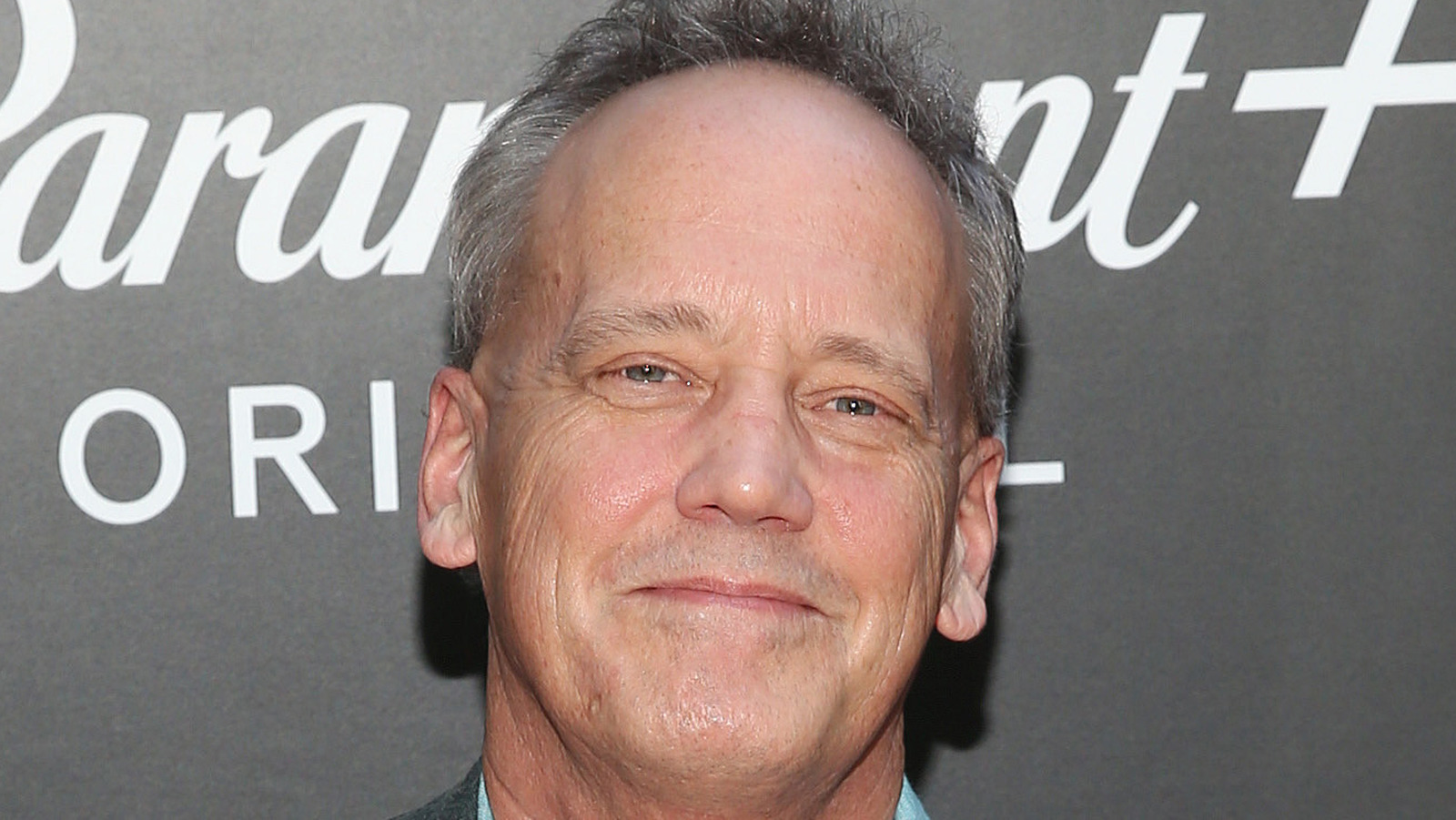
Dee Bradley Baker: Analyzing the Career of the Voice Actor with 2,641 Roles
As of 2026, Dee Bradley Baker stands as one of the most prolific and versatile performers in the history of the entertainment industry, currently credited with a staggering 2,641 distinct roles across television, film, and video games....
As of 2026, Dee Bradley Baker stands as one of the most prolific and versatile performers in the history of the entertainment industry, currently credited with a staggering 2,641 distinct roles across television, film, and video games. This figure, often cited by industry databases such as Behind The Voice Actors, represents more than just a quantity of work; it reflects a unique mastery of vocal anatomy and a specialized niche in non-human characterizations. Baker is not merely a voice actor who speaks lines; he is an architect of sound who has shaped the auditory landscapes of the most successful franchises in modern media, from the "Star Wars" universe to the depths of "SpongeBob SquarePants."
Contents
The milestone of 2,641 roles is particularly significant because it distinguishes between "projects" and "individual characters." While many veteran actors may have hundreds of credits on IMDb, Baker’s role count is propelled by his ability to voice multiple, distinct characters within a single series—most notably in "Star Wars: The Clone Wars" and "Star Wars: The Bad Batch," where he provides the voices for nearly every member of the clone army. Understanding how one individual reached this level of professional output requires an analysis of his technical skills, his history in the industry, and the specific evolution of voice acting as a specialized craft.
The Architecture of a Record-Breaking Career
Dee Bradley Baker’s journey to becoming the voice actor with the most roles began not in a recording booth, but on the stage. Born in 1962 and raised in Greeley, Colorado, Baker’s early interests in musical theater and stand-up comedy provided the foundational breath control and improvisational skills necessary for a career in voice-over. Unlike many of his contemporaries who sought traditional acting roles in front of the camera, Baker gravitated toward the "invisible" art of vocal performance, moved by the realization that a single person could inhabit an infinite number of bodies if their voice was sufficiently flexible.
His professional ascent began in the early 1990s, during a transitional period for animation. The industry was moving away from the "one-size-fits-all" vocal styles of the Saturday morning cartoon era toward more nuanced, character-driven performances. Baker’s first major breakthrough came with the Nickelodeon game show "Legends of the Hidden Temple," where he voiced the iconic rock god Olmec. This role demonstrated his ability to project authority and ancient weight through vocal texture alone, a precursor to the thousands of roles that would follow.
By the early 2000s, Baker had established himself as a "utility player"—the actor a director calls when they need a character that doesn't sound human, or when they need ten different voices for a single scene. This reliability led to an exponential increase in his role count, as he became a staple in the voice casts of major networks like Cartoon Network, Disney, and Nickelodeon.
Decoding the 2,641 Roles: Projects vs. Characters
To appreciate the scale of 2,641 roles, it is essential to understand how the industry tracks these statistics. In voice acting, a "credit" usually refers to a specific TV show episode or a movie title. However, a "role" refers to a distinct character. Baker’s record is built on his extraordinary capacity for "ensemble voicing."
In the "Star Wars" animated franchise, for instance, Baker does not just play "The Clones." He plays Rex, Cody, Hunter, Wrecker, Tech, Echo, and Crosshair—each with a distinct personality, vocal pitch, and cadence. In a single episode, he might effectively be performing a five-way conversation with himself. This technical feat is rare even among elite voice actors. While legends like Frank Welker and Mel Blanc set the standard for character variety, Baker has utilized the modern era’s demand for high-volume, serialized content to push his role count into the thousands.
Key Franchises Contributing to the Total
| Franchise / Project | Primary Roles | Nature of Work |
|---|---|---|
| Star Wars: The Clone Wars / Bad Batch | Captain Rex, Clone Force 99, all Clones | High-nuance human dialogue and military jargon. |
| Phineas and Ferb | Perry the Platypus | Non-verbal chattering and clicking sounds. |
| Avatar: The Last Airbender | Appa, Momo | Animal vocalizations and emotional "beats" without speech. |
| American Dad! | Klaus Heisler | German-accented comedic performance. |
| SpongeBob SquarePants | Squilliam Fancyson, Bubble Bass | Character-driven secondary roles. |
| Ben 10 | Multiple Aliens (Wildmutt, Stinkfly) | High-strain creature effects and unique vocal textures. |
The Specialty of Non-Human Vocalization
A significant portion of Baker’s 2,641 roles consists of "creature work." This is a highly specialized subfield of voice acting that involves creating sounds for animals, monsters, and aliens that do not exist in the real world. Baker is widely considered the world’s leading expert in this area, often referred to as "the guy who does the animals."
Creature work is physically demanding and technically complex. It requires an intimate knowledge of the human larynx and how to manipulate it to produce sounds like clicks, growls, screeches, and whistles without causing permanent vocal cord damage. Baker famously uses a "vocal fry" technique and various biological "tricks"—such as manipulating the epiglottis—to create the illusion of non-human anatomy.
For his role as Perry the Platypus in "Phineas and Ferb," Baker created a signature "rattle" sound that became a global phenomenon. For Appa and Momo in "Avatar: The Last Airbender," he had to convey deep loyalty, fear, and humor entirely through breath and resonance, without a single word of dialogue. This ability to "act" without "speaking" is what allows him to occupy so many roles in a single production; he is often the "voice" of the environment itself.
Comparative Analysis: Baker vs. Other Voice Acting Titans
While the number 2,641 is a staggering metric, it is helpful to place it in the context of other industry giants. The "most roles" title is often a point of friendly debate among fans of Frank Welker, Tara Strong, and Grey DeLisle.
- Frank Welker: Often cited as the only actor who rivals or exceeds Baker in sheer volume, Welker is known for Megatron and Scooby-Doo. Welker’s career spans back to the late 1960s, giving him a decades-long lead. However, Baker’s role count has accelerated faster in the digital age due to the sheer density of characters in modern gaming and animated series.
- Tara Strong & Grey DeLisle: These actresses hold records for the most roles among female performers. Their work is characterized by incredible range—playing both toddlers and elderly villains. Baker’s distinction lies in his dominance of the "creature" niche, which frequently allows him to add 10 to 20 roles to a single video game credit where others might only have one or two.
- Mel Blanc: Known as "The Man of a Thousand Voices," Blanc set the original standard. While his total role count is lower than Baker's in absolute numbers (partially due to fewer shows being produced in the 1940s-60s), his cultural impact on the "Looney Tunes" cast remains the benchmark for all who followed.
The Technical Demands of the Industry in 2026
By 2026, the voice acting industry has changed significantly, making Baker’s achievement even more impressive. The rise of AI and synthetic voice generation has put pressure on human performers to provide something "un-simulatable." Baker’s creature work and his ability to imbue clones with distinct humanity are precisely the types of performances that AI struggles to replicate because they rely on spontaneous emotional "glitches" and organic breath control.
Baker’s work ethic is legendary within the Screen Actors Guild (SAG-AFTRA). He is known for his "home studio" efficiency, a necessity for someone maintaining over 2,000 active role iterations. The transition to remote recording during the early 2020s allowed Baker to increase his output even further, as he could contribute to international projects without the downtime of travel.
Maintaining Vocal Longevity
To sustain 2,641 roles, vocal health is paramount. Baker has often shared his "vocology" insights with aspiring actors. His regimen includes:
- Hydration: Constant intake of water to keep the vocal folds lubricated.
- Vocal Rest: Periods of absolute silence between high-strain sessions (like those for "Ben 10" or "Gears of War").
- Technical Precision: Avoiding "throat-tearing" screams by using diaphragm support and internal resonance chambers to mimic the sound of a scream without the physical trauma.
Frequently Asked Questions
Is Dee Bradley Baker the person with the most IMDB credits?
While Baker has one of the highest credit counts, the "most roles" metric (2,641) specifically counts unique characters. Some actors may have more "credits" if they appeared in 500 episodes of a single soap opera, but Baker leads in the diversity of different characters portrayed across his career.
How does he voice all the clones in Star Wars?
Baker uses a subtle shift in "vocal posture." For example, Captain Rex has a more authoritative, lower-register rasp, while a younger clone might have a cleaner, higher pitch. He treats each clone as a different person with a different life experience, which changes the "weight" of their speech.
Does he use digital effects for his creature sounds?
Generally, no. One of the reasons Baker is so highly sought after is that his organic sounds are more "alive" than digital libraries. While sound engineers may add reverb or layering in post-production, the base sounds—the clicks, growls, and chirps—are produced entirely by Baker’s own throat and mouth.
Where can I see a full list of his 2,641 roles?
The most comprehensive breakdown is maintained by Behind The Voice Actors (BTVA), which meticulously tracks individual character appearances. Behind The Voice Actors provides visual galleries of his various roles.
What is Dee Bradley Baker's most famous role?
This depends on the generation of the viewer. For Star Wars fans, it is the Clone Troopers. For Disney fans, it is Perry the Platypus. For fans of "Avatar: The Last Airbender," it is undeniably Appa and Momo.
Practical Guidance for Aspiring Voice Actors
Dee Bradley Baker is not just a performer; he is an educator. He maintains a comprehensive resource for the industry called "I Want To Be A Voice Actor," which serves as a definitive guide for newcomers.
If you are looking to follow in the footsteps of a performer with over 2,000 roles, your next steps should be:
- Develop a "Creature" Palette: Practice making sounds that aren't words. Explore the range of your voice through humming, clicking, and varied breathing.
- Study Phonetics: Understanding how sounds are formed in the mouth (labial, dental, velar) allows you to tweak a voice just enough to create a "new" character.
- Prioritize Acting over "Voices": As Baker often says, the "acting" part of voice acting is what gets you hired. A funny voice is useless if it cannot convey a sincere emotion.
- Invest in Vocal Health: Learn to recognize the signs of vocal fatigue before they become injuries.
Dee Bradley Baker’s milestone of 2,641 roles is a testament to the infinite possibilities of the human voice. In an era where digital entertainment is more prevalent than ever, his career proves that a single person, armed with nothing but a microphone and an imagination, can populate entire worlds.
Image Gallery