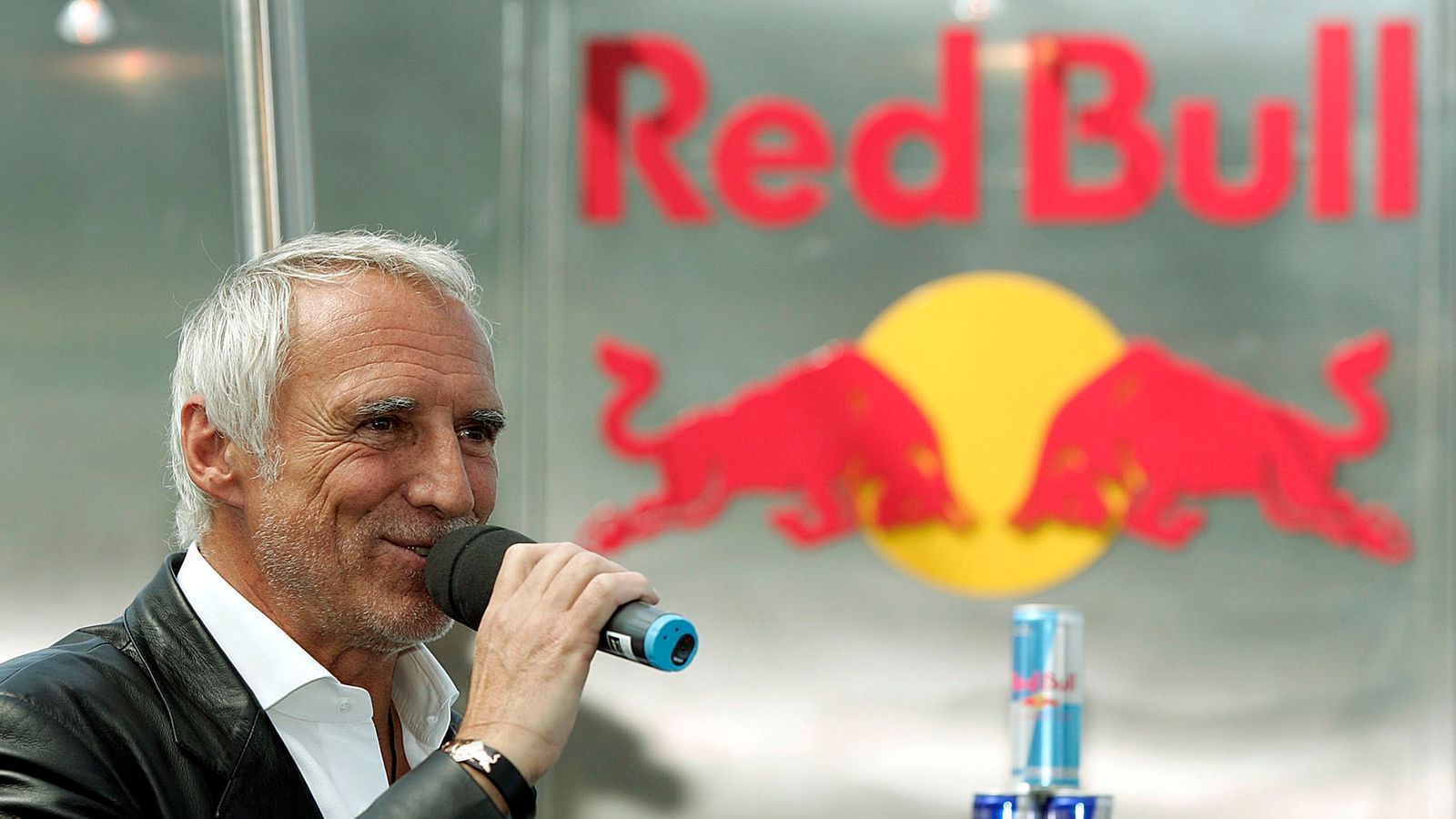
Dietrich Mateschitz Net Worth: How the Red Bull Founder Built a Multi-Billion-Dollar Legacy
At the time of his passing in October 2022, Red Bull co-founder Dietrich Mateschitz had an estimated net worth of approximately $25 billion to $27 billion, placing him among the 100 wealthiest individuals in the world. His fortune stem...
At the time of his passing in October 2022, Red Bull co-founder Dietrich Mateschitz had an estimated net worth of approximately $25 billion to $27 billion, placing him among the 100 wealthiest individuals in the world. His fortune stemmed primarily from his 49% stake in Red Bull GmbH, supplemented by an extensive portfolio of international real estate, media outlets, and championship-winning sports franchises. Following his death, his total ownership interest and wealth transferred to his son, Mark Mateschitz.
Contents
Peak Net Worth and Financial Valuation
Dietrich Mateschitz was Austria’s wealthiest citizen for over two decades. His net worth reached its peak between late 2021 and late 2022, driven by record-breaking global sales of Red Bull energy drinks. According to financial tracking by the Forbes Billionaires Index and the Bloomberg Billionaires Index, Mateschitz's total net worth was estimated at $25.4 billion in October 2022.
Because Red Bull GmbH is a privately held corporation headquartered in Fuschl am See, Austria, Mateschitz’s exact net worth was calculated based on corporate revenue filings, annual dividend distributions, operating margins, and peer earnings multiples within the global consumer beverage sector.
| Valuation Financial Metric | Estimated Figure (At Time of Passing / Post-2022 Transition) |
|---|---|
| Peak Net Worth Range | $25.0 Billion – $27.4 Billion |
| Primary Wealth Asset | 49% equity stake in Red Bull GmbH |
| Annual Red Bull Volume Sold | > 11.5 billion cans (2022) |
| Holding Entity | Distribution & Marketing GmbH |
| Sole Heir | Mark Mateschitz (Son) |
| Current Inherited Wealth (2026) | ~$35 Billion+ (reflecting ongoing sales growth & dividends) |
Financial disclosures show that Mateschitz consistently favored liquidity and cash-flow generation over public equity offerings. Rather than taking Red Bull public through an Initial Public Offering (IPO), he retained private ownership, which allowed the company to distribute billions of Euros in direct cash dividends to its equity holders over three decades.
The Foundation of Wealth: Co-Founding Red Bull GmbH
Dietrich Mateschitz’s financial journey began not in high finance or technology, but in corporate consumer goods marketing. While working as an international marketing director for the German blend company Blendax in the early 1980s, Mateschitz traveled extensively across East Asia. During a trip to Thailand, he discovered Krating Daeng, a non-carbonated energy tonic developed by Chaleo Yoovidhya’s pharmaceutical company, TC Pharmaceutical. Mateschitz recognized that the drink cured his jet lag and saw an untapped business opportunity in Western markets.
In 1984, Mateschitz partnered with Chaleo Yoovidhya to found Red Bull GmbH. The business arrangement was structured with exceptional equity discipline:
- Dietrich Mateschitz: 49% equity stake.
- Chaleo Yoovidhya: 49% equity stake.
- Chalerm Yoovidhya (Chaleo's son): 2% equity stake (giving the Yoovidhya family operational control on paper, though Mateschitz retained management authority).
Mateschitz spent three years adapting the formula to Western tastes—carbonating the beverage and adjusting the sweetness—and developing the brand identity, including the iconic slim can and the "Red Bull Gives You Wings" slogan. Red Bull officially launched in the Austrian market in 1987.
- Red Bull GmbH Initial Equity Structure (1984)
- Dietrich Mateschitz: 49%
- Chaleo Yoovidhya: 49%
- Chalerm Yoovidhya: 2%
The Outsourced Operating Model
A critical factor behind Mateschitz’s extraordinary return on capital was Red Bull’s asset-light business model. From its inception, Red Bull outsourced core manufacturing, canning, and logistics to external partners—most notably the Austrian beverage producer Rauch Fruchtsäfte.
By avoiding heavy capital expenditures in bottling plants and supply chain infrastructure, Red Bull diverted the vast majority of its operational capital toward brand marketing, event creation, and athlete endorsements. This capital efficiency yielded industry-leading operating margins, allowing profits to flow directly into corporate reserves and shareholder dividend pools.
Dividend Mechanics: How Red Bull Generated Billions
Unlike tech founders whose net worth fluctuates primarily based on public stock market swings, Mateschitz’s net worth was backed by physical cash reserves and high-margin recurring dividend payments.
Red Bull GmbH generated billions in cash flow annually. In accordance with Austrian corporate governance standards and the company's internal articles of association, half of the annual net profit was systematically paid out to shareholders as dividends, while the remainder was retained for corporate reinvestment.
- Annual Net Profits
- 50% Retained for Growth & Marketing
- 50% Cash Dividend Payout
- 49% to Mateschitz Holding (Distribution & Marketing GmbH)
- 51% to Yoovidhya Family Holdings
Mateschitz held his 49% stake in Red Bull GmbH through his personal Austrian holding company, Distribution & Marketing GmbH. Through this entity, Mateschitz received substantial cash distributions:
- 2019 Dividend: Distribution & Marketing GmbH received over €211 million in base dividends, plus special dividend distributions.
- 2020 Dividend: Mateschitz received approximately €343 million in payouts despite global economic disruptions.
- 2021 Dividend: Strong post-pandemic sales growth bumped Mateschitz’s payout to over €400 million in direct annual distributions.
These cash flows enabled Mateschitz to fund expensive personal acquisitions, sports investments, and real estate purchases entirely without taking on substantial debt or liquidating his core Red Bull equity.
Beyond Energy Drinks: Sports, Real Estate, and Media Assets
While Red Bull GmbH formed the primary foundation of Mateschitz’s fortune, he systematically transformed his capital into an ecosystem of sports teams, real estate developments, and media production businesses. These holdings were split between direct Red Bull GmbH subsidiaries and his private holdings.
Formula 1 Franchises
Mateschitz was a pioneer in using sports team ownership as a central marketing engine. Rather than simply paying for vehicle sponsorship, he bought teams outright:
- Red Bull Racing: In 2004, Mateschitz purchased the Jaguar Racing F1 team from Ford Motor Company for a nominal fee, agreeing to invest heavily in its operations. The team subsequently won multiple Formula 1 Constructors' and Drivers' World Championships.
- Visa Cash App RB (formerly Toro Rosso / AlphaTauri): Purchased in 2005 (formerly Minardi) to serve as a junior training pipeline for driver talent.
Combined, these Formula 1 assets saw dramatic valuation appreciation over two decades, growing from distressed purchases into multi-billion-dollar sports properties.
Global Football Empire
Under Mateschitz’s leadership, Red Bull established a multi-club global soccer network that altered sports administration models:
- RB Leipzig (Germany): Founded in 2009 after purchasing the playing rights of SSV Markranstädt, progressing from the lower leagues to the UEFA Champions League.
- FC Red Bull Salzburg (Austria)
- New York Red Bulls (MLS, USA)
- Red Bull Bragantino (Brazil)
Real Estate and Private Luxury Holdings
Mateschitz reinvested much of his private dividend capital into real estate assets, primarily across Austria and the South Pacific:
- Laucala Island: A 3,000-acre private island in Fiji purchased from the estate of Malcolm Forbes in 2003 for an estimated $10 million, later transformed into an ultra-luxury eco-resort.
- Hangar-7: Located at Salzburg Airport, this architectural showcase houses Mateschitz’s private collection of historical aircraft (The Flying Bulls), vintage automobiles, and high-end dining facilities.
- Tauroa Hospitality Network: A curated collection of boutique hotels, historic castles, traditional guesthouses, and culinary estates throughout the Styria and Salzkammergut regions of Austria.
- Red Bull Ring: The historic Spielberg motor racing circuit in Austria, which Mateschitz purchased, fully renovated, and re-opened for Formula 1 and MotoGP racing.
Media Outlets
Through Red Bull Media House and private holdings, Mateschitz invested heavily in content production:
- ServusTV: A regional television station based in Salzburg, broadcasting news, documentaries, and live sports across Austria and Germany.
- Print and Digital Media: A portfolio of lifestyle and sports magazines, including The Red Bulletin.
Wealth Transfer: Mark Mateschitz and the Inheritance
Following Dietrich Mateschitz’s passing on October 22, 2022, after a prolonged illness, the entirety of his wealth and his 49% stake in Red Bull GmbH passed to his only child, Mark Mateschitz (born 1992).
- Dietrich Mateschitz (Passing in Oct 2022)
- Distribution & Marketing GmbH (100% Equity Interest)
- Mark Mateschitz (Sole Heir)
- 49% Equity Stake in Red Bull GmbH
- Tauroa Hospitality & Private Real Estate
- ServusTV / Private Holdings
The inheritance process was structured to preserve corporate stability and long-term liquidity:
- Direct Transfer: Mark Mateschitz inherited 100% of Distribution & Marketing GmbH, thereby securing the 49% stake in Red Bull GmbH.
- Corporate Restructuring: To maintain professional governance, Mark Mateschitz stepped down from his operational role as Head of Organics at Red Bull to focus on his role as shareholder.
- Governance Realignment: Red Bull GmbH shifted management responsibilities from Mateschitz as sole CEO to a three-person board of directors overseeing corporate operations, beverage operations, and sports/projects.
- Valuation Expansion: Driven by sustained increase in global beverage volumes (exceeding 12 billion cans annually in subsequent operational years), Mark Mateschitz’s inherited fortune expanded to an estimated $35 billion to $40 billion, cementing his position as Europe’s wealthiest millennial.
Key Drivers Behind the Growth of the Mateschitz Fortune
Dietrich Mateschitz’s approach to business generated an unusually resilient financial estate. His business strategy relied on several foundational principles:
Core Capital Allocation Strategy
- High Equity Retention: Kept 49% private ownership; no IPO
- Asset-Light Model: Outsourced bottling & logistics
- High Reinvestment: Diverted ~30% revenue to marketing
- Cash Payout Reliance: Converted profits to direct cash
Absolute Equity Retention
By declining venture capital funding and rejecting public stock offerings, Mateschitz avoided corporate short-termism and share dilution. Retaining 49% meant he captured nearly half of all long-term economic value generated by the brand over 35 years.
Extreme Brand Marketing
Red Bull created a distinct marketing category by spending roughly 30% of its total revenue on marketing and extreme sports events. Instead of purchasing traditional banner advertisements, Mateschitz sponsored extreme athletes, created sports leagues, and hosted stunts like Felix Baumgartner’s 2012 Red Bull Stratos jump from the stratosphere. This elevated Red Bull from a simple drink manufacturer to a global lifestyle and sports ecosystem.
Geographical Diversification
While born in Austria, Red Bull grew its international distribution footprint rapidly. Today, the product is sold in over 175 countries. This geographical spread sheltered Mateschitz’s financial returns from local economic downturns in any single market.
Frequently Asked Questions
What was Dietrich Mateschitz’s net worth at the time of his death?
At the time of his death in October 2022, Dietrich Mateschitz had an estimated net worth of approximately $25.4 billion. This figure made him the wealthiest person in Austria and placed him among the top 100 richest people globally.
Who inherited Dietrich Mateschitz’s fortune and Red Bull shares?
His sole heir was his son, Mark Mateschitz. Mark inherited his father's personal holding company, Distribution & Marketing GmbH, which holds the 49% ownership stake in Red Bull GmbH, alongside various luxury real estate holdings and hospitality assets.
Did Dietrich Mateschitz own 100% of Red Bull?
No. Dietrich Mateschitz owned 49% of Red Bull GmbH. His original business partner, Chaleo Yoovidhya, owned 49%, and Chaleo's eldest son, Chalerm Yoovidhya, held a 2% stake. Following Chaleo's passing in 2012 and Mateschitz's passing in 2022, control remains split between the Mateschitz family (49%) and the Yoovidhya family (51%).
How did Dietrich Mateschitz make his money before founding Red Bull?
Mateschitz held corporate marketing positions prior to founding Red Bull. He worked as an international marketing manager for the German consumer goods manufacturer Blendax, where he marketed toothpaste, skin creams, and shampoos globally. He used his corporate savings to fund his initial financial contribution to Red Bull in 1984.
What real estate and sports teams were included in Mateschitz’s portfolio?
His asset portfolio contained Formula 1 teams (Red Bull Racing and Scuderia AlphaTauri/Visa Cash App RB), multiple football clubs (RB Leipzig, FC Red Bull Salzburg, New York Red Bulls, Red Bull Bragantino), the Red Bull Ring racing circuit in Austria, the Hangar-7 complex in Salzburg, Laucala Island in Fiji, and dozens of historic properties across Austria under the Tauroa brand.
Key Takeaways for Business Strategy and Wealth Creation
Dietrich Mateschitz’s building of a multi-billion-dollar fortune offers clear insights into brand building and private equity capital structure:
- Protect Core Equity: Long-term value accrues to those who maintain tight ownership control over growing assets.
- Focus on Core Competencies: Red Bull concentrated strictly on marketing, brand positioning, and formula design, while outsourcing physical capital-intensive tasks like aluminum can production and bottling.
- Transform Marketing Costs into Owned Assets: Rather than spending marketing budgets on temporary advertising spots, Mateschitz bought enduring assets—sports teams, event IP, and venues—that appreciate in value over time while generating independent financial returns.
Image Gallery