The Evolution of Audi RS Models and the Debate Around Their Future
Audi’s Rennsport (RS) division has evolved from a niche engineering experiment into a global benchmark for all-weather performance. Originating with the Porsche-co-developed RS2 Avant in 1994, the lineup built its reputation on turboch...
Audi’s Rennsport (RS) division has evolved from a niche engineering experiment into a global benchmark for all-weather performance. Originating with the Porsche-co-developed RS2 Avant in 1994, the lineup built its reputation on turbocharged engines, permanent quattro all-wheel drive, and practical wagon silhouettes. Today, the brand faces an intense debate among purists and modern buyers as it transitions from high-revving internal combustion engines to heavy hybrid powertrains and fully electric architectures.
Contents
1. The Genesis of Rennsport: Co-Developing the RS2 Avant
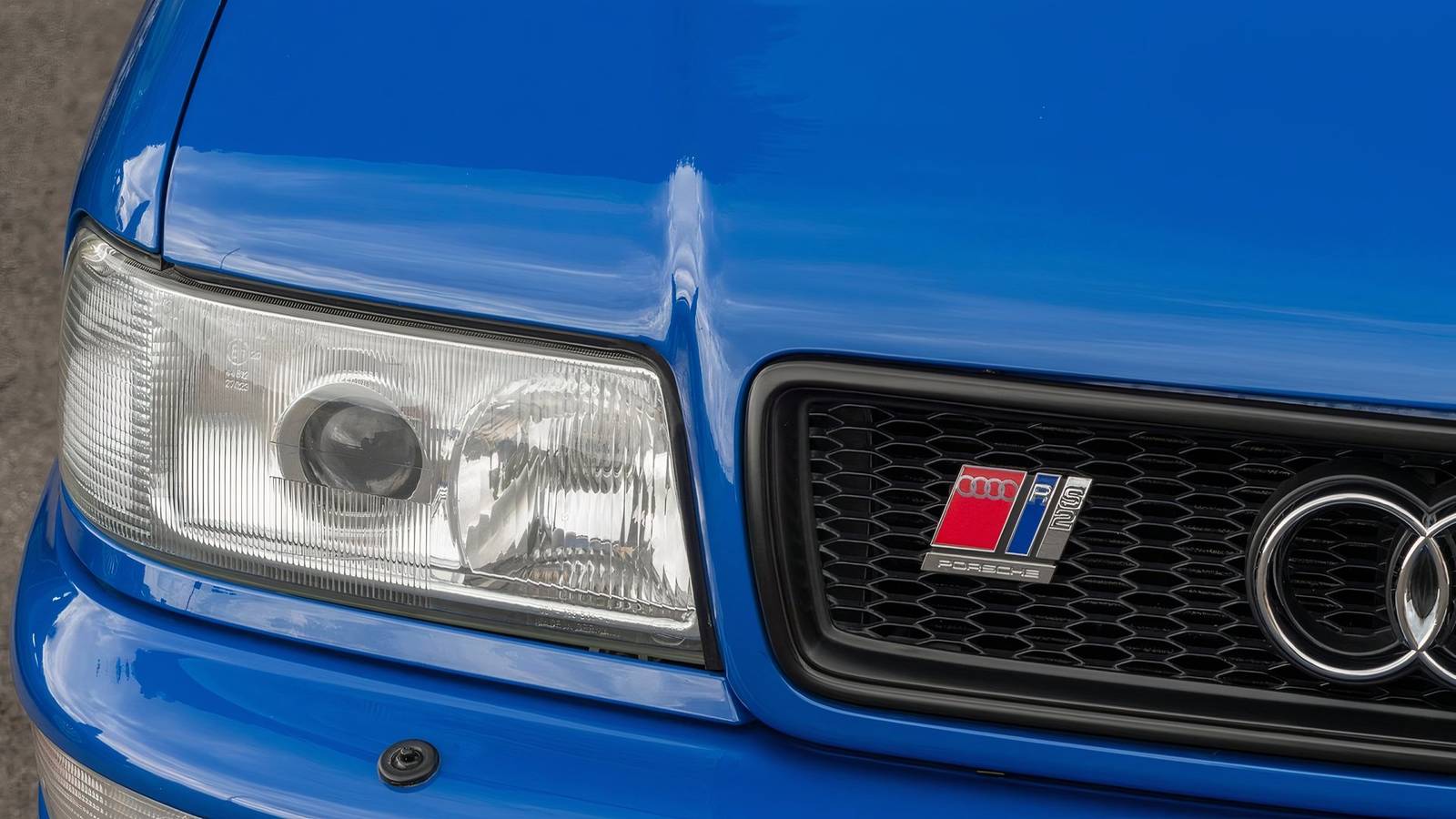
The story of Audi RS began in the early 1990s, when Audi sought to transform its conservative brand image into that of a premier performance innovator. Rather than developing its first ultra-high-performance car entirely in-house, Audi partnered with Porsche to construct the 1994 Audi RS2 Avant. Built on the Audi 80 Avant chassis, final assembly took place at Porsche’s historic Rossle-Bau plant in Zuffenhausen—the same facility that produced the iconic Porsche 959 and Mercedes-Benz 500E.
The RS2 Avant featured a heavily modified 2.2-liter turbocharged inline five-cylinder engine delivering 311 horsepower (232 kW). Porsche engineers fitted a larger KKK turbocharger, an upgraded intercooler, high-flow fuel injectors, and a recalibrated engine management system. Power was delivered through a six-speed manual gearbox and Audi’s permanent quattro all-wheel-drive system featuring a manual rear differential lock. Porsche’s influence was explicitly visible: the car wore 17-inch Cup wheel designs, Brembo four-piston brakes, side mirrors from the Porsche 911 (993 generation), and integrated indicator units in the front bumper.
What made the RS2 revolutionary was its form factor. By delivering supercar-level zero-to-60 mph acceleration (under 5.0 seconds) inside a practical five-door station wagon, Audi established a template that defined the RS lineage for three decades: devastating real-world capability concealed within a versatile, understated bodyshell.
2. The Golden Eras: Analog V8s, Twin-Turbo V10s, and the Iconic Inline-5
Following the success of the RS2 and the subsequent B5-generation RS4 Avant (powered by a Cosworth-tuned 2.7-liter twin-turbo V6), Audi RS expanded its displacement and cylinder counts to compete directly with BMW M and Mercedes-AMG.
The Atmospheric High-Revving Era (B7 RS4)
Launched in 2005, the B7-generation RS4 represented a high-water mark for mechanical engagement. Moving away from forced induction, Audi installed a naturally aspirated 4.2-liter direct-injection (FSI) V8 that revved to 8,250 RPM, producing 414 horsepower. Available globally with a six-speed manual transmission, the B7 introduced Dynamic Ride Control (DRC)—a hydraulic diagonal damper interconnection system that reduced pitch and roll without relying on heavy electronic adaptive suspensions. It also debuted an asymmetrical rear-biased quattro center differential (40:60 front-to-rear torque split), fundamentally reducing the understeer characteristic of earlier front-heavy models.
The Super-Wagon Muscle: C6 and C7 RS6
The arms race for highway dominance reached its peak with the C6 RS6 (2008–2010). Audi crammed a 5.0-liter twin-turbocharged V10 engine into the engine bay. Producing 572 horsepower and 479 lb-ft of torque, this dry-sump power plant made the C6 RS6 the most powerful production Audi of its era.
When the C7 RS6 Avant debuted in 2013, Audi downsized to a 4.0-liter twin-turbo V8. Although cylinder count decreased, torque rose to 516 lb-ft, while thermal efficiency and low-end responsiveness improved dramatically due to a "hot-inside-V" turbocharger configuration. The C7 and C8 generations consolidated the RS6's reputation as the definitive long-distance, high-speed touring machine.
The Five-Cylinder Legacy (RS3 and TT RS)
Audi maintained a direct link to its rally heritage through the 2.5-liter TFSI turbocharged inline-5 engine, featured in the RS3 and TT RS. With its unique 1-2-4-5-3 firing order, the engine produced a distinct, warbling exhaust note that paid homage to the championship-winning Group B Audi Sport quattro of the 1980s. The compact 5-cylinder engine won the International Engine of the Year award in its category for nine consecutive years, proving that downsized engines could retain character when coupled with proper firing timing and tuning.
RS Engine Evolution Timeline:
- 1994: 2.2L Turbo Inline-5 (RS2)
- 2000: 2.7L Twin-Turbo V6 (B5 RS4)
- 2005: 4.2L NA V8 (B7 RS4)
- 2008: 5.0L Twin-Turbo V10 (C6 RS6)
- 2013: 4.0L Biturbo V8 (C7 RS6)
- 2020s: 4.0L Twin-Turbo V8 / EV Platforms
3. The Central Debates Shaping the RS Brand
As vehicle regulations, customer demographics, and propulsion technologies shift, Audi RS finds itself at the center of several fierce automotive debates.
1. Mechanical Emotion vs. Digital Isolation
Early RS models relied on mechanical feedback, manual gearboxes, and tactile hydraulically assisted steering. Modern RS vehicles use direct-ratio electric power-assisted steering (EPAS), sophisticated stability controls, and fast-shifting dual-clutch (S tronic) or eight-speed torque-converter (Tiptronic) automatic transmissions.
Critics argue that modern RS cars, while capable of astonishing cornering speeds and launch-control accelerations, isolate the driver behind software filters. Proponents counter that the primary mission of an Audi RS model has always been usable, all-weather pace rather than tail-happy rear-wheel-drive drift characteristics.
2. The Weight Expansion Problem
As safety mandates, luxury amenities, chassis stiffness, and hybrid propulsion systems have grown, vehicle mass has climbed significantly:
- 1994 Audi RS2 Avant: ~1,595 kg (3,516 lbs)
- 2007 Audi RS4 Sedan (B7): ~1,650 kg (3,638 lbs)
- 2021 Audi RS6 Avant (C8): ~2,075 kg (4,575 lbs)
- Modern Hybrid/EV RS Models: Exceeding 2,350 kg (5,180 lbs)
Managing this mass requires increasingly complex active anti-roll bars, rear-wheel steering, and massive carbon-ceramic brake systems. Critics maintain that dynamic agility cannot be entirely engineered back into a car once mass exceeds two metric tons.
3. Body Style Identity: Wagons vs. SUVs
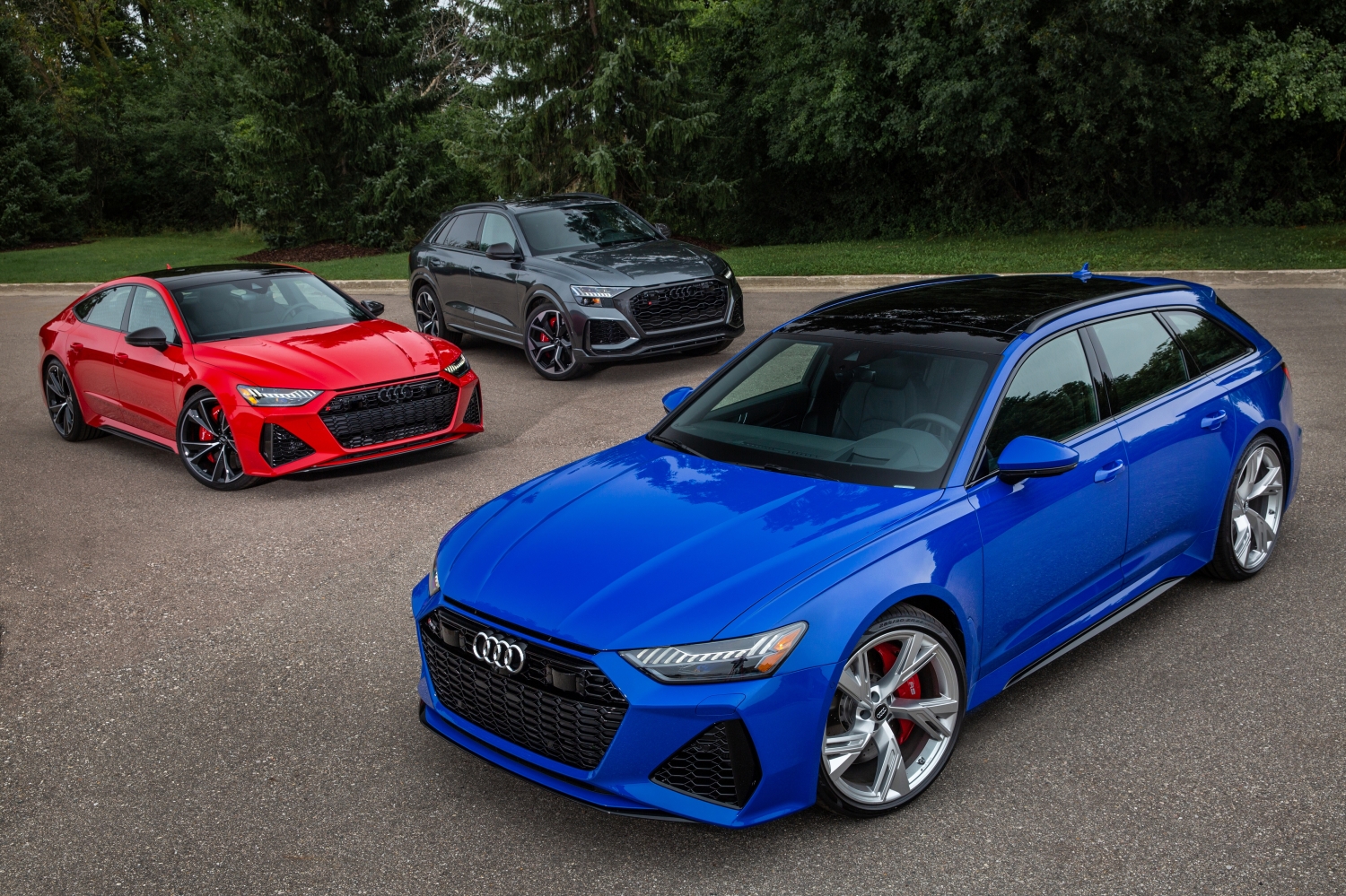
For decades, the core identity of Audi Sport was the Avant (station wagon). However, global sales demand pushed Audi RS to introduce high-performance crossovers and SUVs, including the RS Q3, RS Q5 (in select regions), and the flagship RS Q8.
Purists contend that top-heavy SUVs undermine the low-center-of-gravity engineering ethos that made the RS2 and RS4 famous. Conversely, commercial realities demonstrate that high-margin RS SUVs generate the revenue necessary to fund specialized low-volume sports cars and station wagons.
4. Electrification and Synthesized Exhaust Notes
The arrival of fully electric performance models, such as the RS e-tron GT, marked the beginning of a zero-emission era for Audi Sport. While electric drive delivers instant torque vectoring and linear acceleration, it eliminates traditional internal combustion feedback—specifically mechanical gear changes and natural intake/exhaust sound profiles. The debate centers on whether software-generated exterior and interior sound profiles can adequately replace mechanical acoustics.
4. Comparing Defining Audi RS Eras
The following table traces the progression of flagship Audi RS models across major mechanical shifts:
| Model & Generation | Production Years | Engine Configuration | Peak Power | Transmission | Curb Weight (Approx.) | Key Technical Feature |
|---|---|---|---|---|---|---|
| Audi RS2 Avant | 1994–1995 | 2.2L Turbo Inline-5 | 311 hp (232 kW) | 6-speed Manual | 1,595 kg | Porsche assembly, Brembo brakes, manual rear locker |
| Audi RS4 (B5) | 1999–2001 | 2.7L Twin-Turbo V6 | 375 hp (280 kW) | 6-speed Manual | 1,620 kg | Cosworth-developed aluminum cylinder heads |
| Audi RS4 (B7) | 2005–2008 | 4.2L Atmospheric V8 | 414 hp (309 kW) | 6-speed Manual | 1,650 kg | 8,250 RPM redline, Dynamic Ride Control (DRC) |
| Audi RS6 (C6) | 2008–2010 | 5.0L Twin-Turbo V10 | 572 hp (427 kW) | 6-speed Tiptronic | 2,025 kg | Dry-sump lubrication, biturbo V10 architecture |
| Audi RS3 (8V/8Y) | 2015–Present | 2.5L Turbo Inline-5 | 394–401 hp (294–299 kW) | 7-speed S tronic | 1,570 kg | Iconic 1-2-4-5-3 firing order, torque splitter rear axle |
| Audi RS6 Avant (C8) | 2019–Present | 4.0L Twin-Turbo V8 MHEV | 591–621 hp (441–463 kW) | 8-speed Tiptronic | 2,075 kg | Mild-hybrid 48V system, active roll stabilization |
| Audi RS e-tron GT | 2021–Present | Dual Permanent Magnet Synchronous Motors | 590–912 hp (Launch/Perf) | 2-speed Rear / 1-speed Front | 2,347 kg | 800V electric architecture, rear-axle torque vectoring |
5. Modern Architecture and Strategic Naming Shift
Entering the mid-2020s, Audi implemented a structural revision to its model numbering convention to clarify its propulsion technologies:
- Even Model Numbers (e.g., A4/A6 transition to A6 e-tron, RS6 e-tron): Reserved exclusively for battery-electric vehicles (BEVs) built on platforms like the Premium Platform Electric (PPE).
- Odd Model Numbers (e.g., A5, RS5, A7, RS7): Designated for internal combustion engine (ICE) vehicles and plug-in hybrid electric vehicles (PHEVs).
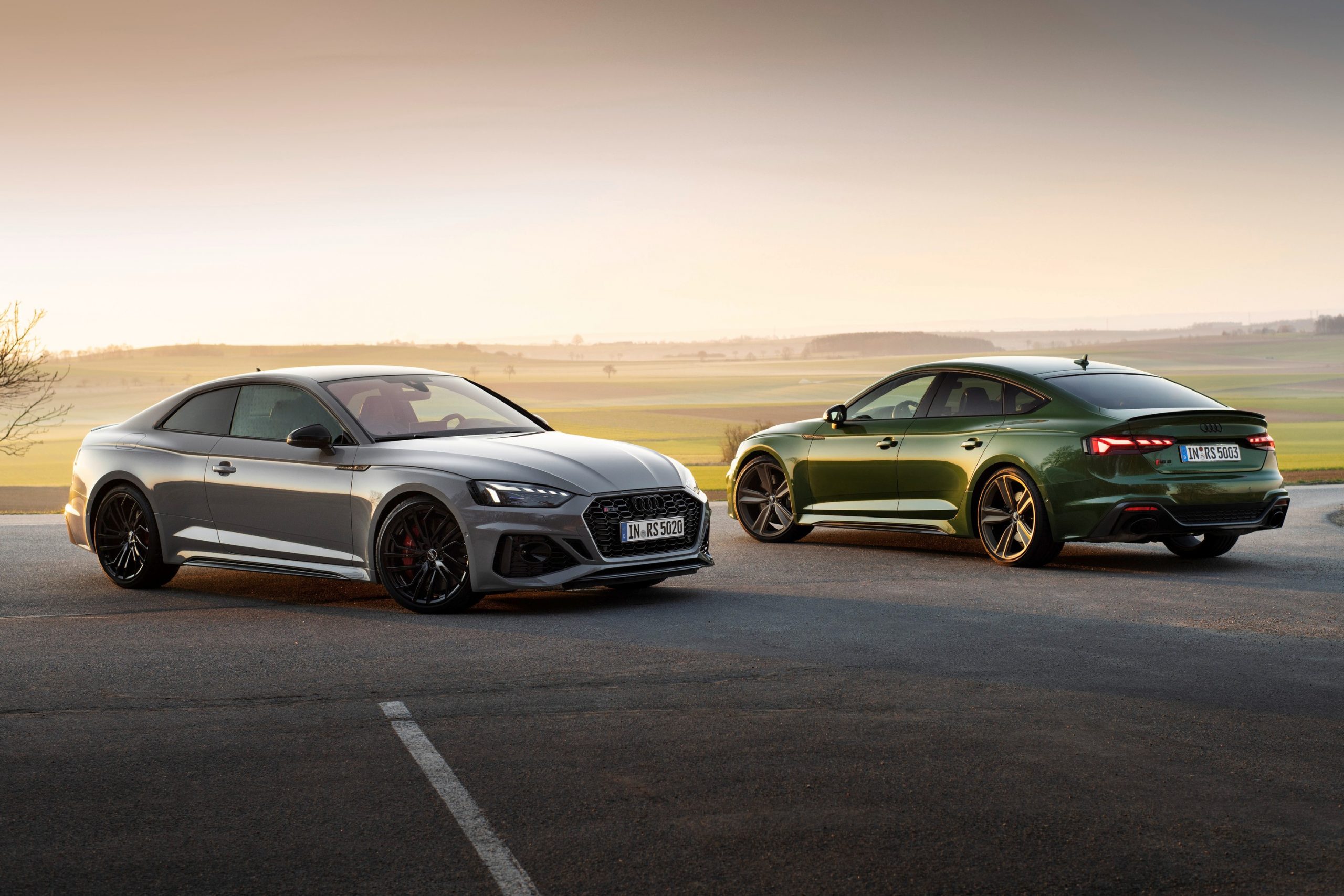
Under this structure, traditional mid-size combustion RS performance models (formerly RS4) transition to the RS5 moniker, integrating high-output turbocharged V6 engines with electric motors and high-voltage traction batteries.
Technical Evolution of quattro
The underlying mechanical hardware of Audi's signature traction system has also evolved:
- Torsen Center Differentials: Early generations used purely mechanical, torque-sensing center differentials that automatically diverted power to the axle with the most grip without electronic intervention.
- Crown-Gear and Self-Locking Center Differentials: Introduced in the 2010s, these systems offered faster torque distribution and lighter internal rotating mass.
- RS Torque Splitter: Introduced on modern platform architectures like the 8Y RS3, this system replaces a central rear differential with two independent electro-hydraulic multi-plate clutches on each rear driveshaft. This allows fully variable torque vectoring across the rear axle, enabling oversteer "drift" modes while eliminating traditional front-axle push.
- e-quattro: Electric RS models bypass mechanical driveshafts entirely. Front and rear electric motors are coordinated via a centralized domain control unit, adjusting torque distribution across individual wheels within milliseconds—far faster than any mechanical clutch packet can engage.
6. Frequently Asked Questions
Why is the Audi RS2 Avant considered such a historic vehicle?
The RS2 Avant was the founding model of Audi’s Rennsport division. Co-developed and built by Porsche in Zuffenhausen, it proved that a five-door station wagon could match or exceed the performance of contemporary sports cars, establishing Audi's enduring preference for high-performance wagons.
What is the difference between an Audi S model and an Audi RS model?
Audi S (Sport) models are engineered as elevated, sporty variants of standard production cars, balancing enhanced horsepower and firmer suspension with daily comfort. Audi RS (Rennsport) models represent the top tier of performance engineered by Audi Sport GmbH. RS cars feature bespoke body panels, wider track widths, dedicated engine tunings, upgraded cooling packages, and aggressive chassis dynamics suited for track driving.
Why did Audi discontinue the high-revving 4.2L V8 and 5.0L V10 RS engines?
The transition away from large naturally aspirated V8s and twin-turbo V10s was driven primarily by global fleet emissions targets, fuel efficiency standards, and performance demands. Modern twin-turbocharged V6 and V8 engines deliver significantly higher torque at lower engine speeds while maintaining better thermal efficiency.
How does the RS Torque Splitter work in modern compact RS models?
Instead of using a traditional single rear differential with a central clutch, the RS Torque Splitter uses two electronically controlled multi-plate clutch packs—one for each rear drive wheel. By varying clutch pressure on either side, the system can send up to 100% of available rear torque to the outer rear wheel during hard cornering, virtually eliminating understeer and allowing controlled oversteer.
Are electric Audi RS models faster than older internal combustion versions?
In terms of straight-line acceleration and instant throttle response, electric RS models like the RS e-tron GT outperform older internal combustion RS models due to immediate torque availability from dual electric motors. However, internal combustion models remain lighter and offer a different driving experience focused on gear changes, engine acoustics, and sustained high-speed endurance track runs.
Next Steps for Enthusiasts and Buyers
Whether evaluating legacy analog classics or considering modern hybrid and electric RS vehicles, prospective owners and collectors should evaluate several key steps:
- Identify the Vehicle’s Primary Role: Decide whether your priority is historical engagement (manual B7 RS4, iconic RS2), long-distance high-speed capability (C7/C8 RS6 Avant), or instant electric performance (RS e-tron GT).
- Inspect Complex Chassis Systems: When buying pre-owned V8 or V10 RS models, verify the condition of specialized components such as the Dynamic Ride Control (DRC) central valves, air suspension bladders, and carbon-ceramic brake rotors, as replacement costs are substantial.
- Test Drive Dynamic Variants: Drive both traditional mechanical quattro models and newer vehicles equipped with active rear torque vectoring to determine whether software-driven agility matches your personal preferences.
Image Gallery