How to Estimate Federal Student Aid: Step-by-Step Calculation Guide
To estimate your federal student aid, use the official Federal Student Aid Estimator on the U.S. Department of Education website. By entering basic demographic details, household size, and prior-prior year tax data, the tool calculates...
To estimate your federal student aid, use the official Federal Student Aid Estimator on the U.S. Department of Education website. By entering basic demographic details, household size, and prior-prior year tax data, the tool calculates your Student Aid Index (SAI). Your estimated financial need is then calculated by subtracting your SAI from a college's Cost of Attendance (COA).
Contents
Disclaimer: This guide is for educational purposes. Final financial aid awards are determined exclusively by postsecondary institutions after evaluating an officially submitted Free Application for Federal Student Aid (FAFSA).
Understanding the Federal Financial Aid Formula
Estimating college financial aid requires understanding how the U.S. Department of Education measures a family’s financial strength. The federal aid framework relies on a specific mathematical model to determine how much federal grant money, work-study funding, and student loan authorization a student may qualify to receive.
The primary equation governing federal financial need is:
$$\text{Financial Need} = \text{Cost of Attendance (COA)} - \text{Student Aid Index (SAI)} - \text{Other Financial Assistance (OFA)}$$
Cost of Attendance (COA)
The Cost of Attendance is an estimate established by each higher education institution. It includes tuition, required fees, housing, food, books, course supplies, transportation, and miscellaneous personal expenses. Because COA varies significantly between private universities, out-of-state public institutions, and local community colleges, your calculated financial need will differ at every school you consider.
Student Aid Index (SAI)
The Student Aid Index is an eligibility index number calculated by evaluating your family’s taxed and untaxed income, assets, and household size. It replaced the legacy Expected Family Contribution (EFC) methodology to provide a clearer measurement of financial need. Unlike the former EFC system, which had a minimum value of $0, the SAI scale can range from -$1,500 up to 999,999.
An SAI of zero or lower indicates the highest level of financial need. A negative SAI (down to -$1,500) helps financial aid administrators identify students who face significant economic hardship, ensuring they receive maximum consideration for federal grants like the Federal Pell Grant.
Tools for Estimating Federal Financial Aid
Before filing an official application, applicants and parents can estimate aid eligibility using online calculators. Two main tools provide early financial forecasts.
- Federal Student Aid Estimator (Calculates baseline federal aid: Pell Grants, Direct Loans, Work-Study)
- Institutional Net Price Calculator (NPC) (Combines federal estimates with school-specific grants/scholarships)
1. The Federal Student Aid Estimator
Maintained by the U.S. Department of Education, the Federal Student Aid Estimator provides an early calculation of your SAI and offers an estimate of your federal aid eligibility. It is free, accessible without creating a formal user account, and requires approximately 10 to 15 minutes to complete. The estimator provides immediate projections for Federal Pell Grants, Federal Direct Student Loans, and Federal Work-Study funding.
2. Institutional Net Price Calculators (NPCs)
Every college that participates in federal student aid programs is required by federal law to host a Net Price Calculator on its website. While the Federal Student Aid Estimator focuses strictly on federal programs, an institutional NPC combines your estimated federal aid with institutional merit scholarships and institutional need-based grants. Using a college’s specific NPC yields a more precise picture of your out-of-pocket costs at that institution.
Required Financial Information for Aid Estimation
Accurate estimates depend on entering precise financial data. Gathering the appropriate tax records and account balances beforehand streamlines the process and yields realistic results.
Identifying the Correct Tax Year
Federal financial aid rules use a "prior-prior year" tax model. This means aid calculations for an upcoming academic year rely on tax returns filed two years prior:
- 2026–2027 Academic Year: Uses 2024 tax return data.
- 2027–2028 Academic Year: Uses 2025 tax return data.
Using the correct tax year prevents severe skewing of your estimated SAI, as income fluctuations across tax years directly impact eligibility.
Documents and Figures to Gather
- Adjusted Gross Income (AGI): Found on IRS Form 1040.
- Income Earned from Work: W-2 statements or Schedule SE documents for both parents and students.
- Untaxed Income Balances: Tax-exempt interest, child support received, and IRA/401(k) deductions.
- Current Asset Balances: Total balances in cash, savings, and checking accounts.
- Investment Account Values: Stocks, bonds, mutual funds, real estate equity (excluding primary residence), and 529 college savings plans.
Step-by-Step Guide to Using the Aid Estimator
Step 1: Establish Student Dependency Status
The calculation process differs depending on whether the student is classified as a dependent or an independent applicant. Dependent students must include parent financial information, whereas independent students report only their own financial data (and that of a spouse, if married).
A student is generally classified as independent if they meet at least one of the following criteria:
- Age 24 or older by December 31 of the award year.
- Married at the time of calculation.
- Working toward a master’s or doctoral degree.
- A military veteran or currently serving on active duty.
- An orphan, ward of the court, or in foster care at any age after 13.
- An emancipated minor or a legal ward as determined by a court.
- An unaccompanied youth experiencing homelessness.
If none of these conditions apply, the student is considered dependent, and parental financial details are mandatory.
Step 2: Input Demographic and Household Details
Access the Federal Student Aid Estimator and enter basic demographic information, including state of residence, student age, and marital status. Enter total household size, counting the student, parents, and other dependents who rely on the parents for more than half of their financial support.
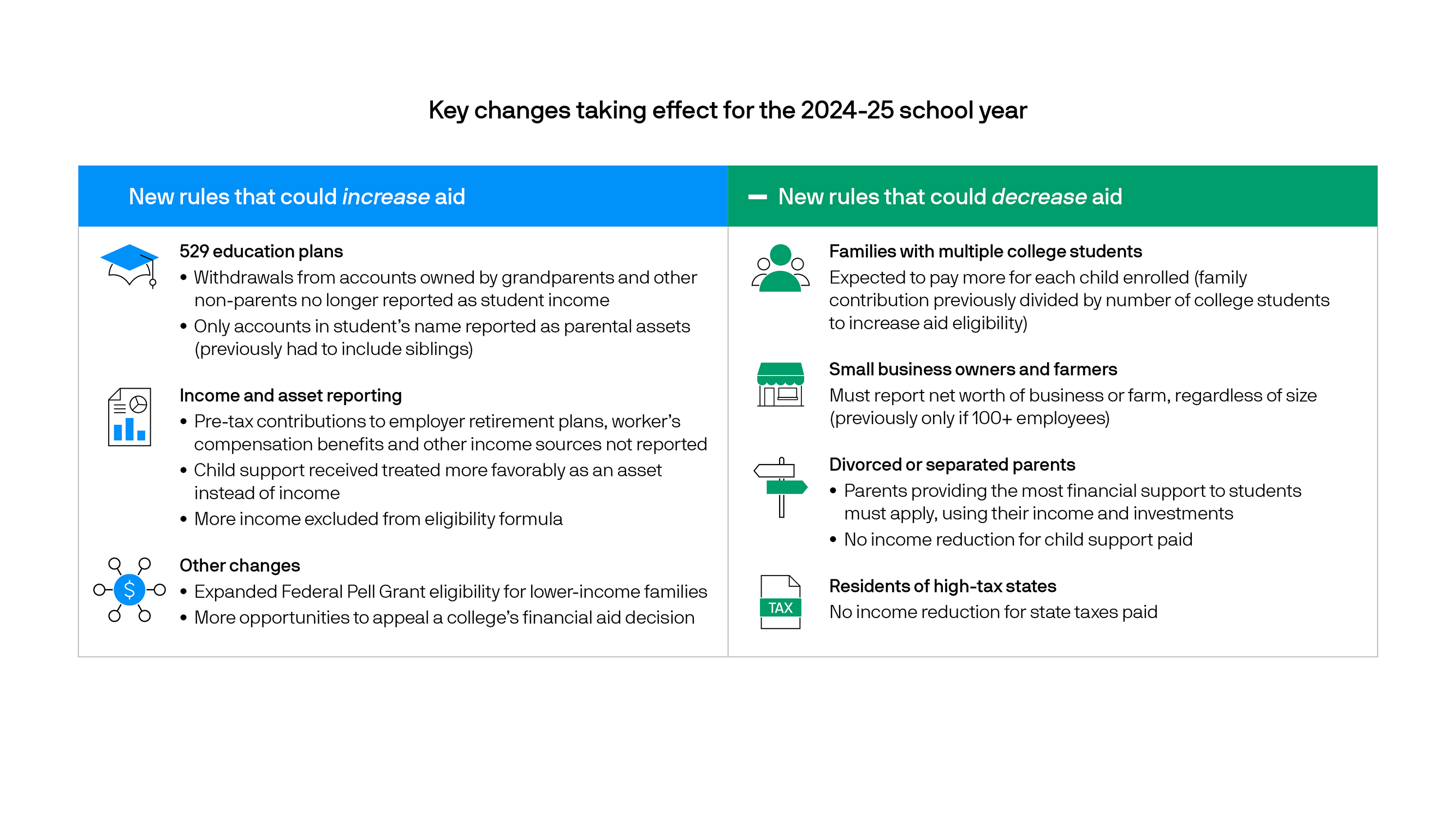
Note on Siblings in College: The federal formula no longer divides the calculated parent contribution by the number of family members attending college simultaneously. While institutions may consider multiple college enrollments when distributing their own funds, the federal SAI formula treats household income standardly regardless of how many family members are enrolled in higher education.
Step 3: Enter Income and Asset Figures
Input the student’s (and parents', if dependent) Adjusted Gross Income and earned income. Report current balances for cash and investments accurately.
What to Exclude from Assets:
- Primary Residence: Equity in the home where the family resides is not counted in the federal formula.
- Qualified Retirement Accounts: Funds inside 401(k), 403(b), traditional IRA, Roth IRA, and qualified pension plans are protected.
- Small Business and Family Farm Equity: Under historic rules, small family businesses were excluded. However, under updated guidelines, the net value of family businesses and farms is included as an asset if the business is owned by the family.
Step 4: Analyze Your Output Results
Upon submitting the data, the estimator provides two primary figures:
- Estimated Student Aid Index (SAI): The index number colleges will use to evaluate your need.
- Estimated Federal Aid Breakdown: An itemized forecast showing maximum potential Pell Grant awards, Subsidized Direct Loan eligibility, Unsubsidized Direct Loan limits, and potential Work-Study assistance.
Federal Aid Categories and Maximum Limits
Federal financial aid consists of four main categories: grants, work-study, subsidized loans, and unsubsidized loans. The estimator projects eligibility across these options based on statutory limits set by Congress and managed by the U.S. Department of Education.
| Aid Category | Need-Based? | Award Type | Estimated Limits / Funding Caps | Key Repayment Terms |
|---|---|---|---|---|
| Federal Pell Grant | Yes | Gift Aid (No Repayment) | Up to statutory annual maximum (re-indexed yearly based on federal poverty limits). | Does not require repayment unless enrollment status changes. |
| Direct Subsidized Loan | Yes | Federal Student Loan | $3,500–$5,500 annually depending on grade level (undergraduate). | Federal government pays interest while student is in school at least half-time. |
| Direct Unsubsidized Loan | No | Federal Student Loan | $2,000–$7,000 annually depending on dependency and grade level. | Interest accrues immediately upon loan disbursement. |
| Federal Work-Study | Yes | Earned Employment | Varies based on institutional funding allocations and campus job placement. | Paid directly to the student via wages for hours worked. |
| Direct Parent PLUS Loan | No (Credit Check Required) | Federal Credit Loan | Maximum cost of attendance minus all other financial aid received. | Parent is legal borrower; repayment begins post-disbursement unless deferred. |
How Income and Assets Affect Your Estimate
The federal formula treats income and assets differently when generating the Student Aid Index:
INCOME vs. ASSETS IN THE SAI FORMULA
- Parent Income (Up to 47% assessed): Primary driver of the SAI output
- Student Income (50% above allowance): Strong impact above income protection
- Assets (Assessed 3.3% to 20%): Lower impact; excludes retirement & primary home equity
Income Weighting vs. Asset Weighting
Income is the primary driver of the SAI calculation. Parent income is assessed on a sliding scale up to 47% of available income after allowances for taxes and basic living expenses. Student income above the income protection allowance is assessed at a flat 50%.
Assets are assessed far more leniently:
- Parent Assets: Assessed at a maximum rate of approximately 5.64% of net asset value above the Education Savings and Asset Protection Allowance.
- Student Assets: Assessed at a flat rate of 20% of net value, without a general asset protection allowance.
Because student-owned assets are assessed at a significantly higher percentage than parent-owned assets, holding savings or investment accounts in a parent's name generally results in a lower SAI (and higher financial need) than holding those funds directly in the student's name.
Treatment of 529 Savings Plans
A 529 College Savings Plan owned by a parent for a dependent student is reported as a parent asset. If the 529 plan is owned by the student, it is also treated as a parent asset on the federal estimator.
However, 529 plans owned by third parties—such as grandparents, aunts, or uncles—are not reported as assets on the FAFSA. Furthermore, distributions from grandparent-owned 529 plans are excluded from untaxed income reporting under current federal calculation guidelines, making grandparent contributions an advantageous method of funding higher education.
Common Pitfalls and Calculation Errors
When using online estimators, small misinterpretations can cause substantial inaccuracies in your financial projection.
- Reporting Retirement Balances as Investment Assets: Including IRA, 401(k), or pension account balances in your investment total will artificially inflate your SAI and reduce your estimated financial aid eligibility.
- Using Current Year Income Instead of Prior-Prior Year Data: Entering your current or projected income rather than tax data from two years prior creates inaccurate estimates. If your current income has dropped significantly due to job loss or medical expenses, complete the estimator using the required tax year first, then request a professional judgment review directly from college financial aid administrators.
- Miscalculating Business Net Worth: Omitting small business assets when required under revised federal guidelines leads to an underestimate of your SAI. Ensure you calculate net value (market value minus debt secured by the business).
- Confusing Federal Financial Aid with Institutional Aid: The Federal Student Aid Estimator projects federal resources only. It does not reflect institutional merit scholarships or private university endowned grants. Always run an institutional Net Price Calculator for each prospective college to see the complete funding picture.
Frequently Asked Questions
How early can I estimate my federal student aid?
You can estimate your federal aid at any point during high school. The Federal Student Aid Estimator operates year-round and allows families to run calculations years in advance using estimated tax figures to assist in long-term financial planning.
Does using the Federal Student Aid Estimator submit an official application?
No. The estimator is an informal planning tool. To receive actual federal financial aid, you must submit the official Free Application for Federal Student Aid (FAFSA) at StudentAid.gov during the application window for your target academic year.
Why is my calculated Student Aid Index (SAI) negative?
The SAI scale allows values as low as -$1,500 to help institutions identify students with extraordinary financial need. A negative SAI indicates that your family's financial resources fall below baseline survival thresholds, qualifying the student for maximum Federal Pell Grant awards and prioritized allocation of campus-based supplemental aid.
What should I do if my current income is much lower than my prior-prior year taxes?
Complete your estimate using the required historical tax year first. If your financial situation has since deteriorated due to job loss, disability, death of a provider, or divorce, contact the financial aid office at your target institutions. Financial aid administrators have statutory authority to execute a Special Circumstance Adjustment (Professional Judgment) to adjust your income inputs on the official FAFSA.
Are grandparent-owned 529 accounts counted in the federal aid calculation?
No. Grandparent-owned 529 plans are not reported as assets on the federal aid application. Additionally, withdrawals from grandparent-owned accounts do not need to be reported as untaxed student income under simplified FAFSA rules, preserving student aid eligibility.
Next Steps for Securing Your Financial Aid
Estimating your financial aid is an essential early step in funding your college education. Use your calculated Student Aid Index (SAI) to evaluate affordability, compare college cost projections, and structure your savings strategy.
- Run Institutional Net Price Calculators: Apply your calculated SAI across 3 to 5 target colleges using their institutional calculators to estimate total net cost, including institutional grants.
- Create an FSA ID: Both the student and at least one parent (if dependent) should create an official account at StudentAid.gov to prepare for official FAFSA filing.
- File the FAFSA Early: Submit the official FAFSA as soon as the application opens for your academic cycle to ensure eligibility for federal, state, and institutional aid programs with limited funding pools.
Image Gallery