How to Calculate Total Energy for Your Systems
Calculating the total energy consumption of your systems is a foundational requirement for engineering efficient architectures, designing power distribution units, managing thermal loads, and lowering operational utility costs. By meas...
Calculating the total energy consumption of your systems is a foundational requirement for engineering efficient architectures, designing power distribution units, managing thermal loads, and lowering operational utility costs. By measuring the electrical power consumed over specific operational intervals, system operators can accurately determine overall energy usage in kilowatt-hours, evaluate hardware efficiency, and optimize resource allocation across computing infrastructure, industrial automation setups, or home power configurations.
Contents
Understanding the Fundamentals of Power and Energy
Before attempting any calculations, it is essential to distinguish between electrical power and electrical energy. These two terms are frequently confused, yet they measure distinct physical properties. Power represents the rate at which electrical energy is generated, transmitted, or consumed at any given moment. It is measured in watts (W) or kilowatts (kW). Energy, by contrast, is the total amount of work performed or power consumed over a designated duration. It is typically expressed in watt-hours (Wh) or kilowatt-hours (kWh).
To put this into perspective, think of power as the speed at which a vehicle travels—measured in miles per hour—while energy is the total distance traveled over a specific trip. A system drawing 1,000 watts of power is consuming energy at a specific rate. If that system runs continuously for one hour, it consumes 1,000 watt-hours, or one kilowatt-hour, of energy.
Understanding this relationship allows administrators to bridge the gap between instantaneous hardware specifications and long-term utility billing cycles. Manufacturers often label hardware with maximum power ratings, but actual energy consumption fluctuates dynamically depending on operational load, idle states, environmental temperatures, and power-saving configurations.
Core Formulas and Mathematical Frameworks
The baseline formula for calculating energy consumption is straightforward, but applying it accurately requires accounting for real-world variables. The primary equation relates power, time, and energy:
$$\text{Energy (kWh)} = \text{Power (kW)} \times \text{Time (hours)}$$
If your power measurements are recorded in watts, convert them to kilowatts by dividing by 1,000:
$$\text{Power (kW)} = \frac{\text{Power (W)}}{1000}$$
When dealing with alternating current (AC) systems—such as server racks, industrial machinery, or HVAC units—voltage and current do not always move in perfect synchronization. This introduces the concept of Power Factor (PF), which represents the ratio of real power working to apparent power flowing in the circuit. For pure resistive loads, the power factor is 1.0, but for inductive or capacitive systems, it is lower. The single-phase AC power formula incorporates this factor:
$$\text{Power (W)} = \text{Voltage (V)} \times \text{Current (A)} \times \text{Power Factor}$$
For three-phase industrial and enterprise systems, the formula expands to account for the three alternating current waveforms:
$$\text{Power (W)} = \sqrt{3} \times \text{Voltage (V)} \times \text{Current (A)} \times \text{Power Factor}$$
| System Type | Primary Measurement Variables | Standard Calculation Formula | Typical Application |
|---|---|---|---|
| Direct Current (DC) | Voltage, Current, Time | $E = (V \times I \times t) / 1000$ | Battery banks, telecommunications, solar setups |
| Single-Phase AC | Voltage, Current, Power Factor, Time | $E = (V \times I \times PF \times t) / 1000$ | Residential appliances, small office equipment |
| Three-Phase AC | Line Voltage, Current, Power Factor, Time | $E = (\sqrt{3} \times V \times I \times PF \times t) / 1000$ | Industrial machinery, enterprise server racks, HVAC |
Step-by-Step Methodology for System Energy Calculation
Calculating the total energy for complex systems requires a methodical approach that accounts for component diversity, variable operating schedules, and environmental inefficiencies. Follow this structured workflow to ensure accurate tracking.
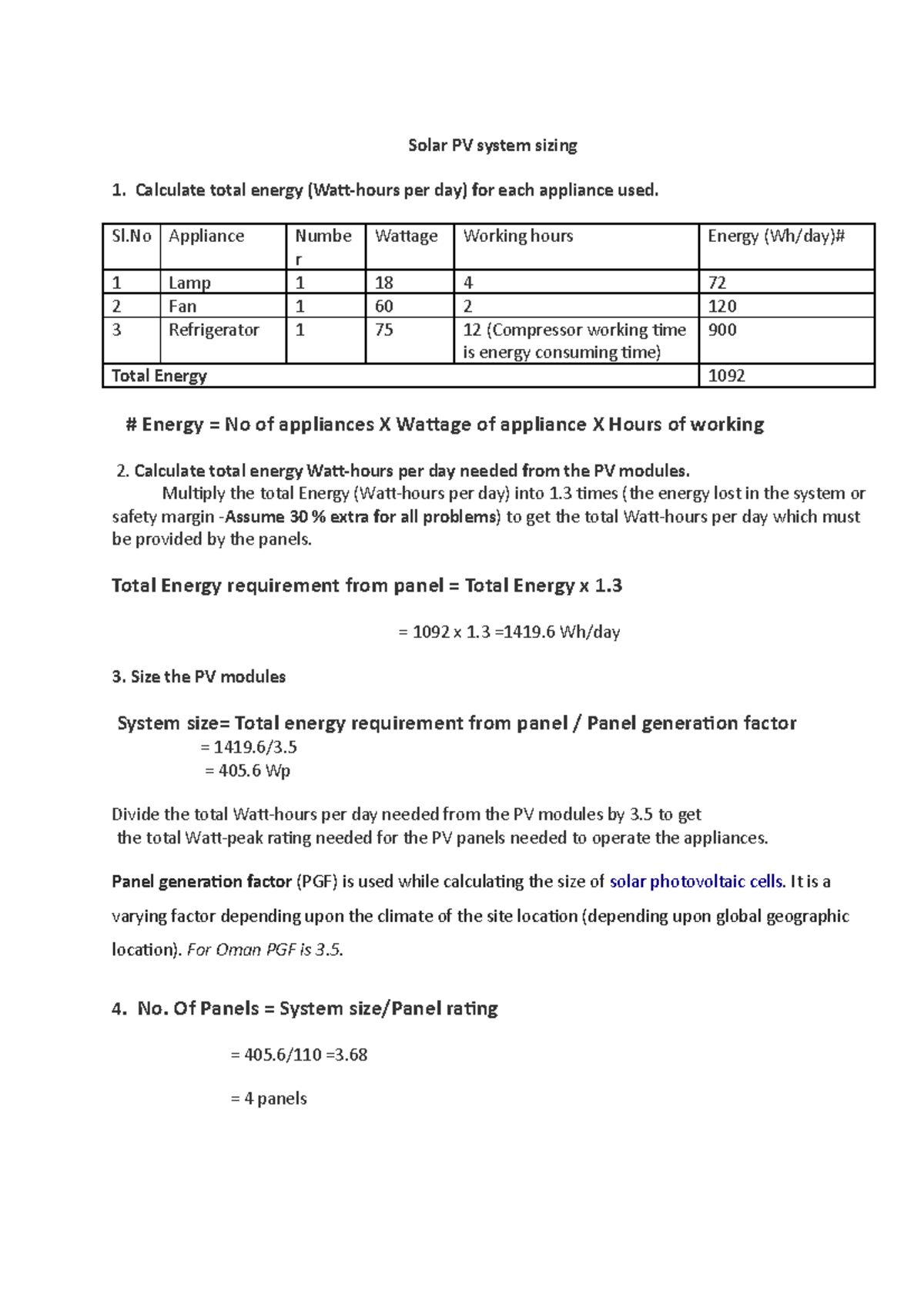
Step 1: Inventory All System Components
List every discrete device, sub-system, or component that contributes to the overall load. In a computing environment, this includes servers, storage arrays, network switches, and peripheral cooling fans. In an industrial or residential setup, it includes motors, controllers, lighting, and auxiliary support hardware.
Step 2: Determine Power Draw for Each Component
Obtain the power draw values through one of three primary methods, ranked by accuracy:
- Direct Measurement: Use a dedicated power meter, clamp meter, or intelligent Power Distribution Unit (PDU) to record actual real-time power consumption under normal operating conditions.
- Nameplate Ratings: Check the manufacturer specifications label for maximum voltage and amperage ratings. Multiply these values to find peak wattage, keeping in mind that nameplate ratings often reflect worst-case maximums rather than typical operational averages.
- Software Telemetry: Utilize built-in system monitoring tools—such as Intelligent Platform Management Interface (IPMI) for servers or energy management dashboards for smart facilities—to pull real-time power metrics.
Step 3: Account for Operational Duty Cycles
Systems rarely run at 100% capacity 24 hours a day. Determine the exact daily or weekly duty cycle for each component. For example, a batch-processing server might run at peak load for 6 hours, idle for 12 hours, and power down for 6 hours daily. Calculate the energy consumed during each distinct operational state separately:
$$\text{Total Daily Energy} = \sum (\text{Power}_{\text{state}} \times \text{Hours in State})$$
Step 4: Factor in Conversion and Infrastructure Losses
No energy system is 100% efficient. Power supply units (PSUs), transformers, and uninterruptible power supplies (UPS) dissipate energy as heat during conversion (e.g., converting AC grid power to DC internal voltages). Consult the efficiency rating of your power conversion units—such as 80 PLUS certifications for server power supplies—and apply an efficiency divisor. For example, if a system draws 800W of internal power and its power supply operates at 90% efficiency, the actual energy drawn from the source is:
$$\text{Source Power} = \frac{800\text{W}}{0.90} = 888.89\text{W}$$
Evaluating Operational Variables and Environmental Factors
Calculating energy usage accurately demands careful consideration of external variables that influence power draw over time. Ambient temperature plays a major role in system efficiency. In high-density computing or industrial environments, elevated room temperatures force cooling fans, chillers, and air conditioners to work harder, dramatically increasing auxiliary energy consumption.
Furthermore, hardware aging degrades component efficiency over time. Power supplies lose conversion efficiency after years of continuous operation, and mechanical parts experience higher friction, requiring more energy to perform the same baseline work. When calculating long-term energy budgets, applying a degradation factor of 2% to 5% per year for aging infrastructure helps prevent under-provisioning.
Software workload profiles also dictate energy signatures. Modern processors employ advanced power management states (such as ACPI C-states and P-states) that scale voltage and frequency downward during low-demand periods. Relying solely on static nameplate data will yield heavily inflated energy calculations for systems with fluctuating workloads. Dynamic measurement or workload-weighted averaging yields far more realistic consumption profiles.
Common Pitfalls and Troubleshooting Inaccuracies
Even experienced administrators encounter discrepancies between calculated energy totals and actual utility bills or meter readings. Recognizing common calculation errors helps ensure precision.
- Conflating Apparent Power with Real Power: Multiplying raw voltage by current in an AC circuit yields apparent power measured in volt-amperes (VA), not real power measured in watts (W). Failing to multiply by the power factor leads to systematic overestimation of energy consumption.
- Ignoring Idle and Standby Loads: Many systems consume phantom or parasitic power even when turned off or placed in sleep mode. Neglecting these baseline draws across hundreds of devices introduces significant cumulative error into annual energy totals.
- Overlooking Transient Spikes: Motors, compressors, and high-performance computing clusters experience high inrush current or transient power spikes during startup. Standard meters may average these out, but specialized monitoring equipment is required to capture short-duration peak loads that affect circuit breaker sizing and infrastructure limits.
- Miscalculating Time Intervals: Ensure consistency in time units. Mixing seconds, minutes, and fractional hours without proper conversion results in distorted kilowatt-hour calculations.
Practical Next Actions and Optimization Strategies
Once you have successfully calculated the total energy consumption of your systems, translate those insights into actionable improvements:
- Establish a Baseline: Document your current total energy baseline in kilowatt-hours per day and calculate the associated financial cost using your local utility rate structure.
- Identify Top Consumers: Sort your component inventory by energy consumption to isolate the top 20% of devices responsible for the majority of the load. Focus optimization efforts on these high-impact assets.
- Implement Power Management Policies: Enable energy-saving features in hardware firmware and operating systems, such as dynamic voltage scaling and automated sleep schedules during low-traffic windows.
- Upgrade Inefficient Infrastructure: Replace aging power supplies, transformers, or motors with modern, high-efficiency alternatives (such as Titanium-rated power supplies) to minimize thermal waste.
- Deploy Continuous Monitoring: Install smart meters or software telemetry agents to track energy consumption dynamically, allowing you to verify the impact of future optimizations in real time.
Image Gallery