Israel Army Ranking Explained: A Comprehensive Guide to IDF Hierarchy and Insignia
The Israel Defense Forces (IDF) ranking system is a unified structure where identical rank names and insignias are used across the Ground Forces, Air Force, and Navy. Unlike many Western militaries, the IDF maintains a simplified hiera...
The Israel Defense Forces (IDF) ranking system is a unified structure where identical rank names and insignias are used across the Ground Forces, Air Force, and Navy. Unlike many Western militaries, the IDF maintains a simplified hierarchy rooted in its historical origins, emphasizing a "flat" command structure and a meritocratic promotion path for both conscripts and career soldiers.
Contents
Understanding the Israeli military hierarchy requires a shift in perspective from traditional NATO or US military models. Because the IDF is primarily a conscription-based force that transitions into a professional career service, the ranks are divided into three distinct tiers: Enlisted (Hogrim), Non-Commissioned Officers (Nagdim), and Officers (Ktzinim). As of 2026, this system remains a cornerstone of Israeli national security, ensuring that communication and command remain fluid across different branches of service.
The Unified Rank System: Why the IDF is Different
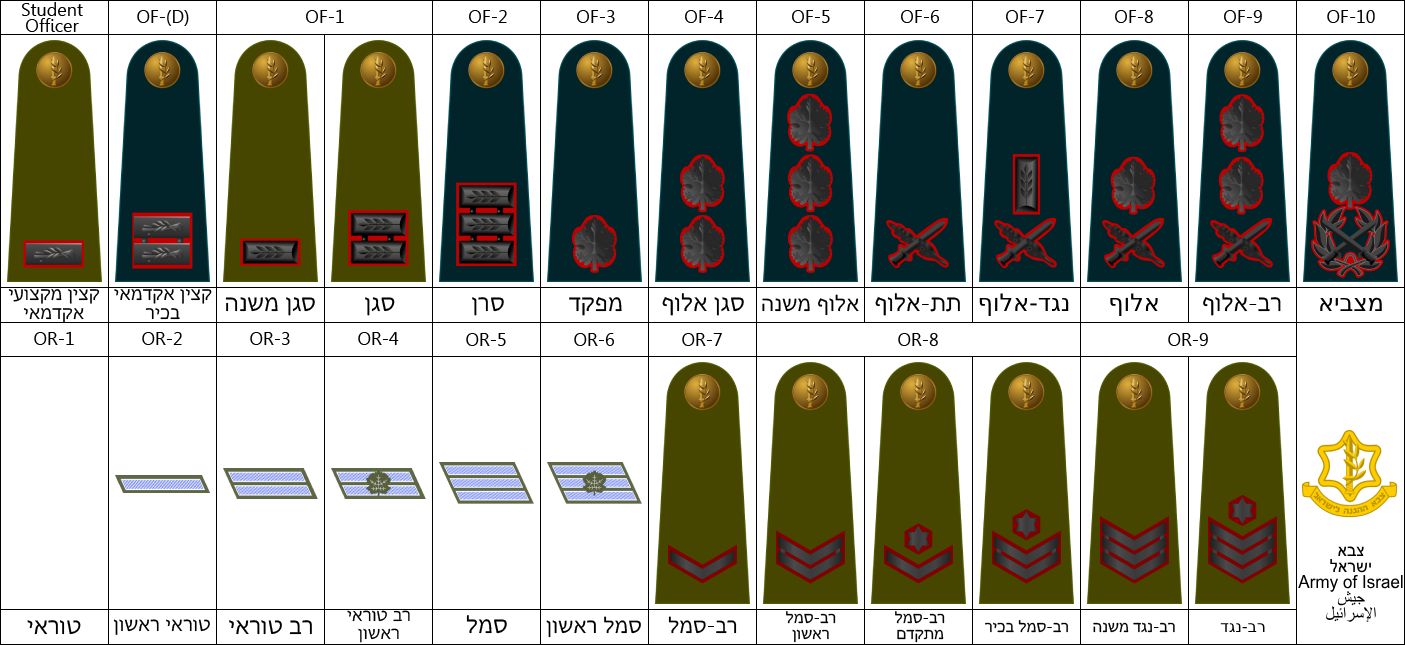
One of the most striking features of the IDF is its unified rank system. In the United States, a Captain in the Army is an O-3, while a Captain in the Navy is an O-6. In Israel, the Hebrew rank Seren is the equivalent of a Captain regardless of whether the individual wears the olive drab of the paratroopers, the beige of the Air Force, or the navy blue of the sea corps.
This unification dates back to the founding of the state in 1948. The early leadership sought to avoid the complexities of colonial-era military structures, opting instead for a Hebrew-based system that reflected both modern needs and ancient Jewish historical titles. This streamlined approach minimizes confusion during joint-branch operations, which are frequent given Israel's small geographic size and integrated defense doctrine.
Enlisted Ranks (Hogrim): The Foundation of Mandatory Service
The vast majority of Israelis begin their military journey in the enlisted ranks. For most conscripts, the progression through these ranks is tied strictly to "time in grade"—the number of months served since their enlistment date.
Turai (Private)
The entry-level rank is Turai. Interestingly, there is no physical insignia for a Private in the IDF. Soldiers hold this rank during their basic training (Tironut). It represents the period of transition from civilian to military life.
Rav Turai (Corporal)
Commonly referred to as "Rabat," the Rav Turai rank is typically awarded after 7 to 10 months of service, depending on the soldier's role (combat vs. non-combat). The insignia consists of two horizontal stripes worn on the sleeve. In combat units, this rank is often bypassed or awarded later as part of a leadership track.
Samal (Sergeant)
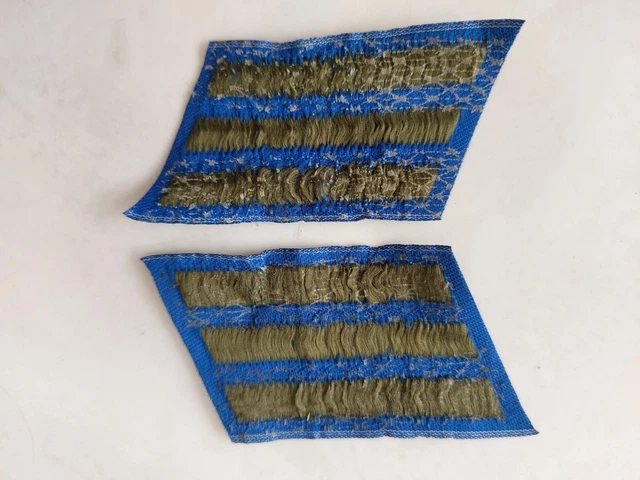
The Samal rank (three horizontal stripes) marks a significant step in a soldier's service. By 2026, the timeline for reaching Samal remains approximately 18 months for most tracks. Sergeants often serve as squad leaders or technical specialists within their platoons.
Samal Rishon (Staff Sergeant)
Commonly called "Samag," the Samal Rishon rank features three horizontal stripes with a small crossed sword and olive branch emblem in the center. This is the highest rank most conscripted soldiers reach before completing their mandatory service. It signifies an experienced soldier who often acts as a mentor to newer recruits.
| Hebrew Rank Name | English Translation | IDF Category | Typical Insignia |
|---|---|---|---|
| Turai | Private | Enlisted | None |
| Rav Turai (Rabat) | Corporal | Enlisted | 2 Stripes |
| Samal | Sergeant | Enlisted | 3 Stripes |
| Samal Rishon (Samag) | Staff Sergeant | Enlisted | 3 Stripes + Emblem |
| Rav Samal (Rasal) | Sergeant First Class | NCO (Career) | 1 Chevron + Emblem |
| Rav Samal Rishon | Master Sergeant | NCO (Career) | 2 Chevrons + Emblem |
| Rav Samal Mitkadem | First Sergeant | NCO (Career) | 3 Chevrons + Emblem |
| Rav Nagad Mishne | Master Chief Sergeant | NCO (Career) | 4 Chevrons + Emblem |
| Rav Nagad | Chief Warrant Officer | NCO (Career) | 5 Chevrons + Emblem |
Non-Commissioned Officers (Nagdim): The Professional Core
The Nagdim are the professional backbone of the IDF. These are soldiers who have completed their mandatory service and signed on for a long-term career (Keva). While the US military places NCOs and Warrant Officers in separate categories, the IDF groups them into a single professional track.
Career Progression for Nagdim
Professional NCOs usually work in technical, logistical, or administrative roles. Their ranks are indicated by chevrons (V-shaped stripes) on the shoulders.
- Rav Samal (Rasal): The first step in the career track.
- Rav Samal Rishon (Rarsar): A rank typically held by senior logistics or administrative supervisors.
- Rav Nagad (Ranag): This is the highest NCO rank. A Ranag is a repository of institutional knowledge, often serving as a base commander's right-hand person for discipline and logistics.
The role of the Nagad is vital for the continuity of the IDF. Because the officer corps and enlisted ranks have high turnover due to the nature of conscription and "up or out" promotion policies, the NCOs provide the long-term technical expertise required to maintain advanced weaponry and complex organizational systems.
The Officer Corps (Ktzinim): Command and Leadership
The IDF officer corps is divided into three tiers: Junior Officers, Field Officers, and General Officers. Unlike many nations where officers must have a university degree before commissioning, the IDF often selects high-performing conscripts to attend Officer Candidate School (OCS) during their initial service.
Junior Officers (Ktzinim Zutrim)
- Sagam (2nd Lieutenant): The entry-level officer rank, usually held by platoon commanders. The insignia is a single bronze-colored bar ("bread" in slang) on the shoulder.
- Segen (1st Lieutenant): Awarded after one year as a Sagam. The insignia is two bars.
- Seren (Captain): This rank consists of three bars. A Seren typically commands a company or serves in a significant staff role.
Field Officers (Ktzinim Behirim)
Once an officer reaches the rank of Major, the insignia shifts from bars to the "Falafel"—a stylized oak leaf that resembles the popular Middle Eastern food.
- Rav Seren (Major): One oak leaf. These officers lead larger units or serve as deputy battalion commanders.
- Sgan Aluf (Lieutenant Colonel): Two oak leaves. This is the rank of a Battalion Commander or a senior staff officer at the brigade level.
- Aluf Mishne (Colonel): Three oak leaves. These officers command Brigades or serve as heads of specific departments within the General Staff.
General Officers (Alufim)
The highest tier of the IDF uses the "Sword and Olive Branch" insignia.
- Tat Aluf (Brigadier General): A single "Sword and Olive Branch" emblem. These officers command Divisions.
- Aluf (Major General): This rank is held by the heads of the regional commands (North, South, Central), the heads of the Air Force and Navy, and the directors of major General Staff branches.
- Rav Aluf (Lieutenant General): This is the highest rank in the IDF, held by only one person at a time: the Chief of the General Staff (Ramatkal).
Placement and Appearance of Insignias
In the IDF, the placement of ranks is functional and standardized across the 2026 uniform regulations.
- Enlisted Ranks: These are worn as cloth patches on the sleeves of the "Class A" (Aleph) uniform, located between the shoulder and the elbow. On work uniforms (Bet), enlisted soldiers typically do not wear rank insignias.
- NCO Ranks: These are worn on the shoulder straps of the uniform. They are usually metallic or high-relief plastic on a dark background.
- Officer Ranks: These are worn exclusively on the shoulder straps. The color of the insignia often denotes the branch: bronze for ground forces, silver for the Air Force, and gold for the Navy.
Requirements for Promotion
Promotion in the IDF is not merely a matter of time; it is a combination of seniority, professional courses, and commander recommendations.
Mandatory Service Promotions
For conscripts, the "Time in Grade" is the primary factor. However, a soldier's "Soldier Quality Rating" can impact how quickly they move from Turai to Samal. Combat soldiers often receive their ranks faster than those in "Rear" (administrative) positions to acknowledge the higher level of responsibility and risk.
Officer Commissions
To become an officer, a soldier must pass a rigorous screening process known as Mivchim. They then attend the IDF Officer School (Bahad 1). Promotion through the junior officer ranks (Sagam to Seren) is largely based on time and successful completion of command roles. However, moving from Seren (Captain) to Rav Seren (Major) requires the officer to commit to several more years of service and often involves pursuing a university degree sponsored by the military.
Senior Command Selection
Promotions to the rank of Sgan Aluf (Lt. Col) and above are decided by "Promotion Boards" chaired by high-ranking generals. These selections are highly competitive and take into account the officer's performance in combat, their strategic thinking capabilities, and their leadership record.
Academic and Professional Officers
The IDF also utilizes a system for "Academic Officers." These are individuals who join the military after completing professional degrees (like doctors, lawyers, or engineers). They wear special insignias (often a bar with a scroll or a different background color) until they complete the standard officer's course. By 2026, the IDF has expanded these tracks to include high-level cyber security specialists who may hold "Professional Officer" ranks equivalent to Captain or Major without following the traditional combat command path.
Common Questions About IDF Ranks
Why does the IDF have fewer ranks than the US military? The IDF maintains a leaner structure to facilitate faster decision-making. By having fewer tiers of middle management, the "distance" between a private and a battalion commander is shorter, which is a core part of the IDF's tactical philosophy of flexibility.
Can a woman reach the rank of Rav Aluf? As of 2026, the rank of Rav Aluf (Chief of Staff) has not yet been held by a woman, though women have reached the rank of Aluf (Major General) and hold numerous senior command positions across the General Staff and combat units.
Do Air Force pilots have different ranks? No. An IDF pilot holds the same rank names (e.g., Segen, Seren) as an infantry officer. The only difference is the "Wings" insignia they wear on their chest and the specific color of their uniform and shoulder bars.
What is the "Falafel" rank? "Falafel" is the ubiquitous Israeli slang for the oak leaf insignia used for Majors, Lieutenant Colonels, and Colonels. If someone says, "He has two falafels," they are referring to a Sgan Aluf (Lieutenant Colonel).
Strategic Importance of the Rank Structure
The IDF rank system is designed for a nation that is always on a high state of alert. The simplicity of the unified ranks ensures that when a reservist is called up—which can happen within hours—they immediately understand where they fit into the hierarchy, regardless of which unit they are attached to. This clarity is essential for the "Nation in Arms" model that Israel employs.
For those interacting with the Israeli military or studying its operations in 2026, recognizing these ranks provides immediate insight into a soldier's level of experience and authority. Whether it is the sleeve stripes of a conscript or the shoulder bars of a company commander, each symbol represents a specific set of responsibilities within the defense of the state.
Image Gallery