The Financial Valuation and Net Worth of ETECSA in 2019: An In-Depth Analysis
In 2019, Empresa de Telecomunicaciones de Cuba S.A. (ETECSA) was not publicly traded, meaning no official stock market capitalization existed. However, based on state enterprise disclosures, international telecommunications benchmarks,...
In 2019, Empresa de Telecomunicaciones de Cuba S.A. (ETECSA) was not publicly traded, meaning no official stock market capitalization existed. However, based on state enterprise disclosures, international telecommunications benchmarks, and historical equity transactions—most notably Telecom Italia’s 2011 buyout that valued the company at over $2.6 billion—financial analysts estimated ETECSA’s total enterprise net worth between $2.5 billion and $3.5 billion USD.
Contents
Corporate Structure and Ownership Model of ETECSA
ETECSA holds a complete monopoly over voice, data, fixed-line, and mobile telecommunications services across the Republic of Cuba. Established in 1994 as a state-controlled joint venture, the entity operates under the jurisdiction of the Ministry of Communications (Ministerio de Comunicaciones). Unlike private telecommunications providers operating in competitive multi-carrier markets, ETECSA functions simultaneously as an infrastructure owner, commercial operator, and regulatory instrument of state economic policy.
During the late 1990s and 2000s, foreign capital played a significant role in ETECSA's capitalization. Italian telecommunications firm Telecom Italia acquired a minority stake of 27% in the firm, bringing foreign direct investment and European hardware infrastructure to Cuba's underdeveloped network. However, by the end of the 2000s, the Cuban government sought to consolidate control over strategic state assets.
In January 2011, the Cuban state financial entity Rafin S.A. purchased Telecom Italia’s 27% stake for $706 million USD. This transaction provided the most transparent market-based valuation baseline in ETECSA's history. Dividing the purchase price by the equity percentage yielded an implied enterprise value of approximately $2.61 billion USD in 2011. Between 2011 and 2019, the organization expanded its physical infrastructure, subscriber base, and revenue streams, particularly through the commercialization of mobile internet services, supporting an estimated enterprise valuation between $2.5 billion and $3.5 billion by 2019.
Key Revenue Drivers and Financial Performance in 2019
The year 2019 marked a major operational shift for ETECSA. Following the initial launch of 3G mobile data services in December 2018, the company aggressively expanded 3G coverage and began rolling out 4G/LTE networks in major urban centers, including Havana, Matanzas, and regional capital cities. This technological transition opened massive new revenue streams.
- ETECSA 2019 Revenue Engine
- Domestic Services (CUC/CUP)
- Fixed-Line Voice
- Domestic Mobile Voice/SMS
- Nauta Wi-Fi & Cybercafes
- Domestic Mobile Data (3G/4G)
- Hard-Currency Inflows (USD/EUR)
- International Top-Up Engine
- Inbound Roaming Fees
- Enterprise Data Contracts
- Foreign Direct Remittances
- Domestic Services (CUC/CUP)
ETECSA’s financial engine in 2019 relied on two distinct income channels:
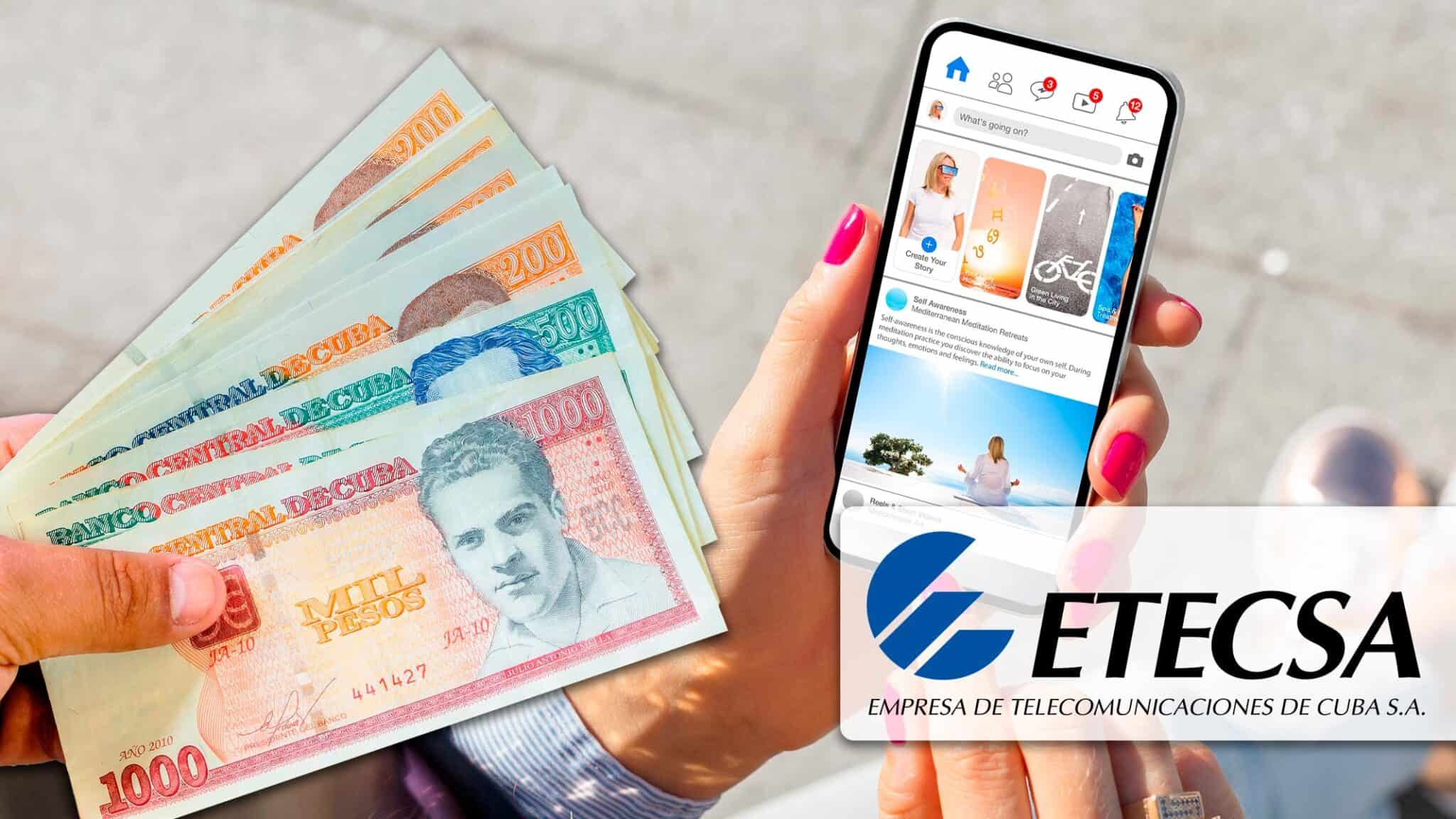
- Hard-Currency Remittances and Overseas Top-ups: A key contributor to ETECSA's foreign currency cash flow was the international recharge market. Members of the Cuban diaspora purchased mobile credit, data packages, and voice bundles for relatives living on the island through third-party platforms such as Ding, RechargeCubacel, and Fonoma. These transactions were processed internationally in United States Dollars (USD) or Euros (EUR), providing the Cuban state with direct foreign currency liquidity.
- Domestic Utility Collections: Local service fees—including fixed-line subscriptions, public payphones, domestic SMS, and localized prepaid data cards—were billed in Cuban Convertible Pesos (CUC) and regular Cuban Pesos (CUP).
By late 2019, ETECSA had onboarded over 5.5 million mobile subscribers, with more than 2.5 million users actively purchasing mobile internet packages. High tariff structures relative to local purchasing power allowed ETECSA to generate estimated gross revenues approaching $800 million to $1 billion USD equivalent in 2019, making it one of the most profitable state enterprises in Cuba.
Impact of Cuba's 2019 Dual-Currency System on Valuation
To accurately assess ETECSA’s net worth in 2019, one must evaluate the complex macroeconomic environment created by Cuba’s dual-currency system, which existed prior to the Tarea Ordenamiento currency unification of 2021.
In 2019, two official currencies circulated simultaneously:
CUC (Cuban Convertible Peso): Artificially pegged 1:1 to the US Dollar for state accounting purposes, but used by consumers at commercial retail outlets and ETECSA service centers.
CUP (Cuban Peso): Used primarily for state wages and domestic services, exchanged at an official consumer rate of 24 CUP per 1 CUC.
2019 Dual-Currency Framework
- Official Accounting Rate: 1 CUC = 1 USD
- Consumer Exchange Rate: 24 CUP = 1 CUC
- Distorted Corporate Financials
- Understated Capital Expenditures
This monetary structure created accounting distortions when evaluating corporate balance sheets:
- Inflated Book Values: State balance sheets listed asset values and internal contracts using the official 1 CUC = 1 USD parity. This overstated local-currency assets relative to their purchasing power on international equipment markets.
- Capital Expenditure Costs: Telecom infrastructure—including fiber-optic cables, cellular towers, base transceiver stations (BTS), and core network switches—must be imported from international vendors (primarily Huawei, ZTE, and Ericsson). Purchasing this hardware required actual foreign exchange (USD/EUR).
- Foreign Debt Servicing: Because ETECSA’s operational assets were priced in CUC on official books while network expansion required hard-currency debt, calculating true net equity required discounting local currency assets against hard-currency debt obligations.
Detailed Financial and Operational Breakdown (2019)
The following matrix synthesizes the structural, financial, and operational indicators that defined ETECSA’s economic standing during the 2019 fiscal period.
| Metric / Financial Indicator | 2019 Estimated / Historical Value | Analytical & Strategic Context |
|---|---|---|
| Estimated Enterprise Valuation | $2.5 Billion – $3.5 Billion USD | Extrapolated from the 2011 Telecom Italia transaction ($706M for 27%), adjusted for 3G/4G expansion and capital additions. |
| Monopoly Control Share | 100% Market Share | Absolute legal monopoly across fixed-line, mobile, data, subsea cabling, and commercial telecommunications services. |
| Active Mobile Subscribers | ~5.7 Million Lines | Rapid growth driven by 3G data adoption (launched late 2018) and initial 4G/LTE deployment in urban hubs. |
| Primary Foreign Currency Source | International Top-Ups & Roaming | Hard-currency revenue generated via diaspora recharges (USD/EUR) through international top-up channels. |
| Core Network Infrastructure | ALBA-1 Subsea Cable & Satellite | Dependent on the ALBA-1 fiber cable (connecting Cuba to Venezuela) alongside legacy satellite links. |
| Monetary Operating Framework | Dual Currency (CUC / CUP) | Operating under pre-unification accounting, where 1 CUC was officially recorded as 1 USD on state balance sheets. |
| Major Capital Equipment Suppliers | Huawei, ZTE, Ericsson | High capital expenditure requirements for imported network switching gear, antennas, and base stations. |
Assets, Infrastructure, and Capital Investments in 2019
ETECSA's net worth was anchored by its physical network infrastructure across the island. By 2019, the organization managed several critical assets:
Subsea Fiber-Optic Architecture
Cuba’s primary international data connectivity relied on the ALBA-1 subsea fiber-optic cable, which landed in Siboney, Cuba, from Venezuela in 2011 and became operational for internet traffic around 2013. Prior to ALBA-1, ETECSA depended on high-cost, high-latency satellite links. The cable significantly lowered per-gigabyte bandwidth delivery costs, enhancing profit margins on domestic data sales.
Cellular Tower Infrastructure and Mobile Base Stations
Throughout 2019, ETECSA invested heavily in expanding its base transceiver stations (BTS). The company operated thousands of 2G, 3G, and emerging 4G cellular towers supplied primarily by Chinese telecommunication conglomerates Huawei and ZTE. These physical assets represented a substantial capital investment, though they carried ongoing supplier financing liabilities.
Public Wi-Fi Hotspots and Nauta Infrastructure
Before home internet (Nauta Hogar) became widely accessible, ETECSA built hundreds of public Wi-Fi access points in municipal parks, plazas, and commercial centers. These access points generated high-margin prepaid hourly access fees, requiring minimal physical customer-premise hardware compared to traditional residential broadband.
Methodological Challenges in Valuing State Monopolies
Determining the net worth of a closed, state-owned enterprise differs significantly from evaluating a publicly listed telecommunications firm such as AT&T, Telefónica, or Vodafone. Several valuation adjustments are necessary:
Absence of International Financial Reporting Standards (IFRS)
ETECSA does not publish audited annual reports under standard IFRS or US GAAP accounting rules. Financial reporting is managed internally according to Cuban state planning models. The lack of independently audited balance sheets introduces a transparency discount when calculating market value.
Political and Country Risk Premiums
In corporate finance, an enterprise operating in an economy subject to foreign trade sanctions, currency convertibility restrictions, and sovereign credit challenges must apply a high country risk discount rate. If ETECSA were evaluated by international investment banks in 2019, its gross asset value would be discounted to reflect sovereign credit risk and foreign exchange transfer limitations.
The Cash Flow Monopoly Premium
Conversely, ETECSA benefits from an absolute market monopoly. In standard market economies, telecommunication operators face price erosion due to competition. ETECSA set tariff rates without competitive pressure, allowing it to maintain high profit margins per megabyte of data sold relative to local wage rates. This guaranteed cash-flow capability provides a positive offset to political risk discounts.
Frequently Asked Questions
Why is there no official published net worth figure for ETECSA in 2019?
ETECSA is a 100% state-owned enterprise controlled by the Cuban government and is not listed on any public stock exchange. Because it is not subject to public SEC filings or international stock exchange disclosure rules, its exact equity and balance sheet figures are kept within state financial reporting channels. Valuation estimates rely on historical equity transactions, regulatory data, and international telecommunications benchmarks.
How did the 2011 Telecom Italia transaction inform ETECSA's 2019 valuation?
In 2011, Telecom Italia sold its 27% minority equity stake in ETECSA back to the Cuban state company Rafin S.A. for $706 million USD. This arm's-length transaction established a baseline equity valuation of approximately $2.61 billion USD for 100% of the company in 2011. Analysts used this figure as a baseline, adjusting for network investments, subscriber growth, and mobile internet adoption up through 2019.
What role did international mobile top-ups play in ETECSA's foreign currency revenue?
International top-ups were a critical source of foreign currency. Members of the Cuban diaspora used foreign credit cards to purchase phone credit and mobile data packages for users on the island through international vendors. These payments yielded direct USD and EUR cash inflows for ETECSA, bypassing local currency conversion limits.
How did 3G and 4G internet expansion impact ETECSA's revenue in 2019?
The rollout of 3G (late 2018) and 4G/LTE (2019) led to rapid growth in data consumption. Millions of mobile subscribers purchased prepaid data packages for the first time. Because data tariffs were high relative to average domestic wages, mobile data quickly became one of ETECSA's most lucrative commercial services.
How did Cuba's dual-currency system affect ETECSA's financial reporting in 2019?
In 2019, Cuba operated under a dual-currency regime (CUC and CUP). On official state accounting ledgers, 1 CUC was treated as equal to 1 USD. This artificial rate distorted local balance sheets, as local currency revenues did not reflect true purchasing power for foreign equipment purchases, which required actual foreign exchange.
Practical Takeaways for Corporate Analysts
Understanding ETECSA’s enterprise financial standing in 2019 provides essential context for sovereign risk analysts, telecommunications historians, and emerging market investors:
- Valuation Baseline: The most reliable baseline remains the 2011 equity buyback ($2.61B valuation), which expanded toward the $2.5B – $3.5B range by 2019 due to mobile data monetisation.
- Currency Interdependence: Enterprise revenue was heavily dependent on external hard-currency recharges to fund foreign hardware purchases from international vendors.
- Monopoly Pricing Power: The absence of market competition allowed high unit pricing for mobile data packages, providing strong revenue margins despite broader macroeconomic constraints.
Image Gallery