What Should Be on My Priorities in Life List: A Framework for Meaning
A comprehensive priorities list should center on physical and mental health, deep interpersonal relationships, financial security, and continuous personal growth. By ranking these foundational elements above fleeting distractions, you...
A comprehensive priorities list should center on physical and mental health, deep interpersonal relationships, financial security, and continuous personal growth. By ranking these foundational elements above fleeting distractions, you create a decision-making framework that ensures your daily actions align with your long-term values, leading to sustained fulfillment and resilience.
Contents
Determining what belongs on your life priorities list is not a one-time administrative task; it is an ongoing process of alignment. In 2026, the complexity of modern life—characterized by rapid technological shifts and a constant influx of information—makes a structured hierarchy of values more essential than ever. Without a clearly defined list, individuals often find themselves reacting to the demands of others rather than pursuing their own objectives. To build a list that truly serves you, it is necessary to categorize your life into distinct domains: health, relationships, personal development, and professional contribution.
The Foundation: Physical and Mental Health
At the absolute top of any life priorities list must be health. This is the "multiplier" priority; if your health fails, every other priority on your list becomes significantly more difficult, if not impossible, to pursue. In the current landscape of 2026, we view health through a biopsychosocial lens, acknowledging that the body and mind are inextricably linked.
Physical Vitality and Longevity
Physical health is more than the absence of disease. It involves maintaining a baseline of energy and functionality that allows you to engage with the world. This includes:
- Restorative Sleep: Prioritizing 7–9 hours of quality sleep to facilitate cognitive function and cellular repair.
- Nutritional Integrity: Focusing on whole foods and hydration to maintain metabolic health.
- Functional Movement: Moving beyond aesthetic fitness to focus on mobility, strength, and cardiovascular endurance.
Mental and Emotional Resilience
Mental health has shifted from a reactive concern to a proactive priority. This involves setting boundaries with digital consumption and practicing mindfulness. The goal is to develop "psychological flexibility"—the ability to stay in the present moment and change or persist in behavior when doing so serves your valued ends. According to the World Health Organization, prioritizing mental well-being is essential for individual productivity and societal contribution WHO Mental Health.
The Core: Relationships and Social Capital
Human beings are inherently social. Research, including the long-running Harvard Study of Adult Development, consistently shows that the quality of our relationships is the strongest predictor of long-term happiness and health. When auditing your life priorities, relationships should be categorized by depth and reciprocal value.
Intimate and Family Connections
These are the people who form your primary support system. Prioritizing these relationships means dedicating "unprotected time"—time that is not shared with screens or work obligations—to foster deep connection. It involves active listening, shared experiences, and emotional vulnerability.
Community and Mentorship
Beyond the immediate circle, contributing to a community provides a sense of belonging. This could mean volunteering, participating in professional associations, or mentoring younger individuals. These connections build "social capital," which provides a safety net during times of crisis and opens doors to new opportunities.
The Engine: Personal Growth and Lifelong Learning
In an era where the half-life of skills is shrinking, personal growth is both a fulfillment strategy and a survival mechanism. Your priorities list should include specific avenues for intellectual and spiritual expansion.
Skill Acquisition and Adaptability
The year 2026 demands constant upskilling. Whether it is mastering new software, learning a language, or understanding emerging economic trends, the commitment to being a "permanent beta" version of yourself ensures you remain relevant. This is not just about professional utility; it is about the cognitive benefits of challenging your brain.
Purpose and Self-Actualization
This is the "Why" behind your actions. It involves identifying your core values—such as integrity, creativity, or service—and ensuring your life reflects them. When your daily tasks align with your purpose, you experience "flow," a state of deep immersion and satisfaction.
The Support Structure: Financial Security and Career
While money is rarely the ultimate goal, it is the fuel that allows you to sustain your other priorities. Professional life should be viewed as a means to provide security and a platform for contribution.
Financial Independence and Stability
Financial priority should focus on moving from "survival mode" to "thrival mode." This involves:
- Debt Management: Systematically reducing high-interest liabilities.
- Emergency Reserves: Maintaining a liquid fund covering 6–12 months of expenses.
- Future Allocation: Investing in assets that provide long-term growth and passive income.
Professional Impact
Your career should ideally offer more than a paycheck. It should provide a sense of agency and the opportunity to solve meaningful problems. In 2026, many professionals prioritize "work-life integration" over the old concept of "work-life balance," seeking roles that allow their personal and professional identities to coexist harmoniously.
Priority Distribution Across Life Stages
Your priorities list is not static. It must evolve as you move through different phases of life. What is paramount in your 20s may become secondary in your 50s.
| Life Stage | Primary Focus | Secondary Focus | Critical Resource |
|---|---|---|---|
| Early Adulthood (20s-30s) | Career Building & Skill Acquisition | Social Exploration & Fitness | Time |
| Mid-Life (40s-50s) | Financial Stability & Family | Health Maintenance & Mentorship | Energy |
| Later Adulthood (60s+) | Health Longevity & Legacy | Community & Leisure | Health |
| Transitional Phases | Emotional Resilience | Financial Re-evaluation | Adaptability |
How to Construct and Refine Your Priorities List
Creating the list is only the first step. The real challenge lies in the execution and the "pruning" of non-essential activities. Use the following framework to finalize your priorities.
1. The Life Audit
Begin by tracking how you actually spend your time for one week. Compare this data against your perceived priorities. If you say health is a priority but spend 10 hours a week on social media and zero hours exercising, there is a "priority gap." Identifying this gap is crucial for honest recalibration.
2. The Rule of Three
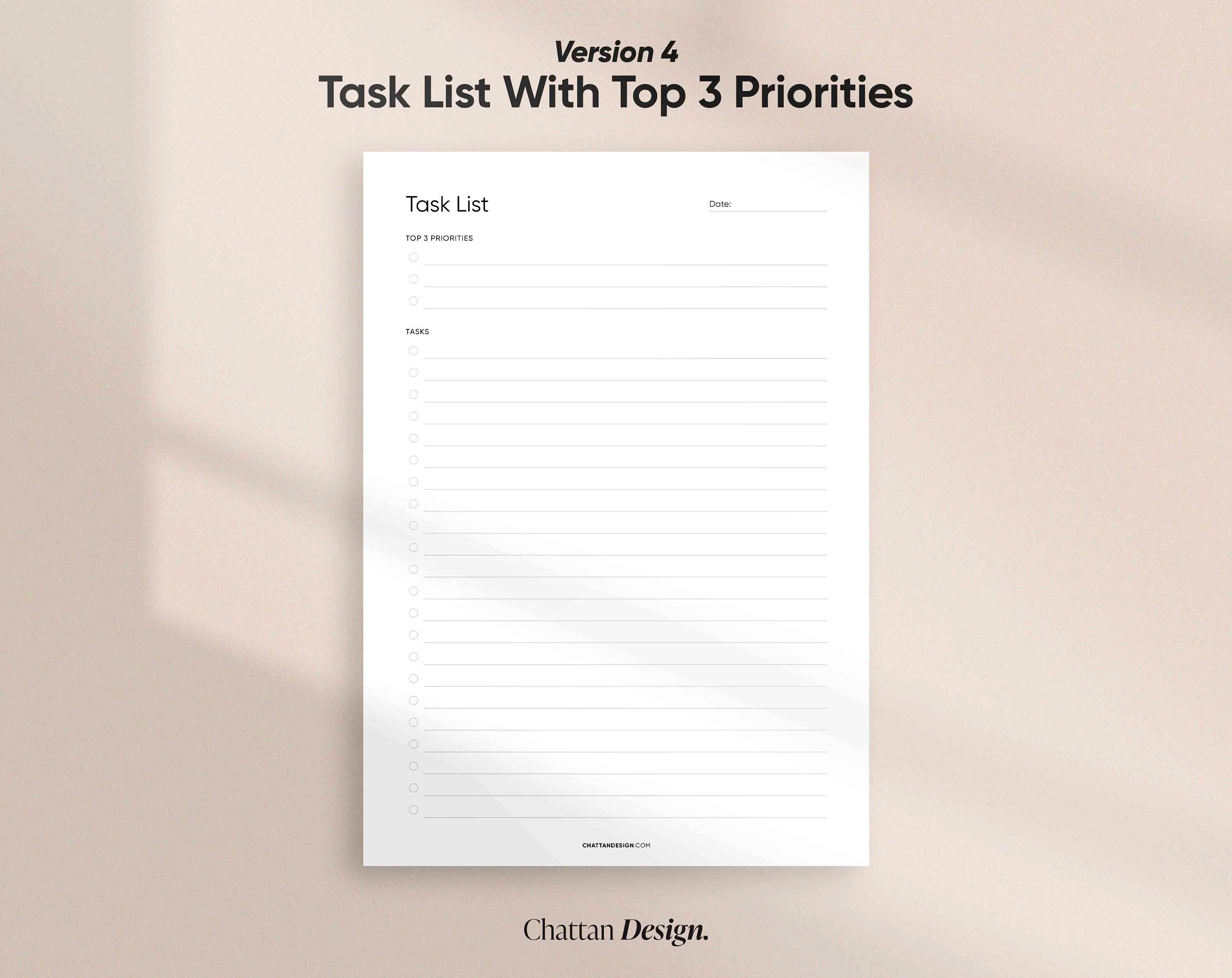
To avoid overwhelm, focus on no more than three major priorities in any given quarter. For example, your top three might be "Improving cardiovascular health," "Paying off the car loan," and "Spending Saturday mornings with my children." Everything else should be in maintenance mode.
3. Boundary Setting and "The No"
Every time you say "yes" to a low-priority request, you are implicitly saying "no" to your top priorities. Establishing clear boundaries—such as "no work emails after 7 PM" or "Sundays are for family"—protects the space needed to honor your list.
Common Mistakes When Setting Life Priorities
Even with the best intentions, people often stumble into traps that undermine their fulfillment.
- Over-indexing on Career: Many realize too late that professional success cannot compensate for failed health or broken relationships.
- Passive Prioritization: Letting your calendar be filled by other people's emergencies.
- Ignoring the "Soul": Focusing entirely on productivity and neglecting hobbies or spiritual practices that bring joy.
- Rigidity: Failing to update the list when circumstances change (e.g., a health diagnosis or a job loss).
Frequently Asked Questions
How often should I update my life priorities list?
A formal review is recommended every six months, with a smaller "check-in" every quarter. Life events like a new job, a move, or a change in family status should trigger an immediate re-evaluation. Use these milestones to ensure your daily habits still support your overarching goals.
Can I have more than five priorities?
While you can have many interests, you cannot have many priorities. The word "priority" was originally singular, meaning the very first thing. Having more than five major priorities usually leads to "priority dilution," where you make a millimeter of progress in a hundred directions rather than a kilometer of progress in one.
What if my partner's priorities are different from mine?
In relationships, it is normal for individual priorities to differ. The key is "alignment of values." While one partner might prioritize career growth and the other prioritizes community service, they should both agree on foundational values like financial honesty and mutual respect. Communication and compromise are essential for balancing individual and shared lists.
Is it selfish to put my health first?
No, it is foundational. This is often called the "Oxygen Mask Principle." By ensuring your physical and mental health are intact, you increase your capacity to help others, perform at work, and be present for your family. Neglecting yourself eventually leads to burnout, which makes you a burden rather than a support to those you love.
How do I stay disciplined when my priorities feel boring?
Motivation is fleeting; systems are permanent. If "Financial Stability" feels boring, automate your savings. If "Health" feels like a chore, join a group class for accountability. Transform your priorities into "non-negotiable habits" so that you don't have to rely on willpower every day.
Next Steps for Meaningful Action
To move from theory to practice, take thirty minutes today to write down your current top five priorities. Evaluate each one against your calendar for the past month. If you find a significant mismatch, choose one small action—such as scheduling a workout or booking a lunch with a friend—to begin closing the gap. Remember that a priorities list is a living document; its value lies not in its perfection, but in its ability to guide you back to what truly matters when life becomes chaotic.
Image Gallery