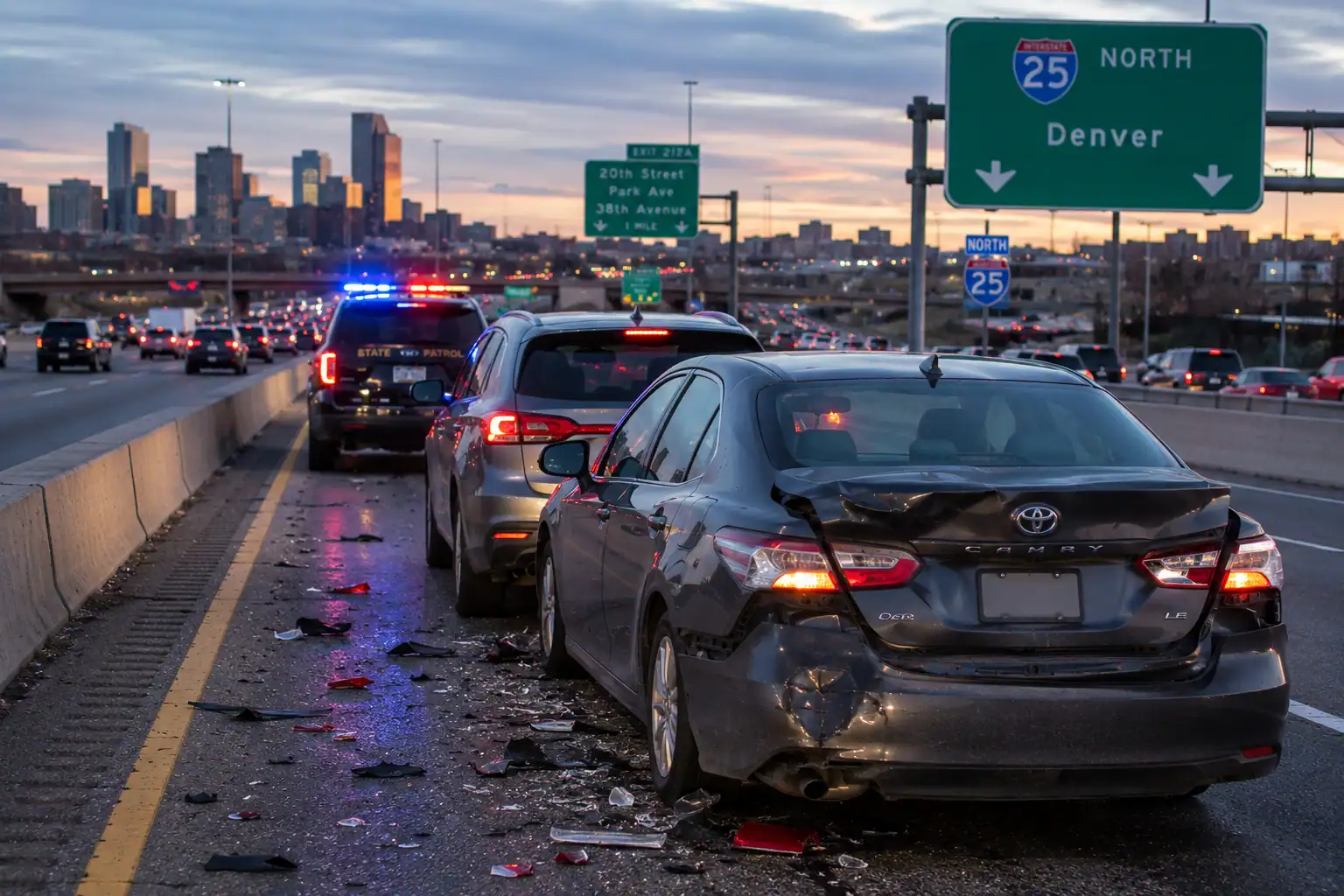
Understanding Expanded Traffic Collision Reports: A 2026 Comprehensive Guide
The term "expanded traffic collision" typically refers to an enhanced or secondary reporting process used by law enforcement and insurance agencies to document complex vehicular accidents that involve additional factors beyond a standa...
The term "expanded traffic collision" typically refers to an enhanced or secondary reporting process used by law enforcement and insurance agencies to document complex vehicular accidents that involve additional factors beyond a standard collision report. In some jurisdictions, this is synonymous with a "supplemental accident report" or "investigative collision analysis," used specifically when initial findings are insufficient to determine liability or when serious injuries or fatalities require forensic reconstruction.
Contents
The Functional Purpose of Expanded Collision Reporting
Standard traffic collision reports often capture only the basic facts: time, location, parties involved, and a brief narrative of the impact. An expanded collision report, however, serves as the definitive legal and technical record for high-stakes insurance claims and potential litigation. By 2026, the integration of Advanced Driver Assistance Systems (ADAS) and telematics has fundamentally changed how these reports are structured.
Law enforcement and accident reconstruction experts utilize expanded reporting to integrate digital telemetry data. This process ensures that the forensic evidence aligns with the physical evidence found at the scene. When an accident is classified as requiring an expanded report, it usually triggers a deeper audit of the following:
- Vehicle Telemetry Data: Extraction of Event Data Recorder (EDR) information, detailing pre-crash speed, braking patterns, and steering angles.
- Environmental Factors: Analysis of road surface conditions, visibility metrics, and synchronized traffic signal timing logs.
- Operator Health and Behavioral Data: Documentation of distracted driving indicators, if available through integrated vehicle sensors or electronic logs.
- Third-Party Evidence: Compilation of non-standard inputs such as private security camera footage, dashcam uploads, and smart-city sensor data from 2026 infrastructure grids.
Analytical Standards in Modern Collision Reconstruction
When an expanded report is initiated, authorities apply specific methodologies to evaluate the sequence of events. In 2026, the industry standard follows the ISO-compliant reconstruction frameworks that prioritize digital precision over manual estimation.
| Analytical Metric | Standard Method | Role in Expanded Report |
|---|---|---|
| Delta-V Assessment | EDR Download | Measures the sudden change in velocity during impact. |
| Coefficient of Friction | Surface Testing | Determines braking efficiency based on 2026 road material standards. |
| ADAS Functional Status | Diagnostics | Confirms if emergency braking or lane-keep assist was active. |
| Witness Synchronization | Temporal Mapping | Aligns eyewitness timelines with high-resolution digital timestamps. |
Legal and Insurance Implications for Policyholders
For individuals involved in a traffic collision, the escalation to an "expanded" status often indicates that the insurance adjuster or police department anticipates a coverage dispute or potential liability conflict. Insurance companies in 2026 rely heavily on these expanded documents to determine the "at-fault" percentage, which directly influences premium adjustments and subrogation efforts.
If you are notified that your accident requires an expanded report, you should treat it as a formal investigation. Ensure that any personal records, including dashcam footage or receipts showing recent vehicle maintenance, are preserved. These documents act as a secondary verification layer against the official findings of the forensic investigators.
Professional Handling Of Expanded Documentation
Data Integrity Always verify the accuracy of the VIN (Vehicle Identification Number) and the precise timestamp of the incident recorded in the report. Small discrepancies in time can lead to incorrect alignment with traffic signal logs or neighboring business security footage, which may shift fault in a liability assessment.
Accessing Forensic Files Under current 2026 data privacy regulations, you have a right to request a copy of the finalized expanded collision report through your regional Department of Transportation or local records division. Accessing this early allows you to identify potential factual errors before they are finalized in your permanent driving record or insurance risk profile.
Troubleshooting Discrepancies in Official Records
It is not uncommon to find errors in initial police reports, which then carry over into the expanded version. As a stakeholder in the claim, you must act decisively if you identify a factual error.
- Identify the Inconsistency: Compare the narrative in the report against your own contemporaneous notes and photographic evidence.
- Submit a Formal Correction Request: File a supplemental statement with the investigating agency. In 2026, most jurisdictions provide digital portals for submitting "Correction of Fact" forms for collision reports.
- Engage Legal Counsel: If the expanded report suggests significant liability that contradicts the evidence, consult an attorney specializing in vehicular torts. They can facilitate the subpoena of raw data logs from the vehicles involved, which are often withheld from standard police reports.
Comparative Analysis: Standard vs. Expanded Collision Reporting
- Standard Collision Report:
- Completed by the responding officer at the scene.
- Focuses on immediate safety and clearing the roadway.
- Often relies on subjective statements from involved parties.
- Expanded Collision Report:
- Completed by traffic investigative units or reconstructionists.
- Includes forensic analysis, digital telemetry, and physical evidence testing.
- Serves as the primary basis for litigation and high-value insurance settlement negotiations in 2026.
Frequently Asked Questions
What triggers an expanded collision investigation? An expanded investigation is typically triggered by fatalities, serious bodily injuries, involvement of commercial vehicles, or ambiguous fault scenarios where physical evidence is contradictory. These investigations ensure a higher level of scrutiny for complex, high-liability events.
Can I request an expanded report if the police only filed a standard one? Yes, but you must provide compelling evidence that the standard report is missing critical technical data. This is common in cases involving software glitches in autonomous vehicle features or complex multi-car pile-ups where the sequence of impact is difficult to determine.
How does an expanded report affect my insurance premiums in 2026? The report's conclusion on fault is the primary driver of premium changes. If the expanded report uses objective forensic data to prove you were not at fault, it can prevent your insurance provider from applying a surcharge, even if the initial responding officer’s report was unclear.
Are electronic vehicle logs admissible in court? In 2026, vehicle event data records are highly admissible and often considered the "gold standard" of evidence. Courts prioritize this objective telemetry over subjective eyewitness testimony, as it provides an indisputable record of vehicle performance leading up to the impact.
Who is responsible for the costs associated with expanded reporting? Public law enforcement agencies bear the cost of investigation for criminal or traffic law enforcement purposes. However, if you or your insurance company hires a private reconstructionist to conduct an independent expanded analysis to contest a finding, those fees are typically private costs.
Moving Forward with Your Claim
If you are currently navigating the complexities of an expanded collision report, prioritize accuracy and technical transparency. Ensure all digital evidence is preserved in a non-compressed format, as forensic analysts will require the original file metadata to verify authenticity. Proactively communicate with your insurer, providing them with any independent technical assessments you have secured to ensure your interests are represented accurately during the fault determination process.
Image Gallery