Navigating Arizona Workers Compensation Regulations: Essential Guide for Employers and Employees
Arizona workers compensation regulations establish a comprehensive framework designed to provide medical care, wage replacement, and rehabilitation benefits to employees who suffer job-related injuries or illnesses, while simultaneousl...
Arizona workers compensation regulations establish a comprehensive framework designed to provide medical care, wage replacement, and rehabilitation benefits to employees who suffer job-related injuries or illnesses, while simultaneously protecting employers from civil tort liability. Understanding these rules is essential for maintaining workplace compliance, managing claims efficiently, and ensuring that injured workers receive their legally mandated support without unnecessary delays.
Contents
Understanding the Foundation of Arizona Workers Compensation
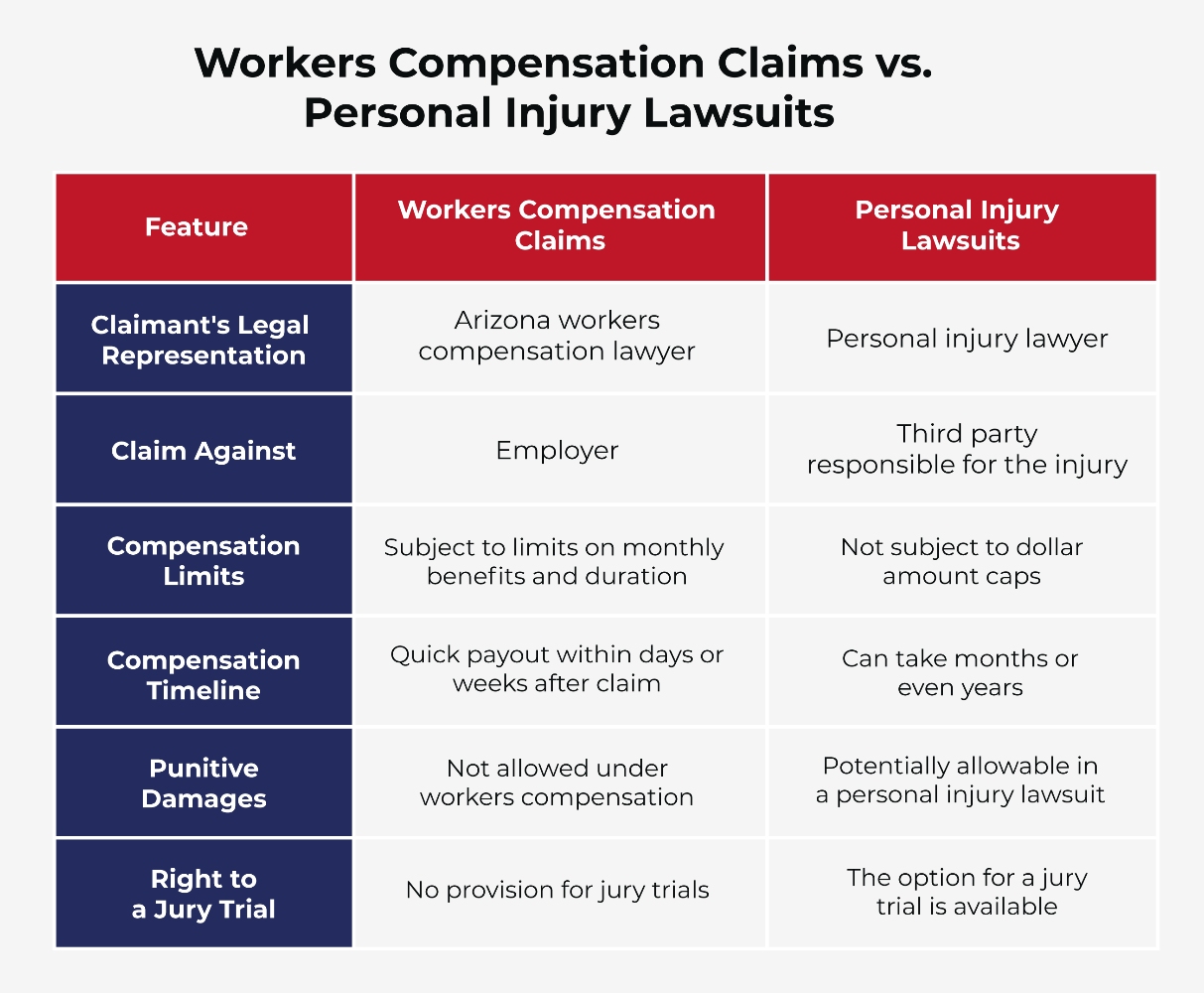
The foundational principle of the Arizona workers compensation system is rooted in a legislative compromise: workers relinquish their right to sue employers in civil court for ordinary negligence in exchange for guaranteed, no-fault medical and financial benefits following a workplace injury. Administered primarily by the Industrial Commission of Arizona (ICA), this system applies across nearly all commercial sectors within the state.
Unlike personal injury law, fault generally does not matter in a workers compensation claim. Whether an accident is caused by employer oversight, third-party actions, or simple misjudgment by the worker, benefits are typically payable as long as the injury or illness arose out of and in the course of employment. However, this no-fault protection comes with strict procedural requirements, mandatory reporting timelines, and precise evidentiary standards that both employers and claimants must meticulously observe.
Employer Coverage Requirements and Exemptions
Under Arizona law, virtually every employer operating within the state who hires one or more employees—whether full-time or part-time—is legally required to secure workers compensation insurance. This coverage can be obtained through a private carrier authorized to write insurance in Arizona, by qualifying as a self-insurer through the Industrial Commission of Arizona, or by participating in the State Compensation Fund (CopperPoint Mutual Insurance Company).
Despite the broad mandate, the statutes carve out specific exemptions. Notable exceptions include:
- Domestic servants: Individuals employed in private homes to perform traditional household chores.
- Casual employees: Workers whose employment is sporadic and not in the usual course of the employer's trade, business, or occupation.
- Sole proprietors and partners: Business owners without employees are generally exempt, though they may elect to cover themselves. Corporate officers and members of limited liability companies (LLCs) are typically considered employees and must be covered unless they formally reject coverage pursuant to statutory procedures.
- Certain agricultural workers: While modern regulations have narrowed historical exemptions, specific low-threshold agricultural operations may still maintain unique exemptions depending on payroll and seasonal employee counts.
Key Compliance Requirements for Employers
Compliance with Arizona workers compensation regulations extends far beyond merely purchasing an insurance policy. Employers carry affirmative statutory duties regarding workplace safety, administrative notices, and immediate post-injury management.
Mandatory Workplace Postings
Arizona employers must display official notices informing workers of their rights under the state's workers compensation laws. These posters must be placed in conspicuous locations throughout the workplace where employees can easily view them, such as break rooms, human resources offices, or central bulletin boards. The notice must clearly display the name of the current workers compensation insurance carrier, policy expiration dates, and instructions on where and how to report an injury.
Injury Reporting Obligations
When a workplace accident occurs, time is of the essence. Employers are required to maintain detailed records of all occupational injuries and illnesses. Under Arizona administrative rules, if an injury requires medical treatment beyond basic first aid or results in missed work time exceeding the initial shift, the employer must submit an Employer's Report of Injury to the insurance carrier and the ICA.
Failing to report injuries promptly can lead to administrative penalties, disputed claims, and delayed medical care for the employee, which ultimately drives up claim costs and potential litigation.
The Workers Compensation Claims Process
Navigating an active claim involves a structured sequence of events involving the employee, the employer, the insurance carrier, and ultimately the Industrial Commission of Arizona. Understanding each phase helps mitigate disputes and streamlines the path toward medical recovery and vocational rehabilitation.
- Injury Occurs
- Medical Treatment Sought
- Worker Files Notice of Claim (Form 102)
- Carrier Accepts or Denies Claim
- Accepted: Benefits & Medical Care Provided
- Denied: Request for Hearing / ICA Appeal
Step 1: Reporting the Injury and Seeking Medical Care
An injured employee must notify their employer of the injury as soon as practical. While the statutory limit allows up to one year to file a formal claim with the ICA, prompt internal reporting prevents evidentiary disputes regarding whether the injury actually occurred on the job. The employee has the initial right to select their own physician, provided that physician is willing to comply with ICA reporting requirements, though employers with an authorized medical provider network registered with the ICA may direct initial care under specific statutory parameters.
Step 2: Filing the Worker's Report of Injury (Form 102)
To formally initiate a claim, the employee must complete and file a Worker’s Report of Injury (Form 102) with the Industrial Commission of Arizona. Copies should also be provided to the employer and the insurance carrier. This document outlines how the accident happened, the nature of the injuries sustained, and the medical providers seen.
Step 3: Carrier Investigation and Notice of Claim Status
Once the insurance carrier receives the claim, it has a statutory window to investigate the circumstances. The carrier will issue a Notice of Claim Status, which will officially state whether the claim is accepted as compensable or denied. If accepted, the carrier assumes responsibility for authorized medical expenses and temporary disability benefits if the worker is unable to work.
Overview of Available Benefits
Arizona workers compensation regulations provide several distinct categories of financial and medical support depending on the severity and permanence of the workplace injury.
| Benefit Type | Description | Duration / Calculation |
|---|---|---|
| Medical Benefits | Covers all reasonable and necessary medical, surgical, and hospital treatments related to the injury. | Continues as long as medical maintenance or treatment is required. |
| Temporary Total Disability (TTD) | Wage replacement for workers completely unable to work during recovery. | Typically 66 2/3% of average monthly wage, subject to statutory maximums. |
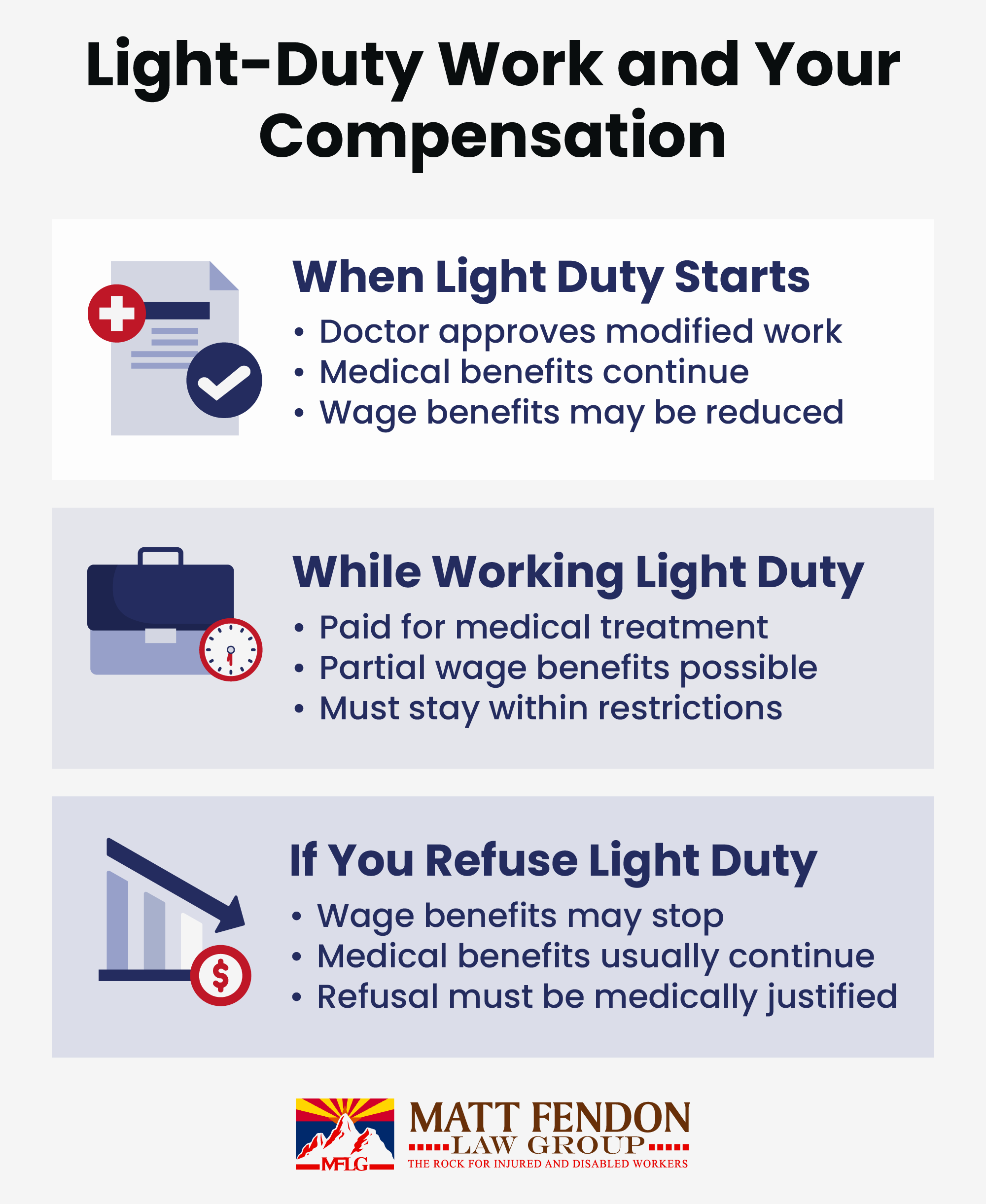
| Temporary Partial Disability (TPD) | Compensates workers who return to light-duty work at reduced wages. | Based on a percentage of the difference between pre-injury and post-injury earnings. |
| Permanent Partial Disability (PPD) | Awarded when an injury leaves a lasting impairment but does not total total disability. | Calculated using scheduled or unscheduled injury formulas set by statute. |
| Permanent Total Disability (PTD) | Granted for catastrophic injuries resulting in total loss of earning capacity. | Lifetime wage replacement benefits, subject to annual adjustments. |
Dispute Resolution and the Industrial Commission Hearing Process
Not all claims proceed smoothly. Disputes frequently arise over claim denials, the termination of temporary benefits, disagreements regarding permanent impairment ratings, or the refusal of a carrier to authorize specific medical treatments.
When a dispute occurs, parties cannot immediately file a lawsuit in state civil court. Instead, they must utilize the administrative dispute resolution system housed within the Industrial Commission of Arizona.
- Request for Hearing: An aggrieved party—usually the employee challenging a denial or closure—must file a written Request for Hearing with the ICA within 90 days of the mailing date of the contested Notice of Claim Status.
- Administrative Law Judge (ALJ) Hearings: Cases are assigned to an Administrative Law Judge who conducts formal evidentiary hearings. Both sides may present medical testimony, expert witness statements, and documentary evidence.
- ICA Review and Court Appeals: If a party is dissatisfied with the ALJ's decision, they may request an administrative review by the Commission. Subsequent appeals of the Commission's review decision must be filed directly with the Arizona Court of Appeals.
Common Pitfalls and Best Practices for Compliance
Navigating Arizona workers compensation regulations requires constant vigilance from management and human resources professionals. Avoiding recurring compliance errors helps protect organizations from costly fines and legal entanglements.
- Failing to Maintain Continuous Coverage: Lapsing on insurance coverage is a severe misdemeanor in Arizona, exposing business owners to aggressive civil lawsuits by injured workers who bypass standard immunity protections.
- Retaliation Against Claimants: Arizona law strictly prohibits employers from firing, demoting, or discriminating against an employee simply because they filed a workers compensation claim or expressed an intent to do so.
- Delayed Wage Reporting: Inaccurate calculation of the injured worker's Average Monthly Wage (AMW) frequently triggers prolonged legal battles. Employers must submit precise historical payroll records to the ICA immediately upon request.
Employers should establish clear internal protocols, maintain open lines of communication with their insurance carriers, and prioritize proactive workplace safety initiatives. By fostering a safety-conscious culture and adhering strictly to ICA procedural timelines, organizations can successfully navigate the complexities of Arizona workers compensation regulations while supporting their workforce through unexpected occupational challenges.
Disclaimer: Workers compensation laws are subject to legislative amendments and specific factual nuances. Employers and injured workers facing complex legal disputes or coverage questions should consult with a qualified attorney licensed in Arizona or contact the Industrial Commission of Arizona directly for authoritative guidance.
Image Gallery