Exploring Porto de Galinhas: The Complete Guide to Brazil’s Natural Pools
Porto de Galinhas is a premier coastal destination in Pernambuco, Brazil, famous for its crystal-clear natural pools formed by coral reefs. Visitors primarily come to experience the unique low-tide lagoons, enjoy high-end resorts in Mu...
Porto de Galinhas is a premier coastal destination in Pernambuco, Brazil, famous for its crystal-clear natural pools formed by coral reefs. Visitors primarily come to experience the unique low-tide lagoons, enjoy high-end resorts in Muro Alto, and explore the vibrant village culture through local gastronomy and professional buggy tours.
Contents
Located in the municipality of Ipojuca, approximately 60 kilometers south of Recife, Porto de Galinhas has evolved from a small fishing village into one of Brazil’s most sought-after tourist hubs. As of 2026, the region continues to balance high-volume tourism with essential environmental conservation efforts, particularly regarding its delicate coral ecosystems and sea turtle nesting grounds. Exploring this region requires a mix of logistical planning—specifically synchronized with the lunar cycle—and an appreciation for the diverse coastal landscapes that range from surfboard-heavy swells to mirror-still lagoons.
Understanding the Geomorphology: Why the Tides Matter
The defining characteristic of Porto de Galinhas is its massive reef wall that runs parallel to the shore. This geological formation creates a barrier against the Atlantic Ocean, resulting in calm, translucent pools during low tide. However, the experience of these pools is entirely dependent on the tábua de marés (tide table).
To see the natural pools at their peak, travelers must plan their daily activities around the low tide. The tide cycle shifts by approximately 30 to 45 minutes every day. Ideally, you want to reach the pools when the tide is between 0.0 and 0.3 meters. When the tide exceeds 0.5 meters, the water levels over the reefs rise, the clarity diminishes, and the "pool" effect vanishes as waves begin to crest over the barrier. In 2026, most local hotels and official tourism portals provide digitized tide charts, which are essential for scheduling the jangada (traditional sailing raft) trips that ferry visitors to the center of the reef formations.
Strategic Logistics: Getting There and Getting Around
Most international and domestic travelers arrive via the Gilberto Freyre International Airport (REC) in Recife. From there, the journey to Porto de Galinhas takes between 60 and 90 minutes, depending on traffic and the chosen route.
- Private Transfers and Taxis: This remains the most efficient method. Reliable companies offer pre-booked services that monitor flight delays.
- Rental Cars: Having a vehicle is advantageous for those staying in the more secluded resort areas of Muro Alto or for those who wish to visit nearby beaches like Praia dos Carneiros. However, parking in the Porto de Galinhas village center is highly restricted and often requires using paid private lots.
- App-Based Transport: Services like Uber operate in the region, though availability can be sparse late at night or during peak festival seasons.
- The "Pedágio" (Toll Road): The PE-009 expressway is a well-maintained toll road that significantly cuts travel time from Recife. As of 2026, ensure your rental car is equipped with an electronic tag for seamless passage.
Once in the village, the center is largely pedestrianized. For moving between different beaches, the "Buggy" is the iconic choice. Professional buggy drivers (bugueiros) are regulated by the municipality, and travelers are encouraged to use authorized points to ensure safety standards and fair pricing.
A Tour of the Coastal Segments
Porto de Galinhas is not a single beach but a collection of distinct coastal environments, each catering to different preferences and activities.
Muro Alto
Located to the north of the village, Muro Alto is named after the "high wall" of sand and reef that creates a massive, deep-water natural swimming pool. The water here is exceptionally calm, making it the primary location for luxury resorts and families with young children. Kayaking and stand-up paddleboarding are the dominant activities here due to the lack of waves.
Praia do Cupe
Situated between Muro Alto and the main village, Cupe offers a mix of environments. Some stretches have "Pontões" (rocky points) that create natural enclosures, while other areas are known for "tombo" waves (heavy shore breaks) that are unsuitable for inexperienced swimmers. This area hosts many of the region’s mid-range hotels and large-scale pousadas.
The Village Beach (Porto de Galinhas Proper)
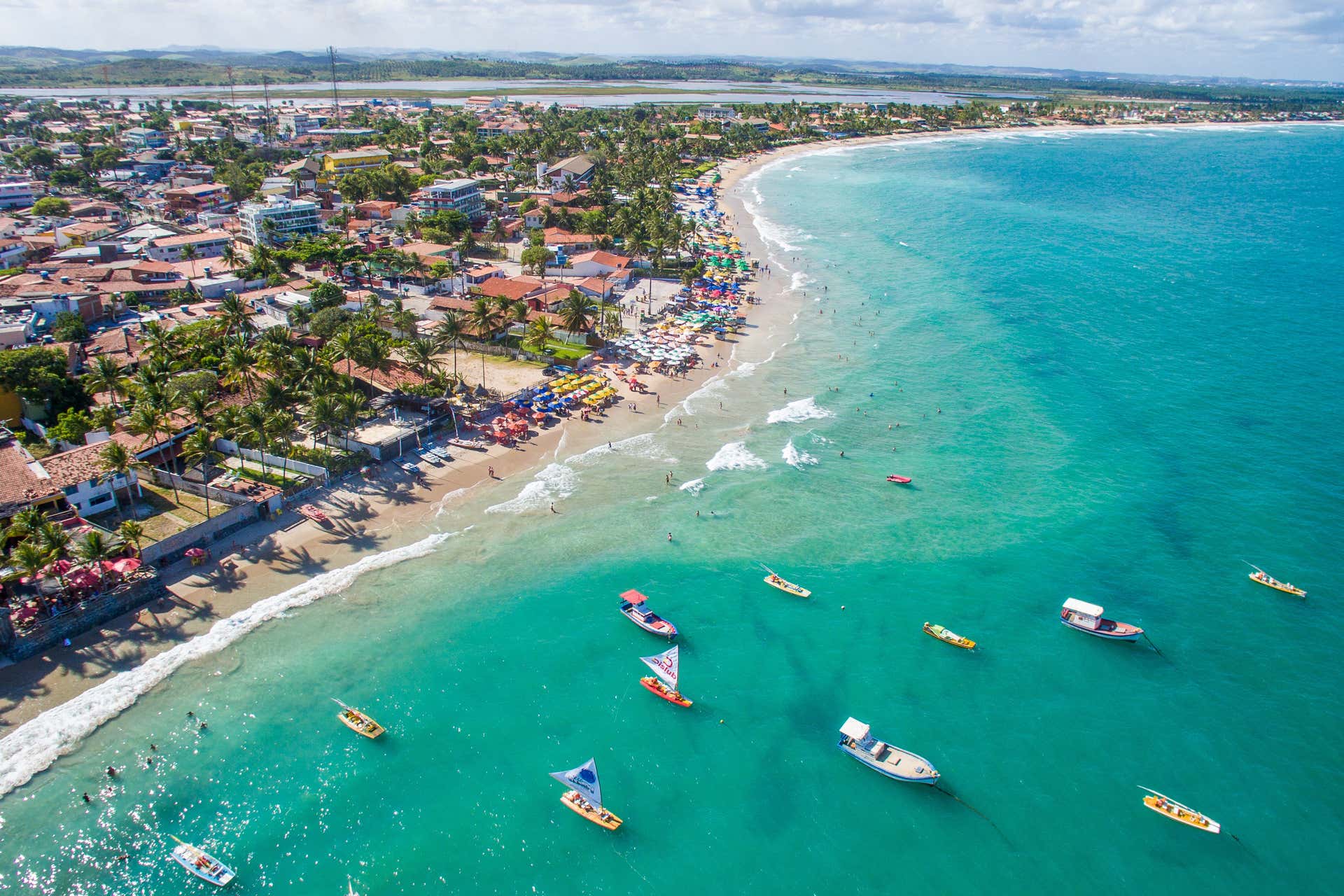
This is the heart of the region. It is where the jangadas depart and where the most famous natural pool—shaped like the map of Brazil—is located. The beach is bustling, lined with restaurants and "baracas" (tents) that offer food and drink service directly to your sand chair.
Maracaípe and Pontal de Maracaípe
To the south lies Maracaípe, the surfing capital of the state. The waves here are powerful, and the atmosphere is more bohemian and rustic compared to the main village. At the very end of this stretch is the Pontal de Maracaípe, where the Maracaípe River meets the sea. This is a critical ecological zone for seahorses. Visitors can take quiet jangada tours through the mangroves to observe the local fauna in a protected environment.
Key Activities and Professional Tours
To fully explore Porto de Galinhas, several activities are considered "non-negotiable" for a complete itinerary.
- The Buggy "Ponta a Ponta" Tour: This tour takes you from the northernmost point (Muro Alto) to the southernmost point (Pontal de Maracaípe) in a single day. It provides a comprehensive overview of the geography and allows you to identify which areas you may want to return to for a longer stay.
- Scuba Diving and Snorkeling: Even for beginners, the clarity of the water around the reefs makes this an ideal spot for "baptism" dives. Professional schools operate daily, taking divers to deeper sections of the reef or to nearby shipwrecks for those with advanced certifications.
- Projecto Hippocampus: Located near the village center, this biology-focused station is dedicated to the study and conservation of seahorses. It serves as an educational hub where visitors can learn about the lifecycle of these creatures and the efforts being made to protect the mangroves of the Ipojuca estuary.
- Day Trip to Praia dos Carneiros: Frequently cited as one of the most beautiful beaches in Brazil, Carneiros is about 50 minutes south. Known for its iconic 18th-century chapel (Igreja de São Benedito) on the sand and its own set of natural pools, it is a common add-on for visitors staying in Porto de Galinhas.
Comparison of Major Beach Zones in Porto de Galinhas
| Beach Zone | Water Condition | Primary Audience | Key Feature |
|---|---|---|---|
| Muro Alto | Extremely Calm / No Waves | Families & Resort Guests | Long reef wall creating a safe lagoon |
| Cupe | Variable / Strong Breaks | Surfers & Pousada Guests | Natural beauty with a mix of surf and calm spots |
| Porto Village | Calm (at Low Tide) | General Tourists | Proximity to shops, restaurants, and pools |
| Maracaípe | Strong Surf | Surfers & Youth | Bohemian vibe and international surf comps |
| Pontal | River/Sea Merge | Eco-tourists | Mangroves and seahorse sightings |
Gastronomy and Nightlife
The culinary scene in Porto de Galinhas is a highlight of the Pernambucan experience. The local diet is heavily influenced by "frutos do mar" (seafood) and regional staples like sun-dried meat (carne de sol) and cassava (macaxeira).
- Signature Dishes: Look for "Peixe na Telha" (fish cooked on a clay tile) and "Cartola," a traditional dessert made of fried bananas, coalho cheese, sugar, and cinnamon.
- The Village Center: At night, the village transforms into a vibrant boardwalk. The streets are lined with artisanal craft shops, galleries featuring the famous "Porto chickens" (sculptures made from coconut trunks), and live music venues.
- Pricing in 2026: While Porto de Galinhas can be expensive compared to other northeastern towns, the variety of dining options—from "quilo" (buffet) restaurants to fine dining—allows for flexibility in budgeting.
Environmental Regulations and Best Practices
As a visitor in 2026, adhering to environmental guidelines is mandatory for the preservation of the reef system. The municipality of Ipojuca and environmental agencies have implemented strict rules:
- No Sunscreen in Pools: Visitors are encouraged to use UV-protective clothing rather than heavy sunscreens when entering the natural pools to prevent chemical damage to the coral.
- Controlled Access: Access to the most sensitive reef areas is limited by a voucher system. These are often included in your jangada ticket.
- Wildlife Interaction: Touching or feeding the fish and seahorses is strictly prohibited. The "look but don't touch" policy is enforced by local maritime guides.
Frequently Asked Questions
When is the best time of year to visit Porto de Galinhas?
The dry season, from September to February, offers the most sunlight and the clearest water. While the region is warm year-round, the rainy season (May to August) can bring heavy tropical downpours that temporarily reduce water visibility and make buggy tours less comfortable.
Can I visit the natural pools without a jangada?
While it is physically possible to swim to some sections of the reef at very low tide, it is not recommended for safety and conservation reasons. The jangada pilots are trained to navigate the specific paths that do not damage the coral, and they provide the necessary life vests and guidance to ensure you stay within permitted zones.
Is Porto de Galinhas safe for international travelers?
Generally, Porto de Galinhas is considered a safe destination, especially within the village center and resort areas which are well-patrolled. As with any tourist hub, standard precautions apply: avoid displaying expensive jewelry, be mindful of your belongings on the beach, and use authorized transportation services.
How many days should I spend in Porto de Galinhas?
A stay of 4 to 5 days is usually sufficient to experience the main beaches, take a buggy tour, and visit the natural pools. If you plan to use Porto de Galinhas as a base for day trips to Maragogi or Praia dos Carneiros, a 7-day itinerary is more appropriate.
Is the water warm enough for swimming?
The water temperature in Pernambuco remains consistently warm, typically ranging between 26°C and 28°C (79°F to 82°F) year-round. This makes it comfortable for long periods of snorkeling and swimming regardless of the season.
Practical Recommendation for Travelers
For the best experience in 2026, consult the tide table before booking your flights. Aim for a window where the low tide occurs during the morning hours (between 8:00 AM and 11:00 AM). This timing provides the best natural lighting for photography in the pools and allows you to finish your maritime activities before the afternoon winds increase. Always book your "Ponta a Ponta" buggy tour for your first full day to get a layout of the land, and keep a waterproof dry bag handy for all boat-based excursions.
Image Gallery