The Major Terms of the Treaty of Versailles: A Comprehensive Historical Analysis
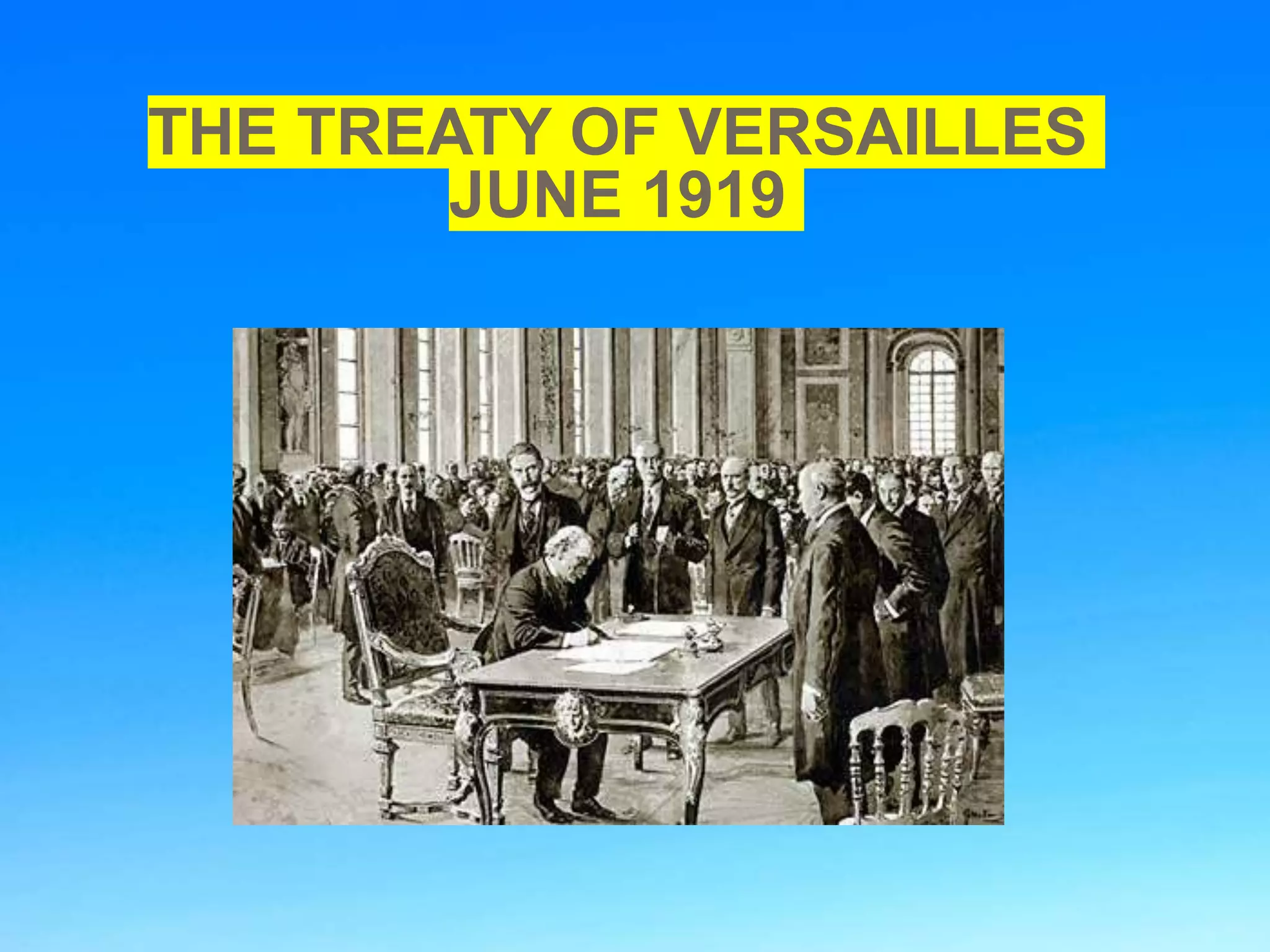
The Treaty of Versailles, signed on June 28, 1919, imposed significant territorial losses, military restrictions, and heavy financial reparations on Germany following World War I. Its primary terms included the "War Guilt" clause, the...
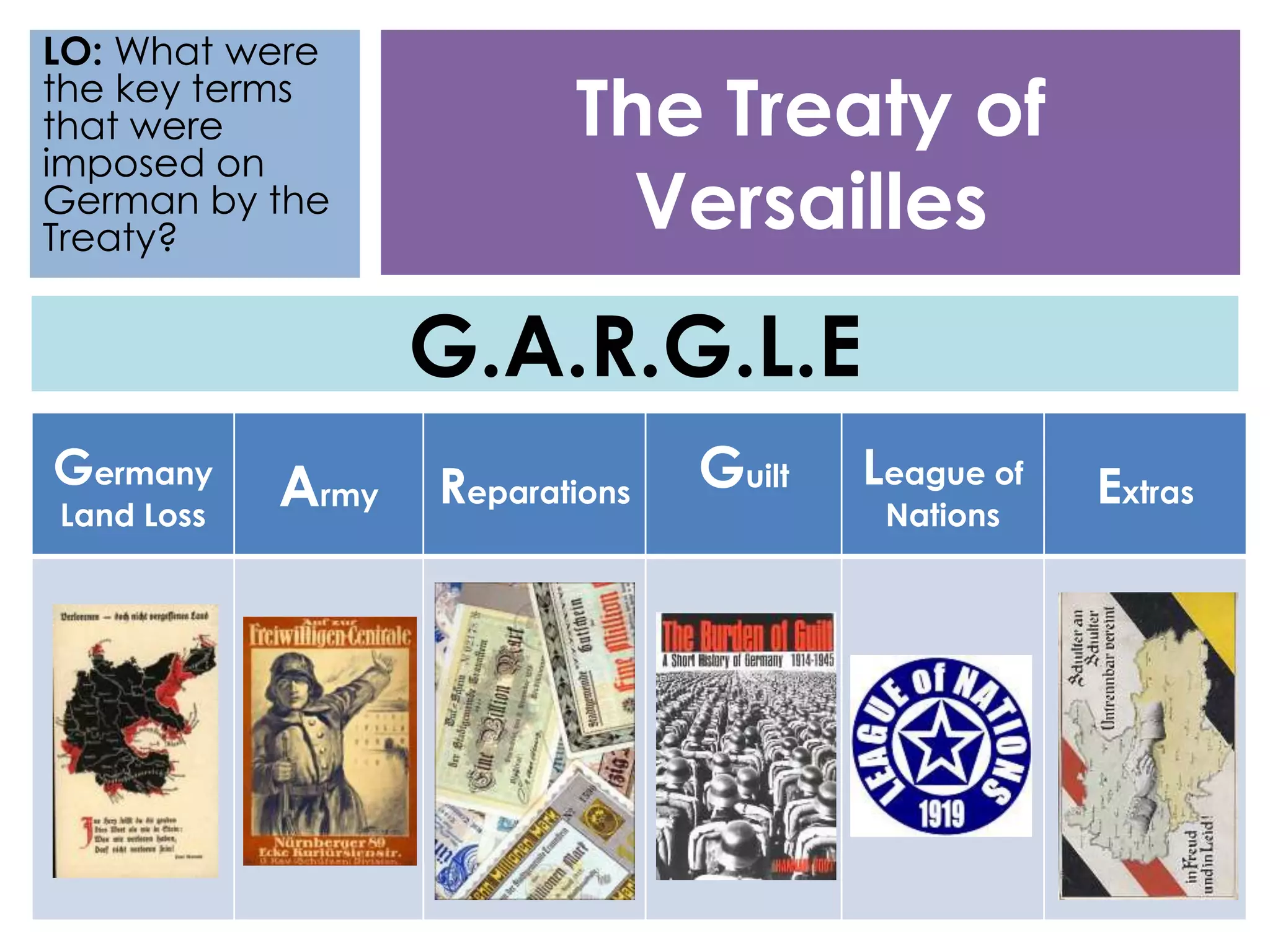
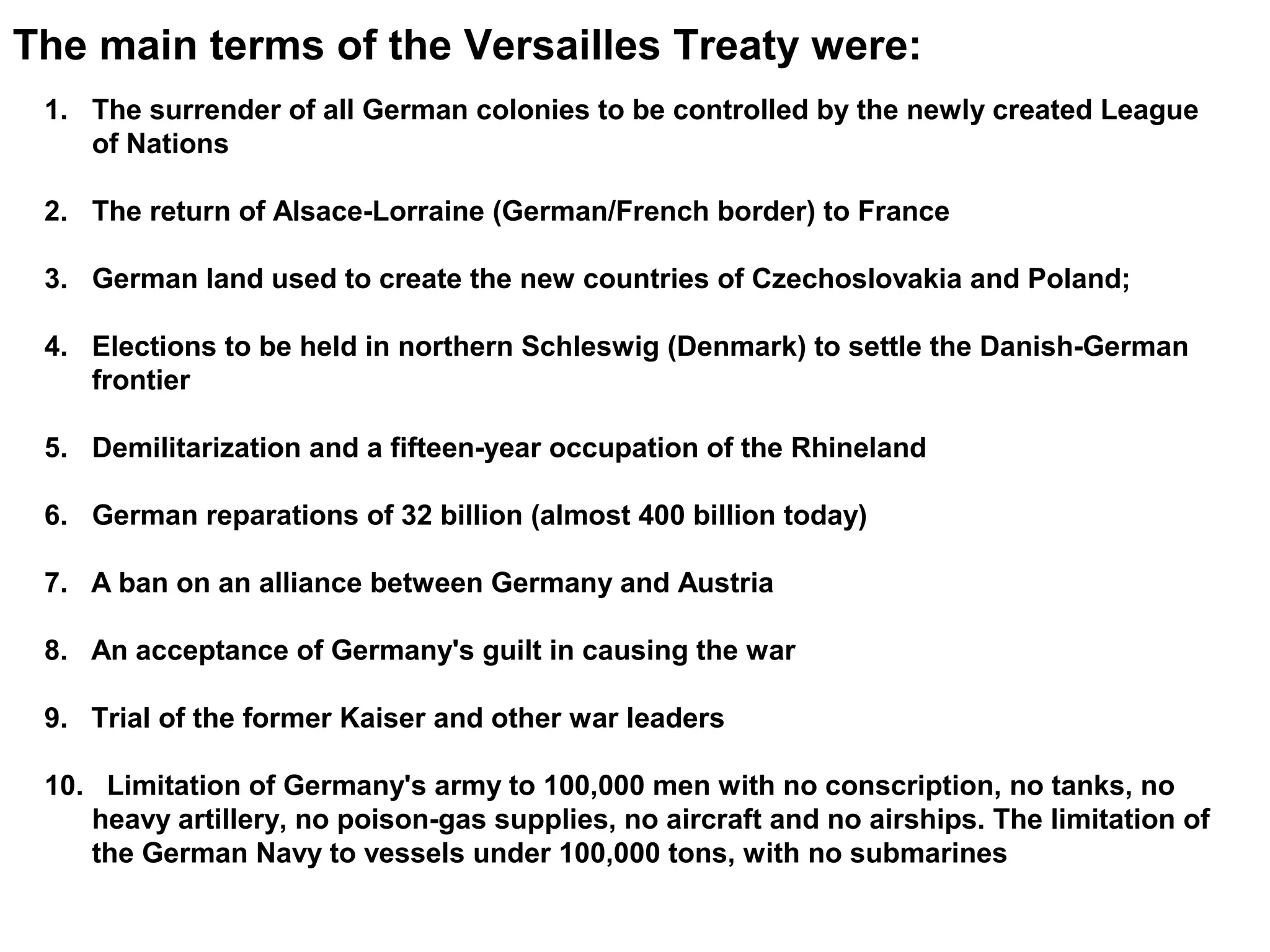
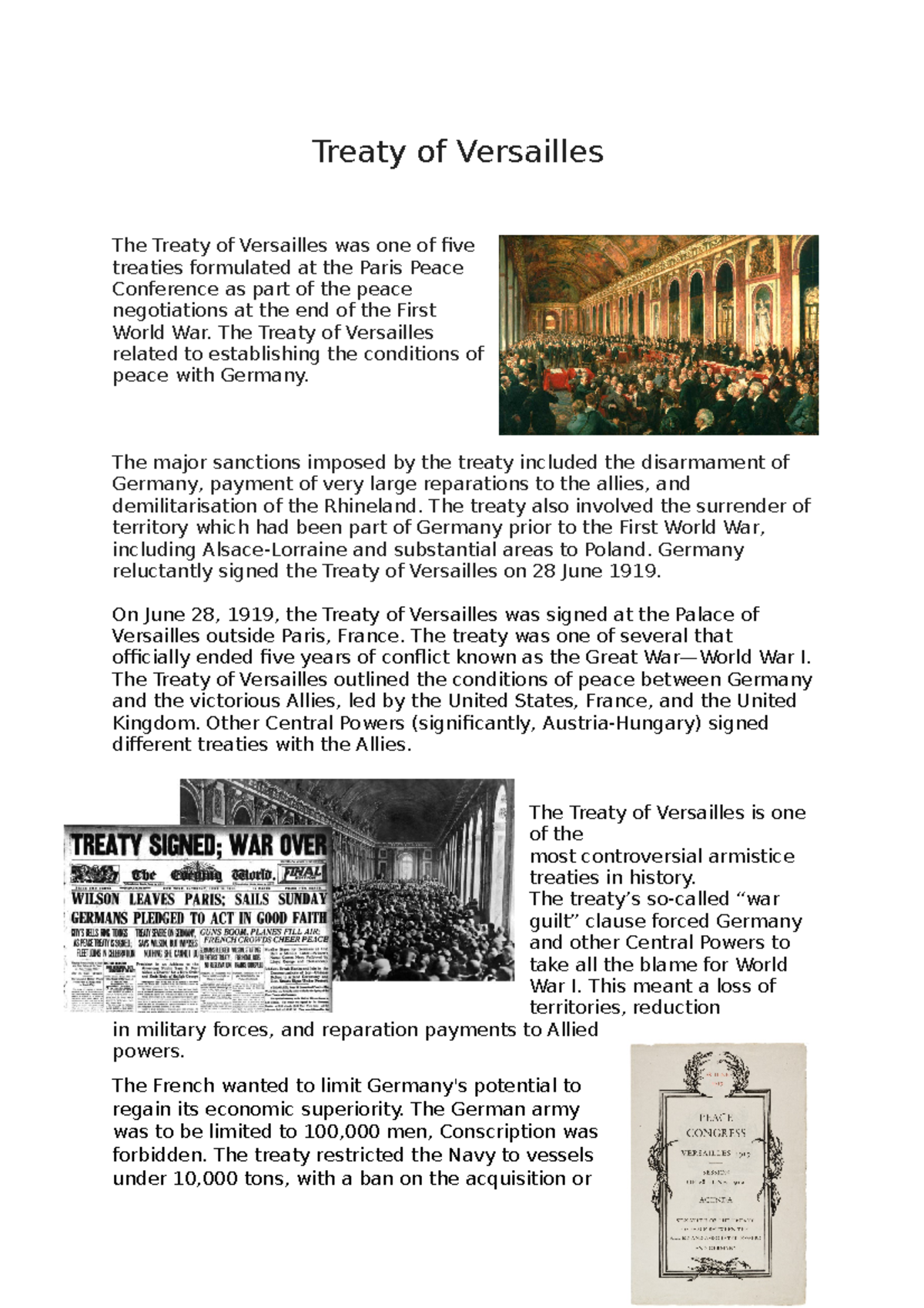
The Treaty of Versailles, signed on June 28, 1919, imposed significant territorial losses, military restrictions, and heavy financial reparations on Germany following World War I. Its primary terms included the "War Guilt" clause, the return of Alsace-Lorraine to France, the creation of the Polish Corridor, and the strict limitation of the German army to 100,000 men.
Contents
The Geopolitical Context of 1919
As we reflect on international diplomacy from the perspective of 2026, the Treaty of Versailles remains the most studied peace settlement in modern history. Negotiated at the Paris Peace Conference, the treaty was the result of six months of intense deliberations among the "Big Three" leaders: British Prime Minister David Lloyd George, French Premier Georges Clemenceau, and U.S. President Woodrow Wilson. While Italy’s Vittorio Orlando was also part of the "Big Four," the primary direction of the treaty was steered by the first three.
The primary objective was to settle the aftermath of "The Great War," a conflict that had decimated European populations and economies. However, the motivations of the victors were far from unified. France sought security and revenge, aiming to permanently weaken Germany to prevent future invasions. Great Britain desired a balance of power in Europe and the protection of its naval supremacy, while the United States, through Wilson’s "Fourteen Points," advocated for national self-determination and the establishment of a League of Nations to prevent future conflicts.
Territorial Terms and National Sovereignty
The territorial adjustments mandated by the treaty were designed to reshape the map of Europe according to the principle of national self-determination for some, while stripping Germany of its strategic assets. Germany lost approximately 13% of its European territory and 10% of its population.
European Land Losses
The most significant territorial concession was the return of Alsace-Lorraine to France. This region had been seized by Germany after the Franco-Prussian War in 1871, and its return was a non-negotiable point for Clemenceau.
Further north, the treaty created the Polish Corridor to provide the newly reconstituted nation of Poland with access to the Baltic Sea. This separated East Prussia from the rest of Germany. The city of Danzig (Gdańsk) was declared a Free City under the protection of the League of Nations. Other territorial changes included:
- Eupen-Malmedy: Ceded to Belgium following a plebiscite.
- North Schleswig: Ceded to Denmark after a vote by the local population.
- Memel: A small strip of land eventually annexed by Lithuania.
- The Saar Basin: Placed under League of Nations administration for 15 years, with its coal mines given to France as compensation for the destruction of French mines during the war.
The Mandate System and Overseas Colonies
Beyond Europe, Germany was stripped of all its overseas colonies. These territories were not granted immediate independence but were instead transformed into League of Nations Mandates. Great Britain and France divided most of the African colonies (such as Togoland and Kamerun), while Japan, Australia, and New Zealand took control of German Pacific territories. This system was intended to provide tutelage for "peoples not yet able to stand by themselves," though in practice, it often functioned as a redistribution of imperial power.
Military Restrictions and Disarmament
To ensure that Germany could never again wage an offensive war, the Treaty of Versailles imposed unprecedented military limitations. The German military, which had been the pride of the nation, was reduced to a shell of its former self.
Personnel and Conscription
The German Army (the Reichswehr) was restricted to a maximum of 100,000 men, including officers. More importantly, conscription was abolished. All soldiers had to be volunteers serving long-term enlistments (12 years for soldiers and 25 years for officers) to prevent Germany from training a large reserve of men through short-term service. The German General Staff, the brain of the military machine, was formally dissolved.
Prohibited Weaponry and Technology
The treaty essentially prohibited Germany from possessing modern offensive technology. This included:
- Tanks and Armored Vehicles: Completely banned.
- Air Force: Germany was forbidden from maintaining any military aircraft.
- Heavy Artillery: Restricted to a small number of specified calibers.
- Submarines (U-boats): Entirely prohibited.
The German Navy was limited to six battleships, six light cruisers, 12 destroyers, and 12 torpedo boats. To enforce these terms, the Inter-Allied Military Control Commission was established to conduct inspections and oversee the destruction of surplus weaponry.
The Rhineland Demilitarization
As a buffer for French security, the Rhineland—the area of Germany west of the Rhine River—was permanently demilitarized. German troops and fortifications were banned from the region. Allied troops occupied the Rhineland for a scheduled 15-year period to ensure compliance with the treaty’s terms, with the provision for gradual withdrawal if Germany met its obligations.
Financial Reparations and the "War Guilt" Clause
Perhaps the most controversial and economically damaging aspects of the treaty were the financial obligations. These were predicated on a single, highly contested legal justification: Article 231, commonly known as the War Guilt Clause.
Article 231: Legal Responsibility
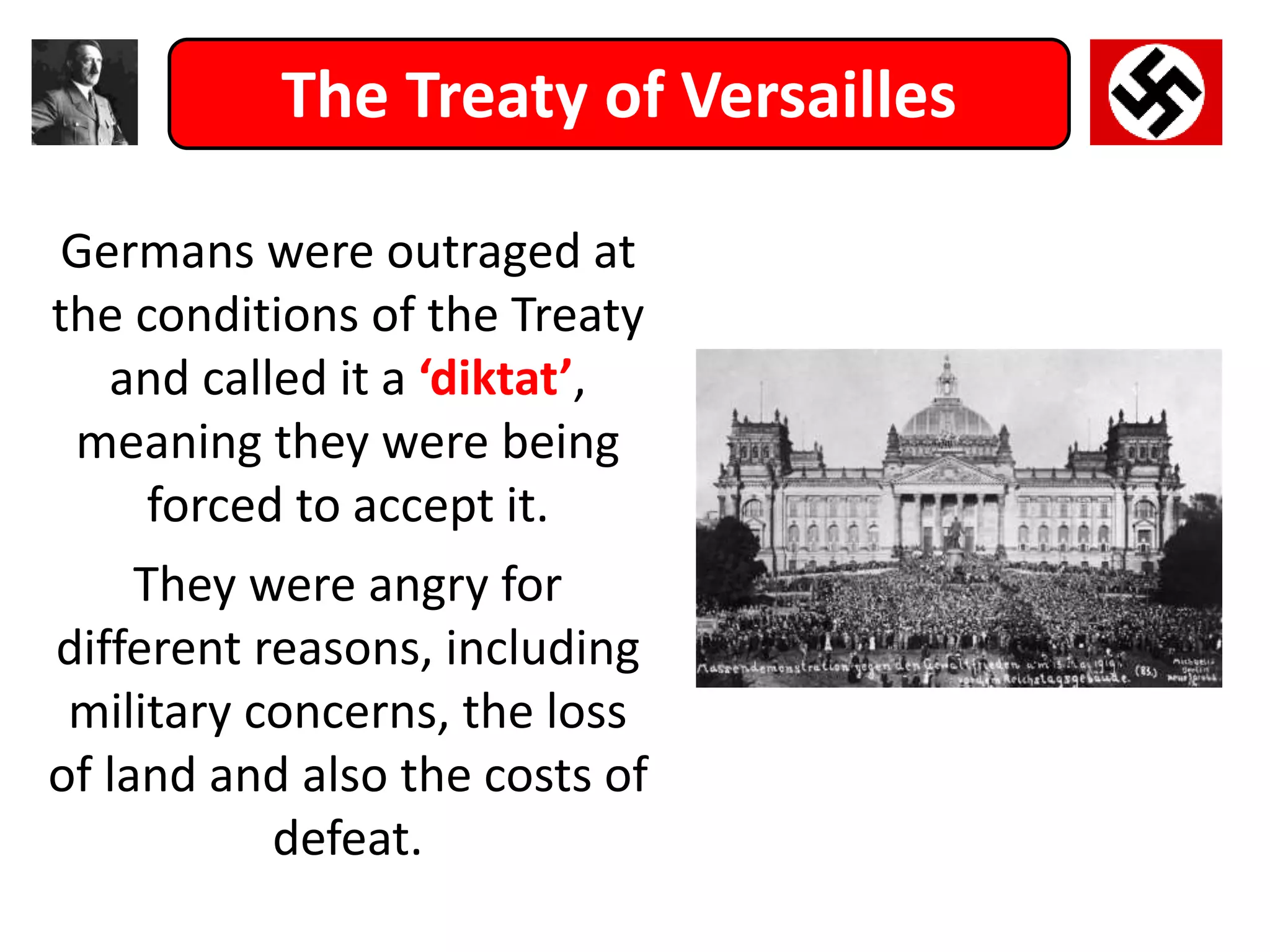
This article forced Germany to accept sole responsibility for causing all the loss and damage of the war. While the Allies viewed this as a necessary legal basis for demanding reparations, the German public viewed it as a "Diktat"—a dictated peace—and a profound national humiliation. The psychological impact of Article 231 cannot be overstated; it fueled nationalist resentment for decades.
The Reparation Commission
The treaty did not set a final sum for reparations in June 1919. Instead, it established a Reparation Commission to determine the exact amount based on an assessment of damages and Germany's capacity to pay. In 1921, the total was set at 132 billion gold marks (approximately $33 billion USD at the time).
Germany was required to make payments in gold, commodities (like coal and timber), and foreign currency. The economic strain of these payments contributed to the hyperinflation crisis of 1923 and remained a point of international tension until the Lausanne Conference of 1932 effectively suspended payments during the Great Depression.
Comparison of Negotiating Objectives
The final terms of the treaty represented a difficult compromise between the idealistic goals of the United States and the security-focused demands of France and Britain.
| Category | Wilson’s "Fourteen Points" (USA) | Clemenceau’s Objectives (France) | Final Treaty Term (Versailles) |
|---|---|---|---|
| National Security | League of Nations for collective security. | Permanent weakening of the German military. | Army limited to 100,000; Rhineland demilitarized. |
| Territory | Restoration of occupied lands; self-determination. | Annexation of the Rhineland (denied); Alsace-Lorraine. | Alsace-Lorraine returned; Polish Corridor created. |
| Reparations | No "punitive" damages; rebuild global trade. | Germany to pay the full cost of the war. | Article 231 War Guilt; 132 billion gold marks. |
| Colonies | Fair adjustment of colonial claims. | Partition of German colonies among victors. | Colonies became League of Nations Mandates. |
| Diplomacy | "Open covenants, openly arrived at." | Secret treaties and power balancing. | League of Nations established (Covenant of the League). |
The League of Nations and New International Order
Part I of the Treaty of Versailles contained the Covenant of the League of Nations. This was Woodrow Wilson’s crowning achievement, intended to create a forum where international disputes could be resolved through arbitration rather than war.
The League was based on the concept of collective security, where an attack on one member was considered an attack on all. However, the League was structurally weakened from the start. Germany was initially excluded (it joined in 1926), and the United States Senate ultimately refused to ratify the treaty, meaning the U.S. never joined the organization it helped create. This left the League largely in the hands of Britain and France, who were often reluctant to use force to maintain the "Versailles System."
Long-term Consequences and Legacy
The Treaty of Versailles is often criticized for being "too harsh to be loved, but too lenient to be feared." By leaving Germany geographically intact but economically crippled and diplomatically isolated, the treaty created a vacuum of power and a deep-seated sense of grievance.
Modern historical analysis in 2026 emphasizes that while the treaty was certainly severe, Germany remained the most powerful economic entity in Central Europe. The failure of the treaty was perhaps not in the terms themselves, but in the lack of consistent enforcement by the Allied powers during the 1930s. The "stab-in-the-back" myth (Dolchstoßlegende) circulated by German nationalists claimed that the military had not been defeated on the battlefield but betrayed by politicians at home who signed the treaty, a narrative that The National Archives and other institutions have extensively documented as a precursor to the rise of the Nazi Party.
Frequently Asked Questions
Why was Germany not allowed to participate in the treaty negotiations?
Germany was excluded from the negotiations to prevent them from playing the Allied powers against one another. The Allies presented the finished document to the German delegation on a "take it or leave it" basis. If Germany had refused to sign, the Allies were prepared to resume hostilities and invade Germany.
What was the significance of the "Polish Corridor"?
The Polish Corridor was a strip of land that gave the newly independent Poland access to the sea. It was significant because it physically split Germany into two parts, separating East Prussia from the rest of the country. This territorial arrangement was a major point of contention and was used by Adolf Hitler as a justification for the invasion of Poland in 1939.
Did Germany ever finish paying the reparations?
The history of German reparations is complex. Payments were suspended in 1932 during the Great Depression. However, after German reunification, the Federal Republic of Germany resumed payments on the interest of loans taken out to pay reparations in the 1920s. The final installment of these debts was paid on October 3, 2010.
How did the Treaty of Versailles affect the Ottoman Empire?
While the Treaty of Versailles focused on Germany, it set the precedent for the other treaties ending WWI. The Ottoman Empire was dealt with in the Treaty of Sèvres (1920), which dismantled the empire and created mandates in the Middle East, leading to the modern borders of Iraq, Syria, and Lebanon.
Was the Treaty of Versailles the direct cause of World War II?
Historians generally agree that the treaty was a contributing factor but not the sole cause. The economic instability, the "war guilt" resentment, and the perceived unfairness of the territorial losses provided a platform for extremist parties. However, the failure of international diplomacy in the 1930s and the Great Depression were equally critical in the path to the second global conflict.
Further Action for Researchers
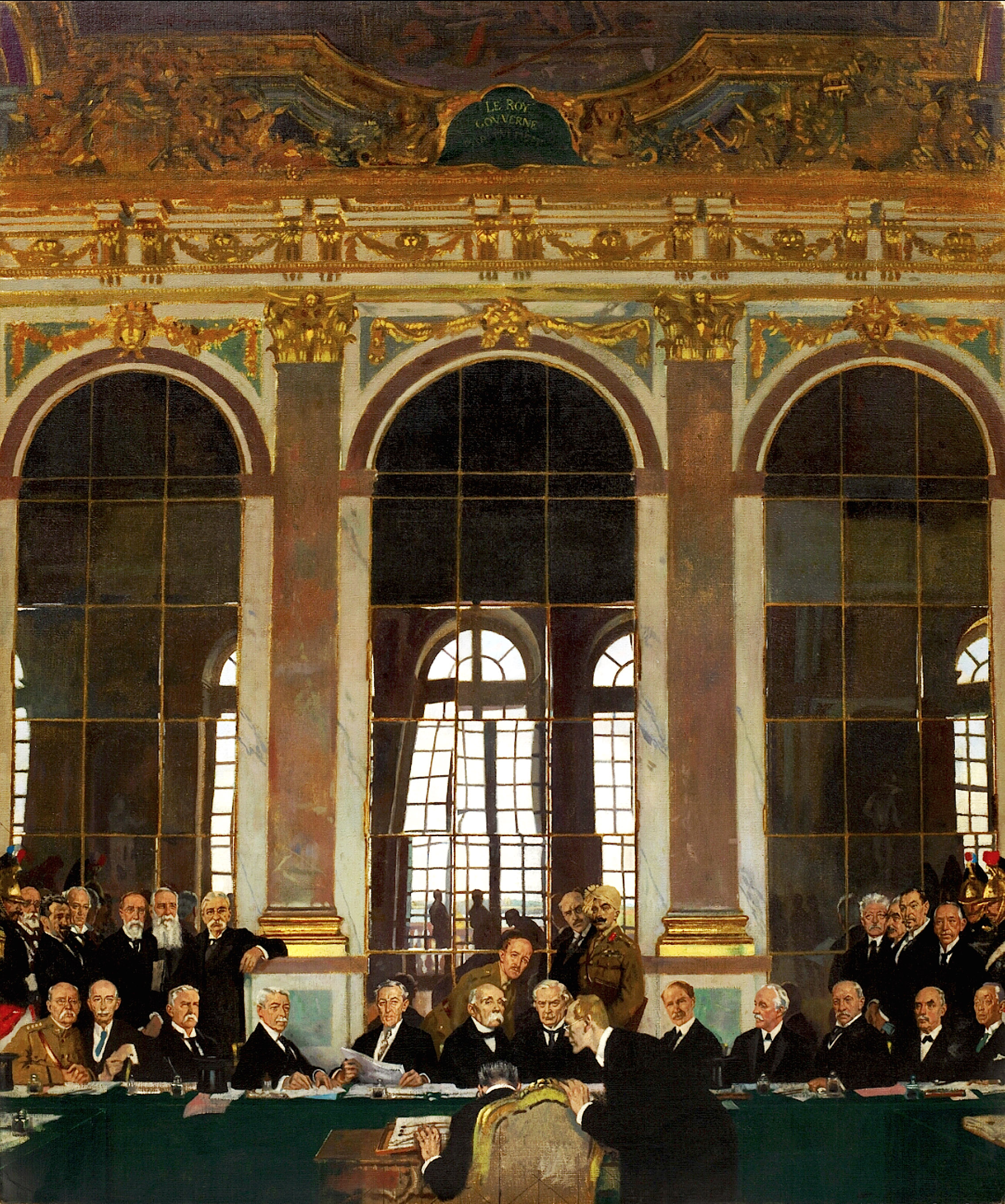
To gain a deeper understanding of the Treaty of Versailles, it is recommended to review the original text of the 1919 Covenant of the League of Nations and the specific articles regarding the Reparation Commission. Students of history should also examine the "Fourteen Points" speech by Woodrow Wilson to compare the initial idealistic goals of the United States with the final, more punitive legal document signed in the Hall of Mirrors.
Image Gallery