Life Insurance Practice Exam Quizlet: How to Master the Insurable Receipt
To master the insurable receipt for your life insurance licensing exam, you must understand that it is a conditional receipt providing coverage from the date of application or medical exam, provided the applicant is found insurable at...
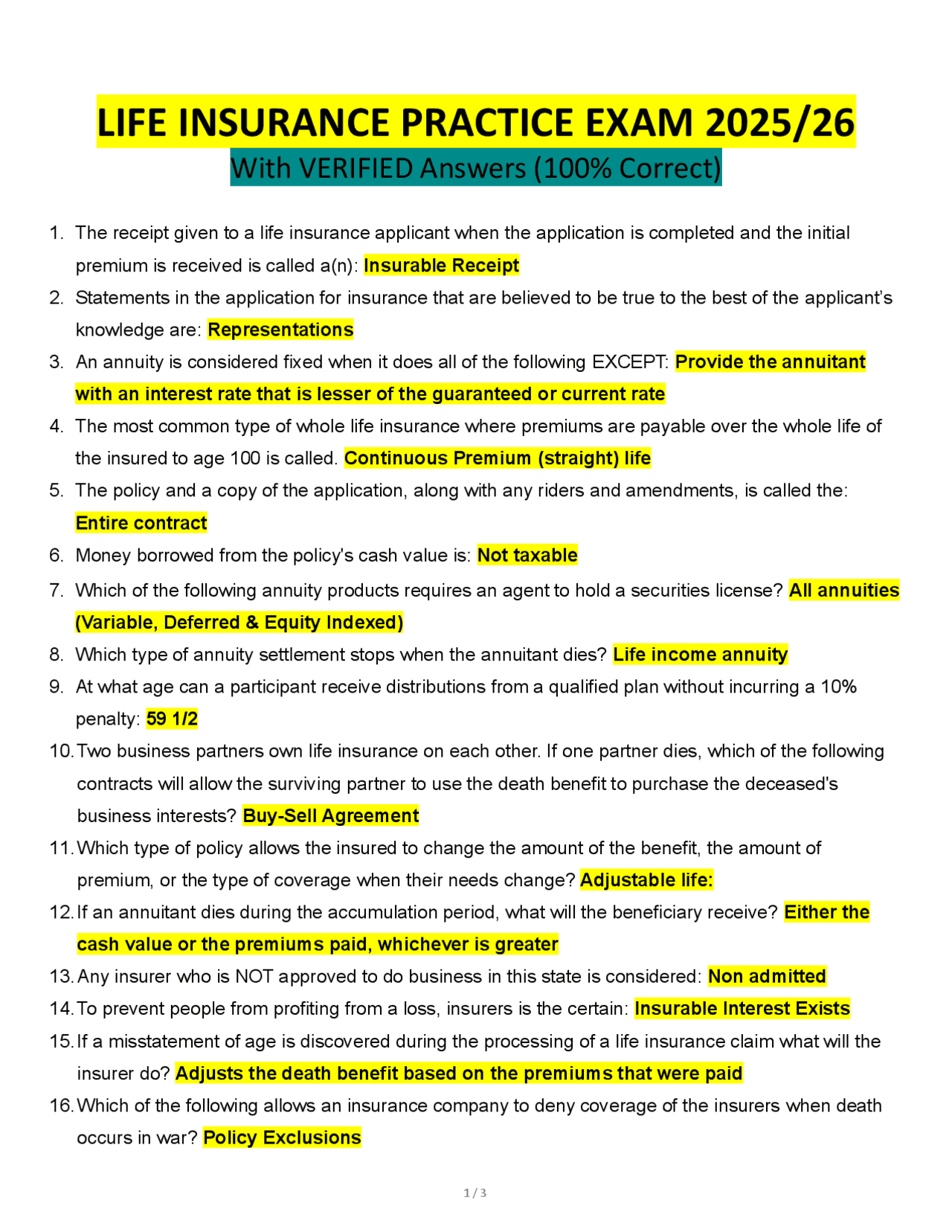
To master the insurable receipt for your life insurance licensing exam, you must understand that it is a conditional receipt providing coverage from the date of application or medical exam, provided the applicant is found insurable at standard rates. Success on Quizlet-based practice exams requires distinguishing between when coverage is immediate versus when it is deferred.
Contents
The insurable receipt is one of the most frequently tested concepts in the Life and Health Insurance licensing curriculum. For many aspiring agents, the nuances of "conditional" coverage vs. "binding" coverage create significant confusion. By 2026 standards, while digital applications have streamlined the process, the underlying legal principles of the insurable receipt remain a cornerstone of contract law in the insurance industry. Mastery of this topic is not just about memorizing a definition; it is about understanding the timeline of liability and the specific conditions that must be met for a death benefit to be paid before a policy is officially "delivered."
The Fundamental Concept of the Insurable Receipt
In the context of a life insurance practice exam, the terms "insurable receipt" and "conditional receipt" are often used interchangeably. This document is issued by an insurance agent to an applicant after the initial premium has been collected and the application has been signed. Its primary purpose is to provide the applicant with a form of temporary protection while the insurance company’s underwriters evaluate the risk.
The "condition" in a conditional/insurable receipt is the company’s determination of insurability. If an applicant pays the premium and receives this receipt on June 1st, but then dies on June 5th before the policy is officially issued, the insurance company will still pay the death benefit—if and only if the underwriting process determines that the applicant was insurable as a standard risk on the date the receipt was issued. If the applicant would have been declined or rated as a sub-standard risk, the company is generally not liable for the claim, and the premium is returned to the beneficiary.
The Role of the Initial Premium
A common "trap" question on insurance exams involves the timing of the premium payment. You cannot have an insurable receipt without the collection of the initial premium. In the eyes of contract law, the premium is the "consideration" offered by the applicant.
- Scenario A: The applicant signs the application but does not pay the premium. No receipt is issued. The "offer" has not been fully made because consideration is missing. Coverage does not begin until the policy is delivered and the premium is collected.
- Scenario B: The applicant signs the application and pays the premium. The agent issues an insurable receipt. The "offer" is now complete. Coverage can potentially be backdated to this moment, depending on the results of the medical examination.
When using Quizlet to study, look for flashcards that emphasize this distinction. If a practice question asks when coverage begins for an applicant who did not pay a premium at the time of application, the answer is almost always "upon delivery of the policy and payment of the premium, while the applicant is still in good health."
Conditional vs. Binding vs. Approval Receipts
To master the exam, you must be able to categorize different types of receipts. While the insurable (conditional) receipt is the most common in life insurance, examiners often use the others as "distractor" options.
The Conditional (Insurable) Receipt
This is the standard for life insurance. It states that coverage is effective as of the date of the application or the date of the medical exam (whichever is later), provided the applicant is found to be insurable at the rate applied for. This protects the applicant against the "gap" in time during underwriting.
The Binding Receipt
Commonly found in property and casualty insurance but rare in life insurance, a binding receipt (or "unconditional" receipt) provides immediate coverage from the moment the receipt is signed, regardless of whether the applicant is ultimately found insurable. If the company later decides not to issue the policy, they must provide a notice of cancellation, but they are "on the hook" for any claims that occur in the interim.
The Approval Receipt
This is the most restrictive type. It specifies that coverage does not begin until the application is specifically approved by the insurance company’s underwriting department. This type of receipt offers no protection during the period between the application date and the approval date.
| Receipt Type | Coverage Start Date | Key Condition | Common Usage |
|---|---|---|---|
| Insurable (Conditional) | Date of App or Medical Exam | Must be found insurable at standard rates | Standard Life Insurance |
| Binding | Immediate | None (until cancelled by insurer) | Auto/Home Insurance |
| Approval | Date of Underwriting Approval | Application must be fully processed | Rare/High-risk Life |
How to Leverage Quizlet for Mastering These Concepts
Quizlet is a powerful tool for 2026 exam prep, but only if used strategically. Many students make the mistake of simply browsing "Life Insurance Exam" decks, which can be outdated or contain incorrect information from different jurisdictions.
- Filter by "Insurable Receipt" and "Contract Law": Instead of broad searches, focus your study sessions on specific modules. Search for sets that specifically mention "Provisions, Riders, and Options."
- Use "Learn" Mode for Active Recall: Passive reading of flashcards is ineffective for the complex logic of insurable receipts. Quizlet’s "Learn" mode uses spaced repetition to force you to distinguish between "Date of Application" and "Date of Approval."
- Create Your Own Scenarios: The best way to master the insurable receipt is to create your own "If/Then" scenarios. For example: "If the applicant dies the day after the medical exam but before the lab results come back, does the policy pay?" Writing these cards yourself encodes the information more deeply than reading someone else's.
- Check for 2026 Updates: While the core concepts of the conditional receipt are stable, the methods of delivery (electronic vs. paper) and specific state-level grace periods can vary. Ensure your chosen Quizlet deck aligns with the NAIC (National Association of Insurance Commissioners) standards used in your specific state.
Common Exam Trap Questions to Watch For
The insurable receipt is a favorite topic for "distractor" questions because the logic is counter-intuitive to those unfamiliar with legal consideration.
- The Medical Exam Trigger: If a conditional receipt is issued on Monday, but the medical exam isn't completed until Thursday, the "effective date" of coverage is Thursday. If the applicant dies on Wednesday, there is no coverage. Examiners love to see if you remember that the entire application process (including the exam) must be complete for the receipt to be valid.
- The "Statement of Good Health": If a policy is issued without a premium being paid upfront (and thus no insurable receipt was given), the agent must collect a "Statement of Good Health" from the applicant upon delivery. If you see a question about an insurable receipt, the "Statement of Good Health" is usually a wrong answer because the health was already "locked in" by the receipt's conditions.
- Substandard Risks: If an applicant is found to be a "rated" or "substandard" risk, the conditional receipt does not provide coverage. The company’s offer to insure the person at a higher rate is considered a "counter-offer," which the applicant must then accept.
Legal and Ethical Obligations of the Agent
In 2026, the digital footprint of an insurance transaction is permanent. When an agent issues an insurable receipt, they are performing a legal act that binds the company to potential multi-million dollar liabilities.
As an agent, you must explain to the client exactly what the receipt does—and does not—do. Misrepresenting a conditional receipt as "immediate coverage" is a common cause for errors and omissions (E&O) claims. From an exam perspective, questions regarding the "Agent’s Report" or "Field Underwriting" often overlap with the insurable receipt. The agent’s primary duty is to ensure the initial premium is handled according to strict fiduciary standards, as the receipt is essentially a legal acknowledgement of those funds.
Frequently Asked Questions
What happens if the applicant dies before the medical exam is taken?
If an insurable receipt was issued but the required medical examination was never completed, the conditions of the receipt have not been met. In most cases, the insurance company will deny the claim and refund the premium to the estate, as they were unable to determine insurability.
Is an insurable receipt the same as a "temporary insurance agreement"?
Not exactly. A Temporary Insurance Agreement (TIA) often provides immediate coverage regardless of the medical exam outcome for a very short window (e.g., 30 or 60 days). The insurable receipt is strictly conditional based on the final underwriting decision regarding the applicant's health at the time of application.
Why would an insurance company use a conditional receipt instead of just waiting for approval?
It provides an incentive for the applicant to pay the premium immediately, which "seals the deal" and prevents them from shopping around with other companies. It also provides the applicant with peace of mind that they are covered if they are healthy, even while the bureaucracy of underwriting moves forward.
Can an insurable receipt be issued for a non-medical (simplified issue) policy?
Yes. In a non-medical or "guaranteed issue" scenario, the effective date is typically the date the application is signed and the premium is paid, as there is no medical exam to act as a secondary "trigger" date.
If a policy is issued with a rating (higher premium), is the insurable receipt still valid?
No. The insurable receipt only covers the applicant if they are found insurable at the standard rate they applied for. If the company issues a rated policy, it is a counter-offer, and no coverage exists until the applicant accepts the higher premium and the policy is delivered.
Final Recommendation for Students
To ensure you pass the portion of the life insurance exam involving receipts, focus your study on the timing of the medical exam. Most students remember that the premium is required, but many forget that the "Effective Date" of an insurable receipt is the later of the application date or the medical exam date. Use Quizlet to drill this specific chronological rule until it becomes second nature.
Image Gallery